On the nozzle: cask beer sparkler
Searching beyond the usual debates, Fred Garratt-Stanley explores the history of the cask beer sparkler and how it became entrenched in regions like Yorkshire.
Fred Garratt-Stanley
Illustration:
Phoebe Wilman
Saturday 25 July 2026
This article is from
Yorkshire
issue 133
Share this article
'Sparkler vs no sparkler' is one of beer's great debates; should publicans fit the spout of their handpulls with a tiny device that gives cask-conditioned ales a tighter, creamier head when poured? Opinion is largely divided as to whether aerating the beer like this enhances or interferes with its character, with personal preferences closely correlating with whether a drinker feels more closely connected to the North or South of England.
But despite the column inches that have been dedicated to this argument already it's remarkable how little we actually know about the origins and historical evolution of this device for beer dispense. In the North (and parts of the Midlands), sparklers are such a quotidian part of the beer-drinking experience that very few people stop to think about why that is; and in the South, vehement anti-sparkler crusaders aren't interested in finding out.
The use of cask ale sparklers can be traced back to 1885, when George Barker, a publican based at the Crown Hotel, Ince (near Wigan), acquired a patent for a "beer aerator". His invention was covered in an issue of the British Trade Journal, which advertised how "Barker's Patent Aerator Will Make Beer & Mineral Waters Sparkling However Flat." Dubbing it "the most ingenious invention of the age," the advert explained how the device "gives a rich creamy head to all beer and porter drawn through it, and renders flat beers sharp and sparkling." The price? Seven shillings and sixpence, which, adjusting for inflation, is around £48 today. The fact that these days, Angram (one of the main modern sparkler manufacturers) sells nozzles for £2 each is a testament to how ingrained they've become in British drinking culture.
According to blogger Gary Gillman, "anyone familiar with beer knows you can swirl the glass to pick up the foam, or with a stirrer of some kind. Barker's invention did the same thing but methodically." The aerator's focus on improving poor or average cask ale is interesting: one of the modern criticisms levelled at sparklers is that they're sometimes used to breathe life into poorer quality beer, making it look better than it actually is. This was, in fact, the original intention of the device.
Sparklers are such a plainly necessary part of the beer-drinking experience that very few people stop to think about why that is
Today, the impact of sparklers on a beer's flavour and mouthfeel ultimately depends on whether or not it is designed to be dispensed this way. Regional preferences play a pivotal role in how different breweries operate; historic Keighley-based brewery Timothy Taylor's, for example, strongly advocates the use of sparklers, and brews the beer to suit this service style.
"Our beer is brewed deliberately robustly so that it can go through a sparkler and not lose all its flavour," explains Timothy Taylor's head brewer, Andy Leman. "We use a lot of hops, probably more than most people do, and when you drink it straight from the tap with no influence from the dispense method, it is quite harsh. That's the purpose of the sparkler, to soften the beer slightly, and create the head."
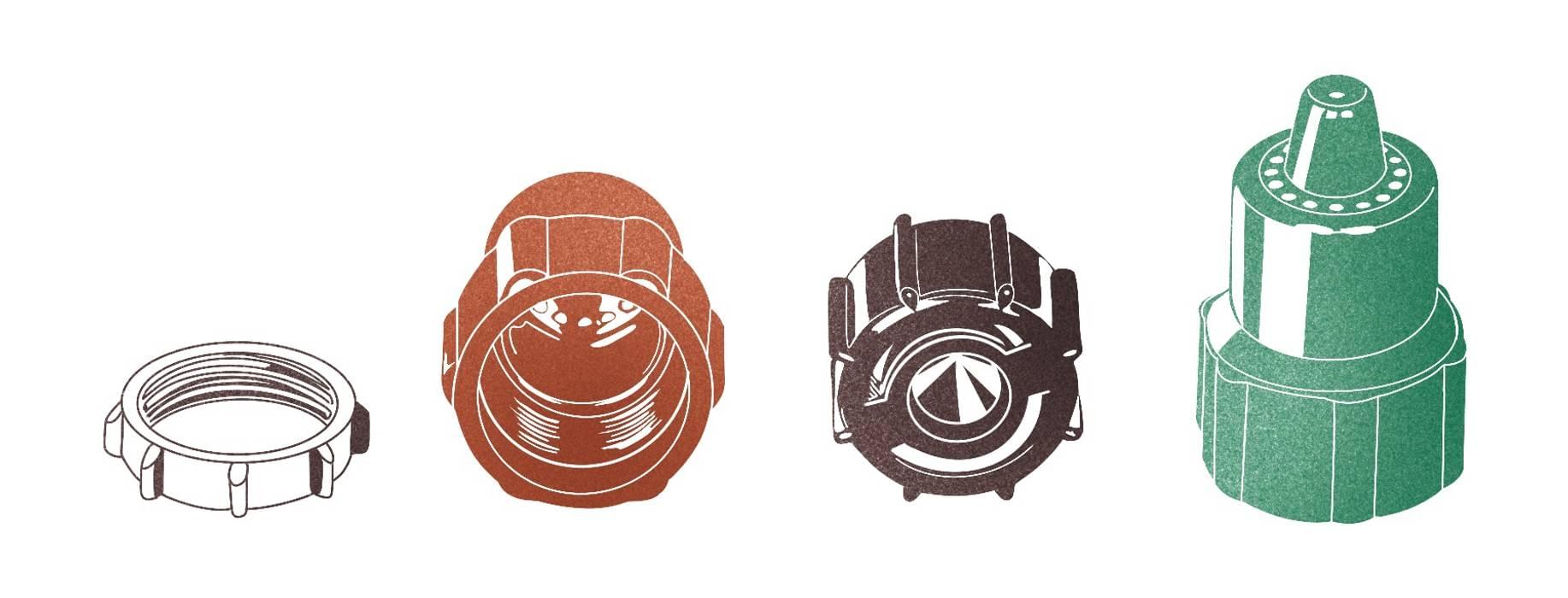
What other brewing techniques aid the sparkler pour? "We leave residual sugar in the beer, and we add priming sugar, so that when it's in the cellar, it's quite lively, and does a proper secondary fermentation in the cask," Andy says. "That creates a lot more condition [the desired body and mouthfeel] in the beer. You then put it through the tight sparkler, you release and lose a lot of that condition to form the head, so you need the extra condition to promote the head without the beer being flat underneath." There's little information online about how the popularity of the cask beer aerator grew in the decades following its invention, but W. Bently Capper's 1923 text Licensed Houses and Their Management suggests they soon became well established in certain regions. "There are several excellent fittings on the market in the shape of 'nozzles' or 'sprinklers' which are fitted to the spout of the engine," he writes. "These agitate the beer as it passes into the glass and produces a head, without affecting the palate in any degree." Today, several types of sparkler can be used to finish off the pour, the main difference being the size of the nozzle's holes — 0.6mm, 0.8mm, and 1mm are the typical options. The tight, restrictive flow of the 0.6mm variety, designed to maximise turbulence, is the standard for companies like Angram, but Timothy Taylor's prefer nozzles with 1mm holes, usually sourced through a company called RLBS. Different colours will be used to denote hole size (these can vary depending on the manufacturer), while British food hygiene laws passed in the 1990s mean that virtually all sparklers are made from plastic, an unsurprising departure from Barker's original brass implement.
As to why sparkled beer became popular in regions like Yorkshire in the first place, there are competing theories. Writing for CAMRA, beer sommelier Annabel Smith posits that while hops were cheap and plentiful for Southern-based brewers, Northern brewers were restricted by their higher cost. "To compensate for the lack of hops, sparklers were invented to squeeze all the hop oils into the head of the beer… [drinkers] would get all the bitterness from the hops with their first gulp, compensating for the lack of hops in the actual body of the beer."
Considering one of the strongest criticisms of the sparkler is how it can flatten hop flavour and aroma, this seems odd; it's also contradicted by the fact that modern Yorkshire brewers like Timothy Taylor's or Kirkstall recommend sparklers to round out ales brewed with lots of hops.
Alternatively, the popularity of sparkler-pulled beer in the North and parts of the Midlands could have something to do with industry; with a much higher concentration of hot and bothered factory workers seeking a smooth, thirst-quenching lunchtime drop, regions like Yorkshire seemed well-suited to creamy, sparkled pints, with less delicate hop character. The fact that publicans could line them up ahead of the rush, knowing they'd retain their head (see the tower-headed banked beers of Teeside, for example) could also be a factor.
Ultimately, this fascinating regional divide simply underlines the richness and diversity of the British brewing tradition
"I would say it's a tradition of the North to have beer with a head on, but actually, it's a tradition of the world to have beer with a head on," says Andy, who grew up in Berkshire but has been based in Yorkshire for nearly 40 years. "It's really only the south of England where people don't want much of a head on their beer."
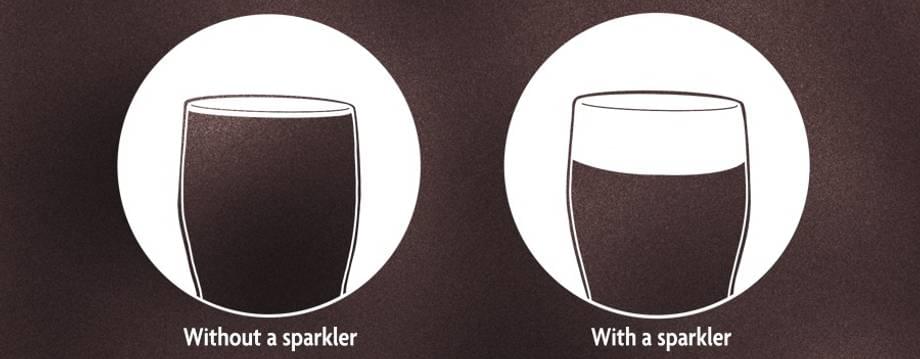
Vehemently pro-sparkler drinkers often enjoy posting comparative photos where the unsparkled pint is a puddle of sadness, topped with a few grim, dirty-looking bubbles; in my view, a complete misunderstanding of what a well-conditioned Southern pint should look like. Sparkler or not, a solid half-inch of head is always desirable, and the cohort of fastidious old Southern men who demand a foamless pint filled to the glass' brim is on the wane. The social media age has heightened public focus on the visual aesthetics of the beer-drinking experience; the ubiquity of Guinness and macro lagers means Southern drinkers who do transition into cask ale will likely desire a decent head, which a well-conditioned unsparkled beer is still more than capable of providing.
Ultimately, this fascinating regional divide simply underlines the richness and diversity of the British brewing tradition. However, knowledge of exactly how these differences emerged remains a real blind spot for most drinkers. Perhaps instead of agonising over the pros and cons of each dispense method, we should spend more time interrogating how the schisms developed in the first place; greater understanding of the roots surely means greater appreciation of the destination.
Share this article
You’ve reached your limit of 5 free articles this month.
Unlock unlimited access and more

Join Beer52 and get your first month half price
-
Get your first box for £13.50 (RRP £27).
-
8 beers & 2 snacks delivered monthly.
-
Printed Ferment magazine included.
-
Unlimited access to all online content.