Viva Malta
On the edge of Malta's Grand Harbour, The Other Brewery Co. is making some of the most exciting craft beers in Malta. He just had to go to London first to figure out how. In partnership with Visit Malta.
Ferment team
Saturday 25 July 2026
This article is from
Yorkshire
issue 133
Share this article
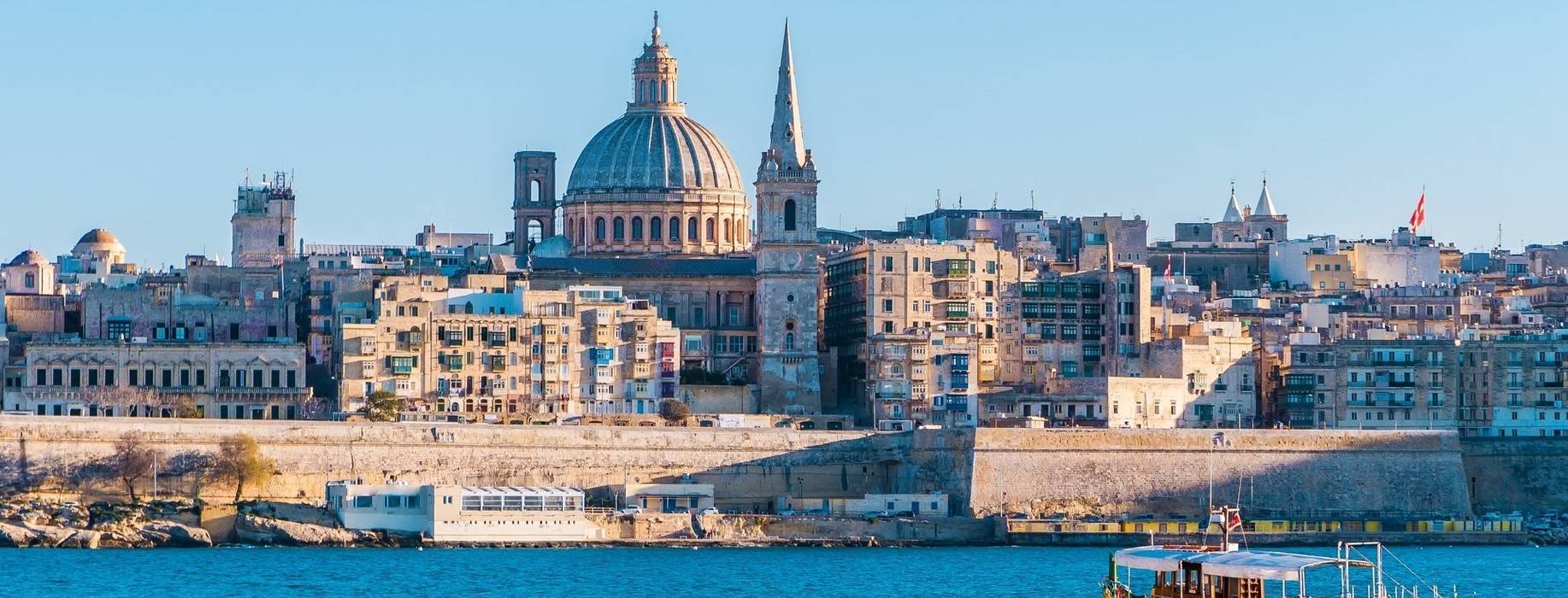
The building doesn't announce itself. Tucked into the waterfront at Jetties Wharf, on the southern reaches of Malta's Grand Harbour, it sits low and utilitarian. Post-war concrete, Maltese art deco bones, the kind of structure that accumulates history quietly. In the 1950s, workers pressed and canned tomatoes here, loading them onto ships bound for export markets across the Mediterranean. For decades after that, not much happened. The area became what Sebastien Bianchi describes, without sentimentality, as "a very neglected area".
Sebastien discovered it anyway, years ago, and fell in love. "I love a working harbour," he says, gesturing out towards the water where ships drift past and small vessels dart between them. "You see some big ships, lots of activity, people going in and out. I don't know, I just find it exciting." When the time came to build a brewery, he didn't spend long looking elsewhere. "I thought, it'd be really cool to have an abandoned dockside warehouse and stick a brewery in there." He pauses, then allows himself a small boast: "I think the Valletta Grand Harbour is the nicest harbour in the world. I've never seen any harbour like it."
This is the home of TOBCo: The Other Brewery Co. It launched in June 2025, making it, at the time of writing, barely a year old. But the story of how it got here stretches back fifteen years, one pandemic, and a two-week brewing trial in Battersea.
Sebastien grew up in Malta but left to study hospitality management, then spent almost a decade working for the Dorchester Collection: the luxury hotel group that operates some of London's grandest addresses. It was meticulous, high-touch work, and he was good at it. But sometime around 2010 or 2011, something else started pulling at him.
"The micro-brewery scene in London was really popular at the time," he recalls. "There were breweries popping up all over the place, really interesting beers. I used to love the way they combined community, music, food, beer in like an industrial kind of space." He started home brewing, and a thought settled in: What if this could be done in Malta?
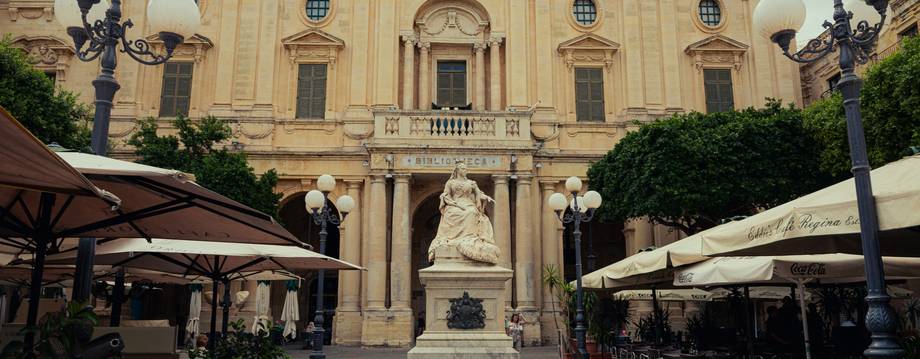
PHOTO: The National Library © Andrea Giardini
Then, he did something about it. He sent thirty CVs to London micro-breweries. Twenty-nine didn't respond. The one that did was Mondo Brewing behind Battersea Power Station, founded by two Americans, Tom Palmer and Todd Matteson. As Sebastien tells it "they said: ‘we'll give you a trial period of two weeks. At the end of the day, you can take home a beer, or drink it at the bar by yourself. After the two weeks, if we feel you know what you're doing and you're not going to burn the place down, we'll give you a job.’" Sebastien laughs.
"I knew nothing about brewing on this scale, but I applied myself, my brain is like a sponge. Show me something once and I'll pick it up." He passed the trial. He stayed eight months, learned how a commercial brewery operates, and picked up an introduction to a Hungarian equipment supplier that would eventually kit out his own site.
The move back to Malta came gradually and by early 2020 he was back for good; then COVID hit. "Sourdough, dog, baby, and a brewery," he says, counting on his fingers, cheerfully summarising the pandemic checklist.
If the lockdowns were useful for anything, they were useful for walking. With Valletta's streets stripped of tourists, Bianchi spent those quiet months wandering the Three Cities; the ancient, fortified towns of Vittoriosa, Senglea and Cospicua that cluster at the harbour's edge. He took the time to think hard about what his brewery should look like.
He called Matt DeMarco, an illustrator who runs a company called Bloom Creative, and who soon became a close friend through their working relationship. Together they created a design that was rooted in Malta but without being kitsch. "I wanted it to feel really local but not overly Maltese where it's just Maltese Crosses everywhere," says Sebastien. Each beer in the core range carries its own set of symbols, drawn from a particular piece of the island's identity.
The base lager wears imagery from Maltese prehistory; the figure of Our Lady of Fertility from the Ħal Saflieni Hypogeum, alongside motifs from Ħaġar Qim, the megalithic temple complex that predates Stonehenge by centuries. The Helles, named for Valletta, pulls from the capital: the statue of Queen Victoria outside the National Library, a vedette watchtower that overlooks the harbour mouth, and the painted ceiling of the Manoel Theatre. This lattermost building, a baroque house, has been staging performances since the 1730s, making it one of the oldest operating theatres in Europe. "If you're walking past, do walk in and have a look at the ceiling," Sebastien says. "It's stunning."
The Hefeweizen depicts southern Malta; a Luzzu, the traditional brightly-painted fishing boat; shells; a fish. The New England IPA draws on the symbols that appeared on the back of Maltese lira coins before the country joined the euro; a Lampuka, the prized dolphinfish that featured on the ten-cent piece, and a freshwater crab, which appeared on the five.
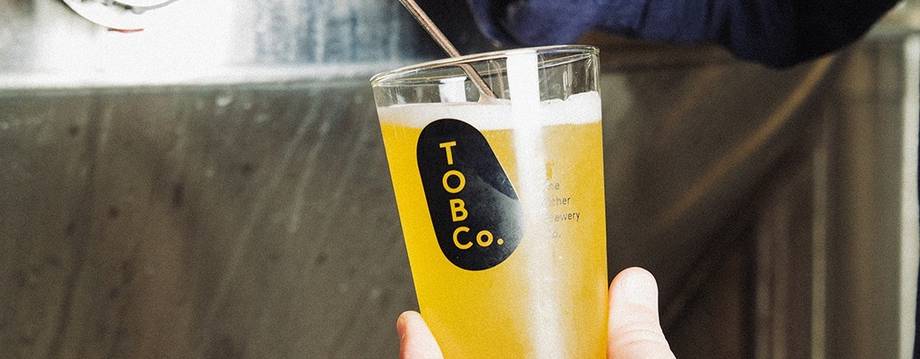
PHOTO: TOBCo
Distribution is handled through a partnership with Cassar Camilleri, a family firm that has been at the heart of Maltese drinks production for over a century. Originally a winery and still the largest on the island, they also produce juices, and Fontana, Malta's best-known bottled water. The fit feels right: a very new brewery plugging into a very old network. "So far it's worked out really well," Bianchi says. "The distribution side seems to be going from strength to strength."
The beer range itself centres on these four core styles, chosen with the market in mind. Cisk, the lager produced by Farsons, has been the dominant Maltese beer since 1928 and has such a monopoly on local consciousness that "give me a lager" and "give me a Cisk" are functionally synonymous for many drinkers.
Therefore, the public’s response to The Other Brewery’s more craft-focused offering caught Sebastien off guard. "My perception going in was that we’d sell more lager than anything else. The NEIPA is more expensive to produce, and therefore more expensive to purchase. I thought ‘nobody would ever spend that kind of money on a beer here.’" He was wrong. "It seems to be the one that's moving the most." The Maltese palate, it turns out, was ready for these kinds of hoppy and hazy beers.
Running a brewery on a small island creates a particular kind of clarity about scale. Malta's population sits at around 600,000, making it more of a city than a country, in terms of market size. "If you're focussing on the local market, it's not very big," Sebastien says. "That's probably the biggest challenge."
The longer-term answer, he suspects, is to look outward. He wants to build a bigger brewery and to take TOBCo international. "I'd love to see where it goes," he says. "It's exciting." There are conversations happening with international breweries about potential collaborations. A new beer is planned for this summer.
Meanwhile, things are changing around him at Jetties Wharf. A restaurant has opened opposite. A gym is coming. He welcomes development, but also wants this little corner of the world to remain a working harbour; active, slightly rough, full of ships and noise and life. The kind of place you'd put a brewery.
Learn more about Malta: https://www.visitmalta.com/en/
Share this article
You’ve reached your limit of 5 free articles this month.
Unlock unlimited access and more

Join Beer52 and get your first month half price
-
Get your first box for £13.50 (RRP £27).
-
8 beers & 2 snacks delivered monthly.
-
Printed Ferment magazine included.
-
Unlimited access to all online content.