Birrificio Granda: Granda gesture
Having established themselves as one of Italy's most respected craft brewers, Birrificio Granda is focused on building the next generation of Italian beer lovers.
Fred Garratt-Stanley
Photos:
Birrificio Granda
Saturday 22 August 2026
This article is from
Italy
issue 134
Share this article
Growing a thriving craft beer movement in Italy was an uphill struggle. Brewers contended with numerous obstacles: difficulties sourcing ingredients locally, snobbishness from drinkers more accustomed to wine, and a broader lack of historic beer culture. To succeed in those conditions, a cult-like drive was required, according to Birrificio Granda founder Ivano Astesana.
“We transformed the craft beer movement like a religion," he reflects. "If you create an enemy at the beginning when the movement is very little, this gives you energy, because you have something to fight against. But when you grow, this becomes an obstacle, because now the customers are not your allies; they see you as a problem.”
The challenge for brewers like Birrificio Granda, he says, is to work harder on translating craft beer to casual drinkers and helping them understand it. This is a balance he thinks they're now perfecting: “talking both to casual drinkers and the beer nerds”.
“The same mistake happened in the wine world some decades ago, but now if you enter a wine shop, you are welcomed and the salespeople understand your level of knowledge and guide you in exploring new products,” he says.
“In the beer movement, if you arrived in a beer shop and you weren't a beer nerd, you were mistreated. We and many other breweries are trying to change this approach.”
Granda was formed in 2011 in the province of Cuneo, Piedmont, in northern Italy. It became one of the first places to be certified as a farm brewery or Birrificio agricolo under the unique Italian law introduced the year prior. These are breweries that grow 51% of their own raw ingredients, and are highly valued for the intimate knowledge and experience they therefore have with the brewing ingredients they use.
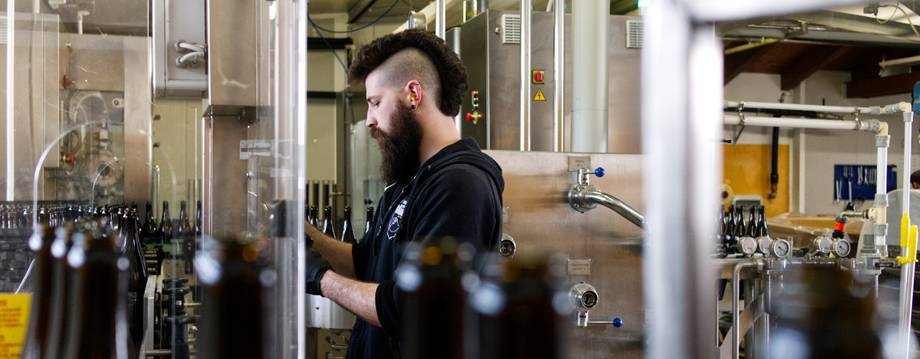
“The farm brewery movement had a very big impact in Italy,” Ivano explains. “Now, I think about 25% of all the craft breweries in Italy are farm-based. Farming in Italy is a very important business, and particularly in Piedmont, Lombardia, and Veneto, where the most breweries are present, it was a natural evolution from the first craft breweries to interlink with the farming part of the business.”
In a country that places more value than most on high-quality, locally sourced food and drink, it makes sense for brewers to take advantage of this connection. “Since here there is a strong wine culture, people are used to thinking about the strong agricultural link to whatever is produced,” explains Ivano. “It's easier for us to explain our product because we can make a parallel with wine production, so we can explain a beer the same way a winemaker can explain their wine.”
This deep gastronomical culture also means Italians have a sensibility for pairing ingredients in a creative but measured and well-balanced way, Ivano believes. He remembers being told at a beer festival by a Franconian brewer that “‘the creative Italian beers always have this balance and this drinkability that comes from the gastronomical culture of Italian people’. Perhaps it's our only advantage in comparison with other countries.”
On that last point, I wouldn't be so sure; Italy's lack of long-standing beer heritage has created opportunities too. For one, it means that pioneering craft brewers like Birrificio Granda have been unshackled by the traditions, expectations, or purity laws that beer makers in other European nations face. At the same time, the secret to their recent success is a hungry, open-minded approach to interacting with and learning from breweries outside Italy.
“Since the beginning, we've tried to be a brewery with an international view," Ivano says. "In the last few years, we've made many collabs with famous European breweries. In particular, since 2023 our collab planning became quite busy, and we invited fellow brewers to visit and brew with us. Every time a brewer comes to Italy, they bring their culture, their know-how, their ingredients sometimes, or an iconic aspect of their tradition, customs and cultures.”
In a collaborative project titled Land of Beer, Granda focused on targeting foreign breweries that they knew could plug gaps in their knowledge. There were also plenty of associates who were interested in using the Moscato grape that Piedmont is famous for. Throughout the course of these collaborations, there have been valuable lessons about how to continue building a new generation of beer lovers in Italy (a mission that is of vital importance to Granda).
Asked what elements of the contemporary Italian beer story bring him hope, Ivano points to a visit to Granda by Marc Rauschmann of Frankfurt brewery BraufactuM. “His daughter arrived with him at the brewery and told us, 'Sorry guys, even though I'm a German daughter of a brewer, I don't drink beer'. We started the brewing day, we introduced her to some modern sours, and afterwards she asked for a case. It opened new perspectives on what she could find in beer. To get a new generation of drinkers on board, we need to explore other ways to brew beer, without being too geeky or too conservative.”
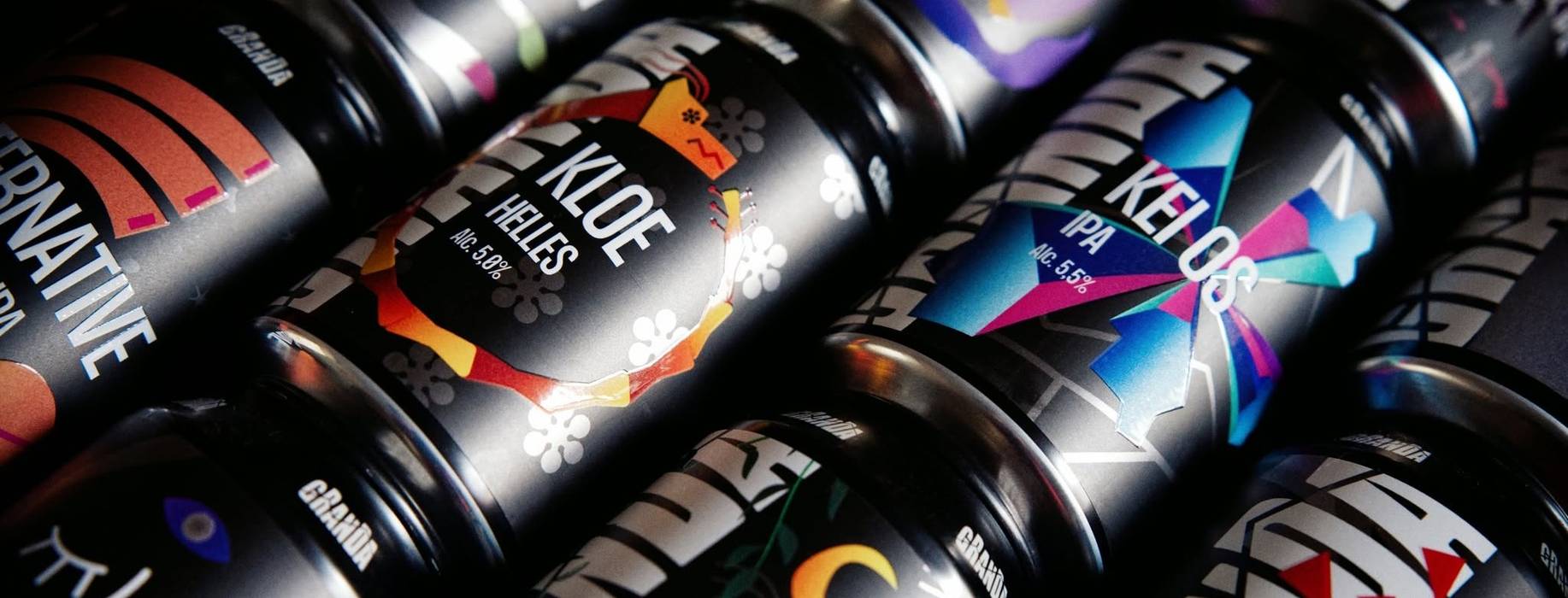
“Trying to give a visual that is compelling and simple enough to be understood quickly is crucial,” says brand manager Cesare Nai, who is responsible for all Granda's clean, approachable packaging. “We drink and we eat with our eyes, so presentation is not just a nice requirement, it's part of the entire existence of beer production. When you are proposing something that's totally different but still technically a beer, I think people will accept it, and that's why Mark's daughter was interested in that. If you manage to give another point of view to the customer, you've won.”
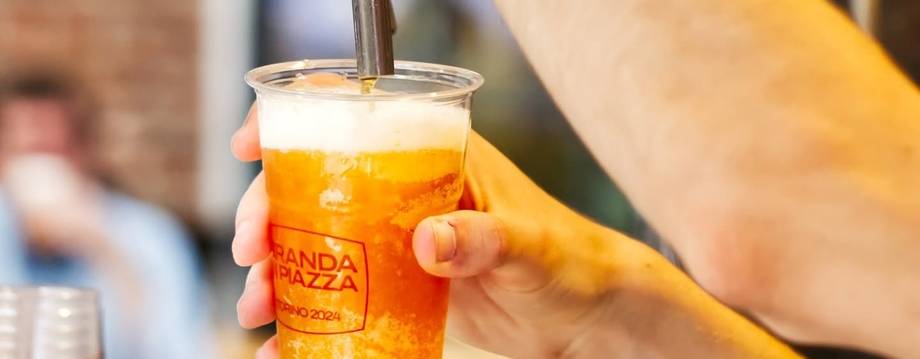
For Birrificio Granda, festivals play an important role in these moments of introduction. Ivano regularly organises beer festivals across Italy and abroad, focusing on using these events to “make beer the protagonist, but not the only protagonist. The approach to the beer is more on the fun side than the technical side.” He adds: “We've had three editions of our festival Granda in Piazza, held in Turin, where we invite all the best breweries we know around Europe, and ask them to bring both the very strange beers but also their lagers, bitters, brown ales — the boring stuff that people like to drink when they are having fun, so beer can be not just the protagonist but a companion.”
According to Cesare, “all kinds of people” have been attending these events. “Of course we get a huge chunk of people that are beer geeks, people understanding craft beer on a deeper level, but also we have normal people, if I can say that! Families, young kids, people that are between 18-25 that are discovering beer and understanding that of course in Italy we have all the industrial big names, but we also have these small businesses making great beer.”
“For each new generation, they don't want to drink the same stuff their father or their uncles drank, so it's natural for them to try something different,” says Ivano. “We can try to be the one to give them something different. It's our responsibility to be more challenging and to try different paths.”
Share this article
You’ve reached your limit of 5 free articles this month.
Unlock unlimited access and more

Join Beer52 and get your first month half price
-
Get your first box for £13.50 (RRP £27).
-
8 beers & 2 snacks delivered monthly.
-
Printed Ferment magazine included.
-
Unlimited access to all online content.