Mastri Birrai Umbri: Flavour of the land
Meet the Umbrian agricultural brewery helping others to certify the provenance of their malt.
Robyn Gilmour
Photos:
Mastri Birrai Umbri
Saturday 22 August 2026
This article is from
Italy
issue 134
Share this article
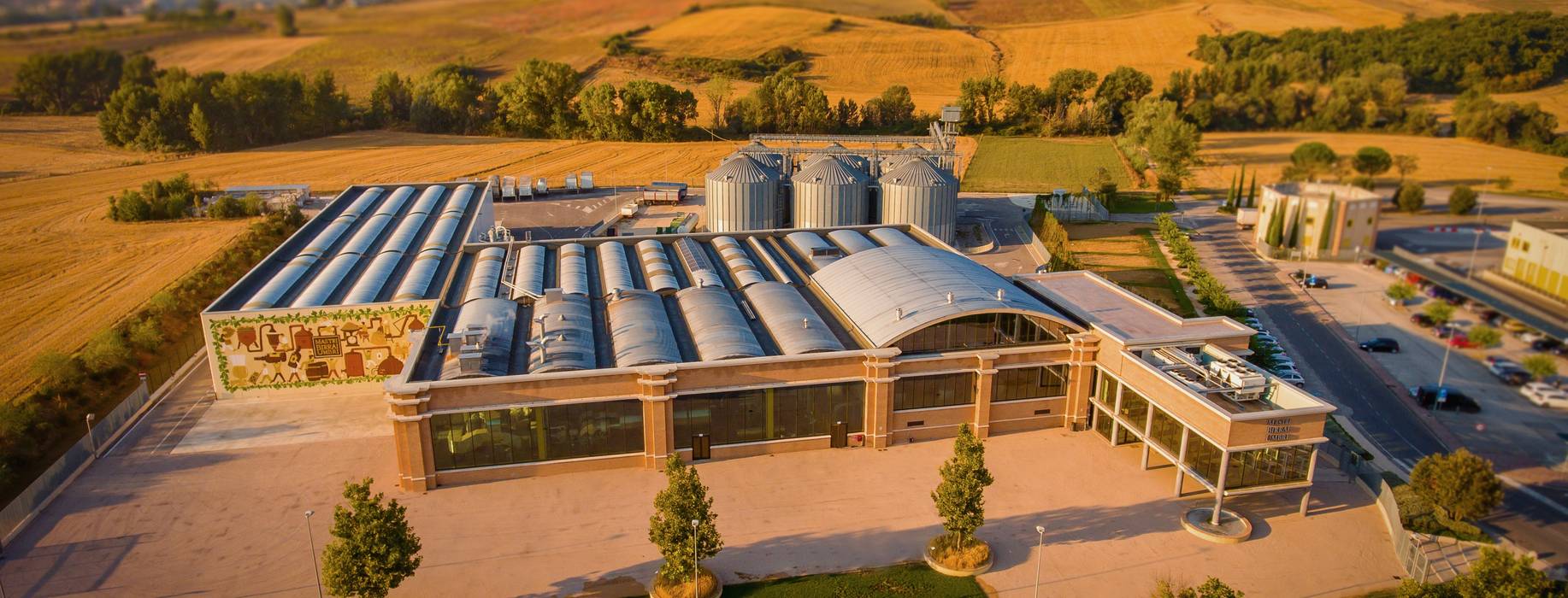
At Mastri Birrai Umbri, land is much more than a resource; it tells the story of Umbria’s culture and traditions, of what local people taste when they gather together to share a meal, and of the Farchioni family, who have owned and tended the land around the brewery for generations. “Everyone must know that you can come here, where I'm sitting now, and you find a real brewery, and the land around it produces the raw material it uses,” begins Michele Sensidoni, head brewer at Mastri Birrai Umbri. “The hierarchy is; every time we can, we do it. Every time we can, we grow our own raw materials; every time we can, we use a local raw material, so that it comes from our region; every time we can, we use Italian raw materials. Our customers recognise the value of our product, not just because of our brand, or the taste of our beers — there is also that, of course — but because they know that they can trace our beer to here.”
The brewery’s story officially begins in 2010, though it was the great grandfather of Cecilia, Marco, and Giampaolo Farchioni who acquired the land around the brewery several decades before. “Our grandfather started the old business, which was based originally on producing flour for bread, and then olive oil became the core of our business,” Cecilia says. “Whenever he could, he invested in land so he could cultivate different kinds of crops. He planted trees for olive oil, then some hectares of barley, then he started a vineyard; the idea was to have a crop from the winter and a crop from the summer, so they had work all year around.”
The winery and brewery that grew out of her grandfather’s legacy actually came about because her two older brothers had different tastes. More specifically, Marco has an allergy to tannins that excludes him from enjoying Umbria’s famous Sagrantino. Giampaolo followed his palate into the world of wine, opening the Terre de la Custodia winery in 2007, and Marco opened Mastri Birrai Umbri in 2010. The brewery started very small — the original microbrewery now fits in Mastri Birrai Umbri’s taproom — but has grown steadily since. Perhaps as significant as the growth of a brewery, though, was the company’s addition of an on-site, closed-vessel malting system which allowed the brewery to oversee every step in its supply chain, from field to glass.
Michele points out that this is an essential and unique feature of Mastri Birrai Umbri. “Big malting plants have a continuous production [barley is constantly fed in one end of the system, and malt is constantly disgorged at the other], whereas we have batch production [steeping, germination, and kilning happen in one closed vessel],” Michele says. “That means we can produce lower volume, but it also allows us to produce a batch that is totally traceable to a patch of land. When we realised this, we started producing beers that were 100% Italian, but also beers that were 100% Umbrian, because we can tell you this barley was actually grown there.”
At the moment, more than 99% of the cereals used in Mastri Birrai Umbri’s beers come from the family’s land. “We are the craft brewers that are most recognised for brewing true farm beers,” continues Michele. “That’s because we are farmers in the first instance; the same company that owns the brewery also owns the land where we grow our barley, spelt, wheat, and legumes.” This is an important orientation to understand. The beer comes from the land, not the other way around, and as such, the beer tastes of Umbria in more ways than you’d expect.
“Even before I joined the business [in 2010] the members of the family were thinking about using local raw materials that the Italian consumer would connect with Umbria,” says Michele. “Lentils, of course, are grown through all the Apennine mountains, but the lentils from Umbria are recognised to be the best in Italy. We have an area called Castelluccio here, and if you mention that name to anyone in Italy, the first thing they’ll come back to you with is ‘lentils!’
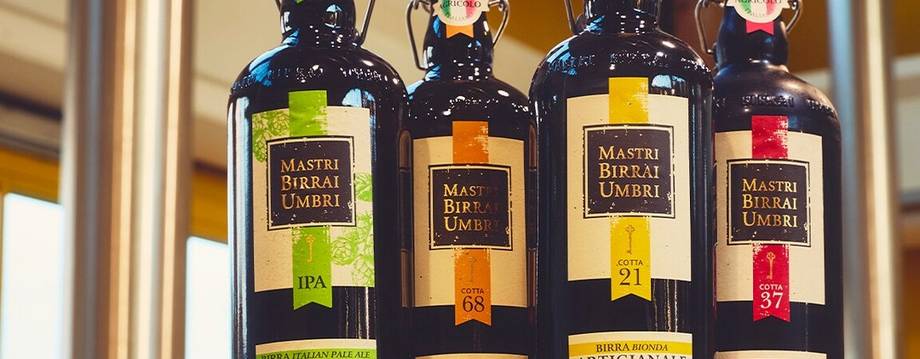
“In another beer, we use a legume called chicklings, or cicerchia in Italian. It has quite an old taste, so isn’t something the modern palate is accustomed to but we use it because it grows here. What’s interesting about this one is that it needs no fertilisers or tillage, and is very resistant to disease and pests. We also grow spelt, or grande farro, and this is a good one to brew with because the seeds are big and contain lots of starch and proteins. That enables us to brew Belgian style beer, and in fact, our best selling beer, Cotta Vintuno is a Belgian blonde that is brewed with spelt instead of wheat.”
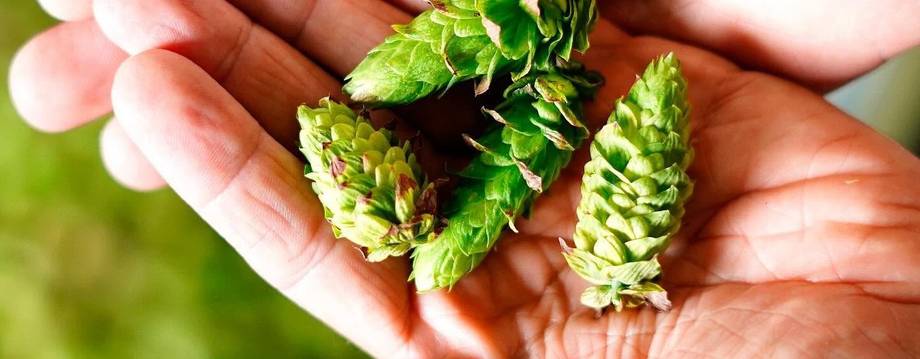
With such close connections to the world of agriculture, Mastri Birrai Umbri is uniquely positioned to work with Italian hop farmers. Michele points out that there are no hop brokers in Italy — though hops can grow in pockets of the country, they haven’t attracted the attention of multinationals willing to invest in their development. Mastri Birrai Umbri tried its hand at growing hops of its own, but decided it was better at producing malt and started working with Italian hop growers. “We are the brewery that uses more Italian hops in Italy — more than half of the hops that we use are Italian,” says Michele. “That is also not common because, as you know, American, New Zealand, Australian aroma hops are incredible, and we use some of them in our recipes, but we find the challenge of using local raw materials is more true to the cause of being a craft brewer.”
Interestingly, Michele points out that enough hops are grown in Italy to serve the entire Italian craft market, but many breweries prefer to use commercial, international hops, which come with a predictable range of flavours and aromas. “Dealing with a hop merchant is a safety net because you have someone to complain to if there are problems. When dealing with farmers, they’ll tell you, ‘look, this is what I have. I don't have anything else’. So it's up to you to find what you need and work out the problems. It's fascinating and in fact, sometimes it's actually better because we know exactly what we get.
“When we ask for information about the hop batch, we don’t get a standard number; it’s a true hop analysis. You have to work with what you have and that's the real challenge. We try to do some of the work of the hop merchants and blend different batches or hops from different areas to obtain this flavour, to make something stable and recognisable. The other thing we do that is really important is contract our hops for a number of years ahead. That means for us the price is fixed, but it allows the farmer to continue to grow, not just their hops, but the size of their farms. That’s very important.”
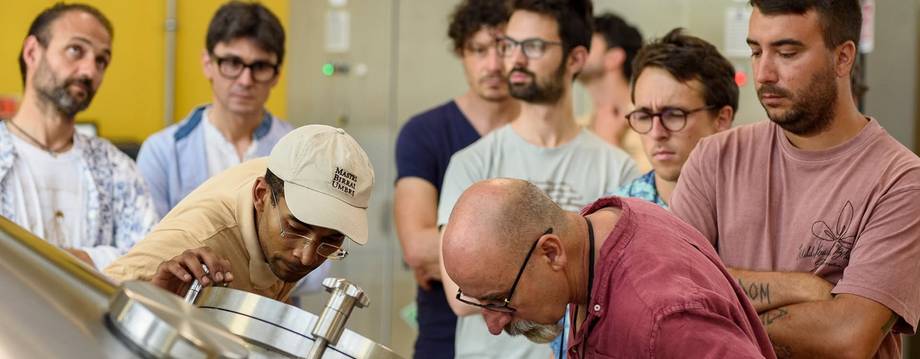
Italian hop farmers aren’t the only entities that Mastri Birrai Umbri is helping to grow; after building the maltings, the company started malting for other agricultural breweries that grow their own barley but don’t have the means of malting it without compromising on traceability. Building and operating a maltings is extremely expensive, so is way out of reach for many breweries, and most commercial maltings can’t guarantee — due to operating a continuous production — that the malt you receive is made with 100% the barley you sent to be malted. Today, around 70 breweries use Mastri Birrai Umbri’s maltings, which has warranted the acquisition of two additional drums.
As much as demand for Italian-made malt is growing, Michele says 60% of the malt used by craft breweries in Italy is still imported from Germany. “Making your own malt in small quantities is not cheaper than buying it from a big company. We don’t save money by working this way but it is an investment in our core values,” Michele concludes. “The word ‘craft’ in Italian, ‘artigianale’ has been diluted. What is ‘craft’? Language might change, but one thing that stays the same is the land, and the fields of barley. That is something that can't be taken away from you.”
There is a lot we can learn from Italy’s agricultural breweries — the pride they take in what their land can produce, and their fixation on provenance as a tool for connection with consumers — but also from the Italian government’s attitude to farming. In Italy, funds for agriculture are, to varying degrees, always available to farmers. Meanwhile in the UK, a nation where native varieties of both hops and cereals can be grown in abundance, British hops have seen a 50% reduction in acreage since the pandemic, and farmers of every variety are struggling to make ends meet. As bleak a prospect as this is, Italian agricultural breweries are slowly and organically developing a roadmap to farm-first ways of working, and there’s no reason we can’t too.
Share this article
You’ve reached your limit of 5 free articles this month.
Unlock unlimited access and more

Join Beer52 and get your first month half price
-
Get your first box for £13.50 (RRP £27).
-
8 beers & 2 snacks delivered monthly.
-
Printed Ferment magazine included.
-
Unlimited access to all online content.