Busa Dei Briganti: In fair Veneto
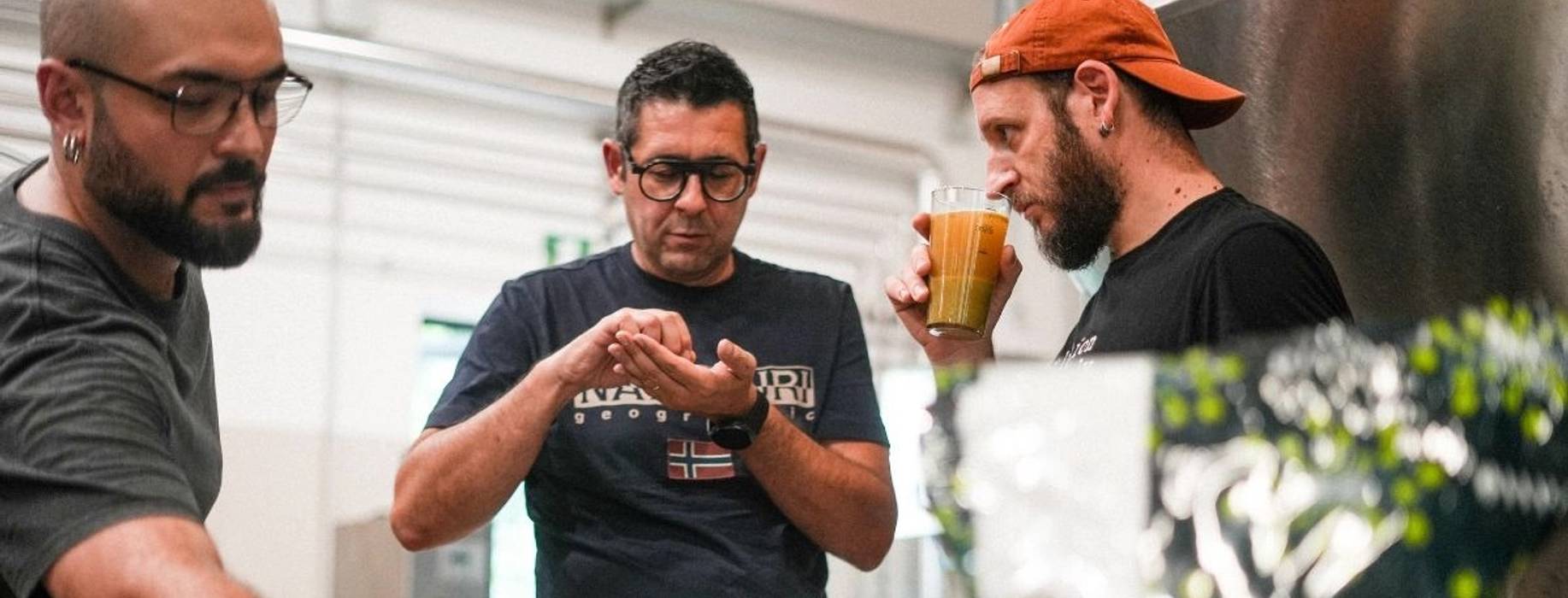
For Busa Dei Briganti, the future of craft beer looks like a better understanding of ingredients, and learning at the consumer’s pace.
Robyn Gilmour
Photos:
Busa Dei Briganti
Saturday 22 August 2026
This article is from
Italy
issue 134
Share this article
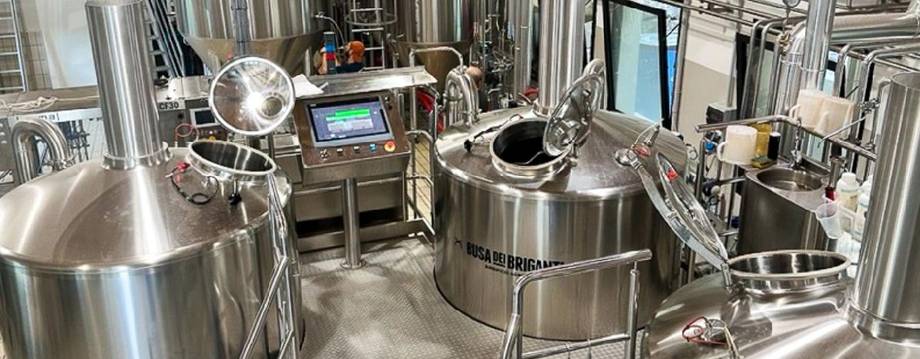
Founded by Nicola Rosa and Tommaso Corazza in Padua, in 2016, Busa Dei Briganti started life as a brewpub using barley grown on its own land, and malted just over the Austrian border where traceability could be guaranteed. By 2019, brewing operations had grown to the extent that a designated production facility was needed, so premises were secured among the breathtaking, volcanic Colli Euganei region — a worthy place for one of Italy’s 390 agricultural breweries. From here, Busa Dei Briganti would grow primarily by opening bars in Vicenza (2019), Este (2023) and Cerea (2026), keeping operations within the Veneto region it has always called home, and where its barley is grown. According to communications manager Giovanni Puglisi, these bars are where Busa Dei Briganti can bridge the gaps between craft beer connoisseurs and the general public, which accounts for macro beer’s 97% market share in Italy.
“There's a lot of people that do not know what a craft beer is and probably have misconceptions about it — in other words, that it’s difficult to drink and hard to understand,” says Giovanni. “I think part of our mission, and something that helped us through this journey, was helping people to realise that it's not always like that. You can have a very good craft beer, you don't have to understand anything; it's enough to enjoy it and appreciate it and if you want to know more, we’d be happy to talk about it, but that’s not a requirement.” Giovanni is a pragmatist and a realist, but his emphasis on simplicity and accessibility comes from a place that is itself complex.
While, in recent years, the UK beer scene has debated whether the term ‘craft’ or ‘independent’ better represents its mission, semantics aren’t up for discussion in the world of Italian beer. “Here, ‘craft’ is defined by law,” Giovanni begins. “You have to be an independent brewery that produces no more than 200,000 hectolitres a year, and makes beer that is not filtered and not pasteurised. If it's not that, it cannot be labelled as craft. I’m not saying that’s necessarily a good thing, but at least it takes out the necessity to discuss what craft is.” There are many reasons this is interesting, but in its most practical sense, the requirement that beer be unfiltered and unpasteurised is considered by many small breweries to be a reason that supermarkets are an untenable route to market.
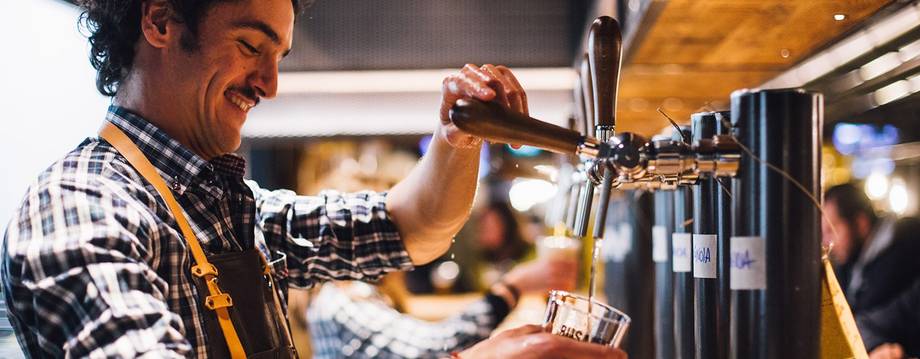
“Don’t get me wrong, there’s nothing wrong with selling to supermarkets,” Giovanni clarifies. “If you know that the product is treated correctly, it’s stored cold and you manage to get a deal with a very quick turnover, then why not?” There are no hard rules to say that supermarkets require pasteurised beer, but in a hot country, it’s not advantageous for small breweries to subject their beers — which are fresh, delicate, living products — to an environment that won’t support them reaching the consumer in the best possible condition. As such, craft beer is almost unanimously sold through bottle shops, a much more niche space, and one the general public isn’t as likely to wander into. This is why Busa Dei Briganti has focused on its bars, and creating an atmosphere that is welcoming to all.
It’s also why the brewery produces a wide range of beers, but isn’t at all regimented about conformity to styles. “It's quite a wide range in the sense that we cover everything from lagers to ultra-contemporary IPAs to some Belgian-style beers. We’ve even brewed some traditional English styles and had a dark mild in our range up until very recently. Like a lot of breweries in the last couple of years we’ve tried to narrow down the range a bit, and just produce a couple of seasonal one-offs, but overall we’re pretty varied. One thing I can say about Busa Dei Briganti, though, is that we do not pay too much attention to style-guidelines themselves; sometimes there is a particular trait we like to add to a beer, but which is considered off-style. We do it anyway. For instance, we have a strong dark Belgian ale, that’s 8% and super fruity and extremely drinkable, but it has this smoky aftertaste that doesn’t fit with the style, but it’s a really good beer, so that’s what we focus on.”
Ultimately, the brewery’s goal is to educate consumers, but it feels strongly that this should be done in the right way and at the consumers own pace. In Giovanni’s view, knowledge has to be the end goal; after all there is a lot for us all to learn, no matter our level of expertise or experience. “As it stands, beer is the only product, worldwide, where the agricultural part is neglected to the point that it doesn't seem to matter where the ingredients come from,” Giovanni says pensively.
“If you have a decent final product, people don’t care where the ingredients come from, which is pretty much unique. Because if you look at wine, of course, you know the agricultural emphasis on grapes is huge, naturally. It is the same for cheese; you get to know where the milk comes from, how the cows were raised, you know, are they grass fed, are they grazing, or are they stabled? In beer, it seems like no one cares where the grain is coming from, where the hops are coming from, how they’re farmed. So I think that it's going to be a natural evolution if you want to look at the future of quality in beer, there's going to be a shift towards looking more closely at where your ingredients come from.”
It is natural for Busa Dei Briganti to have this perspective, given that the brewery was born of family farms and so has an intimate knowledge of how proper agriculture can yield quality raw materials. “The farming that feeds Busa Dei Briganti is a heritage activity in the sense that the family of the owners have been farmers for generations, so this expansion into brewing keeps the family business going,” says Giovanni. “That’s how the brewery was born, not the other way around.” Interestingly, he says many of the agricultural breweries that Italy enjoys today have a similar story, but a significant number of them started with no land or farming experience, and set out to take advantage of tax benefits aimed at helping farmers make their businesses more sustainable. This isn’t necessarily a bad thing — it all furthers the goal of expanding Italy’s beer and agricultural sectors, and may well inject fresh energy and ideas into conventional practices.
The important thing, Giovanni concludes, is that “breweries interested in showcasing our agriculture take care all along the supply chain. If you grow your own barley, you want to have it malted by an establishment that can guarantee that you get back your own malt. In some commercial maltings, you get back barley grown by several farms and that’s all malted together, and I think that kind of defies the point.” For Busa Dei Briganti, the point is to offer drinkers a taste of Veneto, and an avenue to deeper learning about its land, if they want to.
Share this article
You’ve reached your limit of 5 free articles this month.
Unlock unlimited access and more

Join Beer52 and get your first month half price
-
Get your first box for £13.50 (RRP £27).
-
8 beers & 2 snacks delivered monthly.
-
Printed Ferment magazine included.
-
Unlimited access to all online content.