Italian craft turns 30
Adrian Tierney-Jones reflects on three decades of wild experimentation and (mostly) superb beer, from one of Europe’s most distinctive national scenes.
Adrian Tierney-Jones
Saturday 22 August 2026
This article is from
Italy
issue 134
Share this article
“It’s an artichoke beer,” noted one of the other judges.
I was at a tasting of beers from Puglia some years ago. We had spent the morning judging at the Brussels Beer Challenge in Liege and this was a lunchtime treat put on by the organisers. Some of the beers had been excellent, but this one wasn’t. Looking around I could see I wasn’t the only one left unimpressed. Afterwards, chatting with a couple of judges, we all agreed that Italian craft beer was exciting but that this zip and zest brought with it a whole host of challenges, such as brewers chucking in a load of ingredients that didn’t always work.
Year zero for Italian craft beer is seen as 1996, when Agostino Arioli, who founded Birrificio Italiano north of Milan, produced Tipopils, now seen as the first Italian Pils. At the same time, Teo Musso opened Baladin in his home village of Piozzo south of Turin, influenced by Belgian beer. He then went to travel on his own unique path, using a variety of spices, speciality grains and different fermentation processes. I first visited both breweries back in 2008 and was completely overwhelmed with the quality and innovation. I also visited Baladin’s newly opened brewing facility in 2016 and Teo said that he’d bought some wooden barrels that once contained soy sauce, which he aimed to fill with beer. I don’t know if he ever did it and I must admit the idea left me feeling uneasy.
During this decade, I also judged at the Birra dell’ Anno a couple of times in Rimini and would often talk to brewers at the trade fair after the competition. I recall one telling me that too much ‘crazy stuff’ was being made. I presumed that included the artichoke beer. Looking back it also felt as if there was an Italian beer gold rush with people opening breweries, chucking all sorts of fruit and veg into their brewing vessels and some looking to make a quick buck. Or in the words of one brewer, “selling beer like condoms”. This was also a time, just as in the UK, when multinational brewing corporations came looking for a slice of the Italian craft beer pie, with Birra Del Borgo being one of the most notable acquisitions. Yet, here we are in 2026 and despite a variety of challenges Italian independent breweries can hold their own against some of the best in Europe.
“The growth in both the number and quality of our beers was much faster than we expected,” I’m told by Lorenzo Dabove, who has been a longtime champion of Italian beer. “We began to gain international recognition, exporting and participating in high-profile events like the Great British Beer Festival, where we achieved exceptional success and recognition. Our brewers intelligently exploited our country's unparalleled biodiversity, using local ingredients such as grains, especially spelt, chestnuts, and other fruits and vegetables, until they proudly established an Italian style: Italian Grape Ale.”
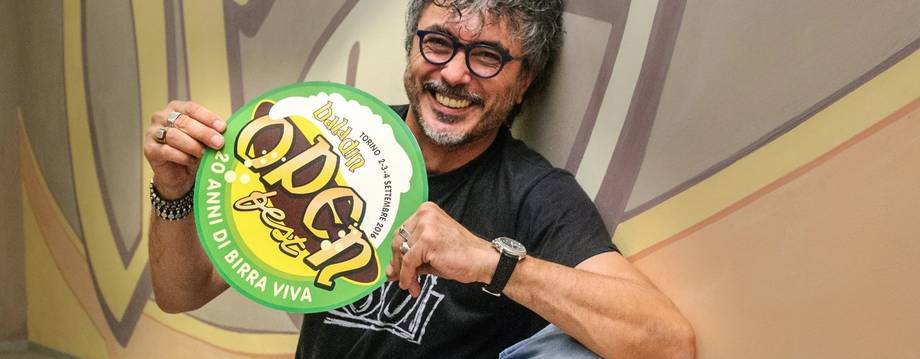
PHOTO: Teo Musso, Birra Baladin founder
Recent figures suggest that there are around 1000 breweries in the country, mainly microbreweries with a smattering of brewpubs. About 49% of the breweries produce under 500 hectolitres a year (roughly 87,000 pints), while 75% of the rest do not exceed 1000 hectolitres a year. Despite this lilliputian output, several home-grown beer styles (the aforementioned Italian Grape Ale, plus Chestnut Beer and Italian Pils) have been recognised by the BCJP (Beer Judge Certification Program). In Italy, just to name two of the newer breweries, the likes of Alder Beer in Lombardy and Ritual Lab near Rome are producing West Coast IPAs, flavoured stouts and barley wines, and dabbling in mixed fermentation and barrel ageing. One of the pioneers, Birrificio Lambrate, which is based in Milan and started in 1996, remains a vital part of the scene with an array of fabulous beers. I was recently in its Guilgi bar in Milan, a raucous, tap-heavy space with punk music on the soundtrack and a game of darts taking place in one corner. Lambrate has always felt to me to be very much the rocky, tattoo-heavy biker part of Italian beer culture, especially as I noticed one of the heavily inked brewers standing at the bar holding court with friends. After a well-hopped and juicy IPA, I ordered a glass of Porpora Doppelbock. This was light mahogany in colour, had delicate floral hops on the nose and a light roastiness and malt came through on the palate.
As well as Italian brewers producing well-hopped beers and lagers with a Bavarian influence, there has always been a definite sense of exploration, hence the three native styles mentioned above. I recall the first tasting I had of del Borgo’s Etruscan, an intriguing, earthy beer matured in terracotta vessels. Then there was Chocarrubica, a dark beer, containing both cocoa and carobs, and brewed by Grado Plato near Turin. This was developed after the then brewer watched a TV programme showing American GIs handing out chocolate bars to local children in wartime Sicily, who had only eaten carobs up to then. Inspired by this programme, Chocarrubica was a marriage of both and remains a highly accomplished beer that could almost be mistaken for a chocolate liqueur. Several brewers have said to me over the years that their country’s food and drink culture has also been a big influence, with the likes of Teo Musso aiming for beer to replace wine on the dinner table.
Another trend is the emergence of farm breweries, where standalone breweries have purchased land on which they can grow their own barley and hops. Italy famously never had a hop growing industry, though there was a tradition of using young hop shoots in the kitchen. However, the appearance of these farm/brewery hybrids along with the foundation of the Italian Hops Company in 2014 has meant the start of something homegrown and resilient. One of the farm breweries is CRAK, based west of Venice, which initially opened as a cuckoo brewery in 2012, but a lack in consistency in the quality of the beers brewed led them to open their own facility in 2015. Then they bought farmland and began to grow their own barley and hops.

PHOTO: Alder Brew Co
“We started out as a beer firm, and our first brews did not go very well,” says CRAK’s Marketing Communications Manager, Claudio Franzolin. “That frustration was the real motivation to open our own brewery. The second step was more radical: we did not just want to brew beer, we wanted to control where our ingredients came from. That is why we chose to become a farm brewery, grow our own barley and start planting hops, so we are not just assembling raw materials but farmers producing beers with a clear sense of place.
“As a farm brewery, we have been strongly influenced by Italian wineries and winegrowers: they taught us that if you want to talk seriously about terroir, you have to start in the field. That is where our decision to grow our own barley and hops comes from, so we can brew beers that truly capture our land and the ‘CRAK terroir’ in every batch.”
One of its bestsellers is a 9% Imperial IPA, Molto Original, which uses one of its own-grown hop varieties that is harvested at a late stage of maturation, alongside Citra and Cashmere from the US. It’s an impressive beer with hints of orange, mango and papaya alongside the traditional Citra dankness.
Italian breweries might be producing IPAs, NEIPAs, sours and other styles that are common across Europe and the Americas, but there is definitely a more considered approach among many of the brewers. For instance, when I ask Birrificio Italiano’s Agostino Arioli what inspired him when he develops a beer, he is almost poetical in his reply.
“The process of creating a beer varies greatly from case to case,” he says. “One example is Delia, our session Pils dedicated to my ex-wife and directly inspired by her. I wanted the beer to reflect her personality, or at least the way I perceived her while we were living together. The two key words were: light yet full of character, and I can say with great pleasure that the beer is exactly like that!”
As is the case in other brewing countries, there are issues such as high taxation, younger people drinking less and the growing popularity of natural wines and cocktails, but I would suggest that Italy’s craft beer scene thoroughly deserves to celebrate its 30th birthday. Just don’t plump for an artichoke beer to toast it.
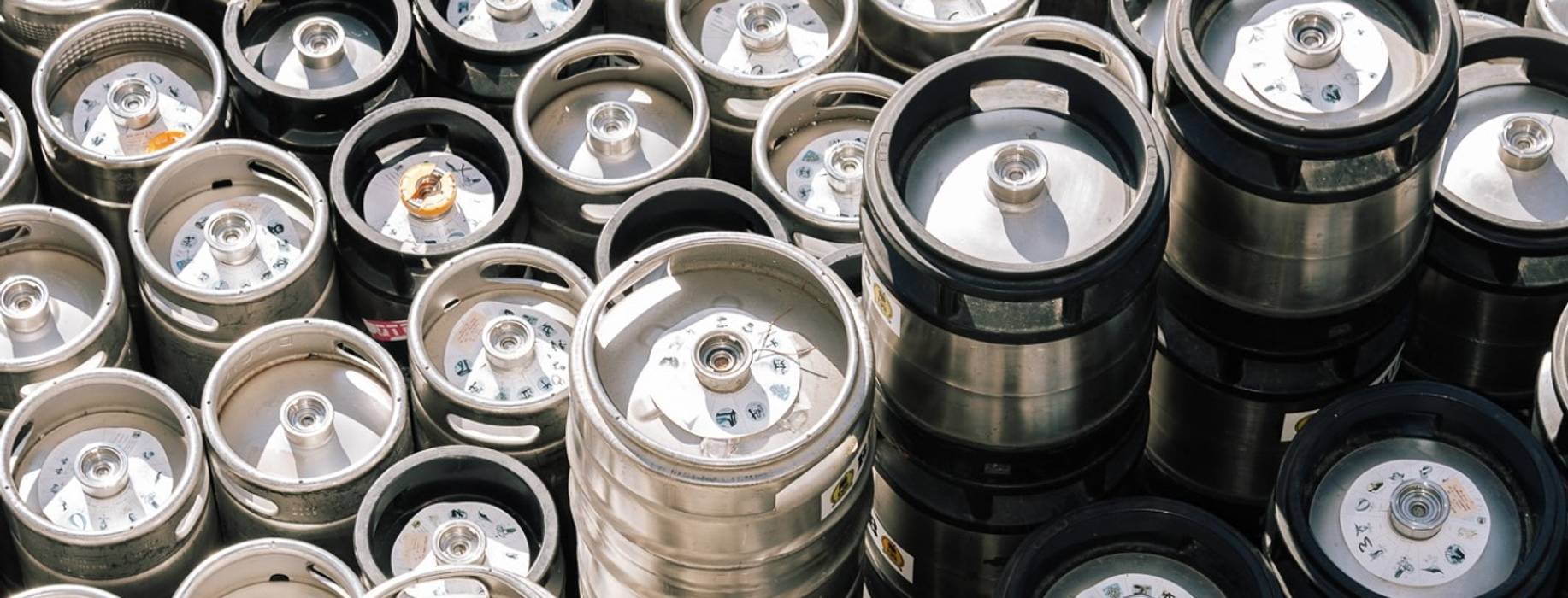
Header photo: Ritual Lab
Share this article
You’ve reached your limit of 5 free articles this month.
Unlock unlimited access and more

Join Beer52 and get your first month half price
-
Get your first box for £13.50 (RRP £27).
-
8 beers & 2 snacks delivered monthly.
-
Printed Ferment magazine included.
-
Unlimited access to all online content.