You're simply the zest
Fred Garratt-Stanley explores how citrus fruit has shaped the cuisine, culture, and identity of Sicily.
Fred Garratt-Stanley
Saturday 22 August 2026
This article is from
Italy
issue 134
Share this article
The volcanic soil around the slopes of Mount Etna provides the ultimate example of terroir: rich in minerals and extremely fertile, this land contains some of the Mediterranean's finest vineyards and olive groves. It also provides the perfect conditions for the cultivation of a totally unique fruit: the tarocco, or blood orange. Dyed red inside by pigments called anthocyanins, the tarocco tastes as beautiful as it looks, and can only be grown in this part of Sicily.
“Etna is always smoking,” says organic citrus farmer Alessandra Mangione, turning her phone to show me a glimpse of Europe's largest active volcano, visible from her balcony. “She gives us very fertile land, full of minerals, and we have more water than other parts of Sicily, because under the volcano, there are reservoirs. For citrus, we need to give water.”
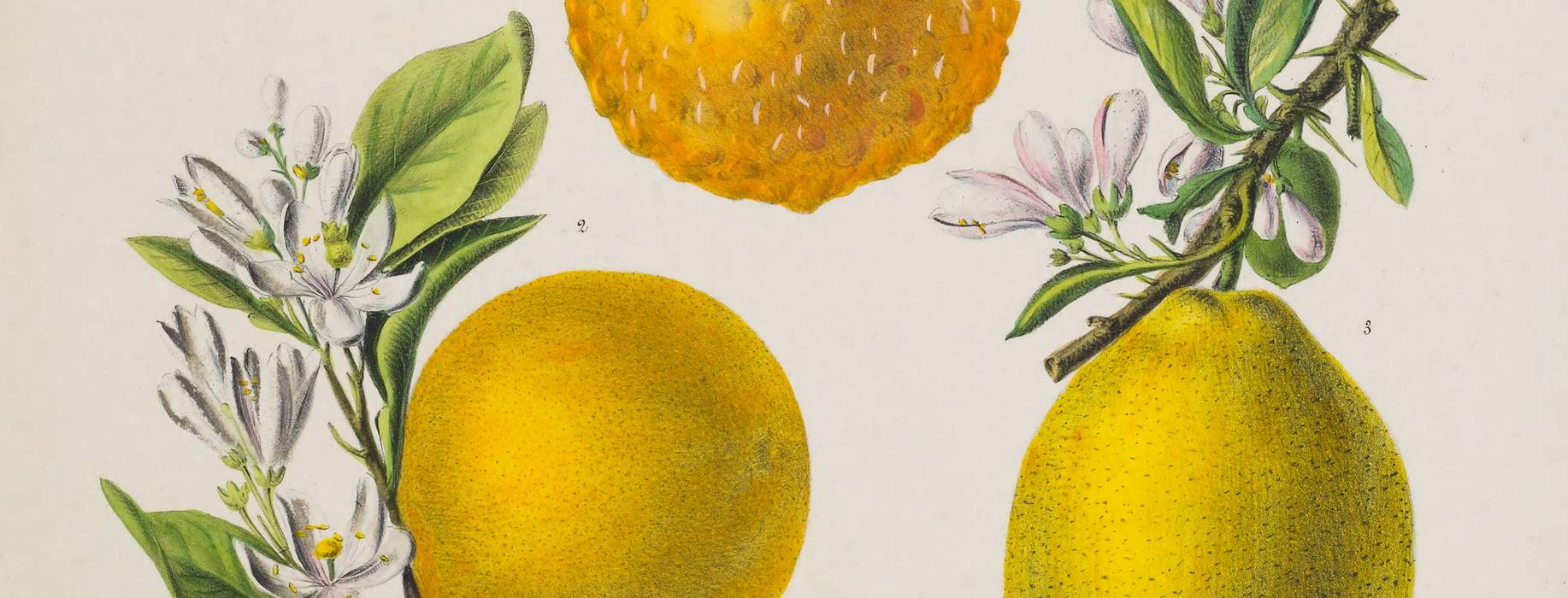
Blood oranges, mandarins, clementines, lemons, citron; Sicily grows an abundance of beautiful citrus fruit, its specific climatic and topographical conditions making it some of the best in the world. Citrus has been present in southern Italy ever since Jewish settlers started importing citron (an ancient fruit which looks like an enormous, knobbly lemon) in the 2nd century. However, it didn't become a Sicilian staple until the 9th century, when Arab settlers arrived from North Africa with revolutionary ingredients and farming techniques.
“They arrived after the Romans in a landscape that still had the ruined Roman agricultural infrastructure of aqueducts, and they improved it hugely,” explains Helena Attlee, author of The Land Where Lemons Grow, a classic of modern food and travel writing that tells the story of citrus in Italy, and The Fire in the Mountain, a new title focused on the communities living around Etna.
“The Romans had brought water as far as gravity would bring it, but Arabic farmers brought a much more sophisticated system of irrigation that meant they could cultivate new crops. They brought lemons, and they brought sugar cane: fundamental ingredients for a quintessential Sicilian summer dessert, the lemon granita,” she says.
In Sicily, the granita (a sorbet-adjacent frozen treat) is used both as a dessert and a palate cleanser between courses. It's one of many Sicilian staples that rely on citrus. Drinkers knock back seltz al limone in the heat, and limoncello as the night wears on; lemons are used generously in the island's seafood cooking; salads prepared with orange, fennel, and olives are classic; citrons are sliced up and snacked on with olive oil and garlic. These fruits permeate Sicilian cuisine at every turn; even dishes that don't rely on citrus, like the island's famous culinary export arancini, are named after it ('arancini' translates as “little oranges” referring to the shape and size of the rice balls).
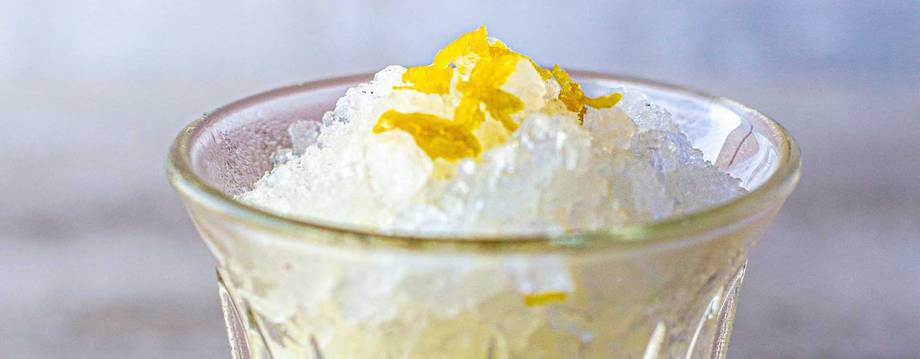
Granita | PHOTO: mediterraneantaste.com
The unique circumstances in which citrus grows on the island have also had a profound impact on the history and socio-political landscape not just of Sicily, but of the entire world. Back in the mid-19th century, the delicate nature of the lemons growing in the warm, windy valleys around Palermo on Sicily's west coast (a region known as Conca d'Oro) created the ideal conditions for the rise of Cosa Nostra, aka the Sicilian mafia.
“The lemons created the perfect conditions for organised crime,” says Helena. “Because of the wind, people could only grow citrus there if they built walled gardens and brought water in channels. You also need buildings to store your fruit and your tools. The fact that you needed to invest so much money into creating viable growing conditions, and then these lemons weren't going to give you any return on your investment for seven years, meant you had this really anxious group of people who welcomed the protection offered by proto-mafiosi.”
Early protection rackets saw local landowners collect fees for watching over these walled gardens, squeezing farmers for extra cash by taking charge of water supplies, or manipulating the market by hoarding nearly-ripe lemons in secret caves and waiting for scarcity to rise up prices. These foundations helped set the blueprint for mafiosi operations far and wide. And as a result, by the end of the 19th century, citrus production in Sicily was big business.
“Sicily was the only place exporting citric acid to America, as well as dominating the fresh fruit trade to America,” Helena says. “Then there were essential oils, which were so valuable, not just for patisserie but for the perfume industry.” It's estimated that during the 1880s, a whopping 2.5 million cases of lemons were arriving in New York every year, the vast majority of them coming from the port of Palermo. While exports have declined since that peak, Sicily is still depended on for Italy's status as Europe's second-largest citrus producer (after Spain).
It's important to note that fruits like orange, mandarin, lemon, and citron have also helped make Sicilians some of Europe's healthiest people. “After the Second World War, the US Navy came to Sicily to study why we are so healthy compared to the United States,” says Alessandra. “They found that one of the key elements of the Mediterranean diet was the presence of seasonal fruits and citrus during the wintertime. It's not just what we eat but how we eat: stopping and eating together obliges you to eat more slowly, and you digest better.”
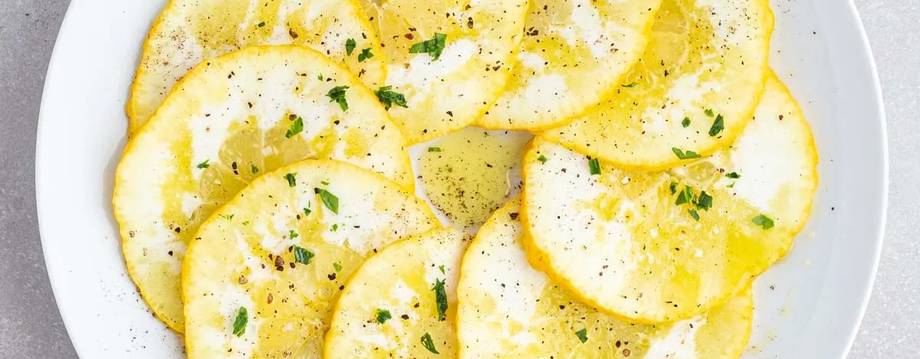
Citron with olive oil | PHOTO: mediterraneantaste.com
A craving for this slower, more measured, higher-quality Mediterranean lifestyle led Josephine Ingoglia to move from her native New York to Sicily, where she had spent many summers growing up. Since moving to the Valle de Belice on the west of the island, on an olive grove run by her husband, she's been blown away by the incredible produce she's encountered.
“I remember walking into the house one day, and my father-in-law was slurping away in a big bowl with huge chunks of citron and olive oil,” she says. “I asked, 'What is that?' and he was like 'I'm eating pirittuni [citron in local dialect]'. I'd never had citron before… now, when they're in season, that's all I eat! They're so fresh, I almost eat them like they're potato chips, cutting them thin, snacking on them as an appetiser with a little garlic and olive oil, or a fresh peperoncino.
“When I visited Sicily as a kid, it was only in summer,” she continues. “Now that I can have citrus at different times of the year, I've found I prefer the lemons in October, November, when they don't have as much of a sour kick, whereas other times of the year, they're a bit more sour and pungent.”
Seasonality is a key issue for Alessandra, too. She runs a project called Etna Nostra (“our Etna”) designed to fight against food waste and educate people about farming practices. “We try to make people understand that citrus is good in the right season, not every time of year. We produce citrus, but we are buying oranges from South Africa to have them in July or August… industrialised agriculture produces huge quantities of fruit, [meaning] sometimes they need to destroy fruit. This is a nightmare situation.”
With additional factors like the constant threat of volcanic eruption around Etna, or the significant impact of coastal winds and intense heat in the Conca d'Oro, citrus producers in Sicily face some of Europe's most challenging growing conditions. However, these same factors have helped the island develop one of the most historically fascinating and socially impactful citrus cultures on the planet.
“This is a piece of paradise that I want to protect,” says Alessandra, gesturing to her small farm in the shadow of Etna. “Citrus brings you a special sort of energy, it brings you vitamin C, it brings you the perfume of the sun. Put citrus in your life, and enjoy life.”
Share this article
You’ve reached your limit of 5 free articles this month.
Unlock unlimited access and more

Join Beer52 and get your first month half price
-
Get your first box for £13.50 (RRP £27).
-
8 beers & 2 snacks delivered monthly.
-
Printed Ferment magazine included.
-
Unlimited access to all online content.