Say it with your chestnut
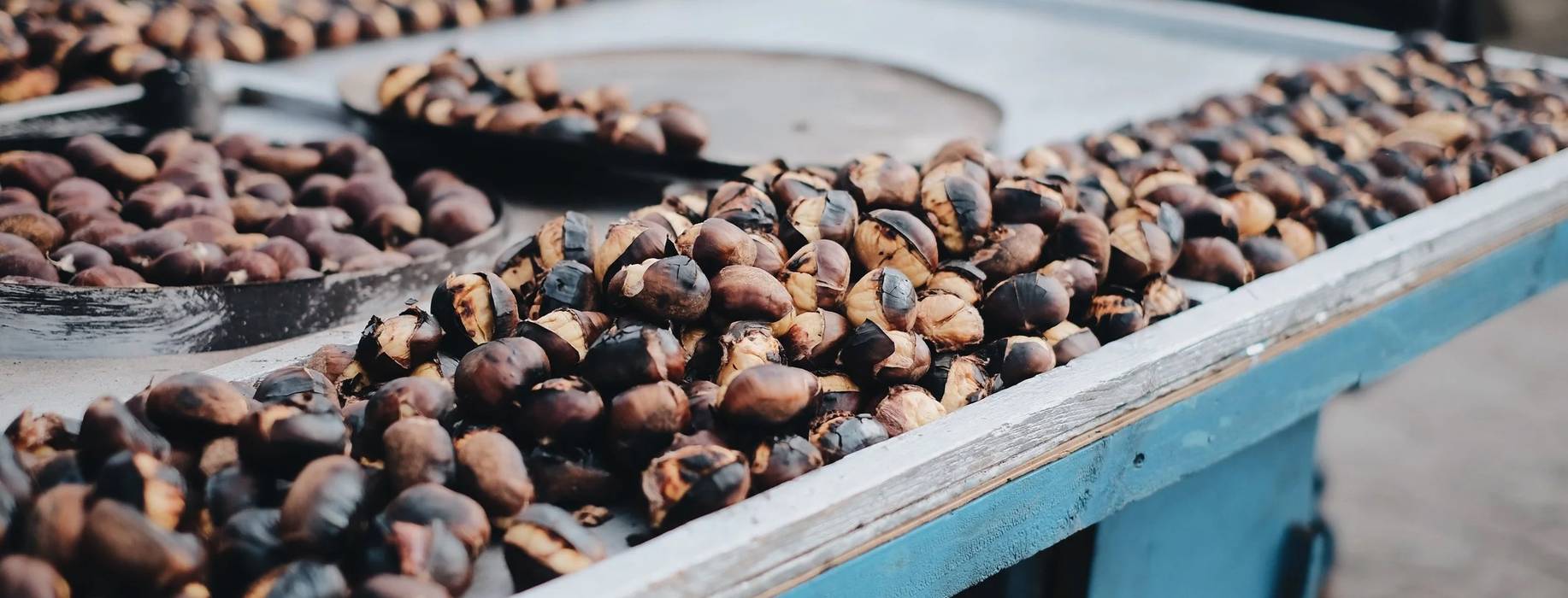
Before Italian pilsner and grape ale, there was chestnut beer. Let Jacopo Mazzeo introduce you to Italy's original local beer style.
Jacopo Mazzeo
Saturday 22 August 2026
This article is from
Italy
issue 134
Share this article
Perceptions of the Italian landscape abroad are often shaped by a markedly stereotyped sense of Mediterranean charm. Sun-baked, breezy coastal roads, overlooking the pristine waters of the Tyrrhenian sea, with plump lemons hanging abundantly from trees spilling over the roadside. This dolce vita postcard image may well hold some truth in parts of coastal southern Italy, yet overall, it represents only a narrow slice of reality. In fact, while the country’s distinctive shape gives it one of the longest coastlines in Europe, more than three-quarters of its landmass is made up of highlands.
It is a peculiar and challenging geography that has left a strong imprint on multiple regional cultures across the peninsula. While the communities that inhabit these regions display great diversity in habits, traditions, and cuisines, there are synergies in the ways each has adapted to highland living. The chestnut is one of the most emblematic elements shared by Italian mountain communities from Trentino down to Sicily. Available in abundance at higher altitudes in autumn, it has historically provided a vital source of nutrition, whether eaten fresh or dried, ground into flour for bread or used in the preparation of a wide range of other foods.
In search of a national style
As Italy’s craft beer movement began to gather real momentum in the early 2000s, chestnuts were swiftly embraced by pioneering brewers. Historically adopted as a cheaper alternative to wheat in breadmaking, they represented a natural addition to any grain bill. Most importantly, the fruit was so recognisable to both brewers and drinkers nationwide, that it offered the emerging Italian artisan beer scene a sense of shared identity, essential at a time when many techniques and stylistic references were Belgian and German imports. Furthermore, chestnuts’ numerous regional varieties made them an ideal vehicle for exploring that idea of local specificity so key to Italian food culture.
Central Italy produced some of the earliest, most significant, and enduring examples. Busalla in Liguria, for instance, released its iconic Castagnasca back in 2001, while a few years later Birrificio Amiata launched its celebrated chestnut-based Bastarda lineup. Named after the namesake local variety from Mount Amiata, these beers still draw particular attention among enthusiasts. Meanwhile, in 2004, the Apennines south of Bologna saw the emergence of Beltaine. The brewery was the culmination of a project for the cultural recovery of local chestnut trees, developed in collaboration with several institutions, including the University of Bologna. With four of its six beers incorporating chestnuts, Beltaine remains one of the most notable projects dedicated to the nut.
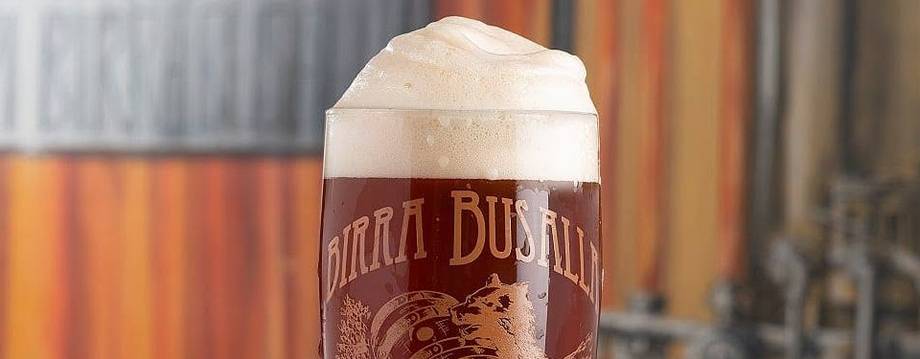
PHOTO: Fabbrica Birra Busalla
Volumes were never large, and approaches to production varied widely. Yet, in a landscape filled with weizenbiers, pilsners, abbey ales and a bewildering array of hybrid interpretations, chestnut beer quickly gained recognition as a kind of flagship Italian style. That role, however, proved relatively short-lived. The growing influence of American craft beer in the late 2000s reshaped the Italian brewing scene completely: eclipsed by the rise of hoppy IPAs, chestnut beer gradually lost its central position.
Chestnut again
While the use of chestnut in beer had lost the early momentum, diluted over more than two decades of shifting influences and trends, it never fully disappeared, persisting instead as a quiet remnant of the formative years of Italy’s artisan beer movement. In fact, as the most intense wave of craft beer mania gradually eased in the late 2010s, chestnuts began experiencing a modest return. “At the beginning, it was almost seen as a kind of native Italian style. Then that identity was partly lost over time,” says Marco Benda, brewer at Cantina Errante, a producer in central Tuscany specialising in spontaneous fermentations. “But now it feels like it is coming back. It’s not a ‘hype’ beer, but we definitely see quite a few around again.”
Several of the breweries that continue to work with chestnut — including Birrificio Petrognola, Birrificio Mostodolce and Birrificio di Busalla of Castagnasca fame — typically use it in flour form. It is a straightforward and practical approach: chestnut flour is readily available, easy to store, and only modest quantities are needed to impart a recognisable chestnut character to the beer. “We use flour, too,” says Benda. “We source it from a nearby farm that raises Cinta Senese pigs. They have a large chestnut grove, so they produce chestnut flour as well. The last we made was only a few months ago, a collaboration with La Malpolon from Montpellier.”
The flour is added directly during mashing, alongside the malt. “It’s the most effective method. There are fewer risks,” Benda explains, noting however that the mash does need to be extended slightly to give the malt enzymes more time to process the amide present in the chestnuts. “But you have to be careful with filtration,” he continues, “because the flour naturally tends to turn into a thick mush, almost like a dense polenta. So during lautering we add rice husks to help keep everything flowing.”
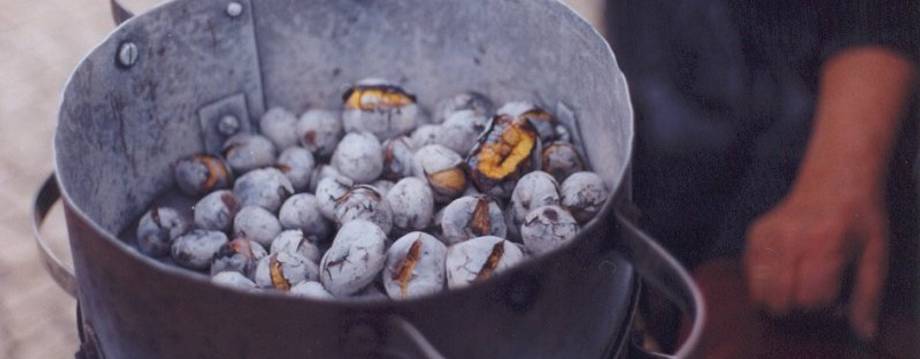
PHOTO: Paulo Magalhãesa
Mountain smoke
Some breweries take a different approach, working with chestnuts in whole form or only lightly crushed into larger pieces. Birrificio AdMeata, near Monte Amiata in southern Tuscany, uses whole dried chestnuts across as many as three different beers: a porter, a Belgian-style blanche and even a Gose. All are marked by a pronounced smoky character, which is less a stylistic choice than a simple reflection of how chestnuts are traditionally processed. “Now you can potentially use dedicated drying ovens, but in the past people had no choice but to dry them over fire,” explains Jean Claude Zacchini, brewer and owner of AdMeata. “We still dry chestnuts in traditional wood-fired structures ourselves. It is a practice that has been carried out for centuries. Up here, chestnuts have been around since at least the Etruscans.”
The drying huts — known under countless local names, including seccatoi, metati, tecci, e caselle — consist of small stone buildings divided into two levels. On the upper floor, chestnuts are laid out to dry, while below a small fire is kept burning, fuelled continuously with chestnut wood for around 40 days. “You’ve got to keep it running, it can’t be allowed to go out, otherwise the chestnuts will spoil immediately,” Zacchini points out.
It is a low, controlled heat rather than an open flame, kept at the correct, lower temperature by adding chestnut husks from the previous year’s harvest. The process renders the chestnuts fully shelf-stable while imparting a pronounced smokiness that, whether the nut is used whole or milled into flour, inevitably shapes the beer’s profile, eventually lending many Italian chestnut beers a distinctive smoky character.
Fuelling the fire
If chestnut beer was initially viewed as a way of imbuing the artisan beer revolution with a sense of national identity, nearly three decades on it has acquired a far deeper cultural significance. For Birrificio Turris owner Chiara Tarana, incorporating chestnuts into beer production offered the opportunity to bring her family’s neglected chestnut grove back into commercial use. “Over the years, especially thanks to the demand generated by this beer, we also leased additional chestnut groves and gradually expanded the business,” she says. “For us, it is a very representative label because chestnuts are a typical product of our area, but also one of the most affected by abandonment. Groves have been increasingly neglected and chestnut flour production has declined. The beer has allowed us to bring some of these groves back into use, and now we even produce chestnut flour ourselves.”

PHOTO: Chiara Tarana, Birrificio Turris owner
A major challenge in preserving historic chestnut-processing traditions lies in the extraordinarily labour-intensive and highly skilled nature of the work involved, from harvest to dehusking. The 40-day drying period alone requires constant attention: the fire must be tended every few hours, while the chestnuts themselves need turning at least once a day. “It’s extremely hard work, and very few young people want to do it,” Tarana says. “We still entrust the whole process — from drying to separating the husks using traditional machinery — to someone who carries it out in the old way. Even the payment is done as it used to be: part of the dried chestnuts are given as compensation. But the person who does it is very elderly now.”
Brewers are working proactively to address the challenge. Tarana highlights that a younger person is now learning the craft in the hope of carrying the tradition forward, while Zacchini is considering bringing the drying process in-house to reduce the risk of the knowledge surrounding traditional chestnut preparation disappearing altogether. “It would be much easier to buy a diesel- or methane-powered drying system and have dried chestnuts ready in three days,” he says, “but then you completely lose the value of traditional smoke-drying.”
As the number of skilled practitioners steadily dwindles, brewers are increasingly playing a central role in safeguarding the tradition, not only by helping preserve the necessary know-how, but also by sustaining the fragile economy around historic chestnut production and by bringing greater visibility to it through a pint. In Italy, chestnut beer is not a style. It is a genuine reflection of identity: a brewing philosophy grounded in locality and regional specificity, and a humble yet authentic advocate for Italy’s mountainous landscapes and the communities that inhabit them.
Share this article
You’ve reached your limit of 5 free articles this month.
Unlock unlimited access and more

Join Beer52 and get your first month half price
-
Get your first box for £13.50 (RRP £27).
-
8 beers & 2 snacks delivered monthly.
-
Printed Ferment magazine included.
-
Unlimited access to all online content.