Schanzenbräu: Paint the town red
Schanzenbräu's passion for preserving traditional Nuremberg rotbier has made it one of the city's most loved breweries.
Fred Garratt-Stanley
Photos:
Schanzenbräu
Saturday 19 September 2026
This article is from
Culinary Germany
issue 135
Share this article
All good brewery startups should have a strong dose of hodgepodge DIY spirit, but even in this context, Schanzenbräu’s early setup was unconventional. Founded in 2004 when brewmaster Stefan Stretz returned to his home city, Nuremberg, after a 10-year stretch studying and working in Berlin, the brewery’s original location was the cramped basement of a used car garage. While enormous American muscle cars rolled in and out of the building, Stefan was using his grandmother’s old washing kettles for mashing, then fermenting beer in sawed-off reclaimed kegs.
“My friends always said, ‘When we go out, you smell the beer, taste the beer, you say it’s oxidised and all this… you should do it better yourself!’” Stefan says of those early days. “This was the birth of Schanzenbräu. It was one of the first breweries in Gostenhof, a part of the city with a lot of artists, a lot of foreigners and immigrants, a nice social mixture. We come from Nuremberg, this is our history, this is our place to be.”
At this point, Stefan was desperate to reconnect with the city and its heritage. Having cut his teeth working at Nuremberg’s largest brewery, Tucher, he completed a Master’s degree in Brewing Technologies at Berlin’s prestigious VLB institute, then worked at one of Germany’s earliest craft beer breweries, Bier-Company, “brewing all this crazy craft stuff with a lot of hops”.
After taking a role at a cleaning detergent company and heading up a project called Aquacheck, which involved helping breweries, dairies and other food companies to reduce water usage, he returned to Nuremberg keen to tune into the city’s unique beer culture. Based in the famous beer region of Franconia, Nuremberg sometimes plays second fiddle to Bamberg, known for its extremely unique rauchbier style. But Stefan’s city has its own historic beer style to brag about, one that Schanzenbräu has played an important role in preserving and promoting in the last two decades: rotbier.
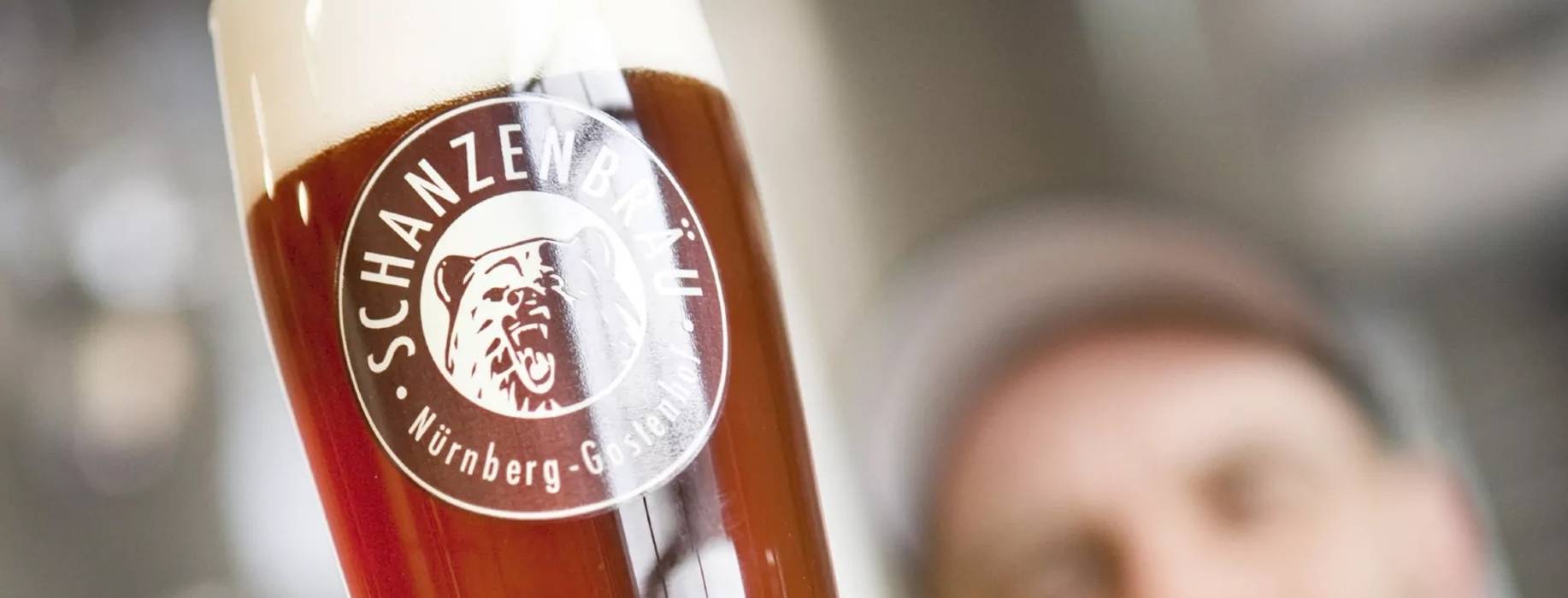
“Rotbier is a really, really old style here in Nuremberg, we’ve brewed it since the Middle Ages,” he says. “There are only two places in Germany that brew it: here, and up in the north by the sea. In the north, it was top-fermented, and here it was always bottom-fermented because we had these cellars under the castle in sand, where they could brew lager beers.”
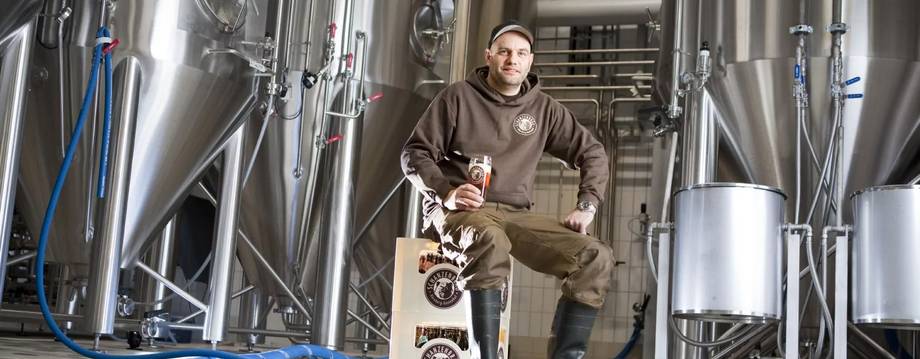
PHOTO: Stefan Stretz, the founder
He continues: “There was a small brewery at the castle that brewed red lager, but we brought it into the market. We want to save red beer, we want to bring it to all the people because we think it is a really interesting style. There’s the red colour, there’s a fruitiness that reminds me of berries, there’s a nice maltiness, but also a nice fruity, hop-forward note.”
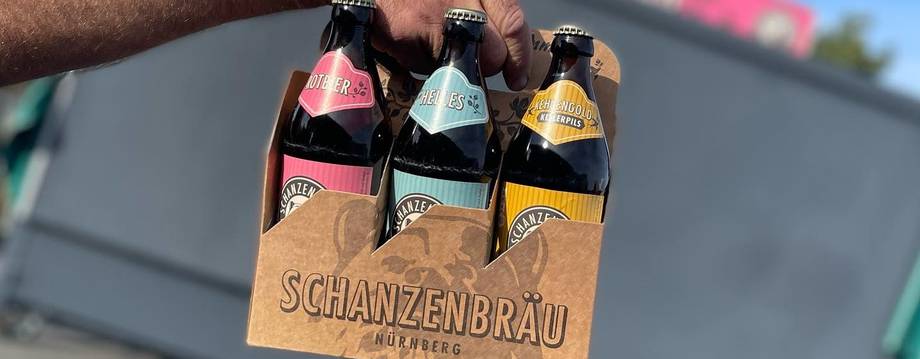
Brewed with original Vienna malt (rather than the mixture of light Pilsner malt and darker Munich malt often passed off as Vienna malt), Schanzenbräu’s rotbier has been one of their two defining styles from the beginning, alongside helles. Today, helles makes up around 55% of sales, and rotbier around 45%, with less popular seasonal brews accounting for the rest. Rather than experimenting with wacky flavours, Stefan sees his task as centring on respecting and pushing forward traditional styles with strong regional ties.
“We make drinkable, characteristic, unfiltered hop-forward lager beers,” he says. “With craft beer, you only need to add a little more hops, and you can hide mistakes, but to produce a nice helles with a nice sweetness and a good hop aroma, this is an art. The lager beers don’t accept any mistakes.”
Key to the Schanzenbräu story is a homely, comfortable brewpub designed to provide the perfect setting for those balanced, highly drinkable creations. They opened their Gostenhof brewpub, Schanzenbräu Schankwirtschaft, in 2008, repurposing a traditional former restaurant with a leafy garden adjacent. They barely renovated the place, trusting in the intrinsic value of a simplistic setting.
“You will always get top-quality beer here,” Stefan says. “There’s no music — the communication should be the music, it should be a meeting point, with good beer, good traditional food (sausage and schnitzel), big plates, less price, and high quality. Only 12 seats can be reserved, and every person is invited.”
Schanzenbräu Schankwirtschaft typifies the thoughtfully no-nonsense nature of the operation. But there is some room for wilder exploration, within the boundaries of core Schanzenbräu values like locality, sustainability, and heritage. The brewery recently released Waldseidla, a beer brewed in collaboration with the Nuremberg Forestry Office, which incorporates hand-picked strains of Douglas fir and pine from the Nuremberg Reichswald, a huge ancient forest just a few miles from the brewery. The idea is to generate those bold piney, resinous flavours and aromas associated with West Coast hops, but using far more sustainable locally sourced forest needles.
“This was a dream for me,” Stefan smiles. “I wanted to combine the smell of the needles in the forest with a beer. This product is really interesting, because the needles are from three different woods, and they taste like lemon, orange and honey. This, together in one beer with the hop aroma, is fantastic. This is craft, this is an invention; nobody does this!”
Beyond passion projects like this, Schanzenbräu have also had to expand into fresh avenues to adapt to a changing German beer market. They brew an alcohol-free version of the rotbier, as well as an alcohol-free shandy which blends this ‘rotbier alkoholfrei’ with “not too sweet” orange lemonade. Stefan himself has had a year’s break from booze (“They said ‘you can’t do one month’, so I said ‘I’ll do one year!’” he chuckles) so he knows the importance of this aspect of the market.
In addition, the brewery has branched out into other areas of drinks production, making kegged Aperol spritz and prosecco which they sell in airports (where beer lines are typically tied to bigger breweries, but spirit and wine offerings are more flexible). Even with adaptations like this, though, Nuremberg’s flagship rotbier brewery is feeling the squeeze financially.
“Beer in Germany is too cheap,” Stefan says. “The brewing companies fight against each other to lower prices: if this crate is €10, the other goes to €9 — but we can’t live with this price! We need more for the beer so that we can work properly, we can upgrade our equipment, and always be on top. Margins are going down and the price is stable, and this is bullshit, you need up-going price, up-going margin. Coca-Cola costs the same price as our beer; it’s f*cking sugar water! We want to bring stable beers, characteristic beers, made with time and temperature, ecological raw materials from the field… of course it costs more than a Coke or a Pepsi! The beer must be worth more.”
Rotbier is a valuable heritage style with a rich, centuries-old tradition in Nuremberg, and fans across the world; but in this increasingly tricky climate, it wouldn’t be enough to simply churn out red lager and hope for the best. Schanzenbräu is widely regarded as the city’s best brewery; so what is it that keeps people coming back? “We are friendly, we are cult, and we are the underdogs: we come from Gostenhof, a really poor part of the city,” explains Stefan. “We are open to everybody, and we are very famous for our good beer. We burn for our brand. We burn for our product.”
Discover more in Nuremberg city guide.
Share this article
You’ve reached your limit of 5 free articles this month.
Unlock unlimited access and more

Join Beer52 and get your first month half price
-
Get your first box for £13.50 (RRP £27).
-
8 beers & 2 snacks delivered monthly.
-
Printed Ferment magazine included.
-
Unlimited access to all online content.