Nuremberg city guide
In partnership with TourismusNuernberg.de
Robyn Gilmour
Header photos:
Florian Trykowski
Saturday 19 September 2026
This article is from
Culinary Germany
issue 135
Share this article
WHAT TO DRINK
Rotbier: This bottom fermented style gets its name from the red malt used in its production. In Nuremberg, this malt is made by kilning barley to a ruby, red colour, which correlates with a deep biscuit and caramel flavour. According to some historians, the style traces its origin back to 1301, when famine in the Nuremberg area required that rye and wheat be conserved for baking bread, and brewers were limited to brewing only with barley. Rotbier is unique jointly on account of being a barley-only style, and because its red malt is what gives the beer its flavour, not the hops used.
Learn more about Schanzenbräu brewery brewing Rotbier.
Whisky: The strength of Nuremberg’s burgeoning whisky scene is as unexpected as it is undeniable, and The Most Venerable Order of the Highland Circle — Germany’s oldest whisky club — almost certainly has something to do with that. Formed by a group of enthusiasts in 1990, The Highland Circle today enjoys 60 members that regularly meet to enjoy tastings, tours, talks and a pilgrimage to the Scottish highlands every couple of years. The group even created an official Franconian tartan in 1996, and hosts a Burns night supper every year in honour of the great Scottish poet. Whether through correlation or causality, Nuremberg also became home to The Village, Europe’s leading trade faire for whisky culture, in 2013. The annual festival sees distilleries, importers, and brands from all over the world gather together in Nuremberg, with an average of 3,000 whiskies showcased every year.
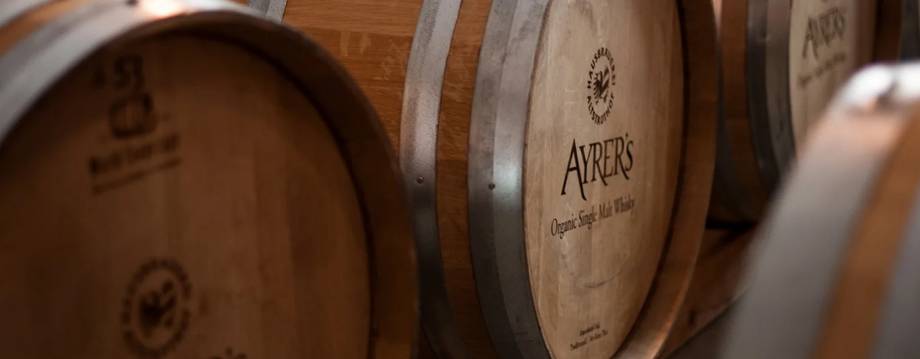
PHOTO © Florian Trykowski
WHERE TO DRINK
Hausbrauerei Altstadthof: In 1597, there were 35 rotbier breweries in Nuremberg, a number that declined over the centuries that followed. None of these original breweries remain, though the tradition of brewing rotbier was revived in 1984 by Hausbrauerei Altstadthof, which uses copper kettles, wooden fermentation vats and antique machinery to brew the style as close to the original as possible. An on-site distillery has also allowed master brewer Reinhard Engel to produce Germany’s first organic single malt whiskey, which can be enjoyed alongside freshly brewed beers at its on-site tavern.
Nuremberg’s rock cut cellars: Ok, you technically can’t drink here but visiting the city’s rock cut cellars is an essential part of any beer-lover’s visit to Nuremberg. In the 16th century, the city’s breweries were required to excavate and maintain their own underground cellars for the preparation and storage of beer. Many of these remain intact today, with tours of the cellars usually ending at Hausbrauerei Altstadthof for a rotbier.
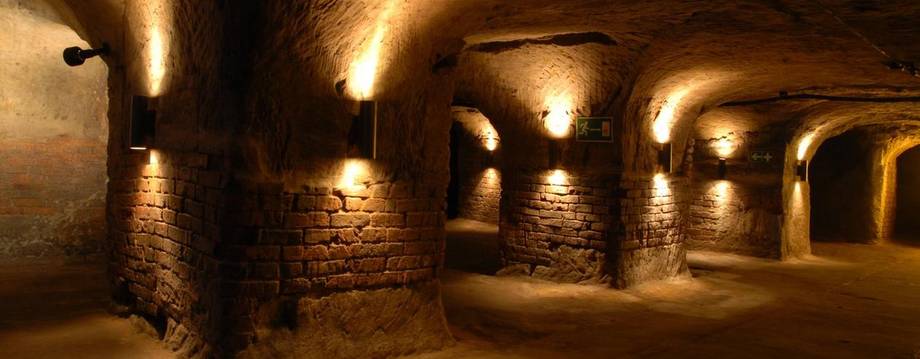
PHOTO © Förderverein Nürnberger Felsengänge/Ralf Ar
Franconian Beer Festival: If you’re someone who likes to plan your trips around an event, then the Franconian Beer Festival is the perfect reason to visit Nuremberg. The annual event sees more than 100 different kinds of beer served by 40 breweries that set up bars in the moat around Nuremberg castle (don’t worry, it's been dry for some time!) Entry is free, and there’s music, food, and activities for kids to keep the whole family entertained. As it stands, the next event is planned for May 26-30 2027.
WHAT TO EAT
Nürnberger Rostbratwürstchen: The first written reference to bratwurst dates back to 1313, the same year that the City Council of the Free Imperial City of Nuremberg protected the recipe by law. As a PGI product, Nuremberg Bratwurst must be produced within the municipality of Nuremberg, though the ingredients can be sourced from wherever the best quality is available. These small sausages — 7-9cm long and 20-25g in weight — are made from ground pork and pork belly, seasoned predominantly with marjoram and pepper (and often also contain nutmeg, and ginger) and, if prepared the traditional way, are cooked on a beechwood-fired grill. You’ll find these sausages all over Nuremberg, and can order them like a local by asking for ‘drei im weggla’, meaning ‘three in a bun’.
FINE DINING
Imperial: While the dishes that Nuremberg is best known for are simple, accessible, and built on quality ingredients, there equally exists a more complex and creative dimension to the city’s culinary landscape. Imperial by Alexander Herrmann & Michi Seitz takes classic Franconian flavours and cooking methods, and elevates them with modern techniques. The restaurant offers multiple menus for different occasions, but the "Nuremberg Menu" might be of particular interest to anyone keen to get to grips with what the city’s cuisine can be.
Waidwerk: A must visit for meat-eating gourmands obsessed with seasonality and ethical consumption, Waidwerk is led by renowned chef and hunter Valentin Rottner, who often personally shoots game for consumption at the restaurant. All parts of the animal are used here, showing the utmost respect for the animal, which is procured by environmentally responsible means. Praised both by Michelin and Gault-Millau, Waidwerk is not to be missed.
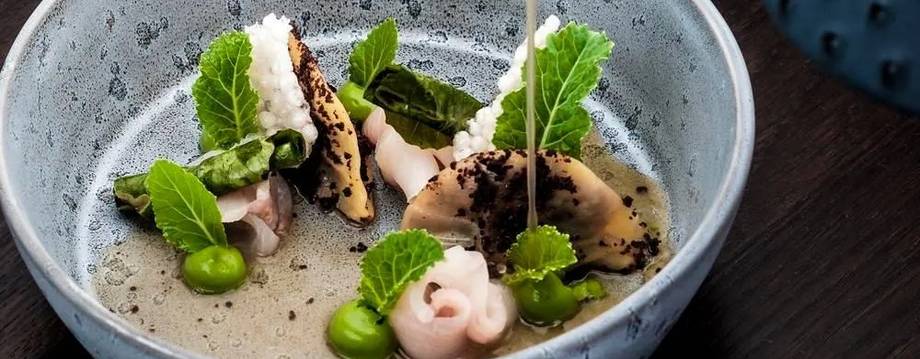
PHOTO © Waidwerk/Chris Höhn
Tisane: For outstanding service in one-of-a-kind surroundings, Tisane should be on your radar. Here, an open plan kitchen is situated in the middle of the restaurant, offering chef’s-table-style dining for a view of chef René Stein and his team at work, and to allow aromas to waft freely throughout the space. From the tableware to the menu, the location to the layout of the room, high-concept details create an atmosphere as intimate and unique as the menu.
Nuremberg Bratwurst Salad
A creative twist on the classic barbecue side salad – Nuremberg sausages are just as delicious served cold.
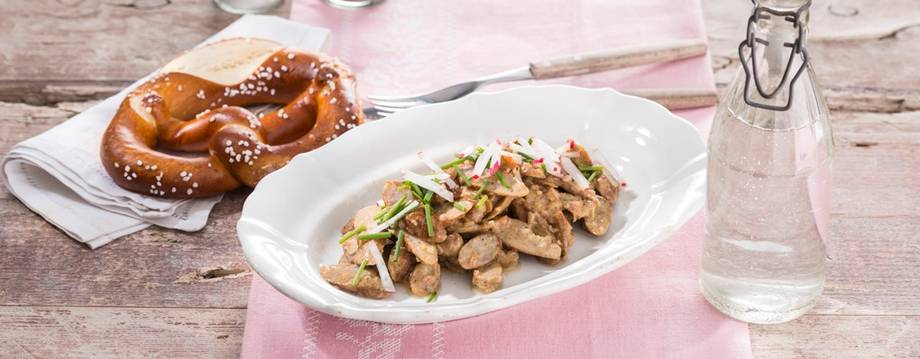
PHOTO: © Brigitte Sauer/Schutzverband Nürnberger Bratwürste e.V.
Ingredients:
- 24 Nuremberg Rostbratwürste (Nuremberg grilled sausages)
- Sweet mustard
- Honey
- White balsamic vinegar
- Worcestershire sauce
- Shallots
- Rapeseed oil
- Grapeseed oil
- Chives
- Radishes
- White pepper
- Sea salt
Method:
Cook the Nuremberg Rostbratwürste over a high heat until nicely browned, then lower the heat so as not to burn the sausage before the inside is fully cooked through. Leave to cool, then slice into thin rounds.
For the vinaigrette:
In a bowl, whisk together the sweet mustard, honey, white balsamic vinegar, a dash of Worcestershire sauce and finely diced shallots. Gradually blend in a mixture of rapeseed and grapeseed oil, whisking continuously until the dressing is smooth and emulsified, similar in consistency to mayonnaise.
Stir in the finely chopped chives and thinly sliced radishes. Season generously with white pepper, and sea salt. Fold the sliced Nuremberg sausages into the dressing and leave to marinate for at least two hours before serving.
Authentic Nuremberg Rostbratwürste are available in the UK from specialist German delis, many of which have websites you can browse and order from online.
Share this article
You’ve reached your limit of 5 free articles this month.
Unlock unlimited access and more

Join Beer52 and get your first month half price
-
Get your first box for £13.50 (RRP £27).
-
8 beers & 2 snacks delivered monthly.
-
Printed Ferment magazine included.
-
Unlimited access to all online content.