Munich city guide
For the beer pilgrims
Richard Croasdale
Header photo:
Sarah Donovan
Saturday 19 September 2026
This article is from
Culinary Germany
issue 135
Share this article
Where Berlin is a culinary magpie, absorbing every dish and gastronomic tradition that catches its eye, Munich is almost the exact opposite; not only does it have a deep-rooted, distinctive cuisine, but it has spent the best part of 500 years codifying it in a strict set of rules.
Let’s start with the obvious one from a brewing perspective: the Bavarian purity law of 1516 – the Reinheitsgebot – permitted beer to be made only from barley, hops and water.
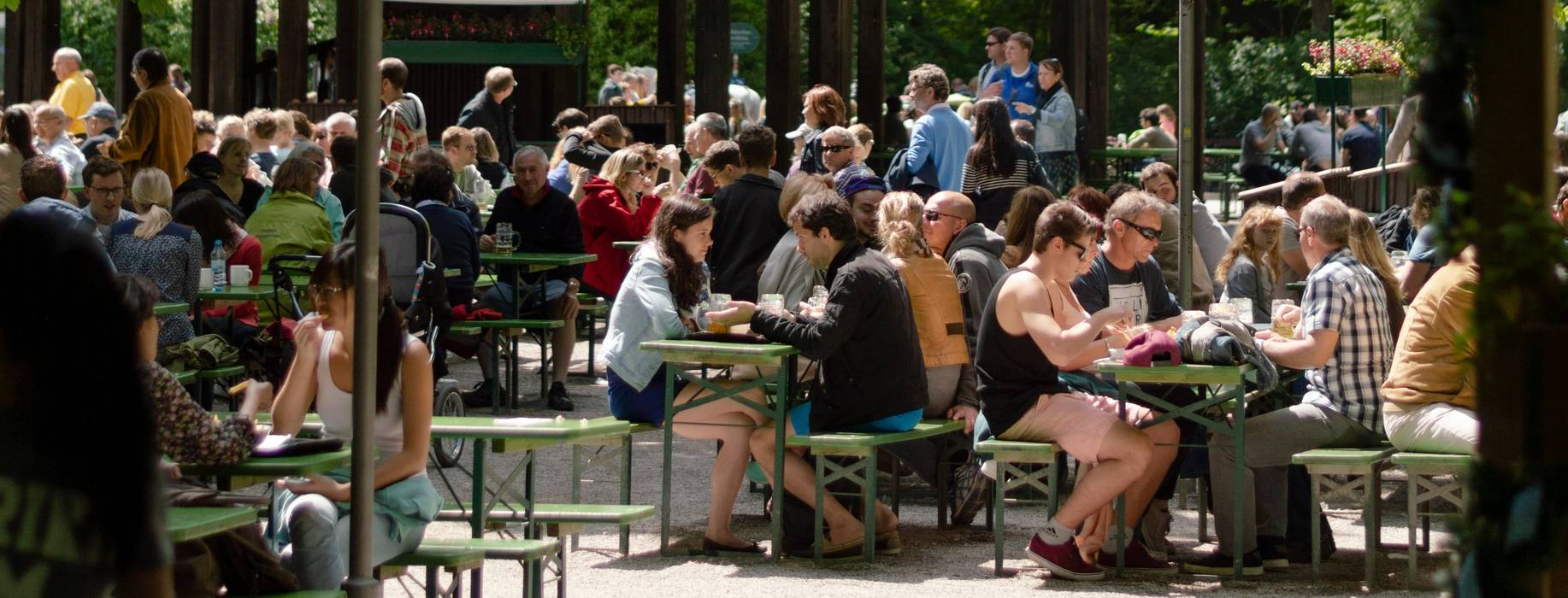
Then there’s the beer garden: invented right here, and mostly by accident. Munich's brewers dug lagering cellars into the cool gravel terraces along the Isar and planted chestnut trees above them for shade, then put tables underneath. The innkeepers, watching their trade walk out of the door, complained to King Max I Joseph, who in 1812 responded by forbidding the cellars from serving food. Undeterred (and by this point rather fond of al-fresco drinking) punters began bringing their own snacks, leading directly to another great Munich rule, the Brotzeitrecht: the right to carry your own cold spread into a Bavarian beer garden and eat it at the table without buying anything but beer. Even today, locals exercise their beer garden rights seriously: when closing times were threatened in 1995, around twenty thousand people took to the streets in what is still known as the beer garden revolution. They won.
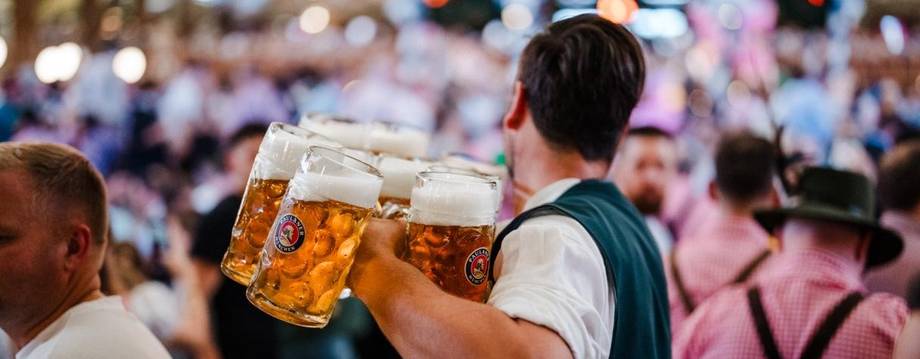
PHOTO © Jan Saurer
Munich’s main tipple is Helles, the pale, soft, sweet lager that Munich developed as an answer to Bohemian pilsner. Wheat beer runs a close second and Märzen takes the stage for the autumn festival, including Oktoberfest. Perhaps best of all though is the strong beer season in Lent, when the doppelbocks emerge, originally brewed by monks as liquid bread during the fast.
The city’s food is likewise armoured in centuries-old rules that stand to this day. Weisswurst, the pale veal and parsley sausage, is poached, never grilled, served with sweet mustard and a wheat beer, peeled from its skin at the table, and – by a rule everyone still half-observes – eaten before noon. There is a notional Weisswurst border somewhere north of the city, past which the whole business is viewed with something close to hostility.
Then there is Obatzda, mashed camembert with paprika and onion invented to use up over-ripe cheese, and Leberkäs, the baked meatloaf that contains neither liver nor cheese, eaten hot in a bread roll.

PHOTO © Jan Antonin Kolar
These days, you’ll also find a good deal of Italian influence here. Post-war migration and simple geography – the Alps are an hour away, Bolzano is closer than Frankfurt – have given Munich a distinctly Italian air, and its everyday dining habits owe as much to Lombardy as to Bavaria. Turkish and Balkan communities have shaped the value street food end of the market. The interesting neighbourhoods are Glockenbachviertel and Gärtnerplatz for bars and small, independent restaurants, while Haidhausen offers a slightly more chilled, family-friendly version of the same.
At the top end, Munich punches well above its weight: fifteen starred restaurants in the 2026 Michelin guide, holding twenty-four stars between them. So fewer restaurants than Berlin, but more stars, if that’s the sort of metric that matters to you. This is Germany's most expensive city and this is definitely reflected in its fine dining scene, with less of the scrappy innovation that makes Berlin fun.
But that’s the trade-off Munich has made, and you really have to accept it knows what it’s doing. Sitting in the shade of a chestnut tree, exercising your ancient right to bring your own damn snacks into a beer garden, and drinking a beer whose recipe is older than most nation states, you can witness a self-evident truth: Munich is a city with nothing to prove.
Share this article
You’ve reached your limit of 5 free articles this month.
Unlock unlimited access and more

Join Beer52 and get your first month half price
-
Get your first box for £13.50 (RRP £27).
-
8 beers & 2 snacks delivered monthly.
-
Printed Ferment magazine included.
-
Unlimited access to all online content.