Follow the river
Katie Mather writes about the Mosel region like it's her spiritual home. She might even say it is, and for good reason. Vintner cuisine makes one of Germany's best known grape-growing regions as delicious as it is geographically spectacular.
Katie Mather
Saturday 19 September 2026
This article is from
Culinary Germany
issue 135
Share this article
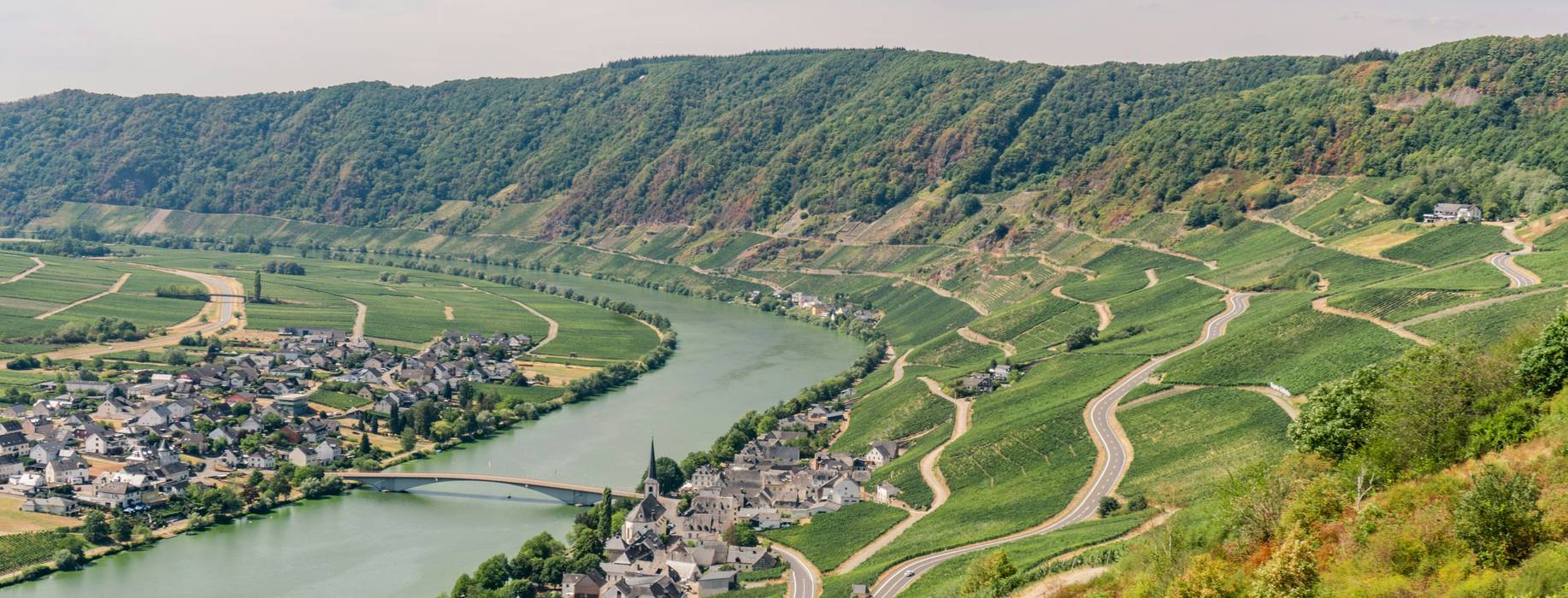
In the gorgeous, green land of the Mosel region in western Germany, the valley is full of contemporary fine dining restaurants and modernity. All that fresh air and rural culture will have you believing that its wines are enjoyed solely on garden tables at sunset by winemakers and their friends, but there are many places to hop to and from if you’re more of a townie. Frankfurt is the nearest big city in Germany to fly to, but it’s by no means the only option for delicious meals and excellent wine lists. Every town along the Mosel river has its own charm, and whether you take a river cruise to experience as many of them as you can, or you’re travelling by car or train, it’s actually super easy to get around. You can lunch in Berkastel-Kues and have supper farther down the river where it connects with the Rhine in Koblenz, if you like. There’s a beautiful simplicity to travelling along the Mosel – you really do just follow the river. That’s where all the good stuff is.
Wine from the region is characterised by its strong sense of place or terroir, which comes from the steep valley’s microclimate, the type and variety of grapes that thrive here, its unique soil and the steepness of the vineyards themselves. The grapes that thrive along the Mosel are those that can cope with a cool climate and a lot of damp days. Riesling is one of the most popular grapes grown in this region because it can ripen perfectly in challenging conditions, but it also makes best use of the slate-rich soil, which is ideal for letting the rain run straight off. In the late summer and early autumn during the time just before harvest, a weather miracle occurs: the steep sides of the Mosel valley are shrouded in mists rising from the river in the mornings. For many grapes, this would be a mildew-harbouring disaster. For varieties like Riesling, Sylvaner and Gewurtztraminer, however, a touch of mould is actually something to be celebrated. Just like in your favourite stinky cheese, the right type of mouldy culture changes everything – this fungus, known as Noble Rot or Botrytis, punctures the protective skins of the grapes and slowly concentrates the inner flesh as it steals the moisture from the fruit. The result is a sweeter juice that tastes of honey, figs and dates, and it’s prized as the essential ingredient for making local dessert wines. From decay at the end of the growing season comes sweetness.

PHOTO: visitmosel.de
Winemakers in the Mosel region aren’t afraid of sugar, and as a result they make some of the most acclaimed off-dry and sweet wines in the world. Dry white wines have been fashionable for decades, but here, fashion does not dictate what is poured – tastebuds do. A dry Riesling is an elegant and wonderful thing, all crisp and sharp, smelling of summer pavements after a downpour and tasting like a bite of an apple, a squeeze of lemon, and perhaps a dash of elderflower. However, off-dry ('feinherb' or 'halbtrocken') Rieslings, the wines most feared by the general UK drinker, are often the highest quality wines available. The first in the local wine ratings system after table wines is made from the earliest harvest and known as 'Kabinett'. This means exactly what you expect it might, that this is the good early wine the vintner might keep in their own cupboard for their own consumption. In contrast, “Spätlese” (pronounced Shpat-leyzuh) is a late harvest wine, noted for its richness, complexity and concentration of flavours. In Riesling, concentration is everything, and a sweet version of the wine highlights every flavour in high definition.
The cuisine along the Mosel is somewhat coloured by visitors’ expectations. You’ll find roast pork knuckle (Sweinhaxse) and huge bratwurst sausages – both classics across the nation – on every menu, which is a good thing, because they are delicious. If you’re looking for more authentic Mosel vintner cuisine, however, look to the bistros, wine cellars and restaurants who are using locally-sourced and foraged ingredients. River fish like zander, served with a white wine sauce is a classic dish, often served with boiled potatoes rather than the ubiquitous mash you see on every other German menu. Soups are common too, and a love for local fresh vegetables and herbs makes its way into every broth. Walnuts are also local favourites thanks to the stately old trees found everywhere in the woods and along riverside avenues in the region. Eat them pickled, in cakes and desserts, as an ingredient in sauces, or simply cracked and eaten raw as an evening snack with your wine. Once you have toasted walnuts on your creamy asparagus soup, there is no going back. Similarly, the mushroom dishes of the region are to die for thanks to the outstanding culture of foraging within the hilltop forests. In season you’ll find all kinds of mushroom dishes on the menus of restaurants up and down the river, from Michelin star fine dining to local bistros. Sometimes the very mushrooms you’ll see on your plate are harvested by winemakers on their days off, who sell them to chefs looking for some true, authentic flavours of the Mosel region. Who knows the landscape better than those who work on it every single day?
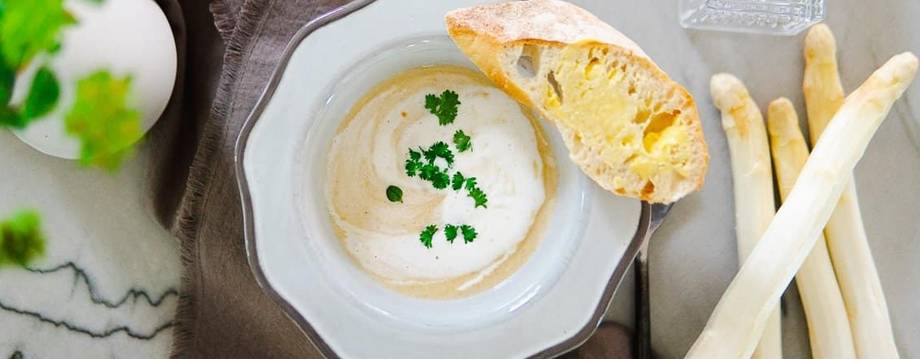
PHOTO: Asparagus Soup © Authentic German Recipes
Home cooking and comfort food is mostly found in the wineries along the Mosel, and to get a real flavour of what local food is all about, head to a wine tasting at a cellar where supper is laid on. The matriarchs of Mosel wineries really know how to cook. If you’re lucky, on top of a three course meal you might get some of their homemade apple cake, a few rustic rye and wholegrain rolls, local butter, and a smoked ham and cheese platter. Charcuterie exists in the Mosel – big time – but it feels a little different. The meats are usually boiled hams, and often smoked. You may get boiled sausage or salami rather than saucisson and paté, and the local cheeses will remind you more of Alpine and Dutch styles than those from over the border in France. Perhaps you’ll be offered a pot of Griebenschmalz for your bread, something you should never refuse. It’s pig fat with roasted crackling mixed in. Think of it like crunchy peanut butter, but 100% lard. Delicious.
Preserving the bounty of summer and autumn for the rest of the year is important to every cook in the Mosel region. Berries are picked to make pies and jams and to flavour spirits, and apples are harvested to make into cider and apple sauce – essential with any pork dish. Gathered herbs are dried or made into flavoured oils or vinegars and used all year. Wines and schnapps are used in the preserving too, adding flavour and complexity to jams, jellies and bottled fruits like plums and apricots, making opening each jar a pleasure. In the months of September and October, the amount of fruit on the trees and in the hedgerows seems overwhelming, but that’s why it’s important to have a cellar full of demijohns and canning jars. Soon, it’ll be winter, and those beautifully ripe fruits can bring colour to the table even though their time passed long ago. Speaking of winter, there’s one thing that takes over the Mosel region during the darkest months of the year, and that’s the long festive season. The time to eat, drink and be merry runs from late October until January, as well it might, considering the picturesque Christmas scenery across the region's towns and villages, where decorations and lights hang across medieval streets and ornate bridges. This is the time when Glühwein shines – mulled wine’s German cousin, spiked with schnapps and made with local Rotwein (red wine) to toast your fingertips and warm you from the inside out on even the coldest day in the Christmas markets. A crisp apple strudel baked with brown sugar does the trick too.
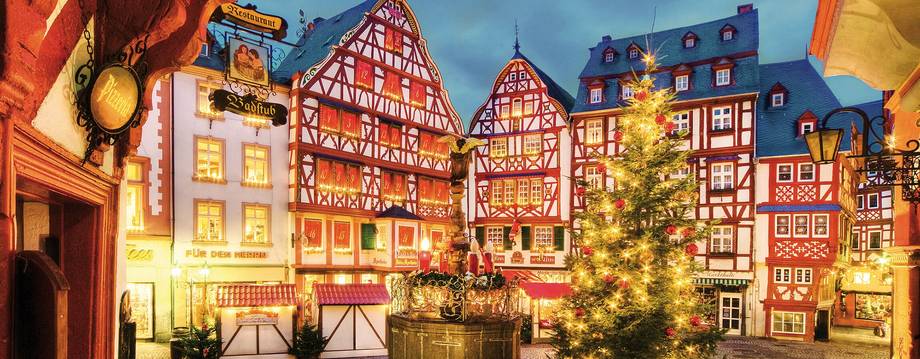
PHOTO: visitmosel.de
Throughout the year there are music festivals and feasts that celebrate the abundance of this valley, making it almost a certainty that there will be something to get involved in, whenever you visit. From summer music and dance festivals, to harvest thanksgivings and winter markets, food and wine is at the heart of every event in the Mosel region. At any gathering there will be a stand serving Flammkuchen, a traditional pizza-like snack that’s incredibly thin and topped with soft cheese, onion and ham. It's originally from Alsace, but we'll forgive them for stealing the idea. Flammkuchen happens to be a fantastic pairing for blonde beer and off-dry white wine, and it does a great job of soaking up the alcohol without becoming too filling, which is probably why so many of them are made and eaten at every celebration. Wine festivals take place around harvest time in August and September, where you can fill your glass with endless tastes of wines from up and down the winding river region and talk to the producers who make them. The Moselfest Winningen is perhaps the oldest, and the four or five day wine festival at Berkastel-Kues is the most elaborate. Fireworks, live music, and all manner of parades champion the world-class wines made right there along the Mosel.
Share this article
You’ve reached your limit of 5 free articles this month.
Unlock unlimited access and more

Join Beer52 and get your first month half price
-
Get your first box for £13.50 (RRP £27).
-
8 beers & 2 snacks delivered monthly.
-
Printed Ferment magazine included.
-
Unlimited access to all online content.