Eating spree
Less than 100km south of Berlin, you'll find Brandenburg's best kept secret; the Spreewald is a region in which gastronomy, ecology, history and culture are inextricably linked.
Robyn Gilmour
Header photo:
gutes-spreewald.de
Saturday 19 September 2026
This article is from
Culinary Germany
issue 135
Share this article
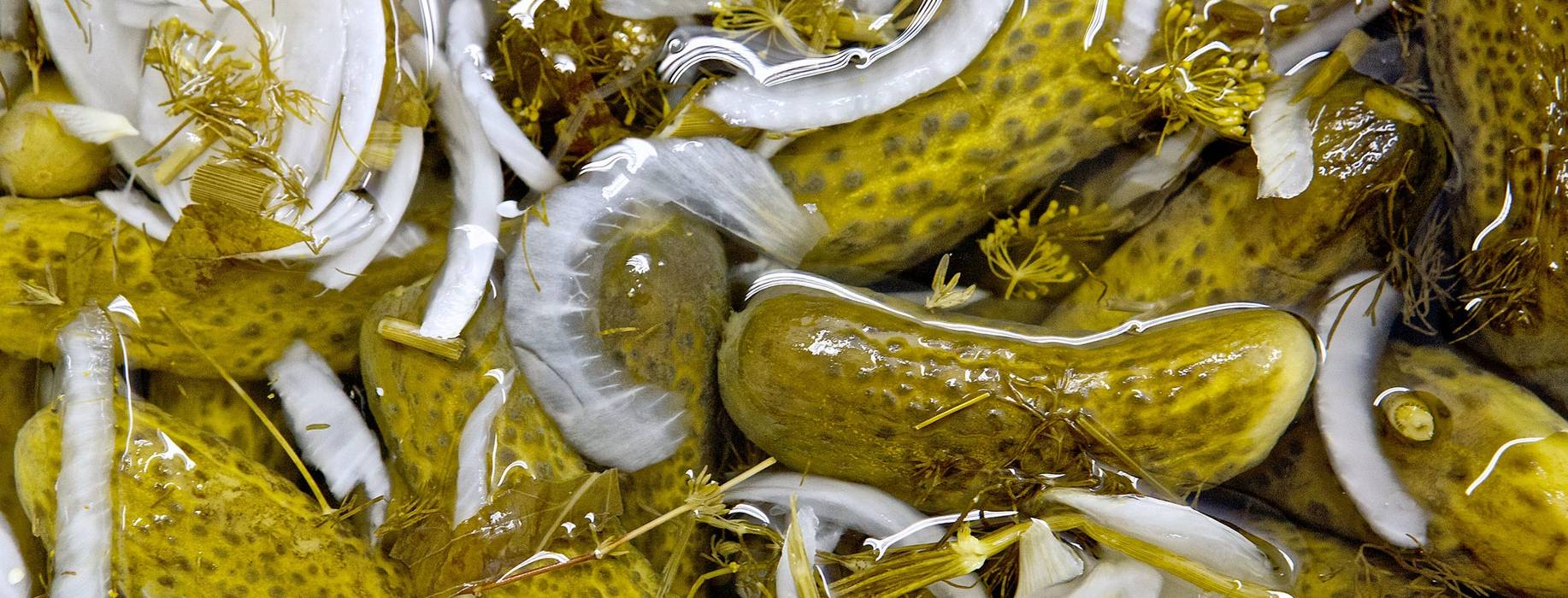
There is little that the Germans won’t attempt (and succeed) to pickle – cabbage, walnuts, any kind of root vegetables – but most ubiquitous, perhaps, is the humble gherkin. There is a reason for this. Not every pickled gherkin you come across in Germany will be from the Spreewald region – just 90km south of Berlin – though the Spreewald pickle is a delicacy across the country, and for good reason. This crunchy, sour, squeaky little cucumber is somewhat of a Pandora’s box, offering gourmands, ecologists, historians and sociologists, an insight into the past, present and future of the Spreewald.
Believe it or not, the story of the Spreewald pickle begins with the end of the last Ice Age, when melting glaciers split the river Spree into a vast delta. In the millennia since, alluvial deposits from the resulting streams and waterways have nourished the surrounding land, creating fertile soils throughout the region. Fast forward to the sixth century and Slavic tribes known as the Sorbs and Wends migrated to the region, settled and began practicing agriculture there. With them, they brought ancestors of the modern-day cucumber and soon discovered that the gourd could grow abundantly in this verdant corner of the world.
For hundreds of years since, cucumbers have been grown and pickled by inhabitants of the region. Cucumbers are demanding plants, requiring lots of water and nutrients once established, meaning the delta’s many waterways and mineral-rich, humus-heavy soils naturally provide perfect irrigation and nutrition. The resulting cucumbers are uniquely firm, and hold their shape and crunch particularly well once pickled in accordance with traditional, local methods. The singularity of the Spreewald gherkin is such that it was awarded PGI (Protected Geographic Indicator) status in 1999, an important step towards protecting the land, people and methods that produce it.
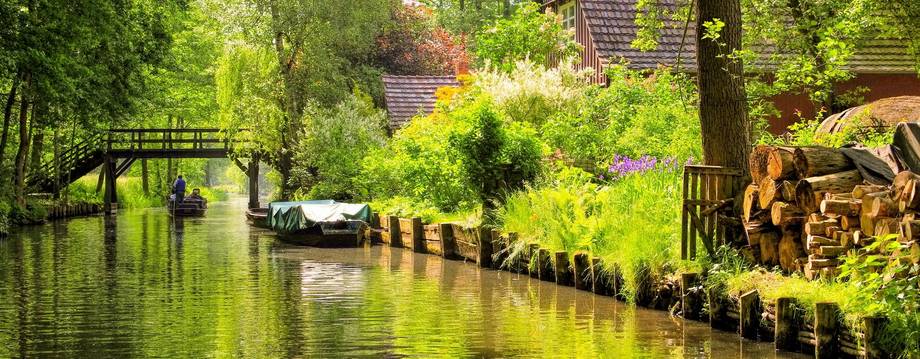
PHOTO © Liane M
Now, as you can imagine, plentiful running water and fertile soil isn’t only beneficial to cucumbers; such a wealth of flora and fauna have made the Spreewald their home that in 1991, the region was officially made a protected UNESCO biosphere reserve, one of eight now in Germany. This means the Spreewald is a biodiverse area in which the tension between conservation and development is being actively explored, so we can better understand how humans and nature can more sustainably co-exist in the future.
The point of a biosphere isn’t to prevent all access to untouched areas of the natural world, but to identify places in which humans and nature already co-exist, and create zones that carefully monitor and control inputs and outputs such that our interactions with the environment can be analysed. Is it possible to practice agriculture without disrupting the surrounding ecosystem? Can delicate landscapes tolerate tourism? These very questions are being put to the test in the Spreewald.
One might think that farming the Spreewald gherkin is at odds with efforts to conserve nature in the area, but the two work hand-in-hand. The gherkin’s PGI status is contingent upon it meeting a strict set of criteria, one of which is that cucumbers must be grown as part of a crop rotation that protects against soil depletion. They must also be grown, pickled and bottled within the region, which benefits the local economy, keeps the centuries-old Spreewald method of pickling alive, and ensures the production of the pickle comes with a low carbon footprint. That the cucumbers must be only 4-8cm in length also required that they’re hand picked, keeping the use of heavy machinery to a minimum.
The acidity, salt content, and flavourings – limited to onion, dill, horseradish and other local herbs – are also tightly controlled. While there’s no cap on the number of producers that can prepare these gherkins within the region, there are currently 20 picklers responsible for the world’s supply of PGI Spreewald pickles, all of whom carefully guard their method of pickling.
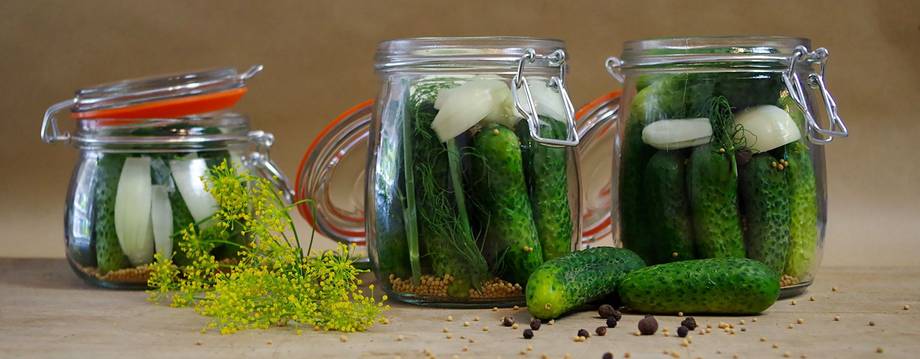
PHOTO © gutes-spreewald.de
On paper, it’s hard to do justice to the kind of landscape and infrastructure that the gherkin growing industry has both created and protected; along this expansive network of streams and canals, lush trees punctuate Slavic castle ramparts, traditional Wendish settlements, timber cabins and more modern civilian infrastructure. Cucumber fields back onto the waterways, and local ferrymen taxi people through towns on wide, flat-bottomed boats known as Spreewaldkahn (Spreewald barges) which have also been recently awarded PGI status by Germany’s UNESCO commission.
As you might have guessed, culture and heritage are important and widely celebrated parts of life in the Spreewald. While, by modern standards, this region is located within the German state of Brandenburg, historic borders placed the Spreewald in an area known as Lusatia – which would straddle the Germany/Polish border today – the historic home of Sorbian people. Fortunately, communities descended from the West-Slavic tribes that first populated the Spreewald still live in the region today, and their language and customs are a prized part of local identity.
For instance, if you pass through towns and villages – namely Lübbenau, Lehde, Leipe, Burg, Vetschau and Schlepzig – whether there are large Sorbian communities, you’ll find bilingual road signs in both German and Sorbian. Furthermore, festivities celebrating Sorbian music and dance are widely attended, and their churches are respected both as places of worship, and beautiful examples of Wendish architecture. While the terms ‘Sorb’ and ‘Wend’ are used to honour the ancient distinction between these two tribes, the last conflict between them was in the 10th century, and hundreds of years of peaceful cohabitation, merged families and shared culture have made the terms almost interchangeable.
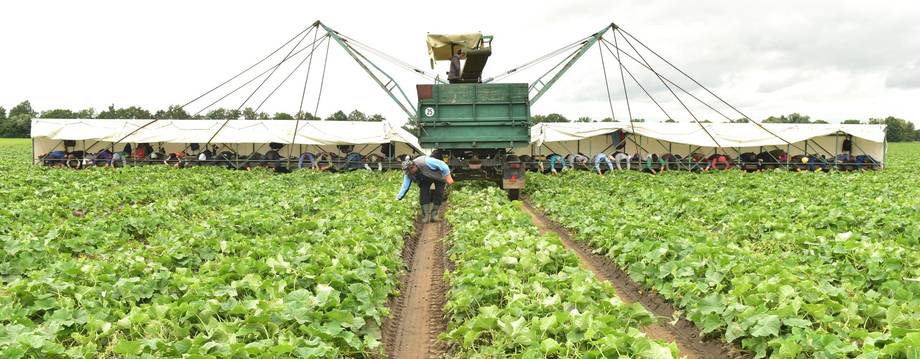
PHOTO © gutes-spreewald.de
With so much to protect, preserve (pickle pun intended) and showcase, responsible tourism is a growing industry in the Spreewald; visitors won’t be short of comfortable hotels, guest houses, holiday homes and places to camp, with saunas, spas and retreats for those seeking a relaxing escape. The region’s emphasis on agriculture and fresh produce has also given rise to a wealth of restaurants, farm shops and weekly markets that will be of interest to any gourmand, while outdoor enthusiasts will be truly spoiled by opportunities to adventure and connect with nature.
That all this industry, infrastructure, history and cultures is contained within the Spreewald gherkin is a reminder to us all that what we eat tells a story, if we’re willing to listen.
Things to do and places to visit in the Spreewald:
Lehde: This historic village could only be reached by boat until 1929, with limited accessibility perhaps to thank for the immaculate preservation of its idyllic log cabin houses. The first written record of Lehde dates back to the 14th century, making a stroll around this protected historic monument something of a journey back through time, and a brief insight into the Spreewald’s medieval roots. Today, Lehde is a common destination for hikers setting off from Lübbenau harbor.
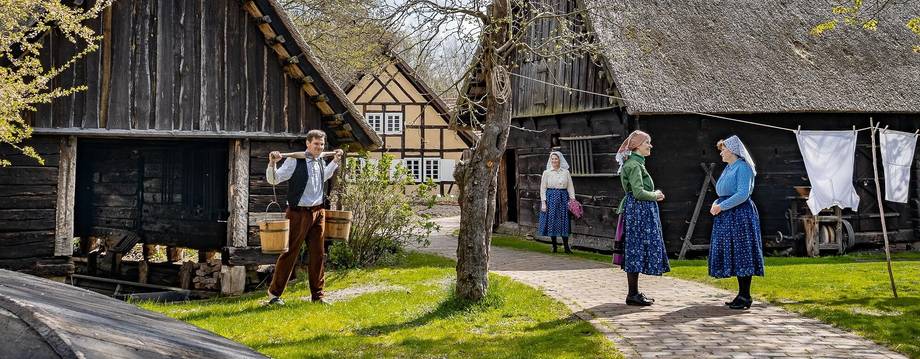
PHOTO © Brandenburg Tourism
The scattered settlement of Burg: One for the history nerds, the scattered settlement of Burg – spanning an impressive 30km² – has been inhabited since the Stone Age and was once home to a hill fort, upon which Schlossberg Castle was later built. Today, the area – best known for the hamlets of Dorf, Kauper, and Kolonie – are centres of Sorbian culture and architecture.
Wochenmarkt Lübbenau: Though bigger towns host larger weekly markets, Lübbenau’s is regarded as being particularly friendly, and attended by a huge variety of local producers. Expect baked goods, fresh groceries, meat, fish, eggs and an abundance of Spreewald pickles. The market takes place on Tuesdays and Thursdays on the plaza outside the town’s central shopping centre.
Paddle: There’s no better way to explore and appreciate the waterways of the Spreewald than by picking up a paddle. Canoe rental is common in the Spreewald, with rental shops offering visitors the best advice on scenic routes, rare wildlife to look out for, and how to navigate safely. Some companies also offer guided tours so just enquire at the point of contact.

PHOTO © TVS/Lena Tschuikow
Fish: Provided you have the appropriate license, you’re welcome to fish in some of the Spreewald’s crystal clean streams and canals at certain times of year. Specific permits are required, and designated waterways are tightly controlled, but for experienced fishers, the Spreewald offers an unparalleled experience. Fishing licenses are affordable – just €20 for a whole week – though equipment isn’t readily available for rent locally, so bring your own, or rent from further afield.
Cucumber Cycle Path: Regarded as one of the most beautiful cycleways in Germany, this 260km track leads cyclists through floodplains, and a labyrinth of waterways, taking in towns, villages, farms and restaurants along the way. With manageable incline and well maintained paths and signage along the way, bike-packing this route is the perfect way to see the region.
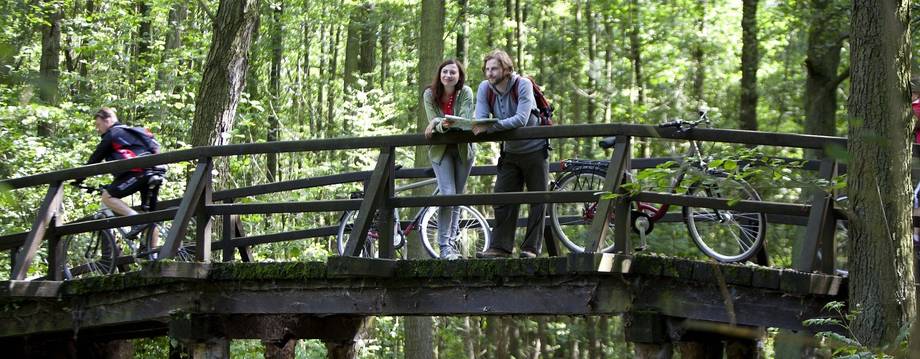
PHOTO © Fotoarchiv/Paul Hahn
Eat locally: In addition to the Spreewald pickle, the region produces a wealth of incredible ingredients best experienced in local dishes. Spreewald pike and Spreewald carp are considered delicacies, and are most often served with potato salad. Spreewälder Plinse – a fried pancake made from grated potatoes, onions, eggs and flour – is a local variation on a dish that's enjoyed nation wide and is most often served with apple sauce, sauerkraut or smoked salmon. All that said, if you travel to the Spreewald for the gherkins and want to enjoy them like a local, order Sauerbraten or Gulasch, which always come with a side of pickles.
Share this article
You’ve reached your limit of 5 free articles this month.
Unlock unlimited access and more

Join Beer52 and get your first month half price
-
Get your first box for £13.50 (RRP £27).
-
8 beers & 2 snacks delivered monthly.
-
Printed Ferment magazine included.
-
Unlimited access to all online content.