Not by halves
Brewer Karl Gowing mulls on the lasting impact and growing popularity of the radler.
Karl Gowing
Saturday 19 September 2026
This article is from
Culinary Germany
issue 135
Share this article
I remember, as a young teen, sitting at the bus stop, waiting for the 74 into Folkestone central, and sipping a Shandy Bass. It was sugary and sweet with a hint of bitterness, or at least that’s how my rose-tinted memory of it goes.
At 19, I was introduced to Jamaican shandy at a trip-hop club under Portland square. Made from fresh lime, ginger ale and Red Stripe, it was phenomenally crisp and citrus-forward with a big hit of ginger and enough sugar to perfectly complement some break beats in a basement under St Paul’s.
Then, some time in the early days of Wiper and True, the head brewer handed me a Schöfferhofer pink grapefruit radler; fuel for a long bottling evening. The sun had gone down, and the IBC still wasn’t empty, but that sharp grapefruit balanced with chewy full, sweetness kept the beer flowing.
Most recently, I realised that if you’re taking your baby in the sling to the pub, a classic lager shandy may be a good option if you want to look respectable. The shandy has permeated more than every facet of my brewing life.
You’ll notice I used the terms radler and shandy interchangeably, and that’s because the two are remarkably similar in both form and function. In fact, a brief history of the drink takes two geographical paths. In Britain, shandygaff developed in the 19th century as the first beer cocktail, traditionally mixed with ginger beer. Charles Dickens called it “the perfect alliance between beer and pop,” Christopher Morley called it a “mixture of bitter ale or beer and ginger-beer, commonly drunk by the lower classes in England”. It was a worker’s beer, designed to stretch out the ale.
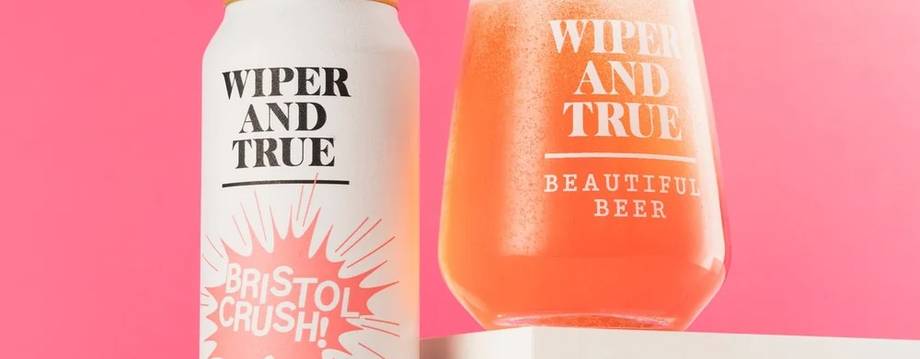
PHOTO © Wiper and True
Similarly, a little later down the line in Germany came the ‘bicyclist’, translated as ‘radler’. Legend has it the Kugler’s beer garden outside Munich was overrun by cyclists upon the opening of a new trail. With the tavern’s wheat beer stock running low, the barman decided to cut it with lemonade and the radler was born.
From this humble start it begins to weave into beer culture, keeping drinkers hydrated across a century.
Craft brewing historically hung its hat on the power of a big IPA – Kernel’s Table Beer withstanding – but with the rapid rise of the low-and-no category over the past few years, the prevailing winds have shifted. Coupled with some advantageous duty rates for beers under 3.4%, and a trend towards more conscious consumption, opportunities have opened up for some of the best breweries in the UK to take on the style.
There are more good radlers in this country right now than I could fit in this article. Over the past few years I’ve constantly come back to Left Handed Giant's Sicilian Radler, a dry-hopped pale blended with their own house lemonade, and when I saw Vault City, purveyors of the finest sour beer in the land had a triple fruited number I was enamoured.
I should declare an interest here; I spend my days as the head brewer at Wiper and True. We make a yearly release of Bristol Crush, and through the years the beer has developed from a 5% grapefruit pale to a grapefruit sour and landed on a grapefruit radler. This year we tried to push the boundary and create a sugar-free version, built upon a wheat beer base and blended with a homemade sugar free pink lemonade. The idea was to try and refine the balance of acidity and sweetness without a traditional sugar base.
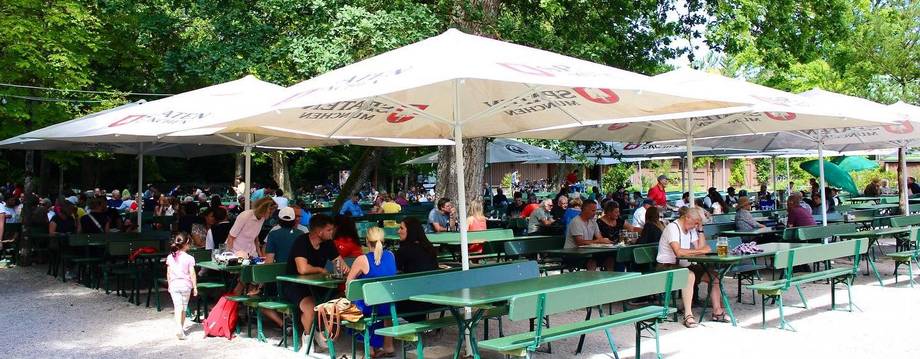
PHOTO © Kugler Alm Beer Garden
Over the course of my research and development, I spoke to many British purveyors of the style about how they approached their own production of a radler or shandy. In particular, I chatted to Jeremiah Fox at Vault City about their triple fruit 3.4% radler and the process behind it.
Karl Gowing: How did you come about the recipe? Any drinks that inspired you?
Jeremiah Fox: Our bread and butter is to be aware of what the tradition is and then fly in the face of it. We have a lot of respect for traditional beer, and as a team we have a lot of love for it. There are so many people that we respect and love that make great traditional products.
Our approach, however, is to look at things in their original context, then put a new spin on that tradition, or add something to it that other people aren’t.
We did some market research, mainly looking at German radlers. On that basis, we thought we would love the lager base but we found we actually preferred the wheat and ale bases more.
KG: When I did that exact process, I was like, ‘I don't really know how to make this beer better. I don't know what I'm going to do to move it forward.’
JF: I think that's funny. Sounds like what we discussed too, which is exactly why we just often don't try to replicate or beat the existing level of excellence that's out there. We just try to bring something new to it.
KG: Do you think that's about residual sugars and yeast selection? I found it wasn't simply about sweetness.
If you had a really high sugar content without the balance it started to overwhelm the beer. Without the high protein level and a focus there, it could start to feel like a soft drink and not a beer mix. I started to think back to shandies of my youth and them being bitter shandies.
JF: I think that's probably what appealed to us because our main sour beers use a mixed house culture and re-fermented fruit on the base beer.
But we were picking up on the fact that in some of those great radlers, there was still a little bit of that yeast character, particularly when top-fermenting yeasts are used. That’s coming through just a little bit in our beer, I think. It's just there, where you can get a unique beer character poking through.
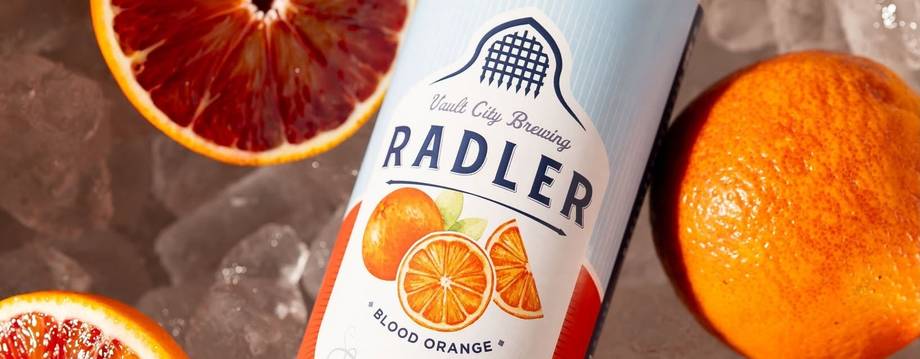
PHOTO © Vault City
KG: The base being used for the radler is the same base beer you use for the fruited sour beers?
JF: No, any time we're getting too close to what we already are doing on a daily basis, we think about what we can do differently.
So we decided, in this case, to veer off a little bit from our norm and use a mainstream ale yeast, but also use some of the methods that we use to create fruited beers. Over the years, we've learned a couple of different ways to balance the sweetness with the acidity.
KG: What was your method for picking the fruits?
JF: We tried some berry flavours, watermelon and pineapple. We talked about doing that, but we're not trying to replicate one of these, right? So we should probably ‘Vault City’ it and just kind of add too many things. So we did grapefruit, orange pineapple on the first one.
KG: If you could drink someone else’s radler where would you start?
JF: Clara con Limón, a Kas [a famous Spanish carbonated drinks brand] mixed at the bar with Estrella Galicia, it holds a lot of memories for me of my time in Spain.
KARL'S TOP-TWO SHANDY RECIPES:
Midnight:
- 50% Wiper and True - Tomorrow - AF lager - 0.5%
- 50% Wiper and True - Today - Helles - 5.6%
Named Midnight by the brewers, a beer mix created for the longer nights of drinking at a staff party.
Coming in at 2.8% de-alcoholised lager blended with a 6 week cold fermented lager creates a full bodied ester-forward lager for easy drinking as the sun comes down. Less citrus forward than a traditional shandy but achieves an amazing full bodied 2.8% beer mix.
Kaleidoscope, Ginger and Lime (Modern Shandygaff):
- 50% Karma Gingerella
- 50% Kaleidoscope
- Squeeze of lime
Big hazy tropical flavours, folded into the sharp citrus of the lime, and complexity coming from the ginger ale. Perfect tap-room drinking on a summer's day.
Share this article
You’ve reached your limit of 5 free articles this month.
Unlock unlimited access and more

Join Beer52 and get your first month half price
-
Get your first box for £13.50 (RRP £27).
-
8 beers & 2 snacks delivered monthly.
-
Printed Ferment magazine included.
-
Unlimited access to all online content.