Pils d'Alsace
Anaïs Lecoq reports on the Alsatian brewing community’s fight to revive a local beer style.
Anaïs Lecoq
Header photo:
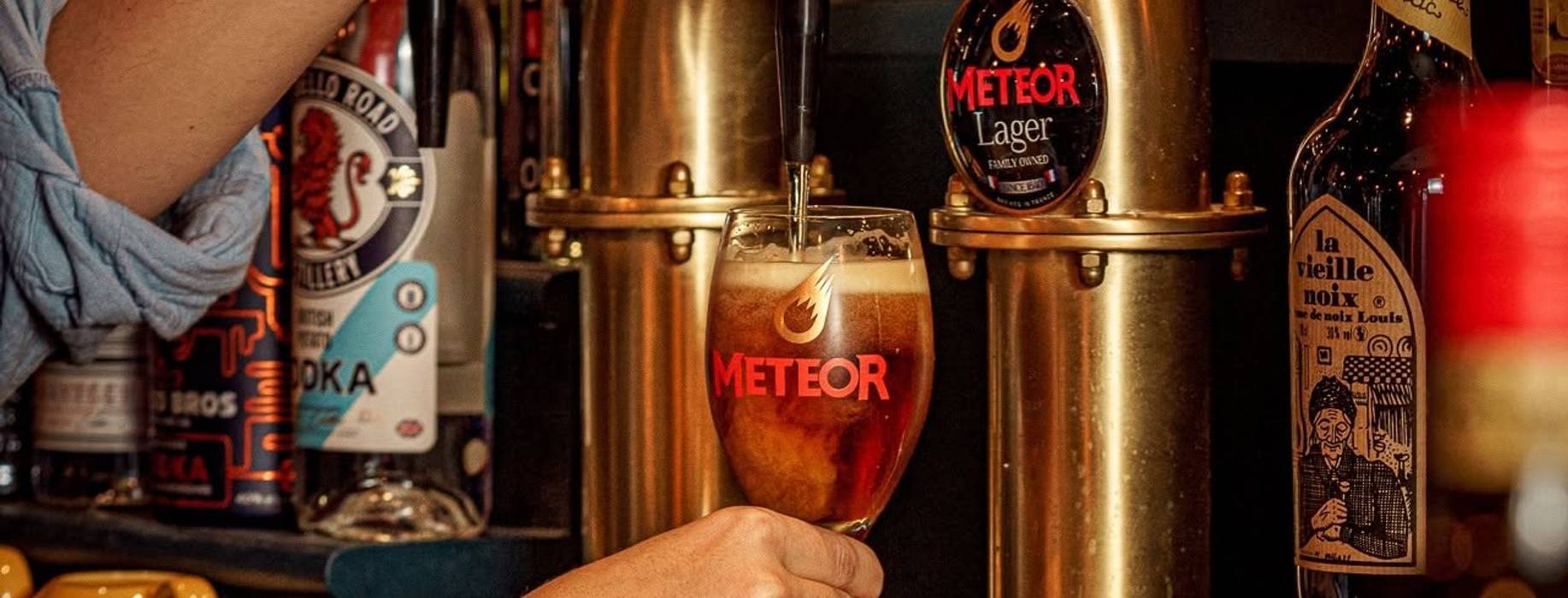
Brasserie Meteor
Saturday 19 September 2026
This article is from
Culinary Germany
issue 135
Share this article
Lunchtime is always busy in Schwindratzheim, a small village of 1700 inhabitants in Alsace, northeastern France. Restaurant Au Boeuf, a staple in the community for the last 156 years, welcomes locals and workers from all backgrounds, seven days a week. The place offers a lively scene, with its red-and-white checkered tablecloths, massive wooden bar and patrons loudly conversing in Alsatian, the region’s historic language.
It’s Thursday and the daily special is a choucroute, a traditional Alsatian dish of sauerkraut, smoked ham and sausage. Jean-Nicolas Gross, the owner, brings a huge plate to the table, along with two half pints. No need to ask for a beer list, as there will only be one choice: Meteor Pils. The light-gold, translucid beer with a dense, foamy head quenches thirst perfectly, its pronounced bitterness balanced by a touch of floral sweetness: a great pairing with the heavy choucroute.
The brewery who made it sits just two miles away from the restaurant, in Hochfelden, where beer has been brewed since 1640: Meteor is the oldest brewery still operating in France. It’s also the one who has given pils d’Alsace (or Alsatian pils) its name. Though pilsner-like beers have been brewed in the region since at least 1912, Meteor former owner Louis Haag created the first official one in 1927. “He learned brewing in Czechia and wanted to get as close as possible to true Pilsen-style beer, but always with the Alsatian palate in mind,” says Hervé Marziou, local beer sommelier and expert in Alsace beer history. “He was incredibly ahead of his time, it’s essentially the same approach Coca-Cola later used, adjusting its formula depending on where it was sold.”
That’s a common misconception: regarding the shared border between Alsace and Germany (and the fact that the region has been part of it many times in its history), people tend to think Alsatian beers are an ersatz of German beer culture. But Alsatian brewers wanted to differentiate from them – and resist the Germanisation of the region, for which beer was used as a tool – by creating their own culture. Alsatian Pils is part of that movement.
“The ingredient that clearly shows that Alsatian pils is not German pils, or Czech for that matter, is corn, which would never comply with the German Purity Law,” says Maxence Creusat, who created La Cité des Brasseurs with Hervé, a project dedicated to reviving Alsatian brewing history. “Corn is a crop historically endemic to Alsace and it brings that sweetness that Alsatian people like.”
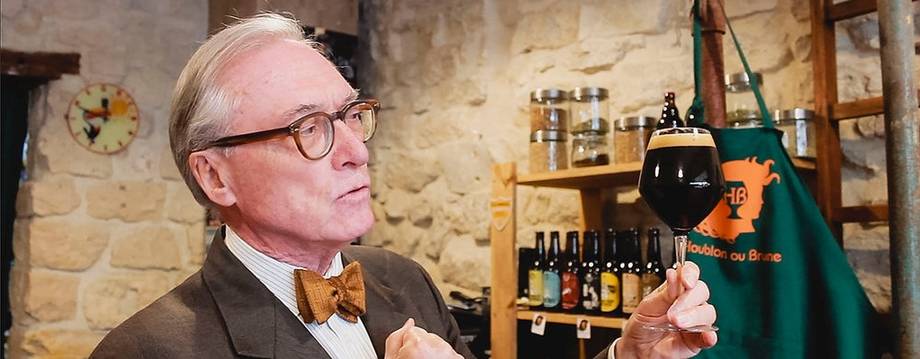
PHOTO: Hervé Marziou, beer sommelier © Les Tours Des Terroirs
Same thing applies to hops, he adds: “It’s documented that, from the 1950s, if not as early as 1930s, breweries in Alsace were using the region’s native Strisselspalt hops, alongside what was then referred to as Bohemian hops, most likely Saaz.”
Up until the 1970s, Alsace was known for its flourishing brewing industry, with pils right at the centre of it. Along with Meteor, breweries like Fischer, Ancre or Perle were known for their own version of the style. “In the 1930s, Perle was producing 300,000 to 400,000 hectolitres annually, it was a major regional player and one of Alsace’s largest brewers,” says Christian Artzner, owner of brasserie Perle, in Strasbourg.
Founded by Christian's great-great-grandfather in 1882, Perle closed in 1972, a few years after the brand and other local breweries were acquired by Heineken. This is what happened to most Alsatian breweries, along with the general decline of Alsatian pils. “Supermarket own-brand versions, often sold without branding or proper promotion, in cheap neutral packaging on the lowest shelves, dragged its reputation down,” Maxence says. “Pils was transformed from a regional brewing tradition into a symbol of mass-market excess.”
Christian revived Perle in 2009. Quickly, he knew he had to brew the beloved Pils. But the original brewery was destroyed not long after it closed, and nothing was preserved or passed down, not even the recipes. “Perle is remembered by older drinkers as a beer with a beautiful bitterness,” he says. “My goal was to differentiate it from the Alsatian and German markets by producing a craft pils that was slightly more copper-toned, higher in alcohol, more bitter, and with a pronounced hop aroma.”
Pils is now gaining momentum. The craft beer movement and IPA’s popularity has helped reshape French taste preferences around bitterness, creating the right conditions for Alsatian brewing heritage to re-emerge. In Obernai, brasserie Les Intenables has been a fan's favourite since it opened in 2019, renowned nationally for their bold and modern brews. But in June 2026, the team launched a new project anchored in Alsatian beer culture: Stamm – short for ‘stammtisch’, an Alsatian term also used in German that refers to the regulars’ table in a bar.
The brewpub is located in brasserie Mutzig’s former building, part of which had remained abandoned industrial space since its closure in 1987, after being sold to Heineken in 1972. “When Heineken left, they sold the building to the town, but included a clause banning any beer production there for the next thirty years,” says Alice Godet, Les Intenables and Stamm co-founder. “The local council had always intended for beer to return to the site as soon as possible, and we answered the call for proposals when the time came.”

PHOTO: Alice Godet, Stamm co-founder © Les Intenables
It’s a bold move for a trendy new brewery, to dip its toes in a regional and quite forgotten culture. But Stamm's attachment to Alsatian beer culture goes beyond a marketing decision, starting with Jérôme Lauth, Alice's business partner and husband. “Jérôme grew up and worked in his family's traditional restaurant, which was also a microbrewery, in Scharrachbergheim,” Alice says. “His father was one of the first ones to bring back artisanal beer to a small Alsatian village in 1997. We took inspiration from his family pils recipe to create our Stamm Pils.”
Alice believes that pils is part of Alsace’s shared culinary culture: “Everyone knows what a Pils is, just like everyone knows what a baguette is.” In that sense, Alsatian people are a different kind of beer consumer than the rest of French people. “They care about the serving temperature, the glassware, the draft system, they know what good beer is and how it’s supposed to taste like,” Maxence says. “I grew up in Schiltigheim, where nearly everyone has a relative who worked in brewing and there’s this collective memory tied to beer and brewery smells.”
This both established Alsatian pils as a pillar of the local community, and also trapped it within a regional image that struggled to resonate beyond Alsace’s borders. To this day, most French consumers are unfamiliar with this beer style, despite new brewers getting ahold of it. Christian regrets how brewing pils has even put him in a box: “I’m fortunate to have this great history behind the brewery, but I was quickly labelled as a traditional, conservative brewer, and that image makes it harder to enter more modern markets.”
Hervé and Maxence are determined to not let that stand any longer. With their Cité des Brasseurs project, they hope to revive the interest around Alsatian beer culture and create a space to tell its rich history to the public. “No other major beer culture in the world has been forgotten quite like Alsatian brewing culture,” they say. As for Alsatian pils, the duo is working on getting the style approved by the BJCP, an international recognition that would help spread the good word.
Share this article
You’ve reached your limit of 5 free articles this month.
Unlock unlimited access and more

Join Beer52 and get your first month half price
-
Get your first box for £13.50 (RRP £27).
-
8 beers & 2 snacks delivered monthly.
-
Printed Ferment magazine included.
-
Unlimited access to all online content.