Aegir Project: Be it, don't dream it
In today’s world, it’s both remarkable and affirming to meet a brewery that has stayed true to its founding vision, even if that has meant staying small and going slow.

Robyn Gilmour
Photos:
Aegir Project
Saturday 17 October 2026

This article is from
South Africa
issue 136
Share this article
Rory Lancellas has over 400 unread messages on his phone. He hasn’t had a day off in a while. As sorry as I am to call him late one fraught Friday afternoon, I’m glad I did. He’s someone I could have drunk pints with well into the night, had 10,000km – give or take – not separated me from the Aegir Project brewery and taproom, in Cape Town. It’s obvious that Rory is an artisan at heart, and that this way of life led him into brewing, not the other way around.
A carpenter by training, this was the skillset that Rory took with him to New Zealand, where he based himself while travelling around the South Pacific Islands. Through sheer coincidence he crossed paths with Speight’s brewery, the oldest operating brewery in New Zealand, while looking for work. In Rory’s telling, Speight’s hired him as a brewing technician even though he had no brewing experience whatsoever, and put him through an apprenticeship. “I actually joked the other day that in 10 years of running my brewery, I still haven’t met that first batch of beer that I made there,” says Rory. A true testament to someone bitten hard by the brewing bug.
He worked at Speight’s for three years and then moved to Scotland, which he planned to be his final stop before moving home to South Africa to set up his own brewery. In Scotland, Rory worked for several tiny breweries over the course of four years, among which was Edinburgh’s own Barney’s Beer, where he developed a love of cask. “We used to make a red rye and that beer was delicious in all its forms. We did it bottle conditioned, on keg, and in cask, and the cask version was so freakin’ nice. It was a proper Irish-style red, but designed for cask, and when I went back to South Africa I really wanted to bring that beer with me.” More on that later, but for now, just know that when Rory returned to South Africa in 2014, he did so with a handpump in his hand luggage.
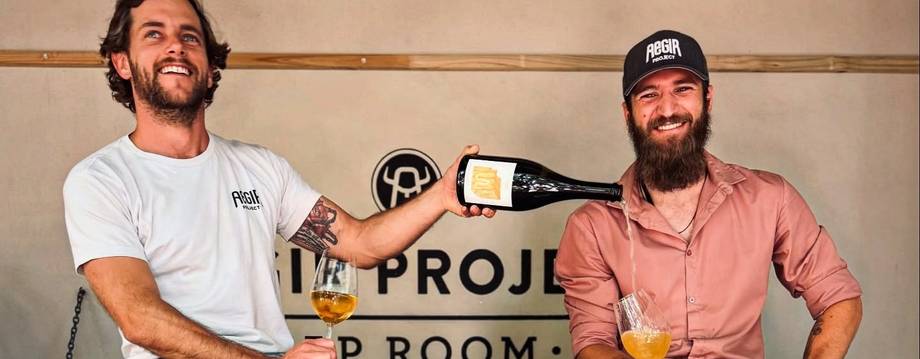
It would take about a year for the Aegir Project to open its doors, which Rory had accounted for knowing how much red tape there would be to wade through. What he hadn’t foreseen was for some investors in the brewery to fall through, resulting in operations starting out on a shoestring budget. “It was the best thing that could have happened to me,” says Rory, in hindsight. “But yeah, we started with nothing and just bootstrapped everything. We welded up the tanks in the brewery, and then we opened a little 10 seater tap room next to the brewery. Threw a whole bunch of fold-out tables under the milkwoods [trees] in the courtyard outside, and then we’d open up.”
Initially Aegir Project sold everything it made on tap, on site; a gruelling but effective and rewarding approach. “In South Africa, we’ve got beers from big breweries which are fully pasteurised, have all the preservatives, they’re rock solid, so you can leave a keg out the back alley at 50 degrees, then run it through a chiller to serve and the beer is going to be fine. Obviously, our beer is not quite that durable. We started out with a bit of distribution, and our beers just weren’t very good out in the public. So we immediately pulled them all back in and focused everything on getting customers to us, which is great for beer integrity but it comes with a whole set of its own hidden challenges.”
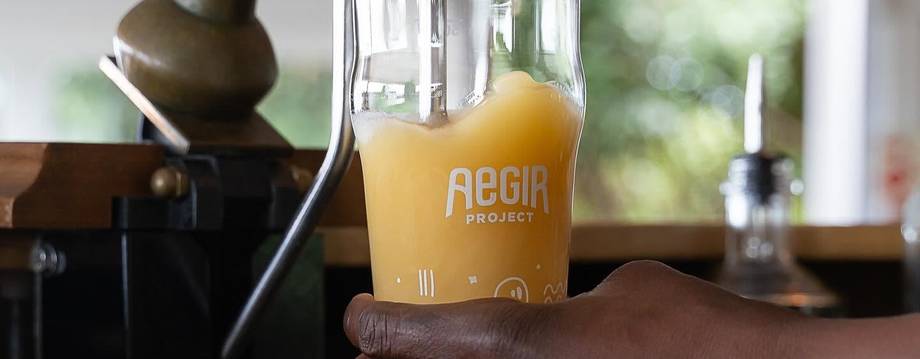
Rory conceded that the biggest of which was simply manning the bar. He himself was on the front line, personally serving beers all weekend, every weekend, for the first two years of the brewery’s life. “I would have people coming in and being like, ‘Oh, can I do the tasting board? I just don’t want to have any pale ales or IPAs’. I found myself begging people to try something other than a lager, I was almost like ‘I’ll pay you money to drink this beer’, but that was just because people had had bad experiences of these styles in the early days of craft beer.
“So, I pretty much forced every single person to listen to me blag on about the beers. And when you’re standing in front of people, talking, you kind of get more of a response out of people. I started noticing people move away from mainstream beer into the pale ale realm, then back into dark beers, and now and then into IPA. Now our pale ales and IPA outsell our lager quite consistently, which is amazing.”
From these humble beginnings, Aegir Project has grown slowly and organically. Rory wouldn’t change a thing, but also assures me that the brewery hasn’t yet reached its final form. “If those investors had come on board, I would have been pushed to grow at a rate that would have made this a business not a passion project,” says Rory who, when asked if Aegir Project today is the brewery he envisioned when first starting out says it’s “exactly where I wanted it to be”. In today’s world, with all its overlapping hardships demanding constant compromise, this strikes me as both remarkable and affirming.
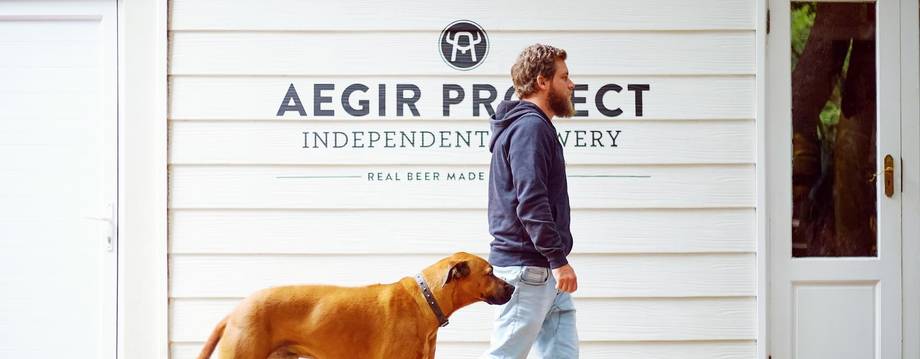
Aegir Project has by no means reached its final form. “Growth isn’t really in my vocabulary right now,” says Rory. “I’m just sort of focusing on just keeping the beer quality increasing, and have invested quite heavily in the last few years in getting the right equipment for us – all the Anton Paars, we just got a new Wild Goose canning line.” He also has a general feeling for the direction he wants to take things in the future, citing sours, wild ferments and a barrel program as a definite aspiration. He says South Africa is still a long way away from being ready for these styles, but Rory also has a track record of convincing drinkers to give things a try. If he can get South African drinkers excited about cask, I’m sure he’ll persuade them to try styles primed for enjoyment by the wine-drinking palate.
“Since I’ve been back in South Africa, we’ve thrown every beer we’ve made on cask” says Rory. “It’s my favourite way to drink beer, if I’m honest. You just get such a nice expression of what the beer should be. It’s a tricky sell here in South Africa, because everyone thinks cask is warm and flat, so it’s taken a while, but every Thursday we tap a cask, and run it through a chiller so it’s more suitable to our climate. Now we’re starting to see some people get excited about it, and will order it whenever they see we have it on. We’re quite well known for our hazy, hoppy IPAs, so we tend to have that on cask quite a lot.”
I guess a little bit of Scotland lives in Cape Town.
Share this article
You’ve reached your limit of 5 free articles this month.
Unlock unlimited access and more

Join Beer52 and get your first month half price
-
Get your first box for £13.50 (RRP £27).
-
8 beers & 2 snacks delivered monthly.
-
Printed Ferment magazine included.
-
Unlimited access to all online content.