Soul Barrel Beer: Soul stew
Based in the old Drakenstein Cooperative Winery’s former cellar, just outside of Franschhoek, Soul Barrel Beer is brewing with an ethos as unique as its surroundings.

Robyn Gilmour
Photos:
Soul Barrel Beer
Saturday 17 October 2026
This article is from
South Africa
issue 136
Share this article
When Nick Smith set up Soul Barrel Beer in 2017, his goal wasn’t to brew beers from the US, where he’s from. “I’ve been inspired by beers from all over the world, and have a broad interest and passion for styles and different brewing traditions,” he says. “So, coming to South Africa, it was really important for us to take that experience and try to do something original, and unique to here. We brew a lot of traditional styles, but we’re really trying to incorporate local ingredients as much as we can, and make uniquely local things. We probably champion local ingredients more than most craft breweries here, so using South African hops is a big focus for us. We’ve done a variety of different things with them over the years, and we’ve kind of tweaked our process, and learned how to use them really well.”
Much to my great shame, I had no idea South Africa had such a robust and long-standing hop-growing industry, prior to speaking with Nick. He graciously assures me that South Africa doesn’t meaningfully export hops to the rest of the world, with most hops being grown for domestic use.
“Over the centuries, people here have tried to grow hops in some shape or form, but it was only really in the 1920s that a proper hop growing industry formed here in South Africa,” Nick begins. “The logistics of importing hops from Europe or America had always been challenging, but it became especially difficult with apartheid because of the embargoes placed on South Africa. So SAB [South African Brewers] started investing a lot into growing their own hops, and in doing so developed unique South African varieties that could thrive in the climate here. We’re also at a slightly higher altitude here than would be normal for growing hops with large commercial yield. I want to say there’s now about 10 to 12 pretty strong, unique South African varieties that have been developed.”
Coming to South Africa, it was really important for us to take that experience and try to do something original
As unfamiliar as these varieties are to me, so too is the infrastructure around hop growing in South Africa. In the US and UK, hop farmers, hop suppliers, and breweries are separate entities, with each coming from their own distinct industry but completely relying on the existence of the other two to survive. Alternatively, because of the manner in which SAB was formed – starting as a collection of small breweries that were slowly acquired by one another until they formed one enormous company – it had both the resource and demand to service its own need for malt and hops. Today SAB has propriety over almost all South African varieties, owns almost all hop harvesting and processing equipment in the country, and does the majority of the country’s malting. It does, however, remain a brewery at its heart, and was the world’s second biggest brewer prior to its acquisition by AB InBev (the world’s biggest beer company) in 2016.
On paper, this set-up sounds a lot like a monopoly – primed for price gauging, suppressed competition, executive decisions about who and where to sell to – but Nick says that from a production perspective, SAB is actually great to work with, and is a real asset to the South African Brewing industry. “You know, breeding hops takes 10 years, so they’ve invested a lot to create these new varieties that really are craft beer focused,” he says. “They’ve also invested in expanding the acreage and developing new varieties just to support local industry really.
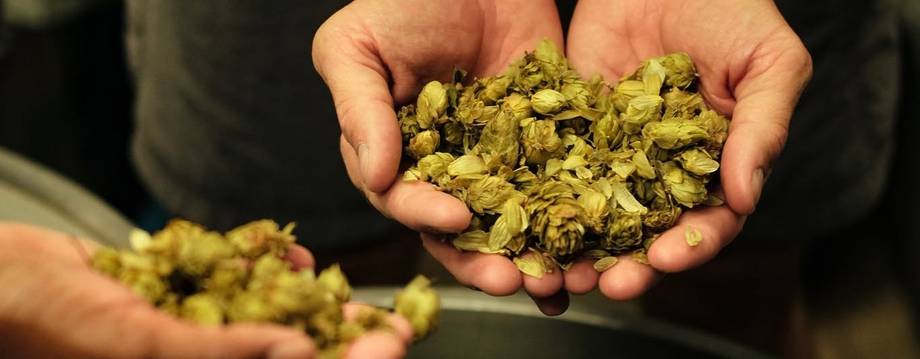
“What’s grown is mainly for the domestic markets, but the quantity is quite significant. I don’t remember what the number is but South Africa is in the top 15 growing countries in the world [12th largest in 2021] just for this phenomenon. So, it’s a pretty well established industry, and not something that came about because of the rise of craft beer.”
Nick says he’s only ever found it easy to buy South African hops from SAB, and that it’s been more than accommodating when it comes to sharing technical specifications, and connecting Soul Barrel with hop farmers whenever they’ve requested it. “From a brewing perspective, these varieties are fairly unique,” he continues. “They tend to have kind of a dark fruit, almost lime character to them, in a general sense, but there’s a few core varieties that we use a lot of. One’s called Southern Passion – that’s probably our favourite, and a really strong like passionfruit note to it – there’s another one called African Queen, which has a kind of berry, and dark fruit character.
“There’s also Southern Sublime, which has a little bit more of an overt bright fruit note, and is starting to get into a citrus realm. Another one we really like is Southern Aroma, that one was bred as a noble type variety and is really such a gorgeous hop. It’s very floral, very delicate, but it also has kind of a citrus, tea-like component to it. So it’s very complex and really interesting and appealing.”
Hops aren’t the only local ingredient that Soul Barrel has embraced. Sorghum and millet are established crops in South Africa, and so Nick has experimented extensively with the best way to use them. “Exploring local grains and unique African grains is a big part of our focus,” says Nick. “In the past year, we’ve been brewing a lot with sorghum; we did a barley wine with sorghum, we’ve done stout, we’ve done hazy IPA, we’ve done lagers. It’s a really fascinating grain and has such strong brewing characteristics and historical context.”
Exploring local grains and unique African grains is a big part of our focus
Brewing – at least as we know it in this part of the world – with sorghum is not without its challenges, but Nick is keen not to let these get in the way of Soul Barrel’s use of the grain. “Barley is essentially the ideal brewing grain because it mashes and gelatinises at the same temperature, so you have starch breakdown. It has a husk, so you can lauter it. You’ve got the right amount of protein. This is all because of the breeding that’s happened over centuries. Brewing with sorghum is a little different, but as brewers we’re used to solving brewing problems. The stuff that you have to deal with when brewing with sorghum is not really anything different than normal barley brewing.
“Sure, it gelatinises at a higher temperature, so you have to cook it first and then break the starch down into sugar, but you can do this in a variety of ways. It doesn’t have a husk, so lautering or wort separation is something you have to figure out. Sorghum also has less enzymes than barley, and the flavour can be very nutty and almost have an earthiness to it but it’s a relatively clean grain. I think the difference between grain flavours, outside of malting or other flavour impactful processing steps, is somewhat overstated, I think. A lot of times we’re adding sorghum to different beers, and it’s part of the beer, but we’re not marketing it as a sorghum beer. We’ll brew a hazy with sorghum and with South African hops, but you know we just sell it as a fruit forward hazy.”

Part of me is saddened to hear this – it seems a shame not to shout about the positive impact that using local ingredients can have on the economy, how it can draw in the skills of local people, how it carries the unique history, identity, and flavour of South Africa – but another part knows Nick is right. Beer isn’t going to save the world. We drink it, and then it’s gone. A huge part of me believes in the importance of what happens in between – along the journey from field to glass – and something tells me Nick does too, but that sentiment is a belief, not a universal truth. Enjoying a beer for beer’s sake is just as good an option.
“You want to give people the right information, but also the right amount of information,” says Nick. “In our craft beer bubble, we speak about the beer in very technical, romantic terms, and it’s a lot of detail and there’s a lot of complexity because, as brewers, that’s how we think about the beers, and we want to share these stories. But you have to find the right way to get that message out there. You know, people are busy in life and they’ve got lots of things to worry about, and they don’t really need beer to be a hobby for them to enjoy it. So we’re trying to really simplify how we describe the beers in an overt sense, but if people want lots of details, we have all these things. We just really want to make sure that the beer’s accessible for everybody.”
Share this article
You’ve reached your limit of 5 free articles this month.
Unlock unlimited access and more

Join Beer52 and get your first month half price
-
Get your first box for £13.50 (RRP £27).
-
8 beers & 2 snacks delivered monthly.
-
Printed Ferment magazine included.
-
Unlimited access to all online content.