Devour the world: Braai
Cooking over fire may be the most primal thing in the world, but South Africa definitely has it embedded in its culture and, as Melissa Cole learns, don’t call it BBQ.
Melissa Cole
Saturday 17 October 2026
This article is from
South Africa
issue 136
Share this article
I’m lucky enough to have travelled to quite a few places in the world where, at the drop of a hat, people will strike up a flame and cook you some food, often going to extraordinary lengths to show off their fiery food culture.
Memorable occasions include being driven around Texas eating the specialities of each place as we went (which nearly killed me); eating brisket in a friend's garden, in California, while they struggled to stay awake because they’d been up all night smoking the meat; tasting whole lamb al asador at a brewery in southern Brazil.
While these were all wonderful, there’s something unique about a braai in South Africa. It’s a whole performance, while somehow not being performative – it’s about community and catching up.
The sexism of the ‘man make fire’ thing that’s deeply embedded in braai notwithstanding (something Unathi Funde covers brilliantly in their paper titled 'Manning the braai: tracing the gendering of the braai in public discourse') I realised I like it so much because it aligns with my way of cooking BBQ; It’s ready when it’s ready, but there’ll be plenty of snacks and beer while it’s going. After all, braai is all about being social, hanging out with friends, catching up with folks you haven’t seen in forever, and laughing until you are blue in the face.
South African native Raph Bassant, a friend, former brewer and general fire-cooking fiend, sums up his feelings on what makes braai unique: “The call to braai is a call to slow down, chill, stare into flames, talk rugby, cricket, fishing and life in general. It's not the British way of barbecuing – flash the gas, in and out – it takes time and so is about being patient. There's laughter and shit talk before anything else, and food only happens when the kids are hungry. You'll always hear 'nou gaan ons braai', ‘now, we're going to start the braai', which marks the beginning of the cooking.”
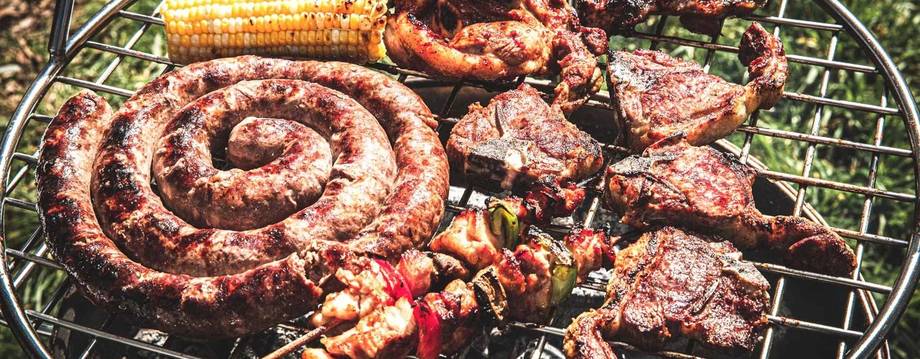
PHOTO: BBQ News
The lingo of lekker
And if you think the comment about ‘shit talk’ is just a euphemism, you’d be wrong. Karl Tessendorf and Greg Gilowey, braai experts and authors of multiple cookbooks, confirm and expand on Raph's astute observations.
“It’s not supposed to be a quick thing," says Karl. "You don’t arrive and eat, you make kak praat [shit talk], then you make a cooking fire, then you have too many beers and forget to put the meat on. Poike [the three legged cooking pot in which stew is made] happens on African time, it’s ready when it’s ready.”
Karl goes on to explain that this merry and slow-moving ritual is a very important social phenomenon. “We have the word ‘gees’ in Afrikaans which means spirit. If you have a lot of it then you can be enthusiastic and very passionate; it gets used a lot in South Africa, especially with braai.”
Greg adds: “Standing around an open fire with mates, outdoors, it’s hard not to have gees, it kind of happens by default. To steal someone else’s phrase, there are 12 official languages in South Africa, but we all speak braai. There’s not a lot that we don’t argue about, but around a fire things tend to be good."
And, quite often, they have to be. Something I hadn’t considered about braai is that its growth as a cultural practice is linked with the prevalence of rolling blackouts – events referred to as 'load shedding' in South Africa. In these instances, the nation’s grid isn’t able to handle the demands for power and cuts off supply. As such, cooking over fire is the best way to ensure your social occasions aren't disturbed, and has turned this major social challenge into something like a group therapy session. This phenomenon is what inspired the clever title of Greg and Karl's most recent cookbook, Blackouts & Boerewors.
Thorny issue
But back to the nitty gritty of braai itself – previously I have been told that the only acceptable source of heat for a braai is wood, but Karl, Greg and Raph all tell me that this isn’t true, and that charcoal can be involved too.
“We use both, it’s the perfect way to make a braai; use a little bit of hardwood charcoal, and put the wood on top, then you get a consistent heat for a longer time," says Greg. “However, briquettes are like the Vienna sausage of the braai world, a hangover cure on a Saturday morning – they do the job but aren't the best. It’s all invasive wood that we get here, a lot of it comes from Namibia and is called camel thorn. You're only able to harvest its dead wood, so we work with this for both the wood and charcoal, but old vines are also perfect.”
Karl adds that “there’s also rooikraanz, which is an invasive species, as well as eucalyptus and wattle, which drink a lot of water and burn to ash at the drop of a hat, so they are dangerous and need to be removed.”
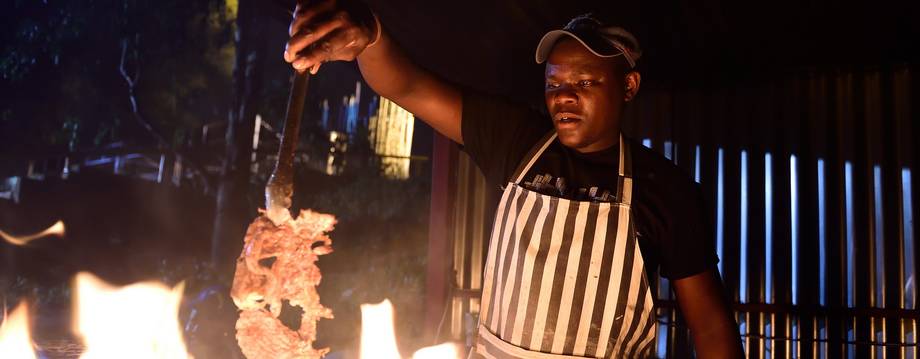
PHOTO: southafrica.net
Braai'd ideas
So, we’ve covered the people and the fuel, so let’s get to the food. What are the absolute necessities for braai?
Raph has four essentials: “Boerewors [a long, spiraling, spiced sausage] is a must, no braai is a braai without it. A lamb loin chop thick cut, cooked hard, and juicy and pink. A good pair of tongs and a good chair.”
In this era of gadgetry, temperature probes, off-set smokers, charcoal ovens and everything else you can think of, this kind of simplicity is refreshing to hear.
“There’s a lot of braai gadgets and tools out there but all you need is a good pair of tongs and a sharp knife, which frees up your other hand for beer.”
And, finally, if you want a summation of why braai is so compelling, Karl says it perfectly.
“It taps back into something primal. Since we could strike two pieces of flint together we’ve been staring at flames, and there’ll be a moment when no one is talking, just looking at the fire, and it’s probably been like that since we were in caves.”
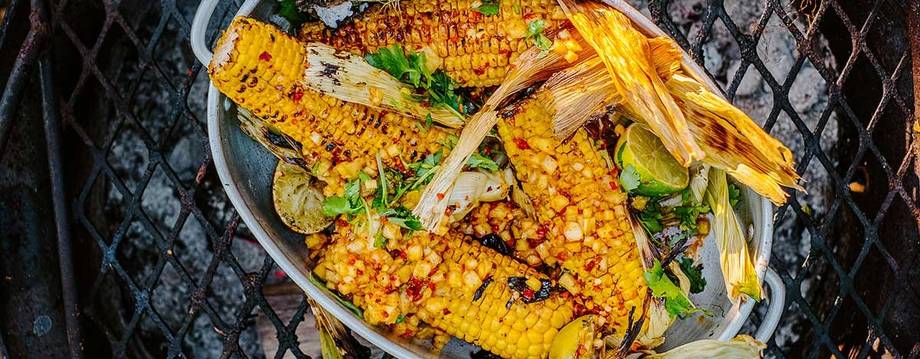
PHOTO: Woolworths TASTE
Braai advice
One of this issue’s fellow contributors Lucy Corne, who married a South African and emigrated, gave me some sage advice on how to navigate the culture of braai:
- Even if it’s raining most people have an outside braai area, so you don’t have to huddle under an umbrella.
- 'A bring and braai' is where you bring your own meat, cook it, and eat it, there’s not usually any sharing.
- If you bring chicken, there will be jokes about ‘I didn’t know we are doing vegetarian’.
- If the flames catch, you have to put them out with beer.
- There’s a joke that if an Afrikaans man invites you back to his place at 2am for a braai, it’s not a euphemism, he means it.
Everyone's braai essentials
- Beer - as low-ABV as possible, you’ll be drinking for a while
- Braaibroodjie - a braai’d toastie, usually cheese, tomato, onion & Mrs Ball’s Chutney
- Boerewors - a big curly sausage of at least 90% meat
- Lamb chops - the thicker the better
- Potato salad
- Coleslaw
- Pap & Chakalaka - maize porridge with variations on very well-seasoned chopped veg, tomatoes & beans on top
Share this article
You’ve reached your limit of 5 free articles this month.
Unlock unlimited access and more

Join Beer52 and get your first month half price
-
Get your first box for £13.50 (RRP £27).
-
8 beers & 2 snacks delivered monthly.
-
Printed Ferment magazine included.
-
Unlimited access to all online content.