Making camp
Pete Brown has been a familiar face at South Africa’s Beer Camp since its inception. Today, he looks back at ten years of constant progress.
Pete Brown
Saturday 17 October 2026
This article is from
South Africa
issue 136
Share this article
Far below the equator, in the heart of the June midwinter, the South African sun sets about 5.30pm. The heavens glow bright copper thanks to the thick dust that Johannesburg kicks up. The beer is not hazy here: people get enough of that from the sky.
I’m on a minibus, hunched in, thighs pressed together, with Steve “Hendo” Henderson of Rockstar Brewing in Melbourne and internationally known fixer for any recipe or brewing problem a small brewer might have. Also present is Amelie Tassin, founder of Women in Beer, head of Tipple Marketing here in the UK, and one of the most tireless and effective campaigners we have for increasing the representation and rights of women in the brewing industry. We also have Bob Pease, who at this point in time is President and CEO of the Brewers’ Association in the United States and Steve Grossman, international ambassador for Sierra Nevada, and brother of that brewery’s founder, Ken. Up front is an Afrikaner couple, Jules and Wendy Pienaar.
The Pienaars don’t look like heroes of the craft beer movement. They don’t have a visible tattoo or plaid shirt between them. In their mid-to late-forties, Jules works full-time for tech company Lenovo across Africa, while Wendy works in education. In their spare time, they run Just Brewing, a brewery in Gauteng, north of Johannesburg, which promises drinkers “good, honest beer”. And in their spare time from that – which, in terms of objective reality cannot possibly exist, but which Jules and Wendy somehow magic up from somewhere – they run Beer Boot Camp.
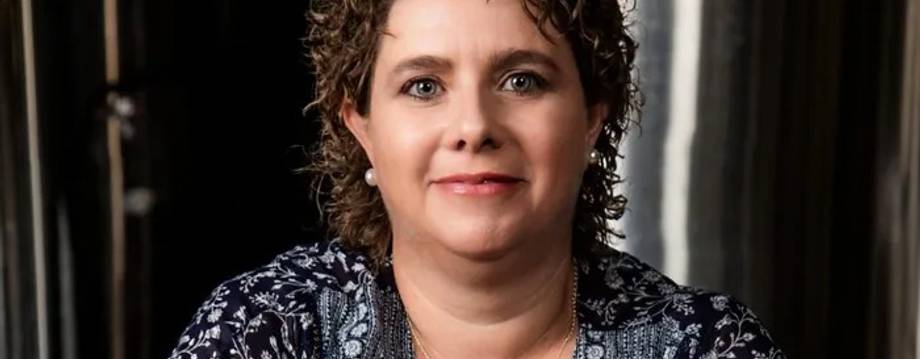
PHOTO: Wendy Pienaar, Beer Boot Camp co-founder © sundayindependent.co.za
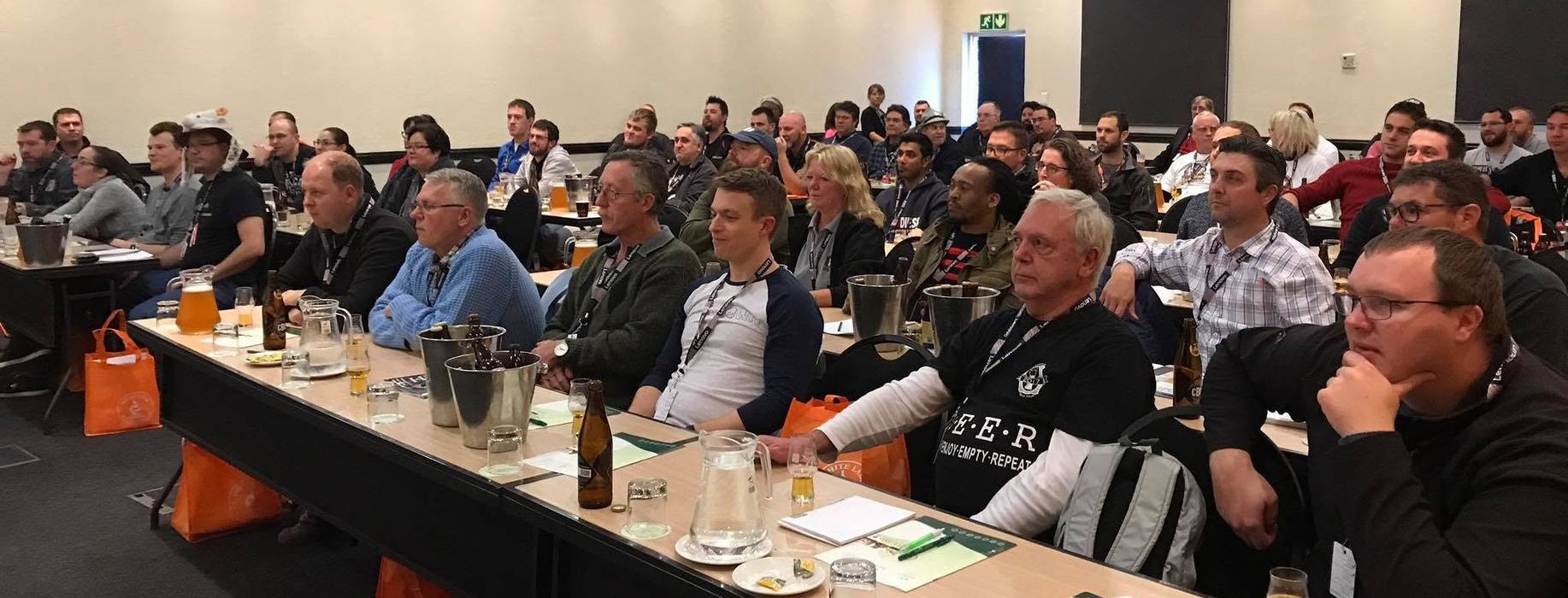
Beer Boot Camp is a day-long conference aimed at South Africa’s small, independent craft brewers; it is also arguably the main reason that, today, South Africa has so many small, independent craft brewers. Many of which are not as small as they used to be, or still would have been without Boot Camp.
Jules and Wendy started brewing in 2014, in difficult circumstances. “There weren’t many brewers around then,” Wendy remembers today. “There wasn’t lot of information. Craft brewers were using recycled equipment, farm stuff held together with tape. We needed help and advice. We needed educating.”
In 2015, the first Beer Boot Camp was held in Johannesburg. Many of the attendees were still homebrewers at this point, so Wendy invited John Palmer, American author of the best-selling home brew bible How to Brew, to come and speak. He accepted.
“We had no profile. No one knew who we were!” says Wendy. “There were no other beer events happening in South Africa, but he knew he’d be in good hands. Everybody else was local: someone from the SAB (South African Breweries) hops farms, JC from Devil’s Peak, which was a pretty established brewery by then.”
It was the first time South Africa’s fledgling craft brewing movement had socialised and networked. Palmer was received like a Hollywood celebrity. The following year, Wendy got more ambitious.
“Hi there, love your writing! Any interest in coming to South Africa to present at a conference for a bunch of craft brewers?”
It took about ten years to hit its peak in the UK. In South Africa, it took less than five
This message appeared in my inbox in July 2015, shortly after the first Boot Camp. It’s the kind of message I live for. Beer writing doesn’t pay much, but every now and then, someone contacts you from out of the blue and offers to fly you halfway around the world to speak to people.
The 2016 edition was still going to be a one-day conference. But it was to be held twice: once in Johannesburg, and once in Cape Town, on consecutive Saturdays. As well as beer writers, there were award-winning international brewers, hop merchants from Baath Haas and yeast scientists from White Labs. We came from the UK, Germany, Australia and the US, converging on a conference room in a fenced-in hotel complex with about a hundred home brewers, professional brewers and everything between the two.
The genius of the concept, from the speakers’ point of view, was that the week between the two events was packed with visits, events, tastings and brewery tours, so the education went both ways.
There’s a graph that shows how the adoption of new technology is accelerating. Smartphones were adopted by the majority of the population much quicker than early Nokias, which were adopted quicker than video recorders, which were adopted quicker than TVs, and so on.
A similar thing happens when you look at the learning curve and spread of craft brewing as it hits different countries. Craft beer took a couple of decades to sort itself out in the United States. It took about ten years to hit its peak in the UK. In South Africa, it took less than five.
The first time I was at Beer Boot Camp, we went to the SAB Museum in Johannesburg. Dr Kristina Schoenberger from Baath Haas was almost in tears at the age and decrepitude of the hops on display. There were malt samples where grains of all colours were mixed in together thanks to the poor quality of the malting process.
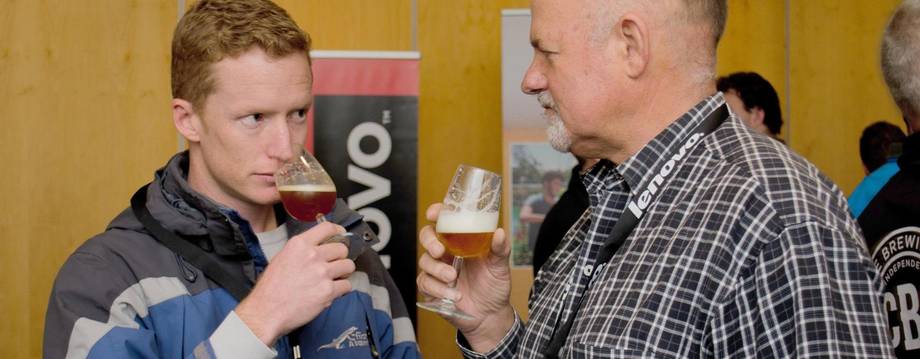
PHOTO: Beer Boot Camp
At the time, SAB supplied craft brewers with their ingredients, and had a ninety per cent share of the beer market. Their biggest competitor was wine, and they figured craft could compete with wine where Castle Lager and Carling Black Label couldn’t. Or maybe this was a ruse: give the craft guys ingredients this poor, and they’d never brew a beer good enough to compete with the big brands.
Either way, when AB InBev took over SAB, their single-minded ruthlessness wouldn’t let them countenance giving help of any kind to a brewer not owned by themselves. Their tunnel vision backfired though: Beer Boot Camp was now attracting sponsors and speakers from suppliers around the world, whose product was of infinitely better quality. I was invited back to speak at Boot Camp every year between 2016 and 2019. The beers were noticeably better every time and by 2019, they were unrecognisable.
Boot Camp paused for Covid, and resumed again from 2022 to 2024. I didn’t miss a single one. While brewing and ingredient experts poured out their knowledge to people who absorbed it like sponges, I was the light relief. Well, me and Jules Pienaar; Jules filled the room with his personality, putting this disparate group of people at ease, making the whole thing feel like a party, as well as running the tech for the event and driving us around for hours a day before and after. Wendy kept everything running. “It was all self-funded,” she says now. “We put it on our credit cards and hoped it would work.”
There was a year off in 2025. And then, in 2026, tragedy struck: Jules Pienaar passed away very suddenly in January, at 49.
Wendy and Jules, and their brilliant daughter Courtney, had become family friends by this point. They’d been over to stay with us, and I’d been on their post-Boot Camp safari holiday with them several times. It was one of those deaths that didn’t make logical sense: he’d been posting on Instagram just two days before about a festival bar he’d be running. The South African brewing scene was stunned by the loss of one of its biggest characters.
I get the feeling Wendy Pienaar hasn’t finished her work – just the first chapter of it
Just Brewing continues, with Wendy now designing the beers. “I like the creative stuff. My colleague Michelle does the science bit.” Courtney, just about to graduate university, designs the labels. I have to ask: have we seen the last of Boot Camp?
Wendy pauses and thinks. “If you’d asked me earlier in the year, I’d have said yes,” she says finally. “I didn’t think I could do it without Jules. But more to the point, maybe it’s not needed any more. We have a lot more breweries now. The quality of the beer is so much better. We have barrel-aged imperial stouts and West Coast IPAs. As of last year, in the Africa Beer Cup we have three new uniquely African beer styles. And breweries are doing better at the business side too.” She smiles, curiously. “Maybe something else is needed now.”
With that, Wendy is back to thinking about a fruited lager that’s in the tank, and I’m back to thinking about that minibus in 2024, Jules’s voice booming from the driving seat, as he transports us to a dinner being hosted by the Craft Brewers Association of South Africa (CBASA), which Wendy has organised because, obviously, at this point in time she’s also quietly making CBASA run smoothly too.
At the dinner, we taste various different traditional South African beers. A speaker from CBASA says the purpose of the dinner is to have South African beer taken more seriously.
“Africa has a table in the beer world,” she says. “People come here for Table Mountain, the Big Five safari animals, our bright clothing and sunny beaches. And then we give them Stella from Belgium.”
As I taste the excellent Joburg-brewed saison that’s paired with the main course, I can’t see this being true for much longer. I get the feeling Wendy Pienaar hasn’t finished her work – just the first chapter of it.
Share this article
You’ve reached your limit of 5 free articles this month.
Unlock unlimited access and more

Join Beer52 and get your first month half price
-
Get your first box for £13.50 (RRP £27).
-
8 beers & 2 snacks delivered monthly.
-
Printed Ferment magazine included.
-
Unlimited access to all online content.