The spirit of reinvention
Lucy Corne takes us to South Africa’s Karoo region, the epicentre of an agave spirit industry that’s been several centuries in the making.
Lucy Corne
Saturday 17 October 2026
This article is from
South Africa
issue 136
Share this article
Nobody quite knows how giant agave plants ended up in South Africa’s semi-desert. They dwarf the surrounding shrubbery, their mint green leaves providing pretty contrast to the emerald vegetation and the russet-coloured earth.
Most people agree that agave was used as ballast in ships journeying from the Americas to the East, and it’s thought that they were tossed overboard, likely to make room for local trade goods. The hardy plants took root and began to grow along the coast, but how they made their way inland is a little less clear. The centre of South Africa’s agave growing region is Graaff-Reinet (recently renamed Robert Sobukwe Town, for the apartheid era freedom fighter that was born here), some 250km from the closest coastline.
Tim Murray’s version of how the plants ended up here is coated in family lore. One of South Africa’s leading agave farmers today, Tim’s family farm has featured the plants since the 19th century, and, according to a tale passed down through the generations, they were brought here by a local girl returning from a trip to the coast. “She saw the agave growing and noticed goats were eating it,” says Tim. “So she brought some of the suckers [baby plants] back in her bag to grow and use as animal feed.” It’s as good a tale as any other as to how this Mexican succulent ended up 15,000km away from its origin.
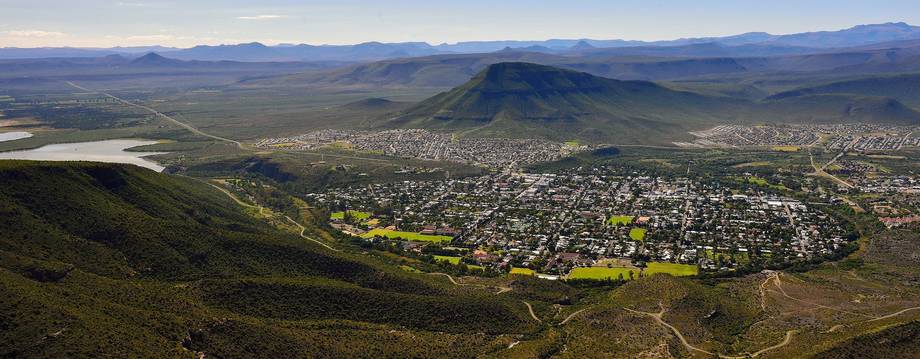
PHOTO: Graaff-Reinet © South Africa Tourism
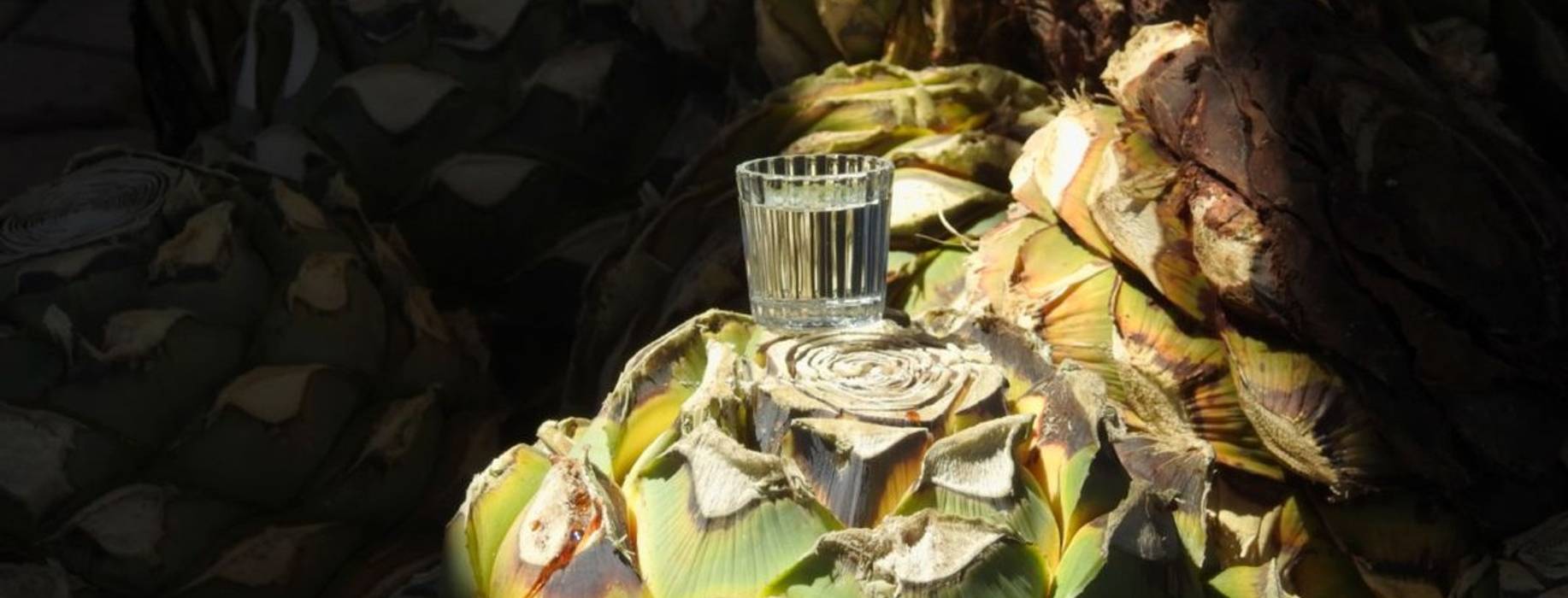
The tequila plant
“Each generation has had a reason to plant agave,” says Tim. “It was first planted on my great-great-grandmother’s farm in 1886, and used as ostrich feed. They believed it gave better quality feathers at a time when ostrich feathers were more valuable than gold.” Later, it would be used as cattle fodder, with the South African government even decreeing that every farm in the Karoo (a semi-desert region occupying 400,000 square kilometres of central South Africa) should plant agave in order to protect their livelihood in the event of a drought, since the plant served as both food and a source of water.
Then in the 1990s farmers started to plant agave for the purpose most associated with it: tequila production. Here it is known as agave spirit, and while its production follows a similar process to that in Mexico, the plant used is a different species: Agave americana. It takes 12-20 years to grow to maturity compared to 5-7 years for Mexico’s blue agave, but once harvested, its core, known as the piña, weighs up to 200kg – almost five times that of its Mexican cousin.
On the northern edge of Graaff-Reinet, an unmarked white building sits behind a chain link fence topped with barbed wire. The building is now used as a storage facility, but the huge agave plants in the grounds hint at its original purpose. There is no signage, but locals all call this windowless building ‘The Tequila Factory’, which for a brief time was true.
Boom, bust, repeat
The Tequila Factory – or Reinet Distillers, to give it its correct name – was built at the end of the 20th century. It all began when Mexico’s agave crop was decimated by fungal disease in the 1990s. Production halted, prices surged and tequila lovers were left wondering where the next sip would come from.
Step into the picture Harvey Venter, a South African entrepreneur who looked at the Karoo’s abundance of agave and saw an opportunity. He raised huge capital, built a factory and set about importing a still. But the venture was doomed. Money was squandered, the Mexican tequila authorities were on the warpath and as Tim puts it, Venter “went bankrupt without ever distilling a drop”.
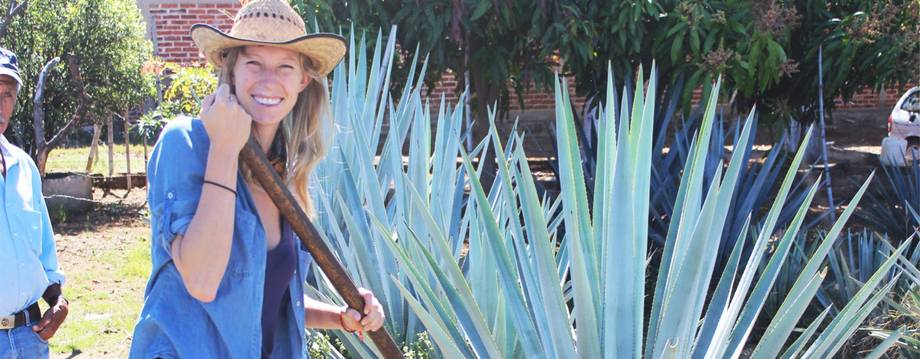
PHOTO: Sarah Kennan, Leonista founder
Uplifting agave
The Tequila Factory sat empty, and the farmers who had believed in Venter’s dream and planted agave en masse sat forlorn. The next owners, Agave Distillers, at least started production (helped in no small part by one employee noting that the column still had initially been installed upside down). But the business was destined to fail, and in 2008 it was once again liquidated, the assets – including that barely-used still – sold off.
It was only a matter of time before a new distiller tried to establish a local tequila market. And this time it worked. Sarah Kennan was on a surf trip around Mexico when inspiration hit. The 27-year-old business school graduate saw a gap in South Africa’s spirits market and spent four months researching the Mexican tequila industry, wowed by the variety and quality available.
“It’s a lot like you’ve been drinking boxed wine your whole life and suddenly you go to France and discover what’s out there,” says Sarah. She decided to bring some of Mexico’s agave culture back to South Africa.
Her brand, Leonista, kickstarted the country’s high-end agave scene in 2016 and Sarah spent five years focusing on showing people that tequila – or agave spirit – could be enjoyed as a high-end, slow-sipping experience and not just something you shoot at salsa night in the local bar.
“The farmers had been burnt before,” she says. “So they were a bit hesitant.” But over time Sarah proved herself, growing Leonista to be a national brand. In 2025 she sold the company to a Cape Town consortium who are currently expanding and getting ready to relaunch.
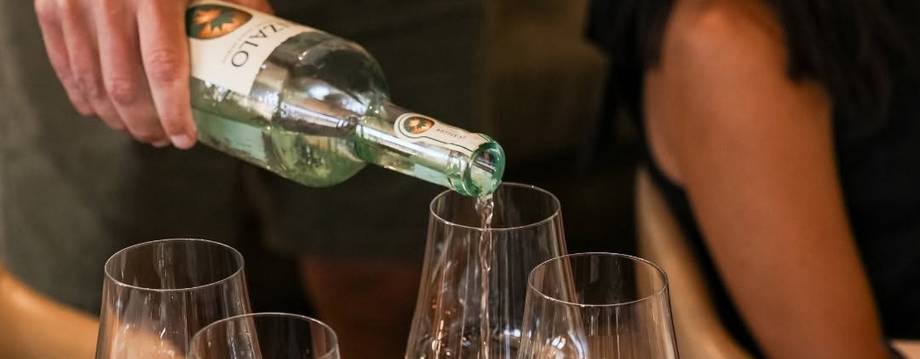
PHOTO: Inzalo
A new era
Today there are half a dozen agave spirit brands operating in South Africa – some cooking and distilling their own agave, others operating as contract brands. And in a happy episode of recurring history, Graaff-Reinet once again has a functioning distillery.
Rocco Toro is the brainchild of Jonathan Roche. He started with a small contract craft beer brand but spotted a gap in the drinks market and changed lanes to venture into agave spirit. “I started dabbling in contract distilling just after Covid,” says Jonathan, “Then, after a few false starts with securing premises in the town, we opened our own distillery in January 2025.”
Jonathan wanted to follow the Mexican authorities’ guidelines, so his spirits contain 100% agave, which is cooked, fermented, distilled and bottled on site. There is also a tasting space, where visitors can learn the process and then join a guided tasting with Jonathan.
“We are tiny!” he says. “We make one batch per week, using about three tons of piña. We yield 70 bottles per ton.” Roche pours tasters of Rocco Toro’s Blanco and barrel-aged Reposado – a sub-category of tequila aged in oak for a minimum of two months – into champagne flutes as he talks visitors through the process and the town’s long history with agave.
In search of agave
But while Graaff-Reinet has long been associated with agave, it is far from being the only region where the plant grows in South Africa – something that co-founder of Inzalo, Sebastian O’Keefe, knows better than most.
After 10 years working in the UK wine and spirits market, Sebastian moved back to his native South Africa with the intent to start a spirits brand. After some research, he settled on agave and began a detailed research mission.
“Once you can recognise what agave looks like, you realise that there is a huge range of species growing in South Africa, but everyone is using the same variety – the Americana from Graaff-Reinet,” he says. “So along with my business partner, biologist Diego Avila, I spent two years road-tripping around South Africa plotting different species. The goal was to find South Africa’s best expression of agave and make the best possible tequila from it.”
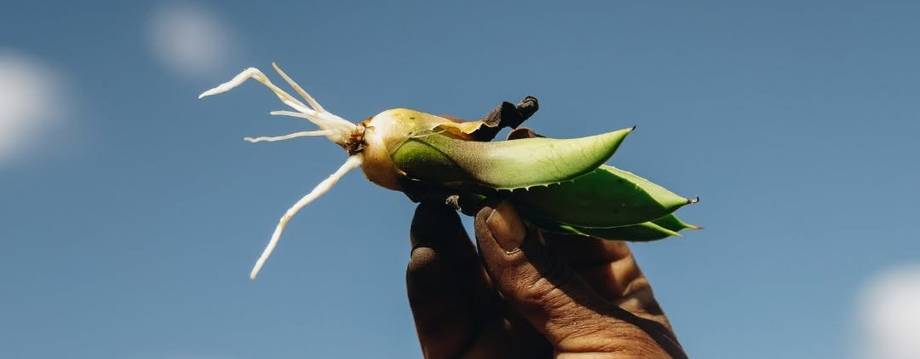
Along the way, Sebastian was introduced to farmer Nick Fairley, who was based outside the Karoo town of Ladismith in the Western Cape. He and Diego had become fascinated by a unique species of agave with red-tipped leaves – a species found in abundance on Fairley’s farm. This variety would become the backbone of Inzalo.
Spirit of provenance
The brand’s name speaks to the ethos of the company. “Inzalo means descendant or rebirth in Zulu,” explains Sebastian. “When it comes to producing our version of tequila, we want to honour the Mexican tradition, but we don’t want to copy it. Our methods are based on traditions, but adapted to the local tools and the local conditions.”
The Inzalo team call their style “red agave” – both a nod to the pigmentation of the plants, and also a tip of the hat to the blue agave used in traditional Mexican tequila production. “These plants were all Mexican once,” says Sebastian. “But they have evolved with the local conditions to become something uniquely South African.”
Over the course of a year, Sebastian and Diego hand-selected wild red agave which was then fermented with yeast isolated from the plants. “We have ended up with a spirit that has this deep sense of provenance,” says Sebastian. “The yeast gives a buttery, soft, chocolate-like note while the high salt content in the soil adds a saline minerality that I have never experienced in another agave-based spirit.”
Experts in the industry agree. In December 2025, after 16 production runs, the Inzalo team finally came up with a product they were proud to launch. They called it Batch One and, earlier this year, entered it into three major competitions. The results were astonishing. Inzalo’s Batch One took a gold medal in the Agavos and scored 96 points in the International Wine & Spirits Competition, placing fifth globally and beating every single tequila in the competition (only Mezcals scored higher). More remarkable still was the double gold awarded in the International Spirits Challenge.
“The goal was always to create something global,” says Sebastian. “We wanted Inzalo to be one of the first provenance-driven agave spirits globally. If you think about it, whisky used to be Scottish, wine was French or Italian but now those beverages are made to high quality in New World countries, and that’s what we aim to do with South African agave spirit.”
Sebastian and his team seem poised to achieve what others set out to do three decades ago. And while agave may have arrived in South Africa by accident, its future here looks increasingly deliberate.
Share this article
You’ve reached your limit of 5 free articles this month.
Unlock unlimited access and more

Join Beer52 and get your first month half price
-
Get your first box for £13.50 (RRP £27).
-
8 beers & 2 snacks delivered monthly.
-
Printed Ferment magazine included.
-
Unlimited access to all online content.