Failing to plan is planning to fail
Laura Hadland finds that brewing isn't always sexy and spontaneous.
Laura Hadland
Saturday 17 October 2026
This article is from
South Africa
issue 136
Share this article
Every now and again, a flurry of activity will set the brewing world alight; a new hop, another cutting edge technique, a different way to approach well-trod styles. From there, new beers seem to come hard and fast, as every other brewery jumps on the bandwagon, keen to put an in-house twist on whatever's trending. But scheduling new releases is far from a fast process. For many breweries, planning a brew schedule is a joint effort between production, sales, and marketing, requiring each to align timelines, logistics, commercials, market demands, and the availability of ingredients, sometimes years in advance.
Carl Duke manages collaborations and wholesale business for Castle Rock Brewery in Nottingham. The brewery has been working with other brands and brewers to build a creative portfolio of one-off beers for almost a decade. Carl, better known as Duke, holds monthly meetings with the brewing and marketing teams to ensure that each beer comes to fruition without a hitch.
“I plan collaborations around the beer festivals that we’re going to do throughout the year,” says Duke. “Launching at festivals highlights not only ourselves but the breweries that we’re working with in the best possible light. Offering something different, something new.”
As well as getting the timing right for release, planning has to include the logistics of where seasonal releases will physically fit in the brewhouse – that means moving beers from tank to tank if necessary and, at the other end, ensuring enough casks, bottles or cans are available.
“Coming into a busy period like Christmas, for instance, we need to know what we’re putting into firkins [9 gallon casks] and what we have to put into kilderkins [18 gallon casks]," Duke explains. "Pubs don’t want their staff going up and down, changing firkins every minute. We need to be able to facilitate that and organise storage accordingly.”
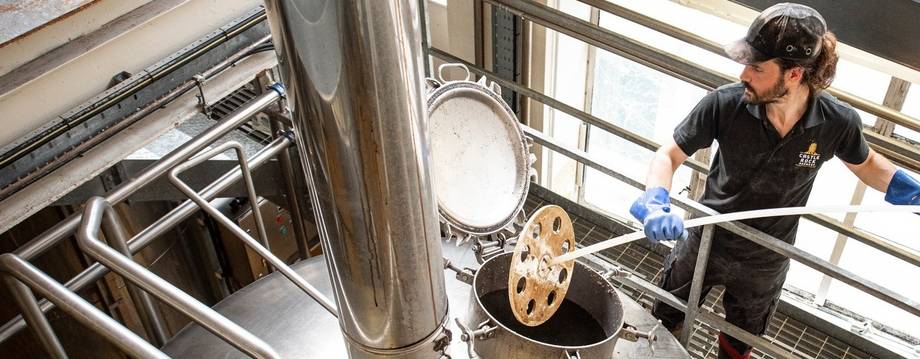
PHOTO: Castle Rock Brewery
Colin Paige, co-founder of Round Corner Brewery in Melton Mowbray sets a lot of stock in careful planning, having worked for large commercial breweries in the early stages of his 30-year career where product launches failed after being rushed and poorly executed.
“Our process is very much a team event. Historically led by me, and now by Lara [Lopez, head brewer], we pull in the sales team and brewing team and discuss what we would like to make and what our customers want to see from us.
“We use a brief writing process, designed to take in all aspects including legal requirements, pricing, launch date, etc. We made the decision when we founded the business that every beer would have a name and a back story. This creates more work but gets our creative juices flowing.”
Like Round Corner, Peterborough’s Oakham Ales also programmes in an annual calendar of seasonal beers that are planned well in advance.
“We have to have our commercial heads on, so we can’t be overly wacky,” explains head brewer, Ed Sharman. “The sales team will say the ABVs and styles that they think work well in each month. For example, it’s not necessarily true with us that darker beers sell better in the autumn. It can be February, March or even late spring.”
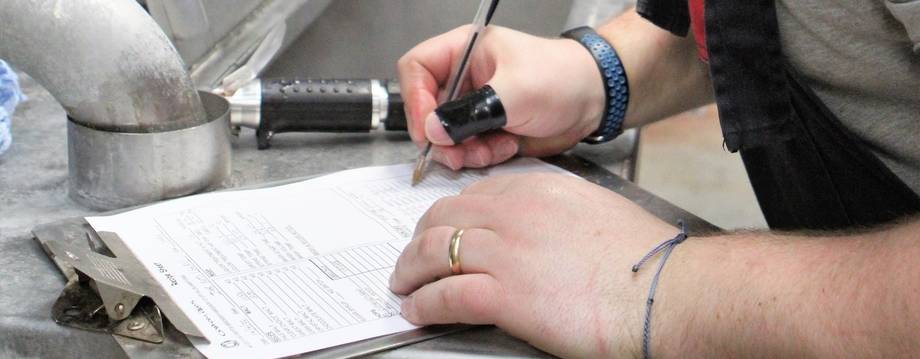
PHOTO: Oakham Ales
Capitalising on intelligence from the sales team doesn’t make brewing restrictive, though. Ed makes use of new ingredients to keep Oakham’s seasonal schedule interesting both for him and for his customers.
“Our core beers are pretty much all US hops, but I like using British hops too,” he says. “They’re fantastic and it’s obviously really important to support the British hop industry. We’re doing two seasonal beers a month in 2026, so there’s a lot of scope to try out new hop combinations. As well as showcasing what single varieties can do, we are also looking at how blends with American varieties can bring out character in the British hops and vice versa.”
The Oakham team has a long-standing relationship with hop processor and supplier, Charles Faram, and in its own way, this partnership has an affect on the teams ability to plan its brew schedule. On one hand, Faram gives Ed access to new experimental hops, but as an intermediary between farm and brewer, the supplier has its own tightrope to walk, namely that which ensures supply meets demand.
After all, hops are a finite agricultural resource, as is the malt that brewers use. The success of the harvest determines what’s available. Some brewers enter into annual hop and malt contracts to ensure that the ingredients their schedule requires are reserved.
Part of Charles Faram’s job that drinkers rarely see is considering acreage changes, where hop growers collectively might be producing too much of one variety and not enough of another. The Faram team brokers collaborative conversations between brewers and growers about what is required. After all, mature hop plants cannot simply be conjured out of thin air. The production of hops takes time and planning over the course of many seasons. Though far removed from the pint you'll enjoy in the pub, this agricultural aspect of beer plays into a brewery's forecasting and brew scheduling.
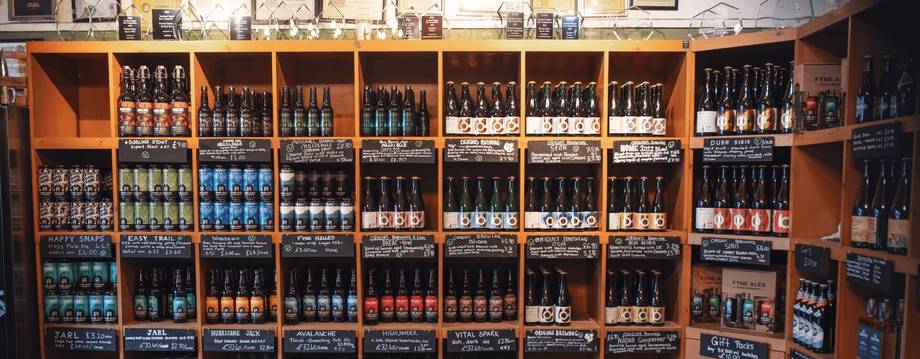
PHOTO: Fyne Ales
Oakham Ales’ twenty-four unique seasonal releases each year is at the higher end of what a brewery can sensibly manage. Any more than that, and you have to wonder whether all of those “new beers” are actually true originals and not just the same base beer with different flavourings added, or rebadged beers that have overrun their release slot. How many Christmas ales morph quietly into a January winter warmer, one wonders?
Shifting stock is more important for some formats than others; cask beer's short shelf life means it has to be sold and drunk quickly, while barrel aged beers can sit around for much longer. This, however, brings with it new challenges. Origins Brewing is a small-batch, mixed fermentation project by Fyne Ales in Argyll. A beer like its fruited saison, Nàdar, can take around a year to produce, from brew to shelf. That means that Dan Wye, who heads up the Origin project, has his brewing scheduling mapped out a year in advance, with some beers marked for release only after being aged for many years.
“Maturation in the barrel has no real timescale,” says Dan. “We’ve still got stock from 2016 – but I’ve used some barrels after just 2 months.”
That means that he has a degree of flexibility when planning for key events, like the brewery’s annual flagship event, FyneFest.
“There’s a bit of thought about the release before and on FyneFest,” he explains. “I have to make sure the Origins bar is on top form. Luckily a lot of the styles I work with can sit for a while and fortunately we’ve got a decent amount of space so I can stack the bottles up in cages.”
For Dan, scheduling is a slow waiting game. For the likes of Ed and Colin, speed is of the essence. Whichever approach they take, it’s clear that failing to plan is planning to fail.
Share this article
You’ve reached your limit of 5 free articles this month.
Unlock unlimited access and more

Join Beer52 and get your first month half price
-
Get your first box for £13.50 (RRP £27).
-
8 beers & 2 snacks delivered monthly.
-
Printed Ferment magazine included.
-
Unlimited access to all online content.