Lúdica Cervecería: Lúdica dreams of grape ale
Wine might not be the first beverage that comes to mind when you think of Mexico, but the hot days, cool nights, and coastal breeze makes the Valle de Guadalupe the perfect place for growing grapes.
Robyn Gilmour
Photos:
Lúdica Cervecería
Saturday 14 November 2026

This article is from
Global Brews
issue 137
Share this article
Over the last 13 years, Ferment has had the good fortune to travel far and wide, and connect with breweries from all over the world. We’ve used these opportunities to explore brewing traditions that are different to ours, and interrogate what we might learn from other beer cultures. We seek out local styles, sample them alongside regional fare, visit pubs and breweries that are pillars of beer culture in their local communities. Up close, our adventures suggest that in every city, region, and country, there’s a specific way for beer to be brewed, served, and enjoyed, but zoom out just a little and it pretty quickly becomes clear that such a theory is bullshit. Beer comes from everywhere, anyone can brew it however they like, and that’s the beauty of it.
Czech and German migrant workers brought lager to Mexico. British colonial forces planted Fuggles in Australia. The movement of people throughout history maps directly onto the evolution of beer, along with a whole host of other fermented products and practices – there is no style, method or ingredient that hasn’t been influenced by someone or somewhere else. And so, in celebration of the chaos and nuance of fermentation, I ask every brewery featuring in this issue if there are any fermentation practices, from other parts of the world, that have influenced its beer and brewing practice. Cerveceria Lúdica best understood the assignment.
When I last spoke with Lúdica’s co-founder, Gustavo del Castillo, I asked if it was possible to grow hops in Baja California – it is, after all, a stone’s throw from San Diego. He told me that people have tried, but that the temperature fluctuation between day and night is too extreme. It is, however, perfect for growing grapes.
“If you were to look up Tijuana on a map, and go 100km south along the coast, you’ll see a small port city called Ensenada,” says Gustavo. “It’s right next to a grape growing region called Valle de Guadalupe. It’s hot during the day, but then at night it cools, and you get the ocean breeze down the valley, and that seems to be a good combination to grow wine grapes. The vineyards go back to the Spanish missionaries that settled there, and brought grapes with them.
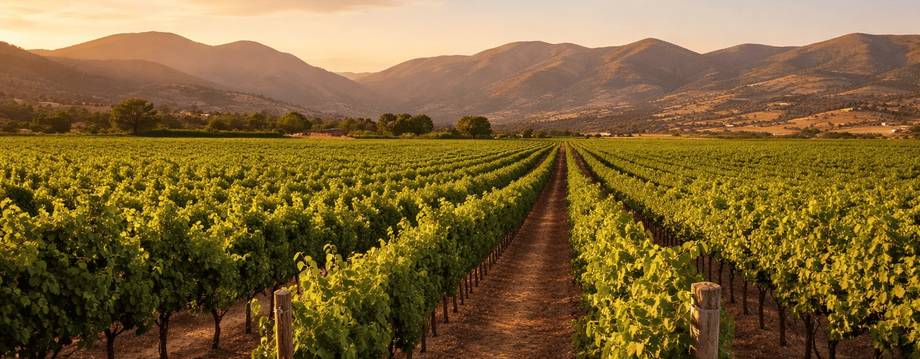
PHOTO: Baja Vino
“They started making wine and brandy and all that. We have a good variety of grapes growing here; there’s a lot of Cabernet Sauvignon, Merlot, Malbec, Grenache, Syrah. White wine too. It’s basically almost all European varieties. We still have a couple of big wineries that are almost 100 years old, but in the last decade a lot of smaller operations have started to pop up. So, we have really, really good wine really nearby to us, and of course, lots of great restaurants and food, so it’s a really nice place to visit.”
Whenever he can – generally a couple of times a year – Gustavo will slip away for a half a day, just to hang out in Ensenada, specifically this one coffee shop, Barra D` Café. “There’s this place where Santo Tomas [one of Ensenada’s big wineries, and the name of the original missionaries] had facilities and where they used to produce their brandy,” he says. “They’re like warehouses, and they still have the old barrels, but they no longer produce anything there and it’s now a commercial space. That’s one of my favourite places. There’s a really good coffee shop in what used to be a concrete brandy tank, so it’s got really tall ceilings, like two meter wide concrete walls, and now there’s just a coffee shop with a little coffee roaster in there.”
It was through brewing beer that Gustavo became friends with another homebrewer who deepened his connection to Ensenada and the Valle de Guadalupe. Gustavo and Iván García Carreño, Lúdica’s other co-founder, started the first homebrew club in Tijuana, making it particularly fitting that the friend of which Gustavo here speaks is a home winemaker. “Every year, he does a batch of wine or a couple batches of wine, and you know, he goes and buys a few kilos of grapes, he cleans them, he crushes them, and then makes a couple of 20-litre batches of wine,” says Gustavo. You can see where this is going.

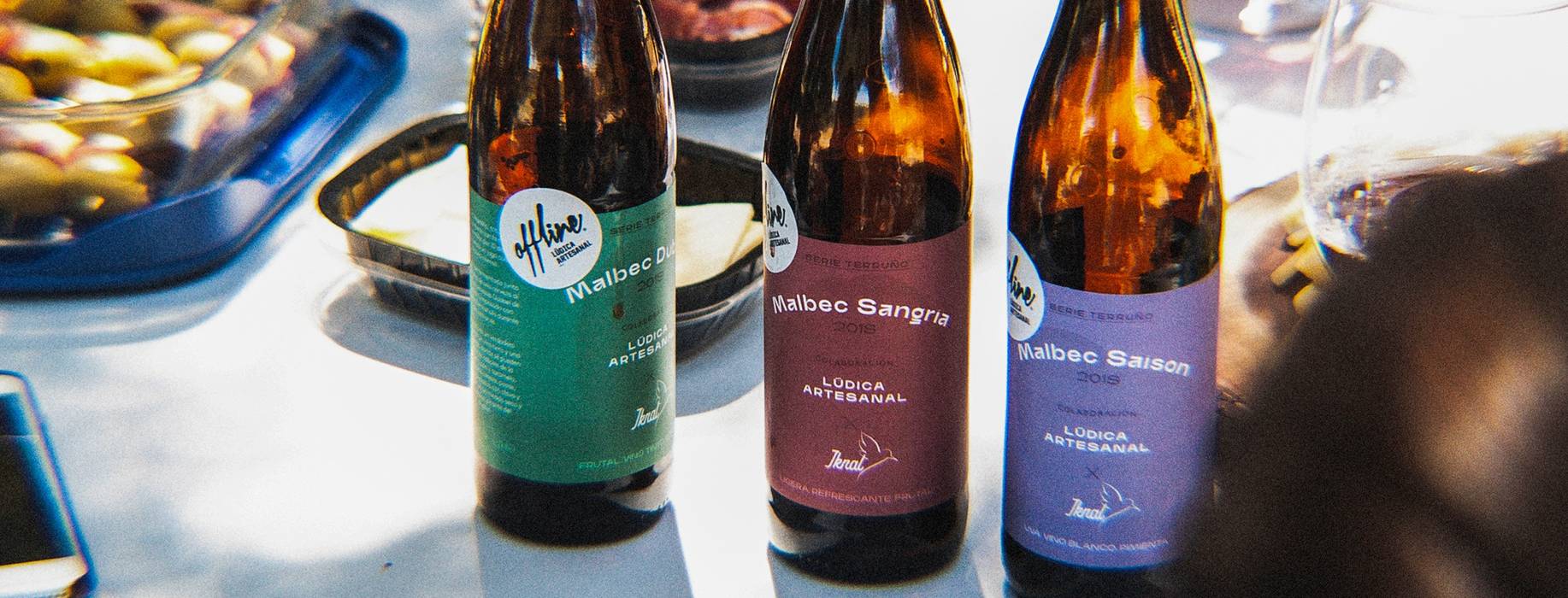
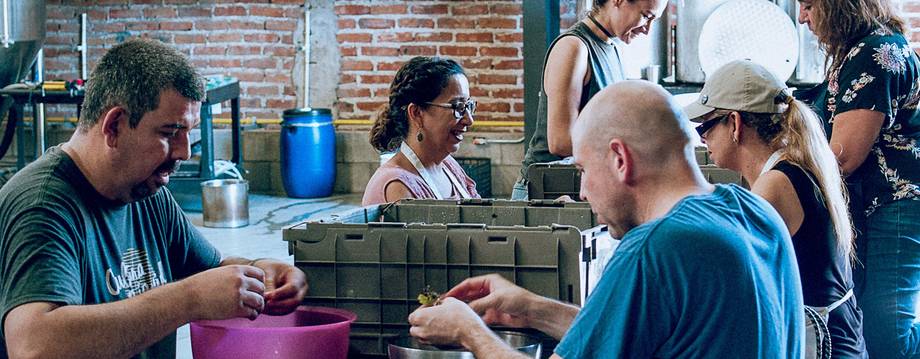
As homebrewers do, the friends got together to brew a series of grape ales that would become Lúdica’s Terroir Series. “He helped us source the grapes, and we went together to pick the grapes, then processed them here at the brewery,” says Gustavo. “He brought his family too, he always gets his sisters to help, and so we set up long tables along the fermenters in the brewery and all got together to clean the grapes, then crush them, then press the juice. I thought that was really cool. Then we used that juice to co-ferment with the beer, so we blended the musts and fermented them together. We also made a couple beers using just what’s left after pressing the grapes, because you know, the skins still have flavour and colour in them.”
This was back in 2018, and Lúdica produced four Terroir Series beers over a couple of years. Unfortunately, some uncertainty around whether or not the brewery would be able to renew the lease on its current site meant it hasn’t brewed any since – these beers are a time and space-hungry undertaking. Now the brewery’s future has been secured though Gustavo is desperate to reinstate Lúdica’s Terroir Series and he still speaks about these grape ales in vivid terms, not a detail forgotten in spite of the time that has passed.
“When making the grape ales, we would add the must just before cooling, so it mixed with the wort while it’s still hot, to sanitise the grape juice. This juice will contain natural yeasts and that’s unpredictable for us so there would be a danger of spoiling the beer, or having a sour beer, if we didn’t add the must when the wort was still boiling. Once the must was added to the wort we would transfer it to our fermenter and pitch the yeast; we found using Belgian Abbey yeasts, like you would use for a saison or a dubbel, worked really well in these beers. These yeasts are expressive, they’ll create fruit flavours and spicy phenolics of clove and pepper, and I think that makes for a really nice interesting combination with the grape juice.
“Back in 2019, we actually won best beer in Mexico at the Aro Rojo awards, a very prestigious brewing competition in Mexico, for one of these beers. That one was a Malbec grape, and we used it in a Belgian dubbel-style beer. As part of the wider series, though, we also did a saison with grape must, and a Belgian golden with Sauvignon Blanc. We also did another dubbel but with this one, instead of using the must, we used the grape skins. We followed a similar procedure, adding the skins to the wort while it was still hot, to sanitise them, but this time we were just letting the beer infuse with the grapes before pulling it down.”
Iván and Gustavo are in the midst of thinking seriously about how to revive the series, and what they learned from producing these beers last time. As always, there are costs to consider, and adjacent to this, Lúdica is thinking about how these beers will be received by drinkers in Tijuana and Ensenada. “Last time the beers sold really well – I mean, we sold everything we made in the first couple of months – but at the start people didn’t really understand the product and so we had to do some work communicating what these beers were,” says Gustavo. “And don’t get me wrong, we did a pretty small run of all these beers, and they were pretty expensive – you know, they were all in 500ml glass bottles with wax on the top. Now that we’re thinking of making some similar beers again, we’d maybe do a friendlier version of that, and maybe even use cans instead of glass.”
I ask Gustavo if Lúdica has ever tried its hand at barrel ageing, and he is at pains to admit that it hasn’t. “We’ve always wanted to, but we’ve never had the space and equipment to dedicate to it.” He’s also keenly aware that barrel ageing involves a lot more than chucking some beer in a barrel and leaving it alone, “these things take time and care and maintenance,” and he wants to ensure, if taking the plunge, that these things are done properly. For now, grape ales in cans sound like a sensible option, but if Lúdica ever did want to dip a toe into the world of barrel ageing, there’s a wealth of opportunity on its doorstep.
Share this article
You’ve reached your limit of 5 free articles this month.
Unlock unlimited access and more

Join Beer52 and get your first month half price
-
Get your first box for £13.50 (RRP £27).
-
8 beers & 2 snacks delivered monthly.
-
Printed Ferment magazine included.
-
Unlimited access to all online content.