Peiping Machine: What’s in a name?
For Beijing’s own Peiping Machine, Japanese lager represents something much bigger, and more nuanced, than our current obsession with Japanese culture.

Robyn Gilmour
Photos:
Peiping Machine
Saturday 14 November 2026
This article is from
Global Brews
issue 137
Share this article
Japanophilia is nothing new but it does, at least here in the UK, seem to be hitting new levels of intensity. The nation’s influence here can be seen in the brands and cultural concepts creeping onto our high streets – UNIQLO, matcha, I’m looking at you – and the staggering 40% increase in UK tourists braving the 13-hour flight since 2019. Running parallel with this short timeline has been the rapid evolution of Japan’s craft beer scene, now globally regarded as cutting edge and still on the rise. In turn, Japanese rice lagers have grown in number on the UK’s craft beer scene, and while correlation doesn’t imply causality, the connection suggests something of Japan’s soft power, even in craft beer.
All this said, we have a tendency in craft beer, and indeed the Western world, to confuse fact with our opinions which, most of the time, lack nuance and global perspectives. For instance, when I ask Tian Yufan, head of marketing at Peiping Machine, if Japan’s soft power is responsible for the growing popularity of Japanese lager in Beijing he replies: “I don’t really think people are drinking Japanese lager just because the Japanese culture is cool. I think it’s more complicated than that.”
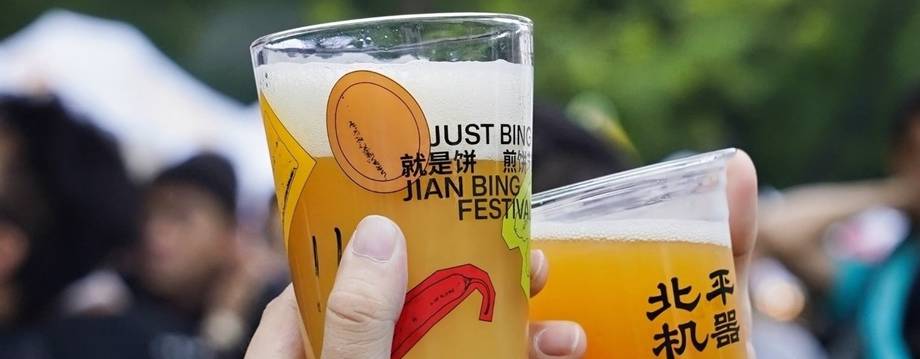
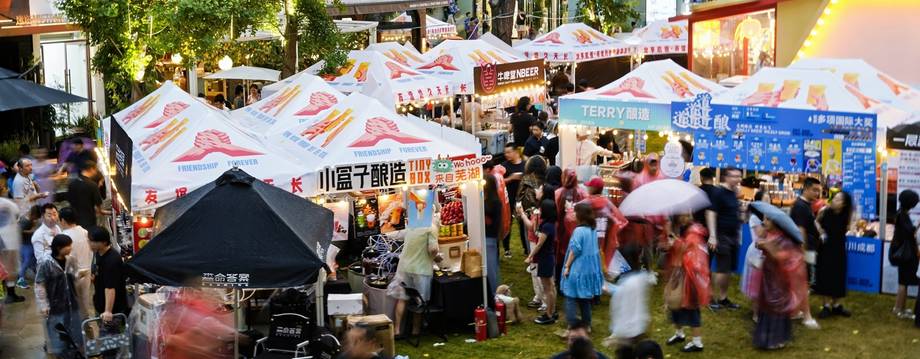
At the time of my conversation with Tian, Peiping Machine owns eight bars – seven in Beijing and one in Chongqing – and is on the cusp of securing a ninth site in its home city. It also annually hosts China’s largest jianbing festival, this year attracting 13,000 people over the course of just one weekend. This is all to say, it sells a lot of beer, and with 40% of production being sold through its bars, Peiping has a solid idea of what craft drinkers are asking for, and interested in. This is how the topic of Japanese rice lager arises.
“I actually don’t really think it started with craft beer,” says Tian. “At least that’s what I’ve seen in Beijing. I think Japanese restaurants are a much bigger reason why Japanese lager has become popular here. There are just so many Japanese restaurants in cities like Beijing or Shanghai, and you know Japanese food is quite easy to do at different levels; you can have something really expensive and high end, or something very casual and cheap, so it’s quite easy for Japanese restaurants and Japanese beer to reach different people. Another thing is that I think Chinese and Japanese people are actually quite similar in the way we drink. Normally, we think about food first and drinking is usually part of the meal, which is totally different from the people in Europe and also in the US. I’ve seen people just standing outside a bar drinking beer all night and eating nothing at all, that’s very different for us. Food and drink are very connected.”
Following this thread, Tian says that he doesn’t think craft brands – at least in Beijing – are brewing Japanese rice lager to imitate Japanese craft breweries. In this instance, he feels craft is following in the footsteps of mainstream brands like Asahi or Suntory, again because these are the brands popular in Japanese restaurants and izakayas. He says a fundamental difference between craft beer (in the modern, global sense) and mainstream beer in Japan, is that the former is loud – always trying to be bigger, better, hoppier, higher alcohol – while the latter has mastered the art of subtle differences. Again, he says, this makes it much better suited to pairing with food, which is a logical approach when the social occasion for enjoying a beer is built into meal times.
“And so, I think craft beer breweries saw that people were interested in Japanese lager and thought, ‘okay, maybe we can do something with lager’,” says Tian. “That’s completely normal, but for me, craft beer followed this trend more than it created the trend. I think this is also happening with food as well. A few years ago in Beijing and in Shanghai, when people talked about a ‘bistro’, normally you thought about French food or Italian food, but today you can have Sichuan bistro, Yunnan bistro, all kinds of Chinese bistro, and they’re pairing natural wine or modern wine with Chinese food. So maybe it’s not just really about the Japanese lager. I think the market is becoming more specific and the consumer has more choices.”
Interestingly, Tian thinks this observation is particularly true of the moment in which China currently finds itself. “You know, China really started developing very quickly after the 1980s, but compared with Japan, Europe, or America, it hasn’t had that much time,” Tian says, framing Chinese drinking habits within a much broader cultural, and commercial sphere. “But China moves really fast. Sometimes I feel like something that took 30 or 40 years somewhere else can happen here, just in 10 years. China is a young consumer market and so it absorbs a lot of new things.”
I tell Tian that in some ways, that sounds quite exciting to me – that such potential for change means the next big thing could come from anywhere – and ask if he thinks there might come a time when we see a Chinese equivalent of Japanese lager, or even more specifically, a Beijing equivalent. “Oh, we already have one of those,” says Tian. “In Beijing, we drink Yanjing, we call it Big Green Bottle. But every city in China will have its own local lager. There aren’t that many differences between them, what’s more important is the brand, and that the beer uses ingredients that are grown locally. Do you have the local culture? Do you fit in the local eating habits, their lifestyle? That is more important than the name itself.”
This point gives me pause. For a long time, ‘drinking local’ was hailed as a central tenet of craft beer in our part of the world, but often that beer, while locally brewed, was made with malt from Germany and hops from the US. In the set-up Tian describes, China’s mainstream, regional breweries are producing an industrial beer, but are doing so in line with principals which, on paper, align with those of craft breweries: brew for the local population, use local ingredients. While plenty of factors differentiate Peiping Machine from Yanjing, for example, it is interesting that an emphasis on local drinkers and local ingredients is something they have in common.
Peiping Machine is a deft hand at adapting international styles to local tastes, which brings us back to Japanese lager. “Peiping Machine doesn’t brew a Japanese lager, we just brew a lager because we’re good at making lagers, and we use rice grown in our region,” says Tian. “For example, our Yutang Royal Rice Lager uses rice that has been farmed just outside of Beijing since the Qing dynasty, and was originally planted for the Emperor to eat. We also make a Peiping Lager, which is a light hoppy lager. For us, in Beijing, we always eat Chinese cuisine, maybe Sichuan Thai, Cantonese cuisine, and we also eat a lot of Chinese barbecue and Chinese hot dogs. But for us, pairing Chinese food with a light lager is very good, you don’t want it to be too malty.”

Peiping Machine, also, is not alone in this mission to inject a craft offering into the Chinese market. “In July, we held our own beer festival – it’s the first time we’ve done this,” says Tian. “It went well, about 5000 people came to our event, and we invited around 40 breweries from around China. Maybe next year we’ll invite 50 or 60, and get some international breweries to attend.”
The event was by all accounts a success, and Tian suggests a much-needed morale boost – a reminder of the strength of China’s craft beer community. “As I said, the Chinese economy has been growing so fast for the last ten years, that slowed growth is noticeable. We’re down about 20% on sales from last year, just because people don’t feel they have the money to spend on craft beer and we don’t have a big culture of export, most of the craft beer made in China is sold in China. The price of craft beer is now much cheaper than before.”
The scale and depth of such background complexity throws into sharp perspective Tian’s earlier point that people aren’t drinking Japanese lager just because the Japanese culture is cool. Point proven, at least insofar as China is concerned. Perhaps, though, this should give us something to consider – if we’re not brewing Japanese lager to enjoy with food, then why are we brewing it? Are our palates and preferences heading in the direction of Suntory – simple, subtle, consistent – or are we just wrapped up in the romance of Japan’s soft power?
Share this article
You’ve reached your limit of 5 free articles this month.
Unlock unlimited access and more

Join Beer52 and get your first month half price
-
Get your first box for £13.50 (RRP £27).
-
8 beers & 2 snacks delivered monthly.
-
Printed Ferment magazine included.
-
Unlimited access to all online content.