Cerveza Gross: Waiting on the world to change
Cerveza Gross is doubling down on Basque beer.
Robyn Gilmour
Photos:
Cerveza Gross
Saturday 14 November 2026
This article is from
Global Brews
issue 137
Share this article
When I ask head brewer Beinat Gutierrez what’s been new at Gross since we last caught up properly, in 2022, he replies “not much”. I don’t believe him. Everything and nothing has affected the beer world in the last four years, and I refuse to believe San Sebastián is immune from the global forces affecting the cost of living, the price of grain and energy, or the seismic shift in consumer tastes towards alcohol-free options. When I point this out, he laughs. “I mean, when you’re thinking about the day-to-day, you kind of forget the news because things keep happening so fast,” he says. “I mean, wow, what happened two weeks ago? That seems old now.” This is not an uncommon sentiment among the brewers I speak to these days; it’s not that nothing is changing, but that constant change has been normalised.
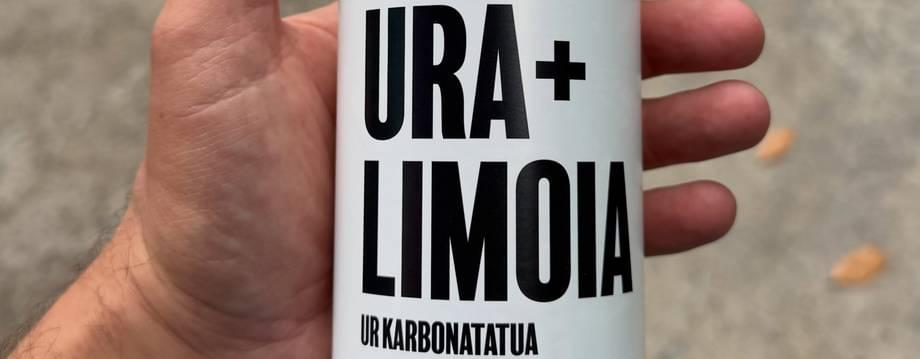
“I mean, overall we’ve been doing well,” says Beinat. “We saw some markets, especially exports, decreasing a little bit but nothing too crazy – being a small brewery we never made a living from export. We started brewing some alcohol-free alternatives to see how they work in the market, and honestly, we didn’t see big sales in alcohol-free beers. I mean, Spain is like the biggest consumer in the world of alcohol-free beer, so it’s a busy market. What we saw doing much better is our sparkling water.”
Funnily enough, it was a total fluke that Gross started making sparkling water – the brewery’s centrifuge broke, so it couldn’t package any beer, and it was going to take longer than expected to fix. Sparkling water was just a way to keep things moving – in fact, the plan was only to make one batch, as an experiment – but the positive reception made the team take seriously the possibility of developing the offering further.
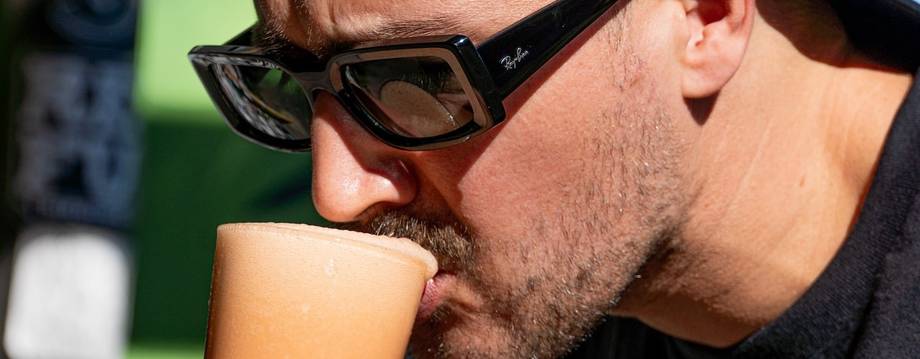
“In Spain, and the Basque country, sparkling water isn’t as popular as it is in other parts of Europe, and you don’t see very many options of sparkling water flavoured with natural ingredients,” says Beinat. “It’s something we’re going to focus on more next year for sure. I think the main idea we have is to release three different versions: one that’s suited to an active lifestyle and for sport, one that helps with focus, and another that helps with sleep and relaxation. We’re still connecting all the dots – brewing it, using botanicals, will be the easy part but working out how to sell it and communicate it will be the part that takes time.”
While sparkling water might be connecting with drinkers seeking alternatives to alcohol, a different solution has been needed for drinkers still interested in craft beer, but who might be more conscious of cost nowadays. “Our core range has always been about balancing cost with quality,” says Beinat. “Some brewers think too much with quality in mind – not everything has to be a hop bomb. There was a time when the market was all New England IPAs, double IPAs, pastry stouts, and those styles have to be expensive because they’re expensive to brew. So, our core range has four beers that you can enjoy all the time, and we’ve brewed these to be affordable for every occasion. So our core range is more balanced between price and quality, and our seasonals will go in this direction too.”
Given Spain is one of the world’s largest producers of bittering hops, I ask Beinat if Gross ever uses Spanish hops to help mitigate costs. “Yeah, we’ve started working with a local hop farmer [Pepo’s Hops in Azpeitia]” says Beinat. “He used to be a snowboarder, and started homebrewing and growing hops when he gave it up.” I laugh, I face-palm. ‘No news’ indeed!
For now, it’s more effective to market all-basque beers as harvest beers
“We started by doing harvest beers with him only because he was another local producer. So we would pick up hops and use them the same day – you know, standard stuff for a harvest beer – but we started to notice the quality was increasing. So we started using more and more hops from him, and now we have one beer in our core range in which we only use his hops. Once things started to taste really good, we figured, well, we’re supporting a local business, if this works out we could look for a local malt producer too.” You can see where this is going.
Gross put an ear to the ground, and through other local producers learned of a small, independent, craft maltster in the French part of the Basque country. Malterie Garagarberoa, located in Saint-Martin-d’Arberoue, was founded by Florian Aphecetche and his father on their family farm. “I managed to connect with him and we tried using their malt for one beer,” says Beinat. “You know, in the beginning, the malt looked good, the maltings looked really good, but I didn’t know what the quality was going to be like, so I thought ‘well, let’s give it a try’. I was really surprised at the quality. For the first batch, just to be safe, I thought, ‘let’s use a little bit more malt than we usually would’ but we hit efficiency, achieved the plato we wanted, and after two batches, it was performing just the same as German malt.”
Work with these two producers is now a central part of an emerging concept at Gross – zero-kilometer, all-Basque beers – albeit one that’s largely happening behind the scenes. Why? Well, communicating the detail and nuance of these relationships isn’t always easy in a craft setting, especially given our hang-ups over brand names and places when talking about hops. It’s easier to say ‘this is a New England IPA’ or ‘we’re working with a local hop producer’ than it is to explain the nuances and technicality of terroir, and the legal implications and restrictions of growing proprietary hops under license.
“For example, in some of our other beers, we use a lot of New Zealand Cascade,” says Beinat. “It doesn’t taste like Cascade at all, but it does have a lot of the floral, fruity character that New Zealand hops are known for because of their terroir, and is much more affordable than some of the other named varieties. So, you know, sometimes a name is just a name.” Beinat makes this point in the context of discussing Pepo’s Hops in Azpeitia; he explains that this producer is growing more aromatic hops than tend to be available in Spain – like Cascade, Chinook and other modern European varieties – but to compare them to native versions of these hops can be counter-productive. Cascade grown in Spain will taste and smell like Spanish Cascade, not American Cascade or New Zealand Cascade.
For now, it’s more effective to market all-Basque beers as harvest beers, or simply by advertising the beer’s style. Getting a more complex message across may well be a project for the future, but for now, Beinat is focused on carving time and space for such passion projects out of a hectic schedule, shaped by the demands of an ever-changing market.
Share this article
You’ve reached your limit of 5 free articles this month.
Unlock unlimited access and more

Join Beer52 and get your first month half price
-
Get your first box for £13.50 (RRP £27).
-
8 beers & 2 snacks delivered monthly.
-
Printed Ferment magazine included.
-
Unlimited access to all online content.