Pühaste: Lager than life
Revered on the international stage for its production of dark beers, Estonia hasn’t escaped the public’s love of lager.
Robyn Gilmour
Photos:
Pühaste
Saturday 14 November 2026
This article is from
Global Brews
issue 137
Share this article
Eero Mander has been around the block; in fact, as head brewer and co-founder of Tartu-based brewery, Pühaste, he has been at the coalface of brewing operations since 2011, and played a major role in the global success that Estonia’s craft beer scene has enjoyed over the last 15 years. So, when he tells me that creativity looks different these days – “now it’s all about the method and process, tweaking beers to make them better” – I follow the line of questioning.
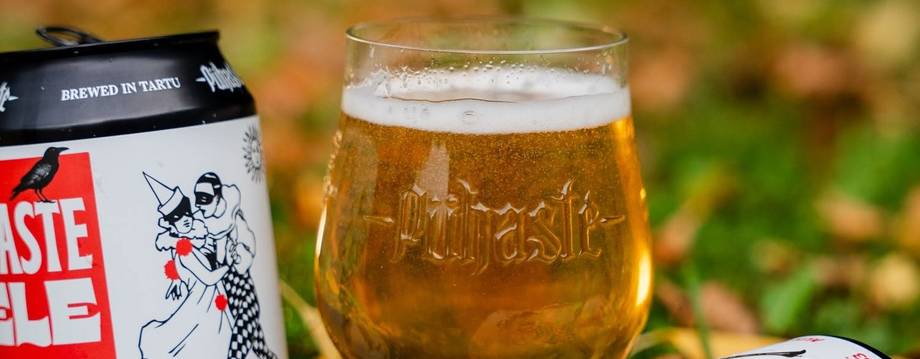
“There’s more and more demand for simpler beers like lager, so we’ve been really growing this part, and not doing so much crazy stuff anymore,” says Eero. “Doing this, we have grown on the domestic market and taken over some taps at traditional bars, and they want helles and pils, which we are brewing a lot of now. We enjoy brewing them – it’s a challenge every time because there’s nowhere to hide, you need to do everything perfectly – so it’s still interesting and I’ve nothing against it. It’s just interesting how craft drinkers have now embraced the styles they were so against for like ten years.”
Having made its name on the back of high-octane dark beers, and mixed-fermentation and barrel-aged beers, Pühaste’s pivot towards lagers and alcohol-free beer speaks volumes of the whiplash experience by the brewing world over the last few years. In recent times, the brewery has also wound down its wild ale and mead programme – it has a couple more releases to make over the next year, but once beers in progress are packaged and sold, more of their kind won’t be re-brewed.
“All the crazy stuff has more or less been made already,” Eero conjectures. “These are fun festival beers, but yeah, it’s not something you can do on a regular basis. These days, everyone is thinking about sales and keeping their companies afloat, so breweries need to make beers that most people will want to drink. I think that sets some limitations on creativity as well.”
While times have changed, it’s not entirely the case that Pühaste’s arm has been twisted – pilsner has always been a part of the brewery’s core offering – but demand, growth, and investment in more tanks have changed the shape of the brewery, such that it’s now lager heavy. Eero isn’t mad about it; “It’s probably one of my favourite styles after IPAs, even though I still drink more lagers than IPAs.” In Eero’s telling, Pühaste brews a pils that could either be described as northern German or a hoppier version of Czech pils, and a helles that’s true to the style of the Bavarian tradition.
The other major development at Pühaste has been the expansion of its alcohol-free offering. “I think this year, the product that has seen the most growth is our non-alcoholic pale ale,” says Eero. “We thought about buying the membrane systems [a de-alcoholiser] but to be honest, we’re using the maltose-negative yeast these days and it’s quite a simple process and you don’t need any expensive equipment for this. If you can control the process, it makes as good a beer as any, though you do need to pasteurise it for the beer to have any stability on the shelves. Nowadays the yeast producers are making non-alcohol producing yeasts better and better, and there are lots of options available on the market. We’ve done quite a few different beers like this, even a non-alcoholic smoothie beer.”
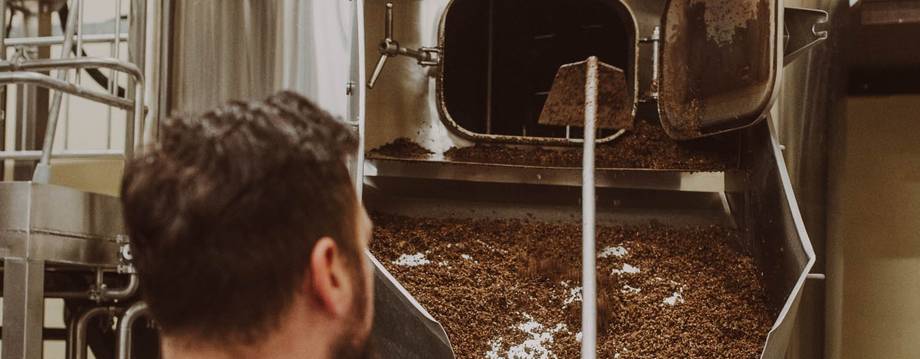
On this point – and knowing that in addition to growing in the lager space Pühaste has developed an alcohol-free lager – I ask Eero if this means Pühaste has found a non-alcohol producing lager yeast that they’ve found particularly effective. “For this one, it’s a process we do that means they really resemble beers made with a lager yeast,” says Eero. “I would say other brewers have to discover it for themselves. We’re not secretive about most things, but on these, there’s some discovering to do if you want to make them.” Colour us intrigued!
There will always be a market for the kinds of beer that made Pühaste famous – the brewery still produces all manner of dark beers, sours and IPAs – but today that market is smaller than it once was, and the brewery is rising to the opportunity to connect with new drinkers in a different way. Luckily for UK drinkers, a range of Pühaste’s dark beers and sours are imported by Distant Lands, but to sample the unique flavour of Estonia you might be best to book a flight. “We still try to do some unique Estonian beers made with local berries, and whatever else is seasonally available here, but that’s more in dark beers, stouts and porters,” says Eero.
Lager and non-alcoholic options might be Pühaste’s focus for the time being, but I’m glad to hear it still protects the time and space to make dark beers. I think anyone in the beer industry knows better, at this point, than to hope change is on the horizon, but at least here in the UK, the competing marketing campaigns of Murphy’s, Beamish and Guinness seem to have injected a new lease of life into the general public’s appetite for dark beers. Such tiny ripples won’t change the tide, but perhaps they’ll generate enough movement that the beer world can breathe a little deeper, and we can renew our appreciation for beers beyond lager, pale ale, and IPAs.
Share this article
You’ve reached your limit of 5 free articles this month.
Unlock unlimited access and more

Join Beer52 and get your first month half price
-
Get your first box for £13.50 (RRP £27).
-
8 beers & 2 snacks delivered monthly.
-
Printed Ferment magazine included.
-
Unlimited access to all online content.