Sorted for mead and fizz
Lucy Corne meets the South African team upending brewing science, all in service of making mead.
Lucy Corne
Header photo:
Cape Town Meadery
Saturday 14 November 2026
This article is from
Global Brews
issue 137
Share this article
When I first met Dr Garth Cambray, I was in equal parts impressed and bewildered. The man is clearly a genius, and a pioneer in fermentation science, specifically in the production of mead. His continuous fermentation column is nothing short of revolutionary – and quite baffling to those of us with a high school grasp on science.
“Garth is probably the most brilliant man I have ever met,” says Dr Ernst Thompson who has taken Garth’s work and built on it, turning it into a commercial enterprise and Cape Town’s only meadery. Pretty brilliant himself, Ernst first met Garth in 2000 when the two were both working at the University of Rhodes in South Africa’s Eastern Cape. “In fact, there are quite a few Master’s degrees and PhDs involved in this thing,” says Ernst, gesturing towards the 10-foot-high stainless steel column behind him.
It is here that The Cape Town Meadery makes its products, in a fascinating continuous fermentation process that converts honey water into a 19% ABV mead in an astonishing 24 hours. “Think of it as a yeast selection device, rather than a fermenter,” says Ernst. “At each stage of the column, the yeast are optimised. They know exactly what they need to do and they’re in an area where they’re happy and functioning optimally.”
Fermentation innovation
As the honey water solution – 300 litres of it per batch – is pumped into the bottom of the column, it first meets yeast that function best in a high-sugar, low-alcohol environment. As the soon-to-be-mead gradually makes its way upwards, it meets different colonies of yeast, ending with the gang that function best with less sugar and more alcohol.
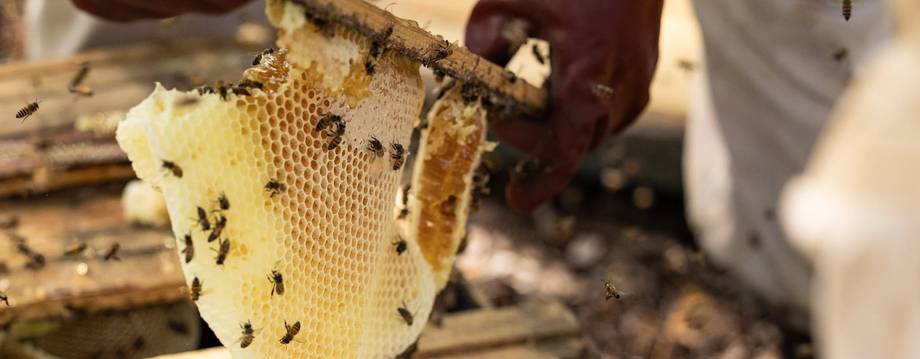
PHOTO: Alvearium Gin
They’re not just floating around in there though. Inside the column are hundreds of small plastic balls, offering maximum surface area for the yeast to thrive. “It’s basically amplifying the idea of the magic wooden spoon,” says Ernst, referring to the use of stirring sticks or spoons in ancient mead making, where the producer wouldn’t have fully understood the role of yeast, but knew that the spoon somehow turned a pot of honey water into something altogether more interesting to have around at parties.
The patent on this remarkable invention has, equally remarkably, expired. Theoretically, anyone could build one and Ernst acknowledges that it’s a fairly simple design that’s affordable to build. But there is one problem. “There are only three people in the world who really know how it works,” says Ernst. “The plans to the column are open, but the real key is the nutrient additions, and that’s a trade secret.”
Making a market for mead
Ernst is one of those three people, and armed with his in-depth knowledge of the unique fermentation system – and a background working with bees – he set up the Cape Town Meadery in 2018. The first release was a sparkling mead produced using the traditional Champagne method. “I still think it’s our best product,” he says, “but it’s a difficult sell here, and the vast majority of it has always been exported to Europe.” Next came the version most people think of when they conjure up an image of mead: still, sweet, robust and high in alcohol.
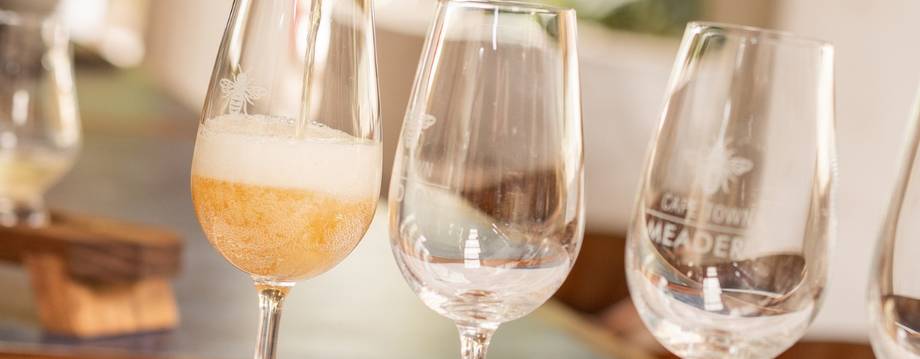
PHOTO: Cape Town Meadery
But Ernst knew that if he wanted to make an impact, he needed a more approachable, recognisable product. “Mead producers often want to stay true to tradition. It must look and taste as mead has always looked and tasted,” he says. “But I believe we need to look at it as a product that can compete with other beverages on the shelf.”
Gin from honey
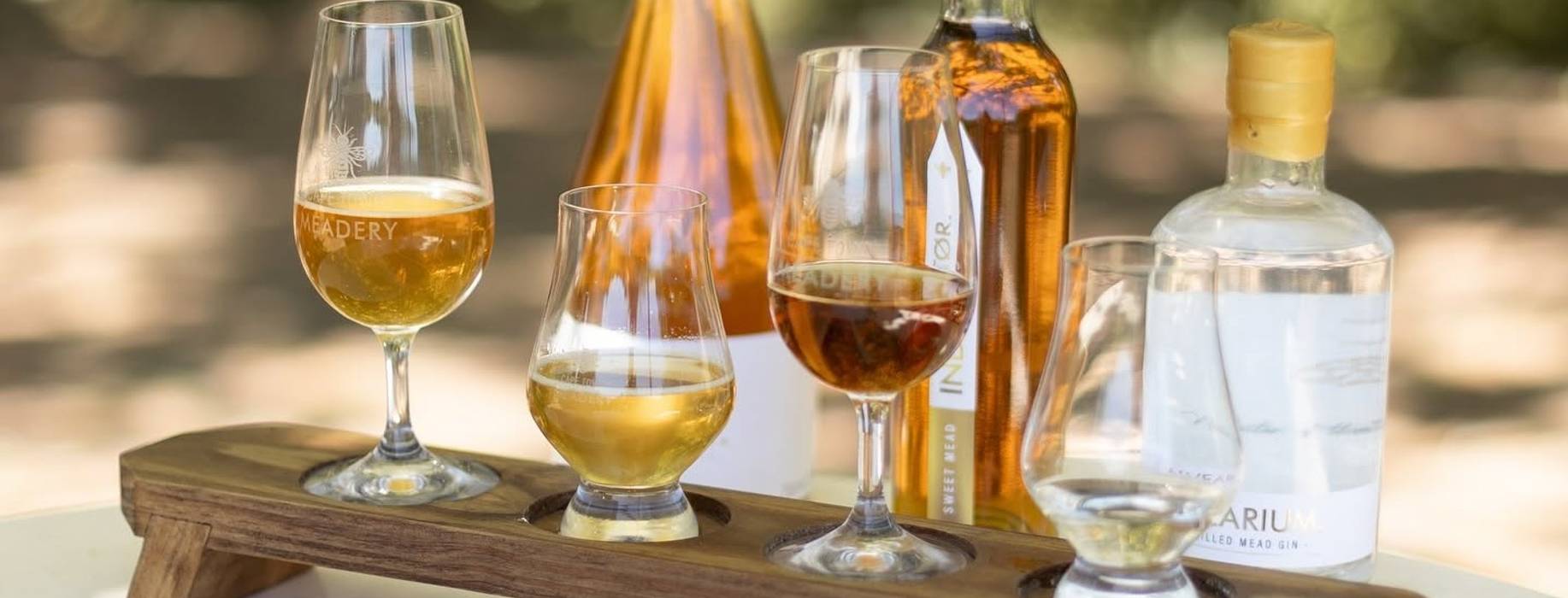
Mead is a niche beverage worldwide, but particularly in southern Africa, where only a handful of producers exist. Ernst knew he wouldn’t be able to make a meaningful impact making mead alone since the market is so small. Then he came up with the idea to make gin distilled from mead. “Gin is perfect,” he says. “With mead, you have to do a whole marketing campaign, explaining to the public what it is and why they should like it. Gin is an easy sell, but the fact that it’s made from honey makes for a great story as well as a great product.”
When it came to building the distillery, Ernst knew South Africa wasn’t the right place. He needed to go somewhere with a large supply of consistently good honey, and so he looked north to Zambia. In 2025, along with his brother-in-law Robert Bernatzeder, he established Alvearium Gin in Lusaka, Zambia’s capital.
“There is a large supply of great honey that’s already being produced in rural areas in Zambia,” Ernst explains. “It’s not driven by corporates, so I knew that’s where the project could have the biggest impact. In rural areas on the outskirts of the nature reserves, there are basically two sources of income – charcoal and honey, so if we could support and grow the more sustainable of the two, we knew we could help inject cash into rural communities.”

PHOTO: Cape Town Meadery
Sustainability for the win
Alvearium works with African Parks, an organisation that manages protected areas in 13 countries. They help to organise the beekeepers and facilitate the purchase and delivery of the honey. “It’s centralised, but still community driven, so it works for everyone,” says Ernst. “We are helping to drive socio-economic sustainability and the impact is real.” Alvearium supports 180 families in Zambia, who have a guaranteed outlet for their honey.
Sustainability is at the core of Alvearium’s business strategy and the gin has won a sustainability award from the Luxury Lifestyle Awards. It was also crowned Best Gin in Africa at the 2026 Gin Guide Awards.
For now, the gin – a London Dry – is principally sold in high-end safari lodges across Zambia, Namibia, Botswana and Zimbabwe. Current production is just 1500 bottles per month but as that increases, plans are in place to export to the USA and UK.
Ancient drink, new thinking
Back in Cape Town, Ernst continues his quest to sell products featuring African honey, but despite the company’s name, he doesn’t generally talk about mead to potential customers. “If you mention mead, people have this idea that it’s going to be super sweet, and they can be put off,” he says. “If you just tell people it’s a beverage made from honey, they’ll taste it and figure out the rest for themselves.”

PHOTO: Alvearium Gin
As well as Mazer, a braggot made with 50 percent honey and 50 percent malted barley, The Cape Town Meadery makes two distinct ranges. The Indicator series is more traditional – higher ABV, uncarbonated meads – while the increasingly popular Bee Bliss range is designed to compete with RTDs and ciders. As well as a 4% ABV sparkling session mead, there is a cyser – a semi-sweet, spritzy blend of mead and cider.
While Ernst still loves the Champagne-style mead he launched the company with, the intention was never to rigidly remain true to a particular product, but to support the wider production of honey.
“It’s important to make a product that people want to drink,” says Ernst. “Ultimately, the goal is to buy as much honey as possible and to support as many beekeepers as we can. It’s not necessarily about educating people on the flavours of traditional mead, or winning competitions.” That said, the Cape Town Meadery won gold, silver and bronze medals in this year’s African Beer Cup, which introduced a mead category in 2025.
Mead is generally agreed to be the oldest alcoholic beverage in the world and, according to Ernst, its production in South Africa started some 20,000 years ago with the KhoiSan – the country’s indigenous inhabitants. Mead has always existed on the sidelines here, but Ernst and his team are doing everything they can to introduce local drinkers to this brand new, very old beverage.
Share this article
You’ve reached your limit of 5 free articles this month.
Unlock unlimited access and more

Join Beer52 and get your first month half price
-
Get your first box for £13.50 (RRP £27).
-
8 beers & 2 snacks delivered monthly.
-
Printed Ferment magazine included.
-
Unlimited access to all online content.