Destination nation
Nowhere else has matched the US’s knack for turning breweries into places of pilgrimage. Mark Dredge shares his highlights.
Mark Dredge
Header photo:
Tree House Brewing Company
Saturday 14 November 2026
This article is from
Global Brews
issue 137
Share this article
What makes a beer experience something that beer lovers should consider essential? In the UK and Europe, we have history and tradition to help plot a tour of must-visit places for must-drink beers, in which each becomes a story letting us use a beer glass as a lens for socioeconomic, political and geographical changes, and where each reflects something of its time. In the US, the stories are told in a different way.
The essential US beer experiences are more Mount Rushmore or Universal Studios; they’re founding fathers, or they reflect the ever-evolving pop culture. But there is a way to balance legacy and icons, to trace the progression of IPA, and chase hype to get a snapshot of beer right now.
Going to Sierra Nevada Brewing Company in Chico, California should be at the top of any must-do beer list in America. While it wasn’t the very first craft brewery, it’s the oldest and the most important. The greatest impact comes from Sierra Nevada Pale Ale, which modernised a classic British style and transformed it by using Cascade hops grown in the Pacific Northwest. It revolutionised the flavour profile of world beer by showing us how wonderful hop-aromatic beers could be. No mainstream brewer really wanted to use Cascade hops back then and Sierra Nevada may just have kept the hop in the field, so it’s not an exaggeration to say that craft beer as we know it today would taste very different without Sierra Nevada.
As part of the brewery tour in Chico, you go into the hop store, which is one of the finest-smelling places in all the world of beer, where huge bales of Cascade hop flowers are stacked up ready to be broken apart and thrown into the kettle. Having a fresh pint of Sierra Nevada Pale Ale in the tasting room after this will give you a new appreciation of America’s most important craft beer. And it’s an easy jump from Pale Ale into a history tour of American IPAs.
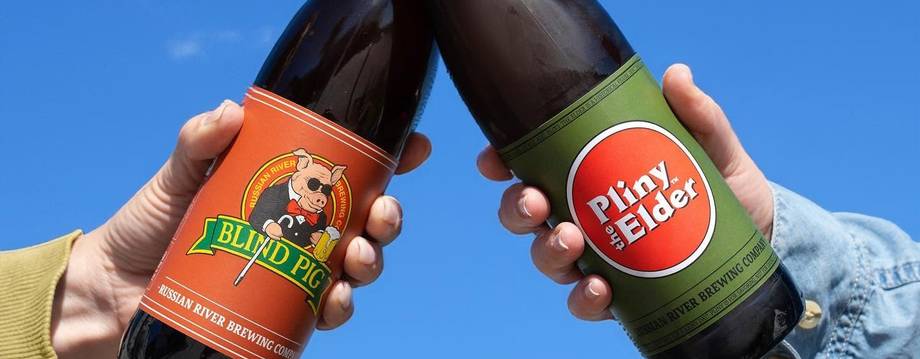
PHOTO: Russian River Brewing
Bell’s Brewery Two Hearted IPA is one of the best examples of a classic American IPA. First brewed in 1997, it’s got sweeter malts than a lot of IPAs today, a pithy orange and grapefruit flavour from the Centennial hops, and a lasting bitterness. It feels kind of old school, but to me it’s still the IPA which defines the first big growth era of American craft beer. A great time to visit the brewery in Kalamazoo, Michigan is January when you’ll be able to get Hopslam, the brewery’s 10% Double IPA; this kind of very strong and very hoppy beer is a perfect example of how America supersized brewing, and created annually-released beers with a lot of hype behind them.
As beer turned from my hobby to my obsession to my job, all I wanted to know was what Russian River Brewing Company’s Pliny the Elder – the brewery’s famous Double IPA and the first true version of the style in the US – really tasted like.
So when I first got the chance to go to the US, I flew straight to San Francisco and went directly to a bar called Toronado for a pint of Pliny. It was remarkable, and even more bold, hoppy and brilliant than I’d built it up to be in my imagination. Even better was visiting the brewery in Santa Rosa a few days later for more Pliny, a taste of the more legendary Pliny the Younger, for Blind Pig IPA and then their Belgian-inspired beers. These intensely bitter yet light-bodied and crisp IPAs defined a new kind of flavour profile, especially on the west coast.
After Sierra Nevada, Bell’s and Russian River all advanced hoppy beer in different ways, The Alchemist influenced the most recent fundamental shift in the flavour profile of hoppy beer – first in the US, then around the world.
The Alchemist’s Heady Topper is a Double IPA. It was an outlier when it was first served in the small brewpub in Waterbury, Vermont. Despite being unfiltered and cloudy at a time when most beer was bright, drinkers were hooked by the pungent hop aroma and flavour. A local legend grew when Hurricane Irene destroyed the brewpub in 2011 and production shifted to cans in limited amounts, meaning (slightly) more people were able to taste the beer (and more people wanted to taste it), which led to ‘best beer’ features routinely calling Heady Topper the best IPA in America. Going to its new brewing facility in Stowe is the only way to drink Heady on tap, and it’s hand-pulled like British cask ale.
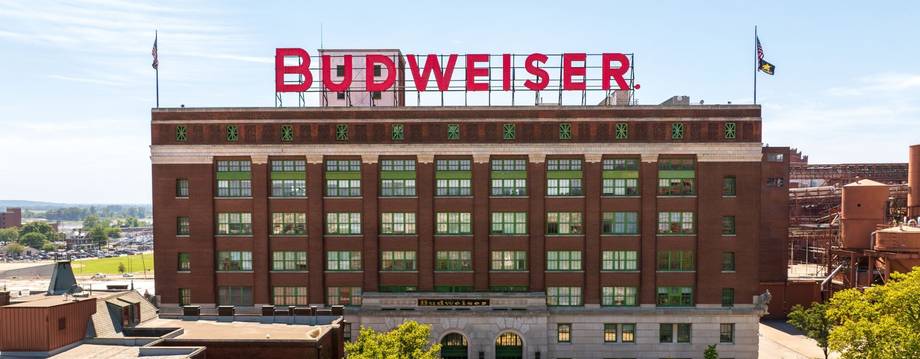
PHOTO: Explore St. Louis
While Heady Topper effectively gave rise to the New England IPA – creating a lore for the region and then a lure to travel to taste rare beers – when you drink Heady you shouldn’t expect the kind of thick and juicy Hazy IPA that so many drinkers love right now, as it’s lighter, leaner, more dank than tropical, and it’s bitter. If you want fresh-squeezed juice then you should head to Treehouse Brewing Company in Charlton, Massachusetts.
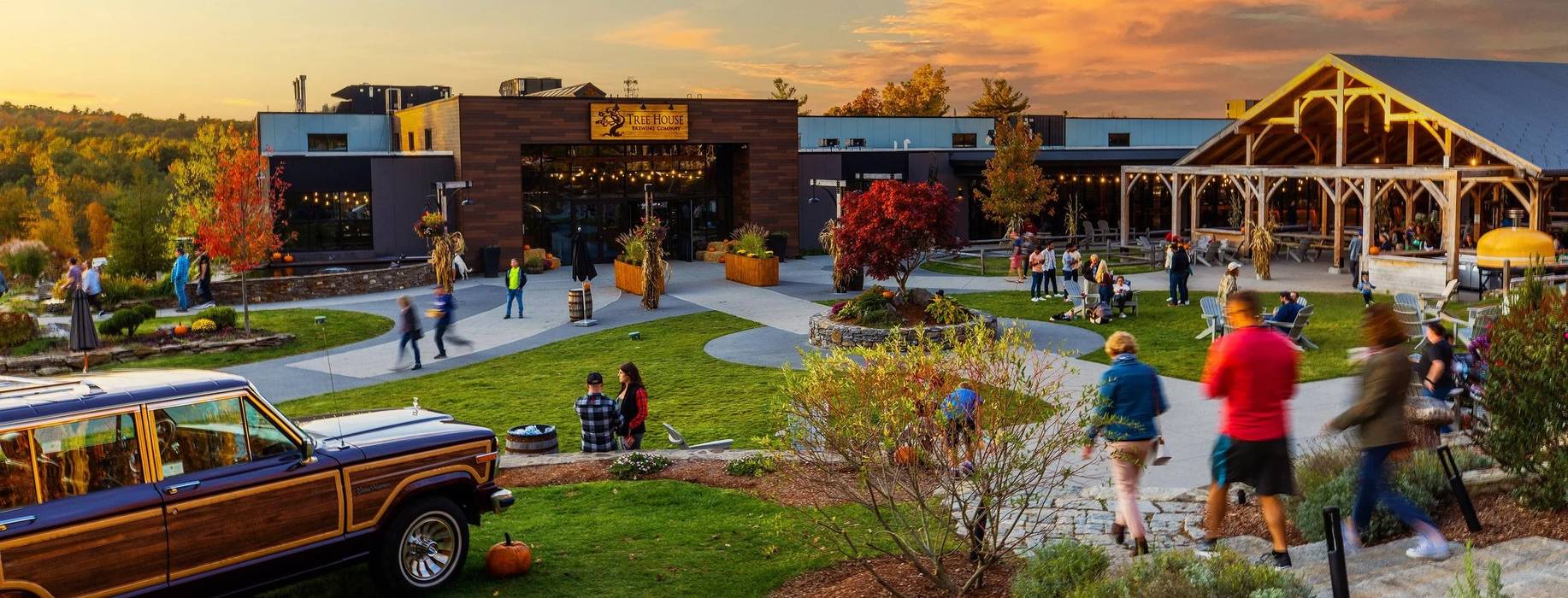
Treehouse shows what success can look like in modern American craft beer, with its impressive scale, manicured lawns, smart tasting room, large outside space, and a huge car park for all the visitors. Its IPAs like Julius and DIPAs like Haze are almost outrageously juicy, full bodied, and boldly flavoursome. Like the way California-brewed IPAs showed drinkers there was more to American beer than light lager, Treehouse IPAs and others like Trillium (definitely visit if you’re in Boston), gave an entirely new flavour profile that has created a new cohort of craft beer drinkers.
If Treehouse is the quintessential modern US brewery, then the most handsome brewery in North America might be a surprise: the Budweiser brewery in St Louis. It’s a six-story red brick brewhouse built in 1892 with red tiled floors, white stairways and grand columns, a great atrium with soaring glass ceiling, and hop vine chandeliers.
Regardless of your thoughts on the beer, this site is seriously important to global beer. It’s central to the story of how German immigrants arrived in the US and brewed beers that reminded them of home, and how over a few generations, and a few shifts in production along with ambitious industrial growth, it fundamentally changed drinking culture in America.
The Budweiser brewery tour is thoroughly Disney-fied, of course, and the beer tastes exactly as you expect it to at the end, but it’s a brewery that I think everyone should visit for its historic relevance. There also aren’t that many 19th century breweries or brewing companies still around, so go to them while you can: Miller in Milwaukee, Coors in Golden, and Yuengling in Pottsville, which started brewing in 1829, making it America’s oldest brewery. These breweries have been ever-present as North Americans truly became beer drinkers. They are drunk in huge volumes, they are cultural icons, lasting for generations when hundreds of other similar breweries have shuttered, and they shouldn’t be ignored on a list of essential beer experiences.
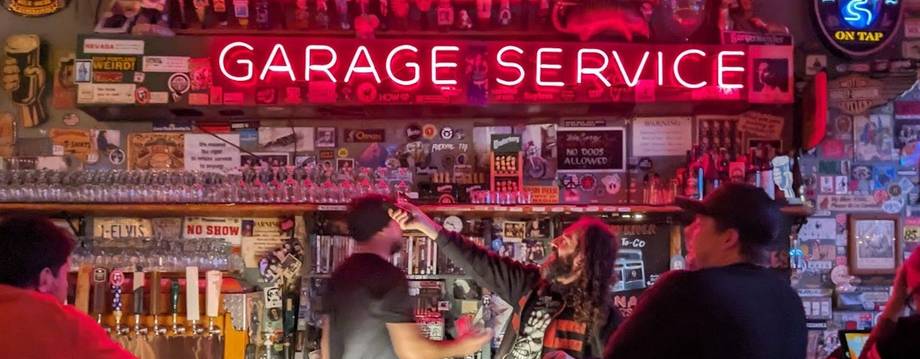
PHOTO: Eddie's List
Lager was the beer of the big breweries, but a few early craft brewers chose to focus on lager and their alumni have gone on to start their own lager facilities, and these second and third (and more) waves of lager fascinate me. Breweries like Bierstadt Lagerhaus in Denver, Notch in Salem, Dovetail in Chicago, and Chuckanut in Bellingham. These all preserve the qualities of classic European lager brewing traditions, and make them modern and American. If you love lager, you need to visit these places.
Then there’s Allagash White, which has been brewed in Portland, Maine for more than 30 years. As craft beer was ascending in the 1990s, inspiration was mostly taken from Europe, and while it took some time for locals to take to a hazy, spicy white beer, it’s become the beer of Maine.
And what about bars? I actually wish I could add more pubs and bars to this list, but there aren’t too many very old taverns worth visiting (or I haven’t been to them so can’t suggest you go there). I’ve already mentioned the Toronado in San Francisco, which opened in 1987 and, like all the best craft beer bars, has been responsible for creating and influencing the beer scene of its city. There’s also Hopleaf in Chicago and Monk’s Cafe in Philadelphia; if you’re in those cities, you should drink in those bars. Or for a more kitschy throwback, try McSorley’s Old Ale House in Manhattan for a hint of what beer drinking may have been like pre-prohibition; it’s a cramped Irish bar with sawdust on the floor and if you order a beer – pale or dark, that’s the choice – it’s served as two small glasses with lots of foam because supposedly this place was so busy that was the most efficient way to get the amount of beer you wanted. It’s fun if you’re in New York City.
There are many more places I could put on this list. More classics, and definitely more modern breweries, but if you want to understand the foundation of American beer and craft brewing then this is a good list to start from.
Share this article
You’ve reached your limit of 5 free articles this month.
Unlock unlimited access and more

Join Beer52 and get your first month half price
-
Get your first box for £13.50 (RRP £27).
-
8 beers & 2 snacks delivered monthly.
-
Printed Ferment magazine included.
-
Unlimited access to all online content.