The ecstasy of gold
Draft Augustiner is back on British shores at long last. Our self-confessed Augie enthusiast Matthew Curtis investigates why this classic Munich Helles has such a cult-like appeal.
Matthew Curtis
PHOTOS:
Augustiner-Bräu
Saturday 14 November 2026

This article is from
Global Brews
issue 137
Share this article
I’m not sure I remember the first time I tried Augustiner Lagerbier Hell. In all honesty, it was probably 10 or 15 years ago during the craze of the IPA years, when citrus, pine and rasping bitterness were the order of the day. What I do remember is that it was available on draught, and then, for reasons which at the time were unknown to me, the kegs disappeared, and only bottles remained.
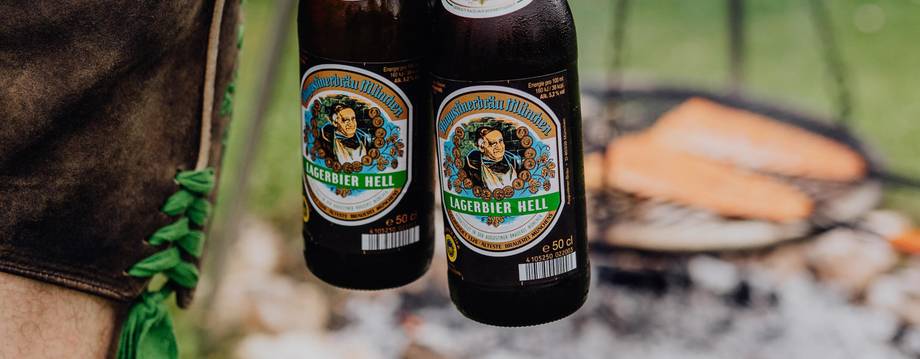
Over the years that followed I developed a keen fondness for Augustiner Hell. Shining and golden, like spun straw catching the midday sun, the beer occupies that perfect point of balance between drinkability and flavour. Distinctive thanks to its rich aromas of freshly baked bread, and refreshing, with an almost-herbal finger-snap of hops at the finish. It’s the kind of beer that was always there for me when I needed it, and I often did; whenever I felt beered-out, and overwhelmed by choice, here was Augustiner, ready with its malt-and-hop-accented embrace.
Bar the odd trip to Bavaria, however, it was bottles or nothing. Not that I’m one to complain, but draught Augustiner is a different experience to the bottled version. The latter is harder-edged, with a vociferous amount of carbonation that enhances its greener, more prickly notes. On tap, it’s almost closer to cask beer – soft, pillowy, welcoming. It’s a beer that makes you understand you want a second when you’re barely half way through your first. It might not be my favourite beer of all-time, but it’s one I want to drink all-of-the-time.
Thankfully, the draught drought didn’t persist. In the summer of 2026, Yorkshire-based beer distributor James Clay struck a deal with the brewery, with kegs finally set to return to British shores.
“Augustiner stands for honest, traditional Bavarian beer, brewed in accordance with the Bavarian Purity Law (Reinheitsgebot) and with an uncompromising commitment to quality,” says Ralph Schömig, sales director at Augustiner-Bräu.
“[We do] not try to follow short-lived trends,” he adds. “Our aim is quite simply to brew good beer – and perhaps that is one of the reasons why Augustiner appeals to such a broad range of beer drinkers.”
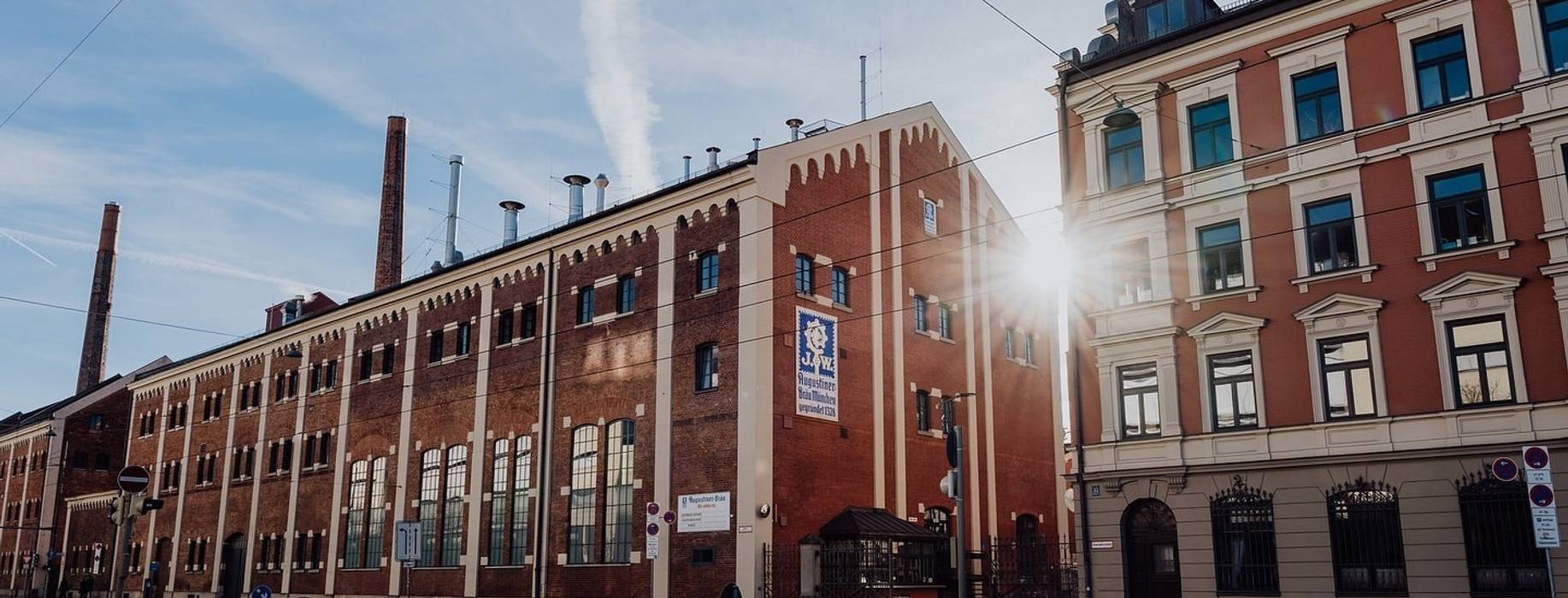
Based in Munich, Augustiner-Bräu is a storied brewery, and one that can chart its history back to 1328, making it Germany’s oldest independent brewery. Its modern history begins in 1829, when the brewery and its then-dormant brewing license were acquired by Anton and Therese Wagner. Its famous gold-on-blue “JW” logo and bishop’s staff iconography was registered as a trademark in 1887, with the logo itself being a nod to the brewery’s monastic origins.
During the Second World War almost 60% of the brewery was destroyed, and full renovation wasn’t carried out until 1971, when stainless steel tanks were installed, as well as a modern brewhouse. When Edith Haberland Wagner died in 1996, the brewery passed on from the Wagner family. 51% of her ownership, however, was invested into a charitable trust. The arrangement ensures Augustiner is the only of Munich’s big-six breweries (which also includes Hacker-Pschorr, Hofbräu, Löwenbräu, Paulaner and Spaten-Franziskaner) to truly retain its independence.
If ever visiting Munich I would encourage everyone to visit its bierkeller and garden so as to experience Augustiner Hell in its natural, bustling habitat. Although, I tend to prefer the cosy rusticity of its Bräustuben, on Landsberger Strasse. That said, a flight to Munich is no-longer required should you wish to drink draught Augustiner as-intended, with more than 60 venues in the U.K. now serving it permanently.
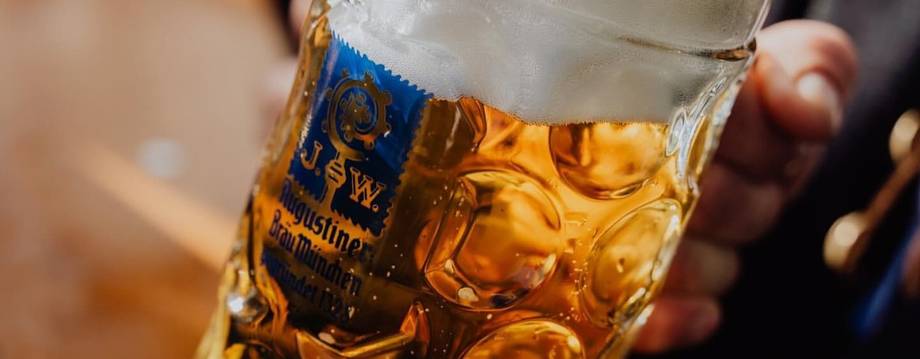
The reason it’s as-intended? The team at Augustiner carried out stringent checks on those wishing to stock it, which included full cellar audits, and the installation of dedicated lines in the venues that passed muster. The branded glassware even includes a second line, a finger-or-so below the mandated pint line and which is labelled the ‘Augustiner Foamline’. While pouring to it isn’t strictly legal under the U.K.’s weights and measures act, it’s not illegal for you, the consumer, to request an extra foamy pint, granting you the ability to close your eyes and visit Bavaria in a single-sip.
“For Augustiner, responsibility for the quality of our beer does not end at the brewery gate,” says Ralph. “The expansion of our draught beer business in the UK is therefore not a fundamental change in strategy, but rather a careful and gradual process. A number of selected venues now meet the necessary requirements, allowing us to take this next step while maintaining our quality standards.”
One of the venues to have secured draught Augustiner is the King’s Arms on Buckfast Street, in East London’s Bethnal Green. It’s a pub I’ve long been fond of, largely due to the excellent selection of beer and cider always available. Most recently, it’s come under the ownership of Jack Duignan, who alongside his father, Mick, also runs the Sutton Arms in Clerkenwell.
“It’s been going brilliantly for us. It’s by far our best-selling beer. We’ve sold over 9000 pints since April 22nd when it started pouring,” says George Kerr, bar manager at the King’s Arms.
Kerr explains how the initial cellar audit only took a few hours. With the initial checklist being highly particular, and the pub cellar dating back to the 19th century, a handful of compromises were made (although the details of these were not elaborated upon). The install itself was relatively simple, with a dedicated chiller and two lines for each tap – meaning two kegs are on at all times – established alongside a dispense unit, which is also used for cleaning.
The lines themselves are cleaned weekly, with a brewery representative attending every six weeks to deep clean the lines using a “special machine” which works by pushing a small sponge ball around the line, and takes a few hours. At the service end a water fountain was installed so every glass is rinsed before filling with delicious lager. Kerr tells me how Augustiner was interested in every last detail of the process, including their glasswasher, and what cleaning products they use in it.
“I was slightly worried about how it would be received by our more regular customers who probably hadn’t heard of Augustiner, but they’ve all started drinking it too,” Kerr tells me. “We’re selling it for £7.40 a pint, [and] haven’t changed that since we put it on. We’ve not had any complaints so far.”

PHOTO: The Kings Arms
It’s been flying out at my Manchester local, Café Beermoth, too, where the price is a slightly-more-Northern £6.60. While Beermoth prides itself on a wide selection across 18 taps and many hundreds more bottles, Augustiner seems to have slotted in perfectly. For me, it’s always the first beer I order before I start perusing some of the more adventurous items on tap. For others, it’s a beer that will mark the beginning, middle and end of an enjoyable session.
“I’d never had Augustiner on tap before so it was exciting for me, and at the time I wondered if it made the rest of Café Beermoth’s taps redundant,” local illustrator and cartoonist David Bailey tells me. “When I was there, shortly after launch, everybody was drinking it.”
There is, however, the matter of some stiff new competition for the U.K.’s independent breweries – many of which are now heavily invested in the production of quality lager. Despite retaining its independence Augustiner produces a mammoth 1.63 million hectolitres (that’s 287 million pints) annually. In Newcastle, Augustiner Hell is now sold permanently in three venues – although to the detriment of local brewery, Donzoko, which lost business to the Bavarian giant.
“I really love Augustiner. I lived in Munich for almost two years, crates of it kept me going through long study sessions and punishingly hot summer days,” says Donzoko owner and head brewer Reece Hugill. “I’d love to drink it more but maybe the allure of what’s new, shiny, and exclusive, comes at a cost to local scenes, bringing more identikit line ups and lack of regional identity.”
Reece’s response is somewhat tongue in cheek. Donzoko has recently released a brand new beer called Keller – a lager brewed exclusively for cask, not keg – which is only available to customers within the Newcastle-upon-Tyne area. Whether or not this beer is intended to be a rebuttal to the growing popularity of Augustiner, is for Reece to say. Or perhaps what’s more important is that we remember no one beer or brand is the beer-all-and-end-all of our drinking experience, especially when the allure of glittering golden lager is strongest. It’s wonderful to have draught Augustiner back on our shores at long last, but perhaps the real winner is simply having so much great lager to choose from.
Share this article
You’ve reached your limit of 5 free articles this month.
Unlock unlimited access and more

Join Beer52 and get your first month half price
-
Get your first box for £13.50 (RRP £27).
-
8 beers & 2 snacks delivered monthly.
-
Printed Ferment magazine included.
-
Unlimited access to all online content.