The taming of yeast
The dawn of brewing science turned yeast into a fixed variable for many brewers. But today, the same tools offer a real creative opportunity, writes Michael Clarke.
Michael Clarke
Saturday 14 November 2026

This article is from
Global Brews
issue 137
Share this article
There’s a corner in many cask ale breweries that is sacrosanct to the brewers. At Palmers in Bridport, Dorset, it sits next to a row of large open fermentation tanks in the 19th century thatched brewery. Darren Batten, head brewer, points it out. “This is a yeast cooler, essentially a big walk-in fridge and it’s where we store the yeast. The yeast sits in open-topped containers at around 4°C. It goes dormant but remains viable for up to seven days.”
Contained inside is a liquid in large buckets. An unprepossessing beige, this is the brewery’s individual yeast strain, an ingredient that Darren says, “is a bit like terroir in wine — a combination of water, process, and equipment, that gives a brewery its overall identity.”
Go on a typical brewery tour and you’ll often be given a sample of beer’s other two principal ingredients. The influence of barley on the finished beer can be demonstrated by nibbling differently kilned malts – bready for light malts, chocolatey for roast malts. Similarly, a sniff of different varieties of hops shows their influence – herby, restrained Goldings and Fuggles in a traditional British ale, assertive tropical American hops like Mosaic or Cascade in a new-wave IPA.
Visitors may even hear about the importance of local water supplies, such as Burton-on-Trent’s for pale ales or London’s for stout and porter, but yeast’s influence on the finished beer is rarely discussed.
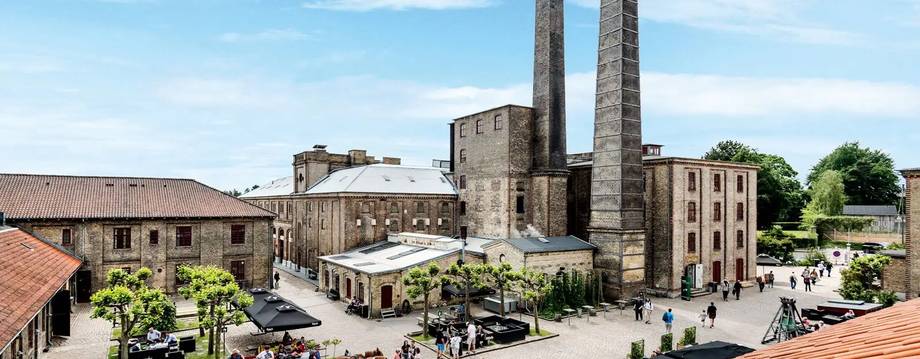
PHOTO: Visit Carlsberg
A notable exception to this trend is Home of Carlsberg in Copenhagen. Here, visitors walk through a recreation of the 19th century laboratory that changed brewing forever, all by focusing on beer’s smallest, and hardest-working ingredient.
Questions and answers
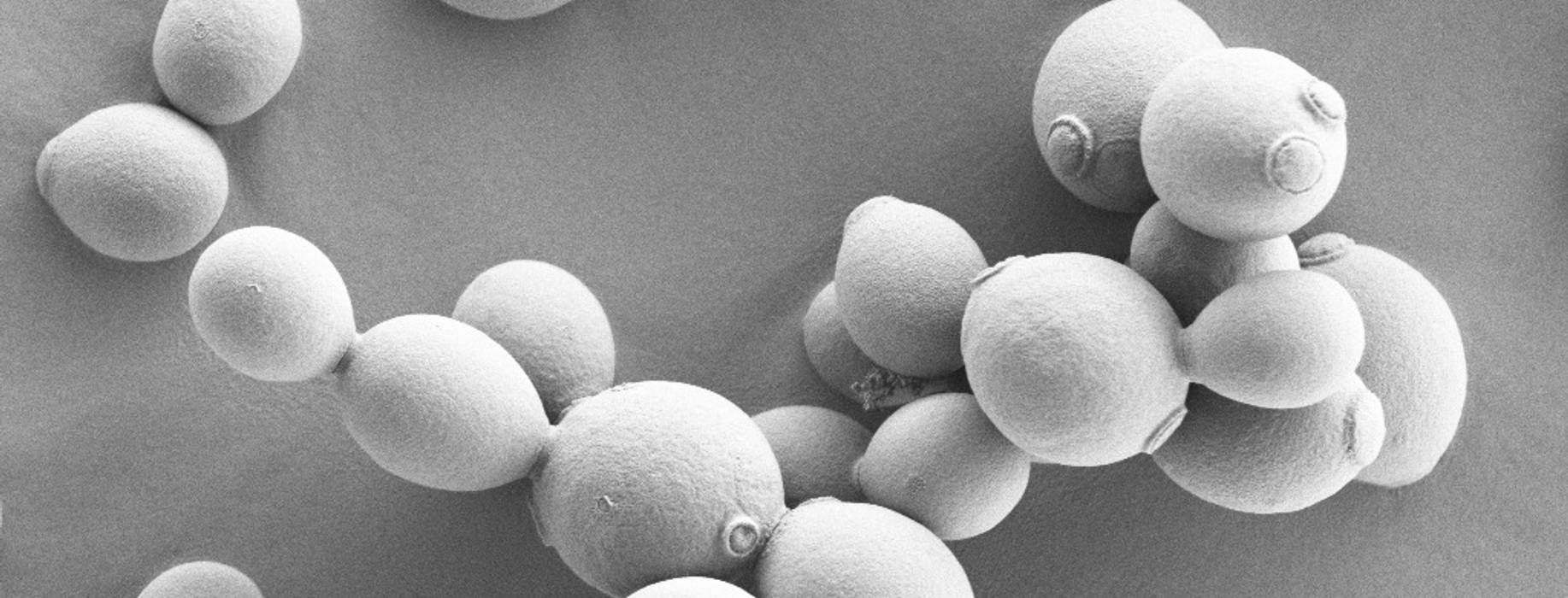
For millennia, brewers observed sugars being converted into alcohol and carbon dioxide, and mastered the ritual required to set this conversion in motion. The agent of this change, however, remained largely mysterious. That all changed in 1883, when Emil Christian Hansen, a scientist at Carlsberg in Denmark, developed a method to isolate and propagate a strain of yeast, Saccharomyces carlsbergensis (now known as Saccharomyces pastorianus), that produced a consistent beer every time.
Isolating a strain means identifying and removing one kind of yeast from an environment that will contain thousands of other, similar strains. Knowing what strain of yeast is present in a brew allows the brewer to predict how much sugar the yeast will consume, how much alcohol it will produce, and what character it might bring to the beer. Being unable to account for all yeast strains present in a brew prevents a brewer from making a consistent, predictable product.
It’s a known phenomenon that over time, yeast will change and fermentation character will shift with it.
As such, when Carlsberg shared the yeast strain – and the equipment with which to isolate and propagate it – with other brewers across the world, it led to the widespread adoption of this bottom-fermenting strain, which was particularly suitable for lagers. Arguably, more than any other innovation, this led to the dominance of light, clean pilsner type beers across most of the world from the late 19th century onwards, epitomised by Carlsberg’s own.
The hand of science
In the brewing process, yeast is pitched into cooled wort to start fermentation. It reproduces rapidly and brewers can reclaim some of this yeast at the end of the fermentation process to save, refrigerate, and start off the next brew.
But along with the ability to isolate specific strains of yeast, science has also shown that these tiny microbes can change from one generation to the next. Particularly if they experience stress – too hot, too cold, not enough sugar to eat – they will mutate to adapt to their environment, and with that the yeast’s behaviour in a brew is liable to change.
Their reproduction therefore requires constant monitoring. As Darren says: “The big lager producers typically only go seven or eight generations before re-propagating from scratch — they’re wary of flavour drift, and it’s a known phenomenon that over time, yeast will change and fermentation character will shift with it.”
It is therefore critical to maintain the purity and consistency of the ‘master’ strain, which is used to start afresh, and many breweries call on the services of companies like Nottingham-based Murphy and Son. Describing the job of a yeast lab, the company’s Dr Celina Dugulin, says “We provide technical support for fermentation, including training in microscopy and yeast handling. We also do microbiological testing daily of beer and yeast samples.”
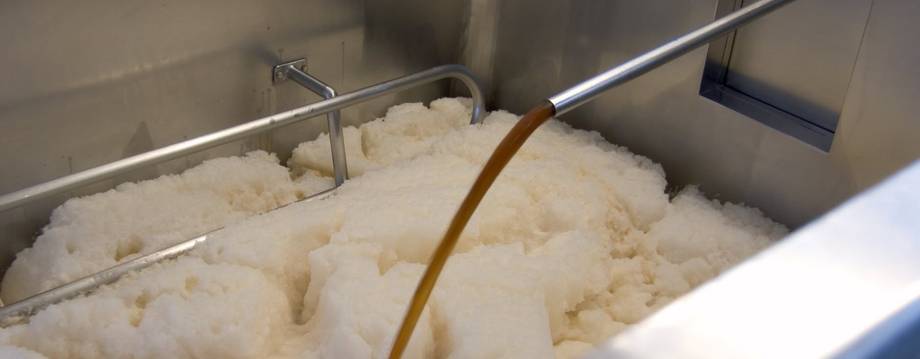
PHOTO: Palmers
Celina stresses the importance of yeast character in the finished beer, since “the same wort used with different yeast strains produces completely different beers, especially in flavour and aroma.”
Maintaining the purity of a strain is particularly important for mass-produced lagers using Saccharomyces pastorianus (lager yeasts) as they tend to ferment ‘cleanly’, not adding many flavours of their own. There are many other types of yeast, which produce flavour compounds such as fruity esters and higher alcohols known as fusels. The spicy character of Trappist-style beers and the distinctive banana aroma of German Weissbier are primarily produced by specialised yeasts.
Enter terroir
Unlike multinational lager brewers, British cask ale producers are often keen to brew with a strain of yeast that has developed uniquely in their brewery. Tom Jenkinson of Chiltern Brewery says of its in-house, 40-year-old yeast strain, “If I had to choose one word to describe our yeast character, I would probably say ‘nutty’, although it’s more in the background than the headline. You would certainly notice if we changed yeast.”
Many traditional cask ale brewers think of their yeast strain in these terroir-like terms, and have arrived at yeast strains that are particularly distinctive, one example being Harvey’s of Lewes in Sussex. Darren recalls a fascinating experiment. “We did a trial many years ago,” he says. “My predecessor had an issue with our yeast and pitched Harvey’s yeast into a brew. We released the beer to a few pubs to see what people thought. They said it tasted like Harvey’s. Nothing else had changed in that brew – same malt, same hops, same water – just the yeast. That’s your character right there.”
But how does a new brewery develop its own yeast strain from scratch? Tom Jenkinson is sworn to secrecy over the origin of Chiltern’s original strain back in 1980. Most often though, breweries will start with a standardised yeast strain and let it evolve, either through use, or by intentionally stressing the yeast. Once the mutating yeast starts to behave in a manner that’s desirable to the brewery, the yeast will be isolated and banked at a yeast lab for safe keeping.
The crux of the matter
Unknown to most through, there is a third option. If a brewery doesn’t want to develop its own house strain, or purchase a standard commercial strain from a yeast supplier, it can turn to the UK’s National Collection of Yeast Cultures (NCYC). Based in a state-of-the-art science park on the outskirts of Norwich, NCYC houses “almost 700 brewing strains,” according to its business development manager, Carmen Nueno-Palop, most of which are available for purchase. “Think of us as a big library. Instead of books, we have strains,” says Carmen.
The origins of many of these strains remain anonymous for commercial reasons, but many were collected in the 1950s and ‘60s during a large wave of brewery closures. They can be classified by region; Carmen tells me that Scottish strains give a much stronger flavour profile.
Even so, brewers appear remarkably conservative in their choices of yeast from NCYC’s library. Carmen says that of 440 ale yeast strains available, only a small subset are regularly ordered. This checks out with a conversation I have with Rob Lovatt, head brewer of Thornbridge Brewery in Derbyshire, who notes that, when tasting or judging beers from start-up breweries, a small range of standardised yeast strains tends to be used. It’s no criticism, but he says the prevalence of this small range makes the distinctive house strains from Timothy Taylor or St Austell’s all the more noticeable.
Think of us as a big library. Instead of books, we have strains.
The National Collection also operates as a vital back-up for many breweries’ house strains. I visit the lab where Carmen’s team prepares yeast cultures for preservation and don protective gear to see clouds of freezing gas billowing out of the cryogenic storage tanks where yeast is preserved at −196°C. DNA footprints for customers’ proprietary yeasts are also available so brewers can track any genetic drift in their own strain.
Carmen says the techniques for preserving both proprietary and commercially available yeasts are so reliable that the collection can work like a time-machine: “Both freeze-drying and liquid nitrogen are very good methods. We open ampoules from the ‘70s and they’re viable within two or three days — quite amazing, more than 50 years later.”
The importance of preserving these strains becomes clear when a brewery risks losing them altogether, such as when the unthinkable happened in 2020 and many brewers were forced to stop the perpetual fermentation cycle. Darren says: “We literally posted two samples when the Covid lockdown was announced to the company we work with. I said, ‘Look after my yeast!’ I crossed my fingers and they kept it alive in the lab for twenty weeks.”
The benefits of Hansen’s discovery are clear in the practice of every brewery in the world, large and small. Despite the wave of homogeneity he unwittingly unleashed with the success of Saccharomyces pastorianus, he also gave brewers a degree of understanding, measurement and control that was previously impossible. And as we look at the brewing world today, in which distinctive character is prized by many drinkers, those same tools have opened new frontiers for creative brewers to create beers that are stable and consistent, but can still surprise.
Share this article
You’ve reached your limit of 5 free articles this month.
Unlock unlimited access and more

Join Beer52 and get your first month half price
-
Get your first box for £13.50 (RRP £27).
-
8 beers & 2 snacks delivered monthly.
-
Printed Ferment magazine included.
-
Unlimited access to all online content.