A change of pace
Promotional feature for Visit Spain
Robyn Gilmour
Saturday 14 November 2026
This article is from
Global Brews
issue 137
Share this article
Of travelling across this beautiful planet of ours, Anthony Bourdain once wrote that, “the journey changes you; it should change you”. Sure, our aspirations for a two-week holiday aren’t always quite so profound, but even in seeking a break from our regular routine or the stresses of everyday life, something within us is seeking change. If you land on Spanish soil with an open, curious mind, there’s as much to be learned, as enjoyed.
The culture of eating
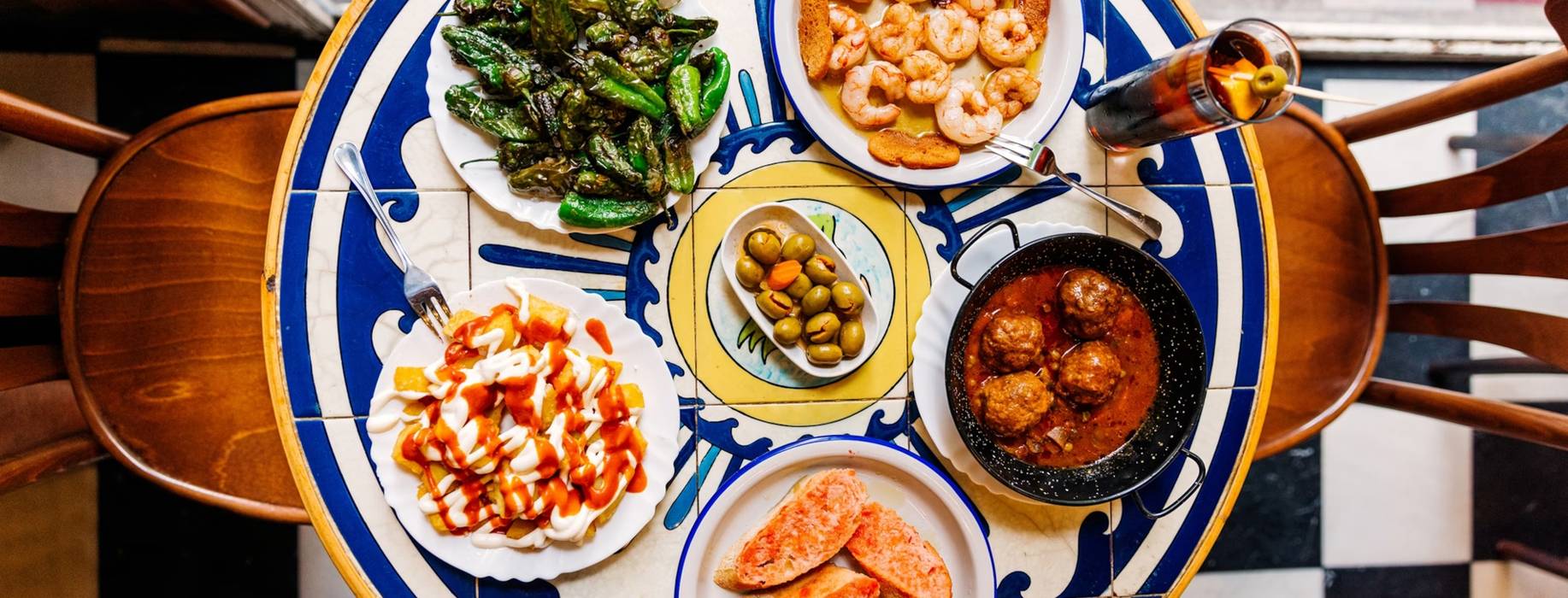
The Mediterranean diet, recognised by UNESCO as Intangible Cultural Heritage, is all about fresh, local, seasonal produce. This attitude to eating promotes balance, advocates for only buying what you need, reducing waste, and supporting local. Not only does food taste better this way, the environment benefits from low food miles, and the region’s blue zones speak volumes of the positive impact this diet has on health.
Crucial to note, on this point, is that the Mediterranean diet is not just a nutritional regimen, it’s a lifestyle in which social interactions centring around food are as important as the food itself. So, if you want to get a taste for the Mediterranean diet while visiting Spain, try to eat with Spanish people; visit a taberna (traditional restaurant), or venta (usually a family-run, roadside eatery serving regional cuisine) at lunch time and you’ll be engulfed by chatter and clinking glasses. Meal times are a profoundly social occasion, a time to press pause on the demands of the day, to catch up with friends, family and colleagues, and savour a meal that is not to be rushed.
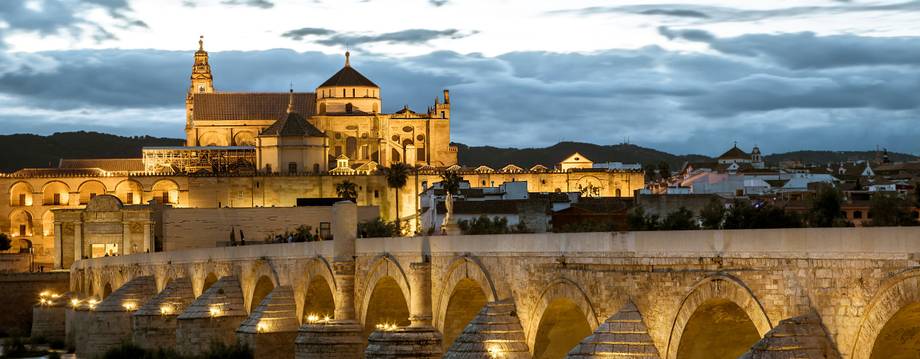
PHOTO: Córdoba © Saad Chaudry
Establishing when to eat can be a challenge for us Brits, given we’re accustomed to earlier meal times, but if you can sync your appetite with Spanish custom, you’ll get a true taste of Mediterranean living. Lunch is the main meal of the day, generally being served 1-3pm. Tapas can be enjoyed any time that a snack is needed. Dinner, generally a light meal, will then be served around 8:30-9pm. Whether you choose to eat at Spanish or UK meal times, options will be available; unlike some other Mediterranean countries, Spanish hospitality enjoys long opening hours so you can feast or nibble at almost any time of day.
A taste of place
From Barcelona to Seville, Cádiz to Salamanca, every city, town, and village will have its own interpretation of how best to combine local ingredients, with subtle differences in flavour and preparation acting as significant markers of regional history and identity.
That inherent sense of place is plain to see on every market stall. Spain's geography, from rain-soaked Galicia to the sun-baked plains of La Mancha, means the produce changes every few hundred kilometres: Padrón peppers and Rubia Gallega beef in the north-west, bomba rice around Valencia, Payoyo goat's cheese from the Sierra de Grazalema, and acorn-fed Ibérico pork from Extremadura. Many are native breeds and varieties, shaped by their landscapes and local customs over centuries, and sources of immense pride. Small wonder Spain has embraced 'Km 0' cooking, which champions ingredients sourced as close to the kitchen as possible. For many Spanish chefs though, it's simply a new name for how their families have always cooked: buy what's in season, from your neighbours, and make the produce the star.
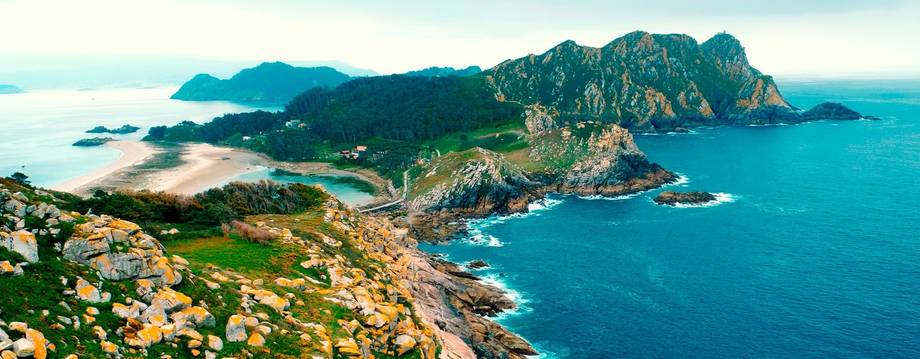
Rías Baixas estuary © Pedro Hiraldez
Sampling the delicacies of each region is as good a reason as any to travel, and if you pay attention to locals, and take an interest in their customs and traditions, you’ll discover an entirely new dimension of life in Spain.
Off the beaten track
For similar reasons, it can be beneficial for us to loosen our grip on paella and ham – both world-renowned delicacies for a reason – as they represent just a fraction of Spain’s food culture. Following food trails away from well-established tourist hotspots is a sure-fire way to get acquainted with a side of Spain you’ve never experienced before.
Take seafood. Each stretch of Spain's coastline has its own catch and preferred cooking methods. In Galicia, shellfish and octopus reign, boiled or steamed, and served simply with olive oil and pimentón. Order goose barnacles, scallops, turbot and octopus, then pair them with Albariño, a grape native to the Rías Baixas. Further east, in the Basque Country and Cantabria, the focus shifts to large wild fish: whole turbot and hake, opened flat and grilled over charcoal, alongside the prized anchovies of the Cantabrian Sea. Down in the south-west, Cádiz and Huelva are where you’ll find almadraba bluefin tuna and sweet white prawns, flash-grilled or fried as pescaíto frito. On the Mediterranean, meanwhile, the red prawns of Dénia and Palamós are lightly grilled or folded into rich seafood rice and stews.
Huelva produce some of the best acorn-fed jamón ibérico de bellota – but spoon dishes are at the heart of Spain's meat culture, combining vegetables; beans, lentils or chickpeas; and slow-cooked cuts, offal or spiced sausage. In Asturias, fabada asturiana pairs creamy white beans with chorizo, morcilla and pork belly for a deeply smoky, comforting dish, best washed down with the region's famous cider. Madrid's cocido madrileño, meanwhile, is a slow-cooked symphony of chickpeas, meat and vegetables, traditionally served in stages: broth first, then chickpeas and vegetables, then the meat.
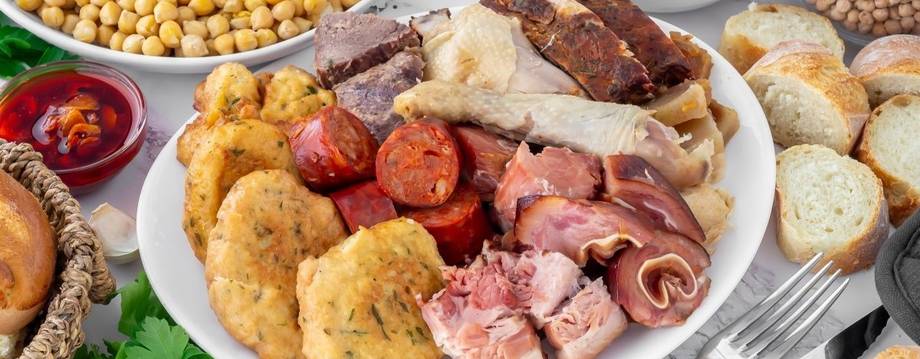
PHOTO: Cocido maragato © Bon Viveur
Head north-west into Castilla y León, and cocido maragato flips that order entirely, starting with the meat and finishing with the soup. Stories differ as to why, but a common thread among them is that eating the meat first is better for digestion. It's unmissable on any gastronomic route through the region, and for any pilgrim walking the Camino de Santiago, as is cecina de León, a cured, smoked beef with an intensely savoury, earthy flavour. Again, this is wine country, so don't miss the chance to enjoy a Ribera del Duero tempranillo or a Rueda verdejo (just two of the hundreds of native grapes grown across Spain) close to where it's made.
Getting around
Ancient civilisations, from the Moors to the Romans to the Celts, have all left an indelible mark on Spain’s history and culture, but so too have they influenced its infrastructure. Roads and trails criss-cross Spain, mapping out the historic movements of migrants, merchants and pilgrims alike, all the while creating superb hiking and cycling routes that offer modern day tourists and travellers a slower and more mindful way to traverse this beautiful country. The Camino de Santiago is the obvious example, but the Vía de la Plata (the Silver Route) offers a similar – if not slightly more challenging – 1000 km route from Seville to Gijón, following the path created by Roman roads. Both are superb routes to structure outdoor travel around in spring and autumn when the climate is most pleasant. If two wheels isn’t your thing, Spain enjoys a nationwide train and bus network so public transport is never off the cards.
Discover a different side of Spain and start planning your next authentic Spanish journey at Spain.info
Share this article
You’ve reached your limit of 5 free articles this month.
Unlock unlimited access and more

Join Beer52 and get your first month half price
-
Get your first box for £13.50 (RRP £27).
-
8 beers & 2 snacks delivered monthly.
-
Printed Ferment magazine included.
-
Unlimited access to all online content.