Reelin' in the years: 2010s
Michael Clarke tells the story of British pubs through the decades via a definitive beer, pub, snack, and jukebox tune. This month; the 2010s.
Michael Clarke
Illustration:
Irina Selaru
Saturday 14 November 2026
This article is from
Global Brews
issue 137
Share this article
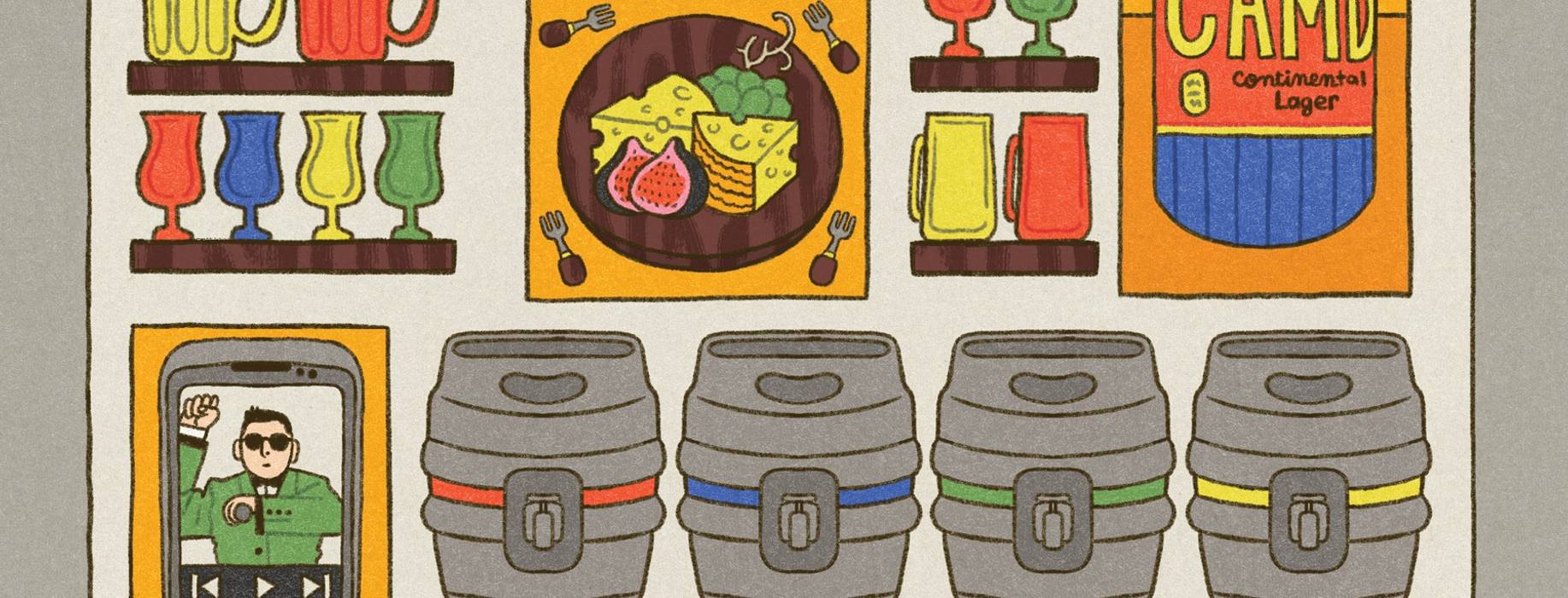
Gangnam Style, by South Korean singer Psy was virtually impossible to escape in the 2010s. During the decade, the video, featuring Psy's idiosyncratic horse-dance moves, was watched over three billion times on YouTube, helped by the ubiquity of smartphones.
But Gangnam Style was unlikely to be blasting out of an iPhone in a new kind of pub that was rapidly spreading across the UK; micropubs developed as an antidote to the same algorithm-driven, screen-focused world that propelled Psy into stardom.
The first micropub was the Butcher's Arms in Herne, Kent, fashioned by Martin Hillier from an old butcher's shop in 2005. With space for only two dozen customers, the pub's ethos was to encourage spontaneous conversation over traditional drinks, mainly real ales dispensed by gravity from the cask. No intrusions from music, TVs, phone noise or gaming machines were allowed (not that there would have been space). The phenomenon exploded in the 2010s, reinvigorating many high streets as shops, hairdressers and solicitors’ offices were converted into pubs. There were many variants on the theme – some were not so micro – but most remained true to Martin's original ethos. With no room for a kitchen, micropubs led the way in imaginative bar snacks, like cheese boards and charcuterie, often shared.
The growth of microbreweries paralleled that of micropubs. Camden Town Brewery was set up in London railway arches by Australian Jasper Cuppaidge, and produced one of the most successful beers of the decade, Camden Hells. Rather than follow US craft trends, the beer fused two German styles: Helles and Pils.
It proved so popular that Camden Town was bought by brewing giant AB InBev in 2015; others, such as Beavertown, were also snapped up by multinationals. By the end of the decade, a new brewery in Enfield was producing Camden Hells and Pale Ale, which became fixtures in pubs across the country. Camden Town had achieved what British brewers had largely failed to do since the 1970s: a home-grown, commercially successful continental lager. Perhaps that’s something worth horse-dancing about?
Share this article
You’ve reached your limit of 5 free articles this month.
Unlock unlimited access and more

Join Beer52 and get your first month half price
-
Get your first box for £13.50 (RRP £27).
-
8 beers & 2 snacks delivered monthly.
-
Printed Ferment magazine included.
-
Unlimited access to all online content.