By 'Eck, It's Gorgeous
Matthew Curtis charts the unlikely return of Boddingtons Bitter. This piece won 'Best Review' at the 2026 North American Guild of Beer Writers Awards.
Matthew Curtis (Writing and Photographs)
Saturday 13 December 2025
This article is from
The Elements of Beer
issue 125
Share this article
Eight years ago I was having a beer with a man called Peter Alexander, and we were talking about Boddingtons.
Myself and Peter, who’s the chair of Rochdale, Oldham and Bury CAMRA, had spent the past couple of years butting heads on Twitter. Our online personas of @Tandleman and @Totalcurtis were locked in what felt like eternal debate about the state of cask beer, particularly in London where I lived at the time, and the use of sparklers. Eventually I conceded that he knew a lot more about beer than me, and so we met for a few pints and became friends. Tale as old as time.
“The loss of Boddingtons still rankles,” he told me over those beers. He was referring to the demolition of Strangeways brewery in 2007. Based in the north Manchester borough of Cheetham Hill, about a mile from the city centre, it had been the home of Boddingtons brewery since it was established in 1778. In its latter years it was known for its tall, black chimney, with the iconic Boddingtons name painted in yellow down its spine. It was a particularly low point for the brewery, which at one point was the largest in Manchester, producing a staggering 850,000 barrels of beer a year. That’s about 240 million pints. Its heyday, which spanned the 19th and 20th centuries, was long gone, along with its beloved television ads starring model Melanie Sykes, who would reel off her famous line, “by ‘eck, it’s gorgeous” with plenty of Mancunian swagger.
The trouble, arguably, began for Boddingtons in 1989 when it was sold to Whitbread, which at the time was one of the six largest breweries in the UK (it would eventually leave brewing behind, to invest in Costa and Premier Inn). From the 1960s onwards, Boddingtons Bitter became famous for being straw pale and raspingly bitter. Despite not trying the beer when it was reputedly like this, I can attest that it was much paler, as a full-colour printed commercial I have in my possession from 1978 indicates.
For all its success though, Whitbread wasn’t content with Boddingtons and so transformed it into a rather ordinary brown bitter (which, more than likely, was part of cost cutting measures). By 1998 sales had dropped by more than 10%, and in 2000, Whitbread sold its brewing concerns to Interbrew, which today is part of the largest brewing company in the world, AB InBev.
And yet its bitter remained in production on cask for a while longer, brewed under license by Manchester family brewery Hydes in its original Moss Side location, until it was ultimately discontinued in 2012. All that was left of Boddingtons by this point was a drab, near tasteless nitrogenated version produced for keg and can. It felt as though its mustard-yellow light was due to be snuffed out, forever.
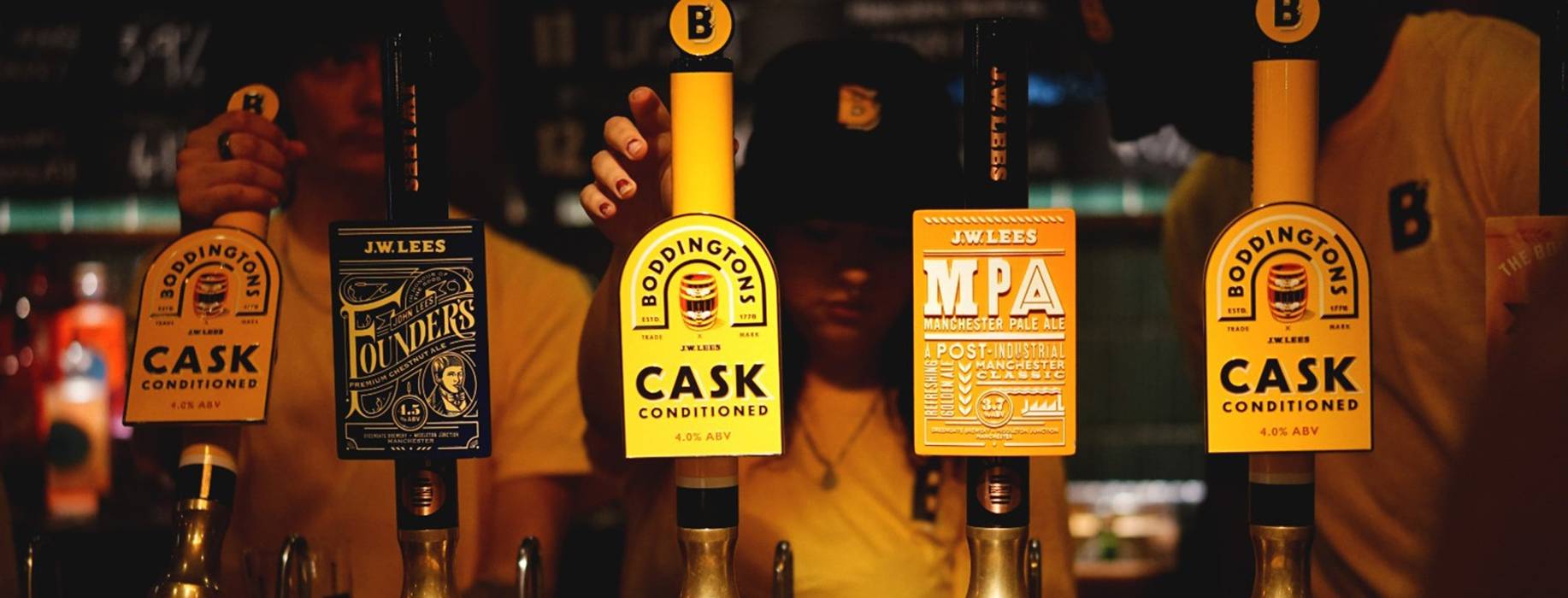
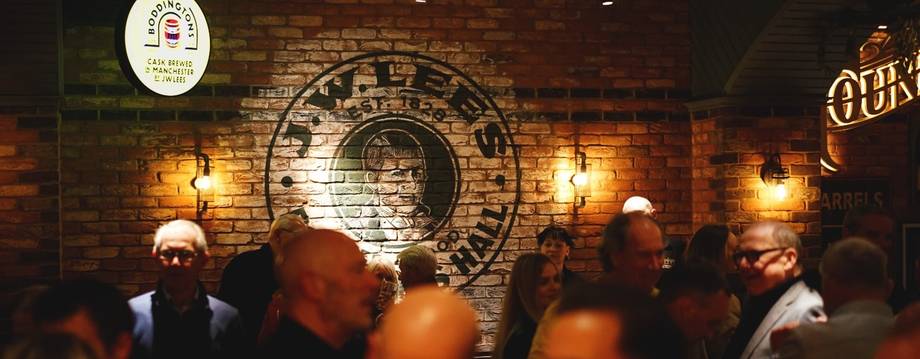
But fate had other plans. In September 2025, I made my way to Founder’s Hall – the city centre taproom of another Manchester family brewer, JW Lees – for a very special event. Boddingtons was back in cask, now brewed at Lees’ Greengate Brewery in Middleton, just six miles north west of where it was, rightly, being celebrated. The big question was, however, how would it taste?
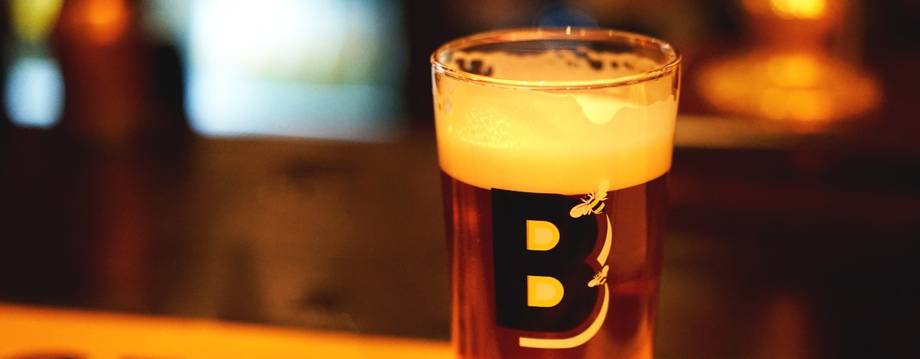
Well, by coincidence Peter Alexander was also at the launch, and he is someone who’s has been drinking long enough to remember both the original Boddies, and the Hydes version. “The new version of Boddingtons is reminiscent of the old in that it’s full bodied – no pun intended – and has the same dry finish,” he tells me. “The head is there, thick and creamy, and the finish is dry and lingering with some hoppiness. [It’s] perhaps a shade or two darker than the original, [but] hardly dark.”
High praise from a man who seldom minces his words – especially when they concern cask beer. I also enjoyed it, finding a soft, bready yeast character amid the light smattering of hop and malt, with a flavour reminiscent of fresh dough. This is no coincidence either, as one of the few things I can verify has changed is the yeast, because in bringing the recipe to JW Lees, using their house yeast was a non-negotiable.
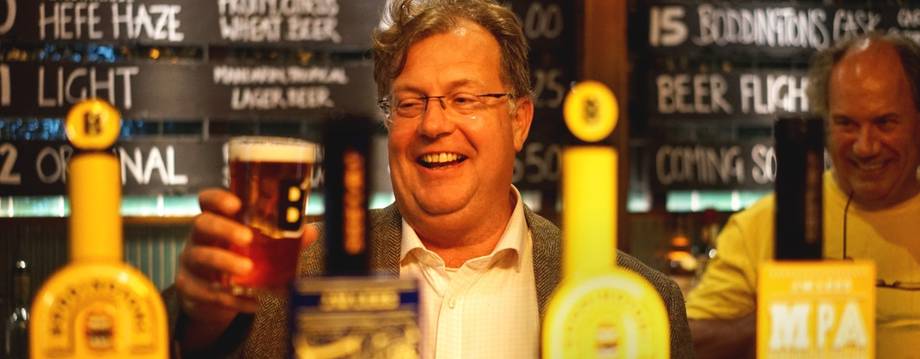
Michael Lees-Jones
“We needed to preserve our own yeast, which is on generation 5718 this week, and is fundamental to JW Lees beers,” brewing director Michael Lees-Jones tells me. “We started with a clean slate as far as recipe is concerned and came up very quickly with a beer that is very close to more than one of the many original versions.”
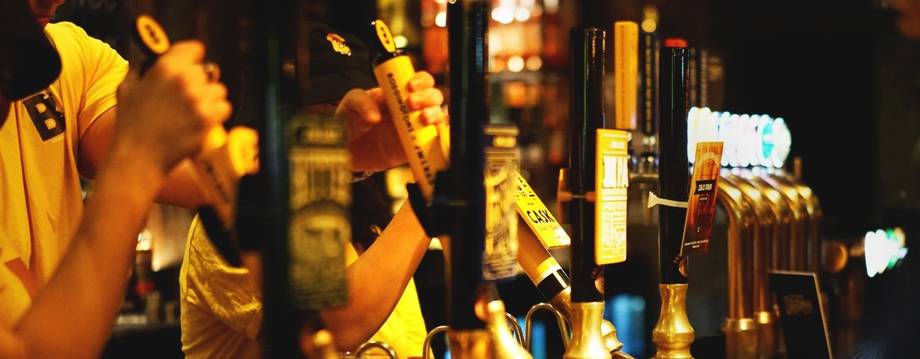
But why now? Well in case you were hiding in a cupboard this summer and haven’t seen everyone walking around in Oasis-branded Adidas gear, Manchester is very much the centre of Britain’s cultural attention at the moment. Manchester is cool, and AB InBev happens to have been sitting on one of its most iconic brands for a quarter of a century. But there’s also plenty of evidence that nostalgia is in, the ceaseless popularity of Guinness (and Murphy’s and now Beamish) notwithstanding. But Boddingtons is also not the only traditional bitter in AB InBev’s vast stable. It also owns Bass, which over the last 12 months has seen a remarkable 19% increase in sales. This has led to a full reactivation for the brand, the most recent development of which was a collaboration with clothing manufacturer Service Works. This evidence suggests that people are excited about traditional brands, including those served on cask. At the Boddingtons launch a few weeks ago, the three, bright yellow handpulls were seldom out of action, with the gathered crowd of Manchester journalists and influencers – many of whom are still in their 20s – knocking back pints with abandon.
Manchester is cool, and AB InBev happens to have been sitting on one of its most iconic brands for a quarter of a century
“The biggest problem that we have right now is lack of beer and casks and there are pubs up and down the country wanting to put Boddingtons on their bars,” JW Lees managing director William Lees-Jones (Michael’s cousin) tells me. “The rate of sale is so good that many of our direct customers are running out of beer which shows that there is a strong demand for cask beer, and especially Boddingtons since it’s so well-loved.”
I have seen this in action; Manchester pubs putting on a cask only for the barrel to run dry within a couple of hours. It’s not just what people want to be drinking, it’s what they want to be seen drinking. A pint of Bass or Boddies is this year’s must-have autumn accessory. It’s not just Manchester that yearns for the bitter either, with London pubs like Finsbury Park’s The Robin and Clerkenwell’s Sutton Arms already stocking the beer. Despite the North West being its heartland, Boddingtons was once a huge national brand. With its resurgence in popularity not just regionally, but nationally, it could potentially boost more than just its owner's fortunes, but those of cask beer as a category. Think about it: a range of brands from small producers on a row of handpumps can be intimidating for the uninitiated. A few positive experiences drinking cask Boddingtons, and suddenly those handpulls start to have greater appeal. This can only be a good thing.
Jack Duignan runs the Sutton Arms with his dad, Mick, and also recently took on the King’s Arms in Bethnal Green, East London. When he remodelled the pub, Jack decided to put Bass on permanently, which as you might already have guessed, was a hit. He tells me how he feels drinkers' tastes have gone full circle, with people craving more traditional beer styles. At his pubs he says hazy IPAs aren’t selling in the same way they used to, while traditional lagers and cask beers are proving to be more popular. “There’s always been the people that ask for a ‘normal lager’ but there’s a huge amount of people that ask for ‘normal bitter’ now, so Boddingtons was an appeal for the traditionalist. Knowing JW Lees were making it really helped,” Jack says. “A few of my customers who are old enough said ‘it's a million times better than it used to be’ which was pretty funny.”
Maybe this is it. Maybe this is when mainstream drinkers turn a corner and start drinking and (most importantly) respecting our cask beer heritage. Yes, Bass and Boddingtons are the vanguard, backed by the largest and most powerful brewing company in the world, and that should be acknowledged. But if it triggers a cask beer renaissance in the process? Well, smaller brewers better make sure they’re ship shape, because there’s a rising tide coming in.
Share this article
You’ve reached your limit of 5 free articles this month.
Unlock unlimited access and more

Join Beer52 and get your first month half price
-
Get your first box for £13.50 (RRP £27).
-
8 beers & 2 snacks delivered monthly.
-
Printed Ferment magazine included.
-
Unlimited access to all online content.