And the winner is...
From home brewing to the biggest names in craft, the beer industry loves its award ceremonies, but are these plaudits worth the perspex they’re etched on? Matthew Curtis finds out.
Richard Croasdale
Tuesday 20 March 2018

This article is from
The Hops Project
issue 24
Share this article
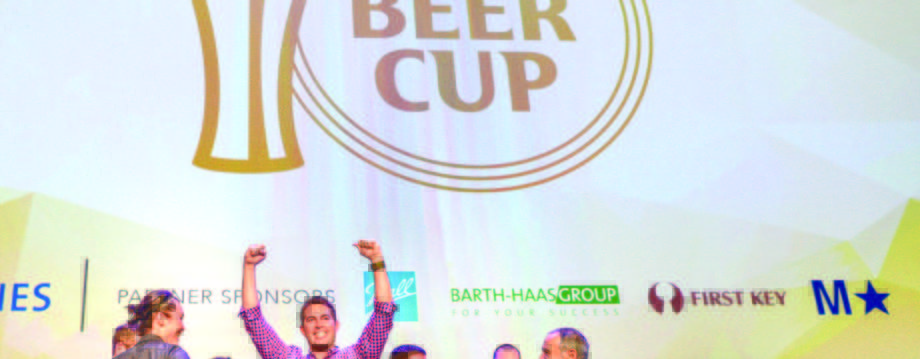
May 2018 will see the return of the biannual World Beer Cup. It’s one of the most respected beer competitions in the world, with heats taking place all over the globe before judges congregate for the final judging stage in the United States. The winners are decided every two years in the days leading up to the American Brewers Association’s annual Craft Beer Conference; the largest summit of its kind within the beer industry. Traditionally the awards close out the conference and this year brewers will be celebrating (or commiserating) in Nashville, Tennessee. Whatever the outcome, you can guarantee the beer won’t stop flowing until the small hours that evening.

The volume of entries it receives – some 6500 beers from over 1900 breweries – makes a medal earned in the World Beer Cup one of the most respected accolades in brewing. Thousands of breweries enter from all over the world. The majority of these are based in the US, but with over 6000 brewers – more than anywhere else on the planet – this should come as no surprise. It’s also judged by some of the most respected palates in beer: Ray Daniels, Randy Mosher, Melissa Cole and Stan Hieronymus to name a handful. The list of judges is a who’s who of beer personalities.
The judging process is also incredibly stringent. Judges are ordered to wash with odour-free soap and avoid strong deodorants and perfumes – otherwise they might not even be admitted to the judging hall for fear of tainting other judges’ finely tuned senses. Even cups of coffee are to be avoided in an attempt to keep the palate as sensitive as possible, before hundreds of finalists are judged in a completely blind tasting. As subjective as tasting beer is in any given circumstance, it’s easy to see why awards such as the World Beer Cup are so highly regarded.
PHOTO FINISH
When Northern Monk’s head brewer Brian Dickson – who was at home in the UK at the time – received a text from his friend Adam Watson of Kentucky’s Against the Grain Brewery at 1am, he wasn’t expecting to find out that one of his beers had medalled in the World Beer Cup. But that’s exactly what happened at the 2016 competition in Philadelphia. The Leeds-based brewery’s Eternal Session IPA fended off hoards of competition to win bronze in its respected category.
“I didn’t even realize the ceremony was happening in Philadelphia,” Dickson says of the moment he found out his brewery had picked up the gong. “I didn’t even have a can of Eternal in the house. We’d just won an award for this beer and I couldn’t even drink it to celebrate!”
For a British brewery to medal in an IPA category at the World Beer Cup is no mean feat. The field is dominated by US entrants; only BrewDog had previously managed to medal in an IPA category at these awards, with its Hardcore IPA earning due plaudits a few years previously. There can be few things as gratifying as winning an award for all the tiresome efforts that go in to achieving excellence within your field. What I’m curious about however, is what kind of lasting value winning awards has for breweries, and in turn for the customers that buy their beer.
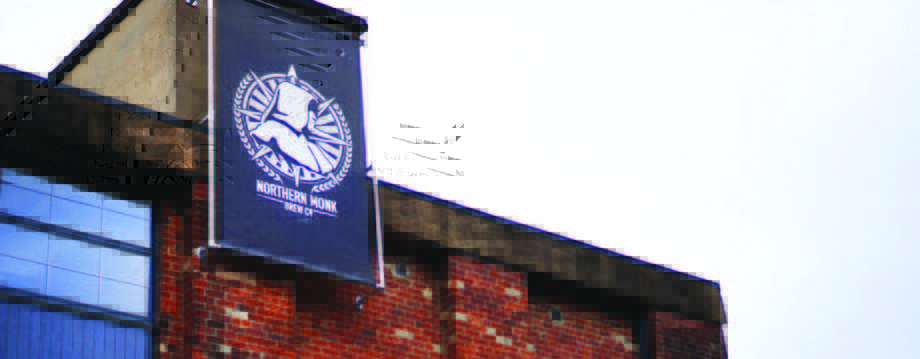
“[Winning] bronze at the World Beer Cup was really a seminal moment for us as a business,” Northern Monk’s founder and managing director Russell Bissett tells me. “It was just over two years earlier we’d set out to make some of the best beer in the world, armed with no experience in the beer industry and just a few thousand pounds. On a business level it provided a major confidence boost to our brew team and a huge amount of reassurance that we were on the right track.”
Both Dickson and Bissett fondly reminisce over how much Eternal they then drank over the subsequent days and weeks. It was a real moment of arrival for a brewery that was just over two years old. Affirmation that this was indeed an industry in which they could succeed and earn the respect of their peers. But how does this success relate to the consumer experience of the same beer?
“There are roughly 24,000 breweries worldwide and we’ve now passed the 2,000 mark in the U.K. As a consumer myself, the ratings, reviews and awards provide some guidance in a world of seemingly infinite choice,” Bissett says. “I’ve literally travelled the globe seeking out the best beer – much of which deemed so by ratings and awards – and thoroughly enjoyed doing so.”
Another British brewery that won big in Philadelphia back in 2016 was Derbyshire’s Thornbridge. It smashed the competition in the wood and barrel-aged sour beer category, taking home both gold and silver for its Love Among the Ruins and Days of Creation, respectively. This was no mean feat, considering that this was one of the first occasions these beers had been outside the brewery walls, and that they nosed ahead of heavyweight competition from the likes of Allagash, Boon and New Belgium.
Thornbridge head brewer Rob Lovatt couldn’t quite believe that these beers had pulled off a double victory. He was also a judge at the 2016 awards, (although he would not have judged any of the 96 categories in which his beers were featured) so understood only too well the gravity of his brewery’s achievement. However, he admits that perhaps the awards might have little relevance beyond the borders of the brewing industry.
“I’m not sure how relevant they are to the customer here in the UK,” Lovatt says. However any brewer who is worth their salt knows that picking up an award at the World Beer Cup is a serious accolade.”
ON THE PODIUM
Unlike the World Beer Cup, which is judged by selected industry professionals, the RateBeer Awards are based on data gathered by its network of users, who are for the most part out drinking the beers they rate in pubs, bars, at home and at beer festivals. Where the World Beer Cup is judged blind, in a closed-door environment, the RateBeer Awards are somewhat more reflective of what is happening within the consumer space. To a point at least. Hard to find beers, often of high ABV and fueled by hype carried by social media and word of mouth, are often the hallmarks of the site’s most highly rated beers.
This may go some distance towards explaining why Hill Farmstead has been voted RateBeer’s “Best Brewery in the World” since 2015. Its beers are notoriously difficult to get hold of and often only available from the brewery itself. Obtaining them consists of a lengthy drive into the Vermont countryside. Once you put that kind of effort into procuring a beer, your opinion of it is forever going to be influenced by that experience. Scarcity too plays a part, with limited-release beers regularly scoring higher than those brewed for a core range.
The RateBeer awards are handed out each January and although no physical awards ceremony took place this year, this didn’t stop the UK’s brewers from running away with a handful of gongs. No fewer than ten British breweries featured in the coveted top 100 brewers list, including the aforementioned Northern Monk (Thornbridge, however, was sadly absent). Cloudwater (which finished fifth in the awards in 2017) had a tremendous 2018, buoyed by waves of both hyperbole and some exceptional beer, went as far as to take the coveted number two spot. The Manchester brewery finished ahead of some of the most well-regarded breweries not just in the US, but from all over the world.
“I’d have lost my shit if I’d been at a ceremony this year and got called up for second best brewery in the world,” Cloudwater co-founder Paul Jones says. “I definitely would have been convinced we’d dropped out if I’d not have heard our name for 10th, 9th, then up to 5th. By the time Trillium got called for 3rd I’d have been slamming a beer and playing back in my mind what went wrong, and how we need to do better to delight our customers.”
Some may have been surprised at seeing Cloudwater beat off so much competition to take the silver medal. However, RateBeer founder Joe Tucker would not count himself among the naysayers.
“Cloudwater is an amazing brewery led by extremely passionate people dedicated to the highest standards and with a keen understanding of craft beer as it’s evolving around the world,” Tucker says. “They have their finger on the pulse and in part, it’s their own. It was no surprise to see the final tally.”
This year’s RateBeer Awards were mired by some controversy, however. In June 2017 it was revealed that RateBeer had sold a portion of its business to one ZX Ventures - the so called “disruptive” venture capital arm of AB-InBev, the largest brewing company in the world. For so long the awards had been not just a celebration of great independent craft beer, but also of the sites users, many of whom go to great lengths to try, along with rate, as many beers as they possibly can. The news called into question what relevance the awards would hold in the future and led to the cancellation of the 2018 awards ceremony and accompanying festival.
Despite the revelations surrounding RateBeer’s ownership, Cloudwater’s Jones still feel the awards carry significance across the modern beer landscape.
“[RateBeer] is another valuable feedback loop breweries can choose to listen to if they are in the market of making new beer,” he says. “I worry the dim view of sites like RateBeer are propped up by a sense of superiority that the industry – from brewers, competition judges, to writers and bloggers – ought to shake off. I take a view that all feedback on our beers is deeply personal, but I also value all the feedback we get.”
BLAZE OF GLORY
Brewers may proudly hang medals and display trophies and certificates on their taproom walls. They might congratulate and slap others on the back, joining in the victory parade held by their peers. They may also be introspective in light of not winning, perhaps dwelling too long on what went wrong – and with any luck use any insight gleaned during this introspection to kick on and improve every aspect of the beer experience they’re creating for their customers.
Despite all of this, it’s still incredibly difficult to quantify exactly how much a consumer cares about a brewery winning an award for its beer, even it’s a brewery they actively follow as a fan, besides just being a drinker. If you head into a pub for a few pints at the weekend, do you ask your bartender which of the beers they’re serving are award-winning before ordering? I didn’t think so. Awards may help drive the industry internally, but to most drinkers it’s likely that they’re little more than window dressing.
“Awards don’t really influence what breweries we stock, as they tend to be on our radar anyway,” Stephanie Palgrave-Elliott, co-owner of North London bottle shop Caps & Taps tells me. “However, we do notice more customer interest in beers that have won awards, such as Burnt Mill (who won best new UK brewery in the RateBeer awards) recently.”
Ultimately the value of awards is dictated not by their existence, but what went into achieving them. As Northern Monk’s Russell Bissett eruditely pointed out there are over 24,000 breweries globally. Some will be excellent, some will be ok, some might not be quite as up to scratch as consumers demand. Awards are one way at least, of indicating that trying something different might be worthwhile, or reaffirming our preferences for our favourite beers.
“As a consumer myself when I’m in an unfamiliar market I find pointers like awards to be valuable,” Palgrave-Elliott says. “And I don’t think there’s anything wrong with a bit of backslapping in what is a pretty difficult and competitive industry.”
Share this article
You’ve reached your limit of 5 free articles this month.
Unlock unlimited access and more

Join Beer52 and get your first month half price
-
Get your first box for £13.50 (RRP £27).
-
8 beers & 2 snacks delivered monthly.
-
Printed Ferment magazine included.
-
Unlimited access to all online content.