Well Seasoned
Hops are notoriously sensitive to the conditions in which they’re grown. Richard Croasdale catches up with Dr Peter Darby to discuss the principle of terroir and how much difference it really makes

Richard Croasdale
Monday 21 May 2018

This article is from
The Hops Project
issue 24
Share this article
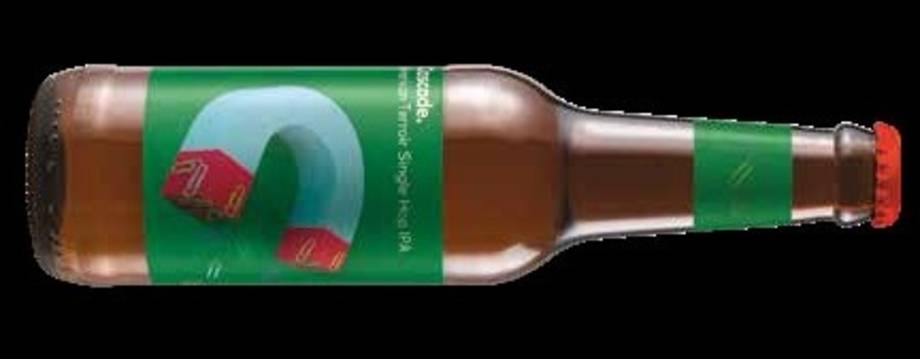
Whether as a brewer or a beer lover, it’s easy to grow a little distant from the agricultural reality of the hop, which we normally only deal with in its dried or pellatised form or, ultimately, in a pint of beer. But these are delicate, sensitive and notoriously picky plants, cultivated for centuries to behave different regions or even specific vineyards – it can equally be applied to hops, some varieties of which are so sensitive to their growing conditions that they are given different names depending on which farm they came from. In the beer box this month we have two beers – USA Cascade and EU Cascade – that demonstrate just how much of a difference terroir can make. The conditions under which hops are grown, from the soil and rain to daylight hours and even farming practices, have a massive influence not only on how successful a hop harvest is in terms of yield, but also on the flavours that end up in your beer.
Taken together, these environmental factors are known as ‘terroir’. While this term may be more common in the world of wine – where aficionados are able to distinguish between the same varieties of grape from USA cascade is everything you'd expect: floral, perfumed with a piquant nose, the Cascade shines through in all its zesty glory. Alongside, we have an IPA hopped with Cascade grown in central Europe, floral and spicy, with a pronounced citrus aroma that prevails.

Dr Peter Darby of Wye Hops, one of the UK’s most respected voices in the breeding and growing of hops, approves of the choice. “Cascade was a great hop to pick for your demonstration, for lots of reasons. It has a very wide geographic spread in terms of where it’s grown, and it’s a variety that responds very clearly and physically to its environment. Not just in terms of what it contributes to the brewing but even how it looks on the bine.”
He explains there are other similarly ‘plastic’ hop varieties (in the sense that they’re strongly affected by terroir), which are typically associated with a particular location.
“East Kent Goldings bears that name because if it’s grown anywhere else, it’s not the same. They’re very particular. Even in East Kent, they’re different on different farms, which is why they’ve gained a whole range of names: Eastwell, Rothersham, Mathon, Petham. All these variety names reflect the village or farm where they’re grown and they look different on each farm.”
But why should this be the case? What are the main growing factors affecting hop character from a brewing standpoint, and what’s actually changing on at a chemical level? According to Peter, light is the most significant factor in hop terroir, particularly in determining the types and quantities of flavor-imparting oils and resins produced prior to harvest. This makes sense from an evolutionary standpoint, he explains, as many of the these substances will have developed over the millennia specifically as a reaction to light exposure.
“There’s a lot of research just now which points to the fact that almost all the genes controlling a hop’s function are related to light. This includes some lovely work that’s been carried out in the Czech Republic, which has shown all the genes associated with resin and oil production are also affected by light,” he says.
“The length of the day and the intensity of the light are the predmoninant things that affect these functions, including oil and resin production. Generally, the higher the light intensity the higher the oil quantity. But it’s not just quantity; one piece of research published last year in the Journal of The Institute of Brewing and Distilling looked at Amarillo hops grown in different parts of America. It shows the oils are very distinctly different between the two growing regions, particularly the ratio of esters to terpenes. The difference was marked enough to be identifiable in the beer.”
Without wishing to get too deep into the biochemistry side of things, it seems to be the group of organic compounds called monoterpenes that are most affected by the maturity of the hop and its environment. This is important because this group – which includes myrcene and caryophyllene – contributes a huge amount to that initial hit of intense, fruity hop aroma that we all love.
“We had a trial where we grew Challenger, North Down, Target and Cascade in different countries: New Zealand, America and the UK. Most of the oils were pretty much identical, but not the monoterpenes, which were consistently lower in the UK than any of the other growing regions in each variety. This is attributable to our more northerly, maritime climate, which gives more cloud cover and less light intensity. Monoterpenes tend to be higher where you have the highest light intensities.”
While soil conditions and rainfall can make a difference to crop yield and other agronomic factors, they don’t really have a measurable impact on brewing character. However, what can have a surprising influence are the subtle differences in growing practices (or ‘husbandry’) in different regions.

“For example, some varieties grown in New Zealand and America are very different from when they’re grown in Europe,” continues Peter. “When that was looked at in more detail, it was discovered that in Europe we use copper fungicides to treat downy mildew, which knocks out one of the key components of Cascade. So this key component was present in American and New Zealand hops, but it was missing in European cascade.”
This is an area of ongoing research around the world. For example, in the US there is currently investigation into what effect – if any – certain diseases and their treatments have on hops from regions where those diseases are particularly prevalent.
Terroir in hops is an interesting idea for drinkers and researchers, but can be a headache for those trying to grow hops which meet buyers' expectations of that particular variety. Peter, whose role is focused on developing and selecting new hops for the market, says that for this reason he and his colleagues tend to select for varieties that aren’t easily affected by growing conditions, like Brewer’s Gold.
Related to this, Peter points out that ultimately all hop varieties are the result of evolution, ad-hoc selection by farmers and more scientifically deliberate breeding programmes. As such, each hop variety is adapted to the conditions in the region from which it originates, so terroir is only part of the picture.
“We’re just starting to unpick the genomes of different hop varieties,” he says. “There was a paper last year which suggested the germplasm pool in each country was fairly distinct, and those things weren’t transferable. You could distinguish all the Slovenian varieties from the American varieties and the British varieties and so on, just by looking at the genome. It’s the interaction between the genes and the environment that makes this such an interesting area.”
Share this article
You’ve reached your limit of 5 free articles this month.
Unlock unlimited access and more

Join Beer52 and get your first month half price
-
Get your first box for £13.50 (RRP £27).
-
8 beers & 2 snacks delivered monthly.
-
Printed Ferment magazine included.
-
Unlimited access to all online content.