The Scratch of the Hop
“IT’S AN INTERESTING STORY, NO QUESTION ABOUT IT”
WORDS: Marsha O’Mahony
Monday 21 May 2018

This article is from
The Hops Project
issue 24
Share this article
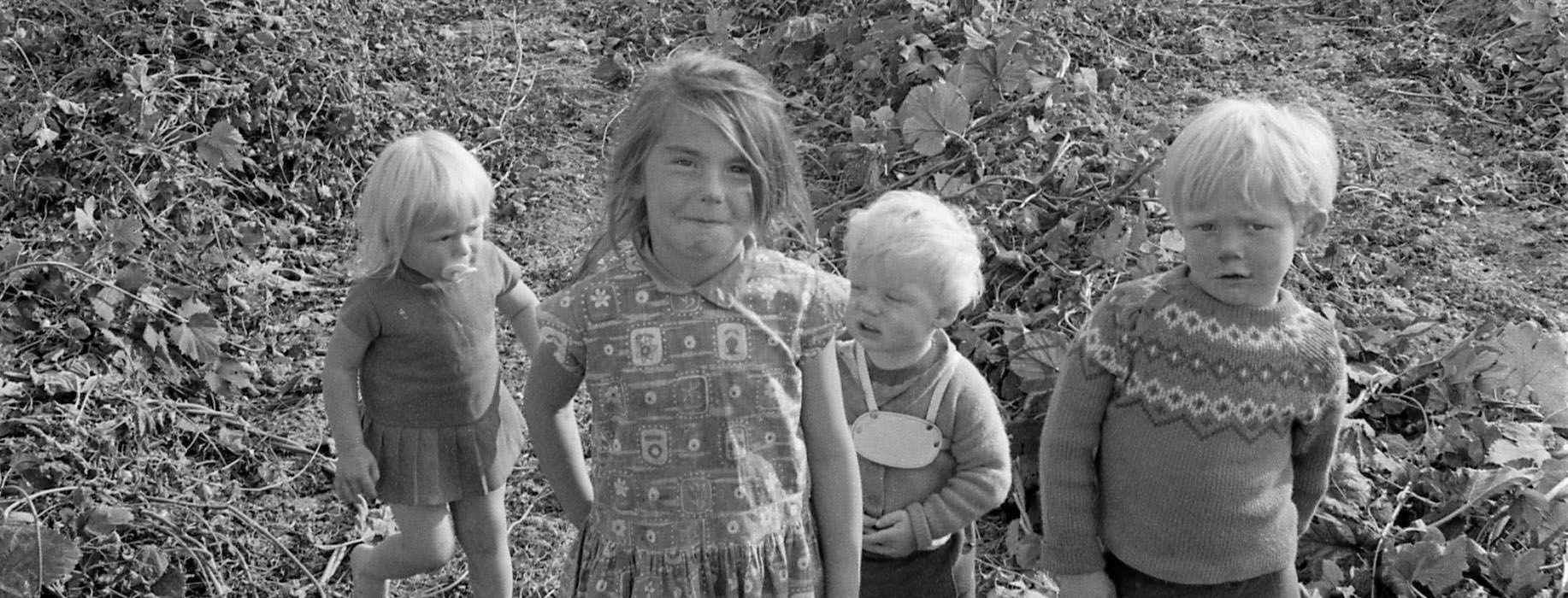
Herefordshire is well known for its apples and it’s Hereford Cattle, but what about the humble hop? A requisite of British beer, with their evocative aroma, hops have been an integral part of county life for centuries. In days gone by, families would arrive for a working holiday by train, cattle lorry or charabanc. Dinners were cooked over open fires and children picked hops into upturned umbrellas while their mothers worked at the cribs. Wherever you turn in the county there are still traces of this hey-day of hop-growing, with the distinctive roofs of the old hop kilns and the tall wooden poles, but the hand-picking days have long been replaced by new processes and technology. Even so, this beautiful, aromatic crop still grips the imagination of many who encounter it, and still work with it today.
A new film, made possible by players of the National Lottery is called ‘Stories from the Hop Yard’, and it charts the hey day of hop-picking by hand, which all but died out during the 1960s. It’s a timely project, for two of the interviewees, hop pioneer Peter Davies of Claston Farm, and Barry Parker of Munderfield, both in their 90s, died recently. They witnessed a revolution in their industry, as it moved away from hand-picking towards mechanisation.
Peter Davies’ prodigious hop growing operation was once the biggest in Europe, producing over 600 pockets each season. Easy to see why he was once described as the ‘hop king’. Where once his hop farm was one of hundreds in Herefordshire, today there are only around 25 left in the region. Most are several generations strong, but excitingly others are starting out for the first time. With increased interest in craft brewing there is a renewed confidence in the industry.
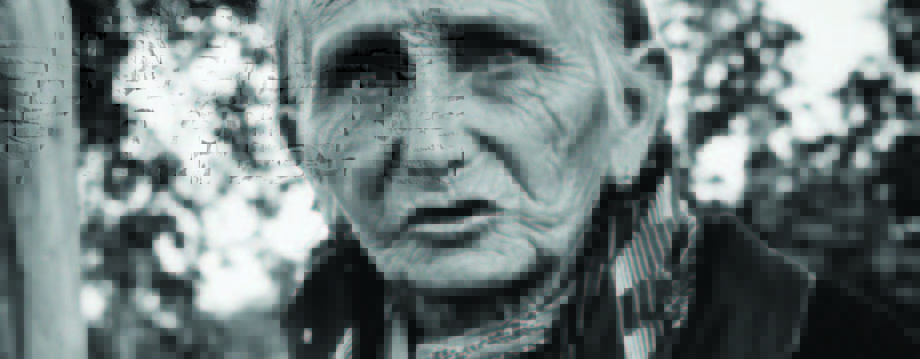
In its pre-mechanised days, the hop harvest was picked by hand, requiring a labour force of thousands across the county with the village of Bishops Frome swelling from 600 to 6000 inhabitants. The mass migration of pickers would start in late August, from the local communities, the industrial Black Country, mining towns of South Wales, and the Romany travellers, arriving in their ornate caravans and charabancs. It was an annual movement of people that was unprecedented and rarely remarked upon.
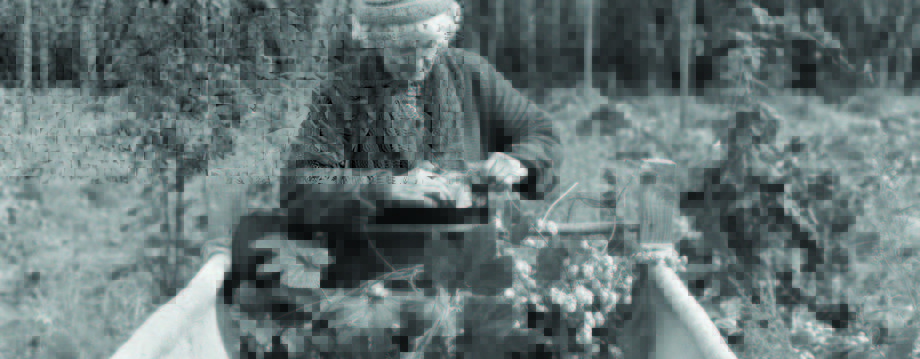
Sleepy villages were transformed, as women (it was a mostly female occupation) and their children, toddlers, babies in prams, streamed out of train stations, off buses and trucks, arriving to take up residence in farm outbuildings, freshly whitewashed and strewn with new hay. Here was their temporary home for the next month. Beds would be made, sheets and blankets thrown over the straw, food stored in ‘hop’ boxes away from the mice and rats, wood collected for the fires, and fresh milk collected from the farmer’s wife. During the Second World War, it offered a haven from the bombing afflicting the West Midlands. Mavis Doughty is lyrical when she describes the delight and relief coming away from her Midlands home to the hop fields: it was three weeks of peace and safety: “It was such a blessing to get away from the life that we had, what with the war being on, cos you could sleep in peace and you weren’t going to be bombed, and your relatives weren’t going to be blown up, cos we were all sleeping together at Ledbury.”
It was a period of high intensity, sweat, toil, tempers and laughter. During the height of the season, the view over the Frome valley in the evening was akin to a military encampment. The landscape was littered with fires, in one corner, tents and caravans, the accordion playing, in another singing and dancing around the fire. Food was cooked on ‘devils’, huge iron contraptions that held fire wood and balanced steaming saucepans of soup and stew. There were horse sales, fights, and strikes. It was the highlight of the year for many, but it all changed with the invention of the Bruff machine. This piece of engineering was a mechanised hop picker, doing the work of a hundred pickers in a few hours. It quickly became an essential piece of kit for farmers. Within a few short years, a way of life that the county had become accustomed to, came to an end – it really was the end of an era.
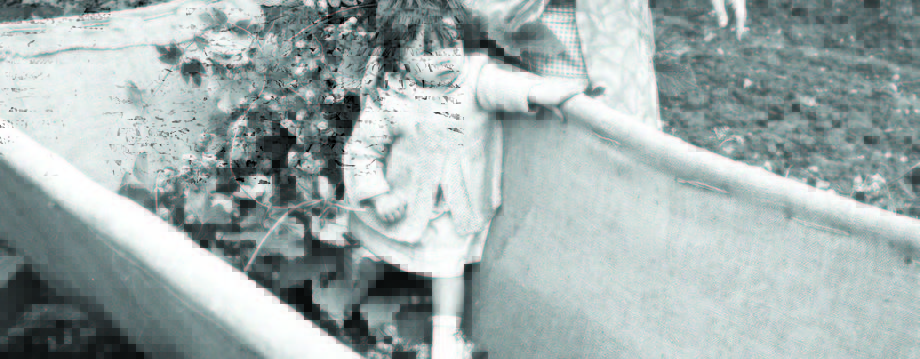
The late Barry Parker of Instone Court was a third-generation hop farmer. His son, Simon, still runs their hop operation today. Speaking in November in his farmhouse home, where he was born, Barry had vivid memories of the pickers arriving, en masse, at the start of each season. It was like a holiday for many, lots of fresh air and good fresh food, but it was an equally important opportunity to earn a precious few more pennies:
“One of my first memories is hop pickers, hundreds of hop pickers in the buildings everywhere. I was always a bit frightened of them, but they were very nice people really. They were certainly short of money and it was a good holiday for them because they had no other chance of going out into the country. Some of them took it seriously and earnt money and others of them treated it as a holiday. It just went on and on and on. But the majority of them came to earn some money. We used to have a strike every year. It was the thing to do to have a strike. And father got the buckets out and gave them plenty of cider and next morning they were back at work! It always happened like that. But you always had to have a strike, it was the thing to do. It was a day off really!”
Romany gypsies, a marginalised group today, were an essential part of the workforce during the hop harvest and trusted members of the team. Margaret Dallow of Bromyard, remembers them well: “Head of them all was a very strong lady and she kept then in check. And they used to protect my mother, my sister and I by walking round the farmhouse at night to see that we were alright if father was not there. If they got to fighting, there was a big pool and sometimes someone got thrown in the pool and father used to have to put their caravan or tent down the other end of the farm.
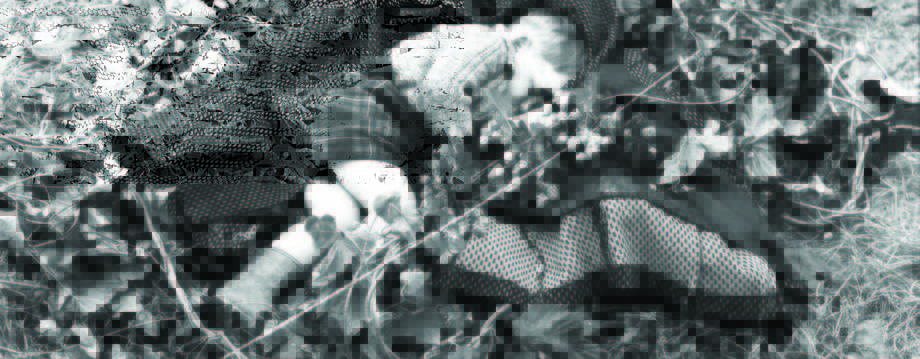
“But the Sunday nights were lovely because the Welsh pickers used to sing Welsh hymns. And this memory has stayed with me. I love a Welsh choir. And we used to clean out the cattle shed, so that they could all come in there and sing their hymns and that was a lovely sound.”
The hop field of the handpicking days had their own language. There was the crib, a portable wooden contraption, with a sack apron. Into this the pickers picked the hops. There was the busheller, an important man (it was usually a man). Scooping up the hops from the crib with his measuring tool, a simple wicker basket, he would ‘bushel’ the hops – one basketful of hops was one bushel. The bagger was holding the giant green sack into which the bushelled hops would be tipped. Finally we had the booker (usually a woman, the farmer’s wife or daughter, or the local teacher). With her book and pencil, she would mark the number of bushels next to the picker’s name. At the end of the harvest, the totals were tallied up and the well-earned money paid.
During the day, six days a week, the women with their babies in prams or sitting in the hop cribs, would pick, while the older children picked into upturned umbrellas, or cleared out the leaves, or went searching for firewood or scrumping in the surrounding orchards. Once back, they would light a fire and the kettle would be boiled for tea. Sometimes the farmer’s wife would come around with horse and cart and serve tea or cider. Sandwiches were wrapped in muslin, everything tasted of hops and sandwiches were stained by hop-resined fingers.
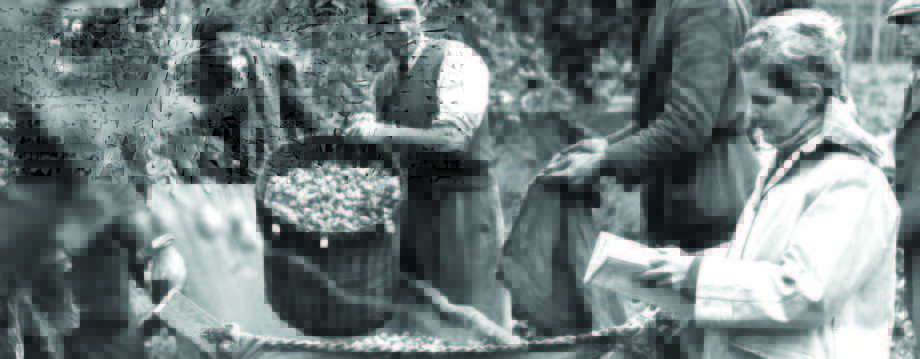
Every so often words echoing around the hop yard would alert to the arrival of the busheller, ‘Clear ‘em up, clear em out!’, ‘bushel 'em up’ The busheller wasn’t always the most popular person in the hop field and he often had his hands full; the pickers were not afraid to make their feelings known if they felt that he wasn’t being generous enough, favoured another picker or was a ‘heavy handed’ busheller. They were a tough and vocal bunch, every penny and every hop mattered. Long before universal suffrage, one of the Pankhurst sisters was spreading her message in the hop fields of Herefordshire.
Margaret Dallow again: “The women would go on strike if they weren’t paid enough money as they thought they should and they would stop picking. My mother told me that at one farm they beat up the busheller because he wasn’t playing fair. And the busheller had to be very careful how he bushelled from one crib to another. If he was bushelling light, as they used to say, he would only put a little bit in if he liked the women, he would put a little bit in and say, one. Well the next one, he’d fill the basket right up to the top, and the women soon would notice and they would get around him. I can see my father bushelling now. They used to say, ‘come on Bill, come on Bill’.
One of the great traditions of the hop yard was getting ‘cribbed’, especially at harvest’s end. If you were getting married, or perhaps one of the few bachelors on the farm, or the busheller then you were in danger of being cribbed, picked up and thrown into the crib and smothered in the hops. It happened to a young John Pudge. John is from a long tradition of hop farmers in the Frome Valley. Over 50 years after the end of hand picking, he still receives visitors from the Black Country and South Wales at The Hop Pocket shop, reminiscing about ‘the old days’: “We were still picking by hand in 1958/59, and at that stage some of the pickers, I was there with my father in the hop yard, I wasn’t very old, but I was picked up and thrown into the crib. Father had no hesitation but to laugh so there was no problem grabbing hold of me and smothering me in the hops.’
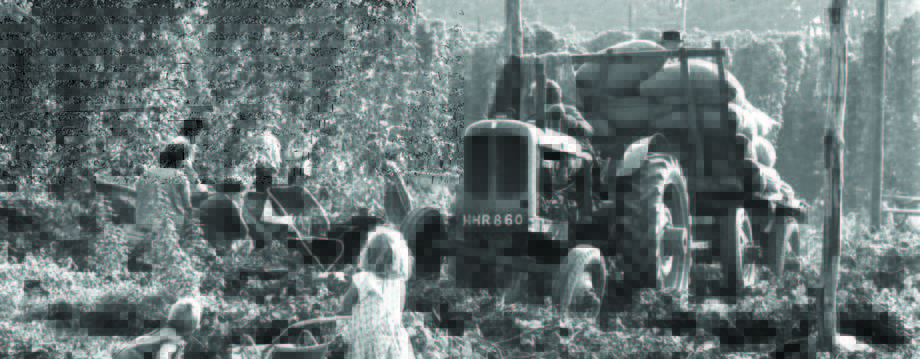
And so, this way of life could have gone on forever, if it hadn’t been for a Mr Brooke in nearby Suckley and his invention of the Bruff machine. Technology drove the change, bringing the industry firmly into the 20th century. The hop pickers were no longer needed and within ten years, their annual migration had reduced to barely a trickle with farms needing not 200 but only 20 workers. Progress means some old ways have to be left behind and it would be impossible to pick the quantity of hops by hand now but it’s hard not be nostalgic for those heady hop picking days. People’s fondness for these times must surely be fuelled by the pungent and distinctive scent of the hop, once ‘scratched’ never forgotten.
The Film Stories from the Hop Yards brims with archive photos, film, and newly-recorded interviews. It is part of a larger project, Herefordshire Life Through a Lens, produced by Hereford based Catcher Media. Funded by a National Lottery grant of £328,300 from the Heritage Lottery Fund (HLF), the project has been inspired by the rediscovered Derek Evans’ photographic collection. For more information go to www.herefordshirelifethroughalens.org.uk
Share this article
You’ve reached your limit of 5 free articles this month.
Unlock unlimited access and more

Join Beer52 and get your first month half price
-
Get your first box for £13.50 (RRP £27).
-
8 beers & 2 snacks delivered monthly.
-
Printed Ferment magazine included.
-
Unlimited access to all online content.