Kings of The Hill
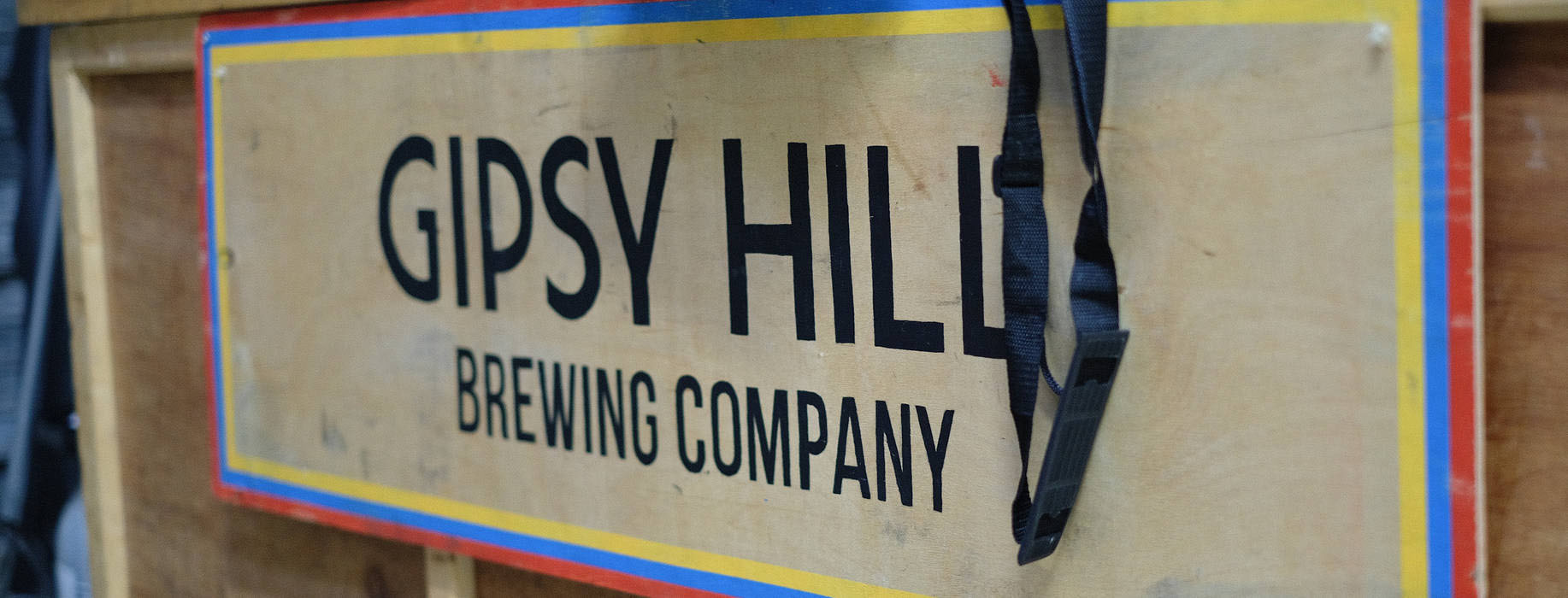
In a leafy corner of south-east London, 20 minutes from the over ground station with which it shares its name, Gipsy Hill brewery doesn’t look like much from the outside.
Richard Croasdale
Tuesday 02 June 2026
This article is from
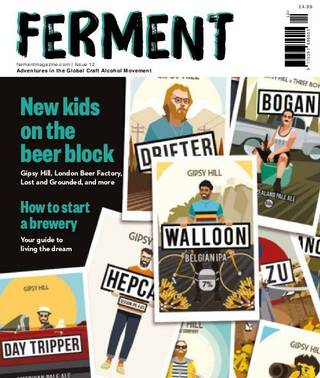
New Kids On The Block
issue 12
Share this article
In a leafy corner of south-east London, 20 minutes from the over ground station with which it shares its name, Gipsy Hill brewery doesn’t look like much from the outside; a light industrial unit, mostly obscured by a barricade of kegs and paletted bottles waiting for delivery.
Coincidentally, it’s within literal spitting distance of the London Beer Factory (though both breweries are far too neighbourly for that kind of behaviour, despite being south of the river).
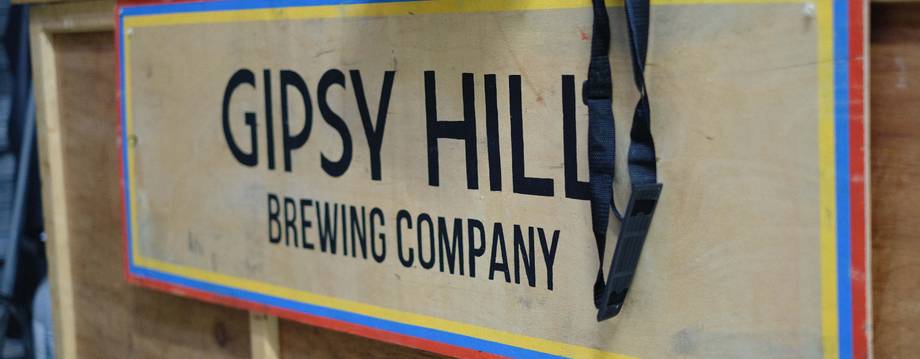
I’m greeted by co-founder Charlie, who has just that minute returned from a trip.to Japan, but does a great job of taking my somewhat early arrival in his stride. He’s relaxed, friendly and very approachable, which is what you’d expect from the head of a brewery which has earned a reputation for complex yet highly sessionable beers.
“That's always been our USP,” confirms Charlie. “We love the strong beers, but as we've seen the craft scene getting bigger and bigger, we've seen the average strength get higher and higher. We love to experiment with higher strength beers, but our core range is all about keeping the conversation flowing on a night out.”
It’s an exciting time for Gypsy Hill, with expansion and growing critical praise. Yet Charlie admits the early days back in 2013 were tough, particularly building the kind of team he knew he would need. “You want someone with experience, who probably has a track record with a good brewery, but until you’re established yourself that’s not so easy,” he says. “So I was very lucky to find Simon; between the two of us and my business partner Sam, we had a really complementary set of skills. We somehow got through that first year and established ourselves as a brand, enough to recruit other people.”
Gipsy Hill has a core range of four beers, of which the biggest seller is its session IPA, Hepcat (included in your Beer52 box). For a brand built around the idea of sessionable craft beers, having a world-class session IPA was obviously going to be make-or-break for Gispy Hill, and Charlie confirms he is truly proud of Hepcat; “it’s our Gamma Ray,” he quips.
The rest of the range consists of Southpaw amber ale, Beatnik pale ale and a porter, Dissident. All are under 5% abv and, while rewardingly complex, none present the drinker with a super-hoppy, head-buzzing challenge.
“I think we’re in a good spot, looking at where people’s tastes are heading,” says Charlie. “We’ve had everyone doing the high alcohol, super-bitter hops thing. It became a bit of an arms race. I think what people increasingly look for in their beer is a lot of hop character, but without that very astringent bitterness. That’s more difficult to do, but it’s what we’re good at.”
If that sounds safe or boring, don’t be fooled. Everyone I met at Gipsy Hill is fizzing with ideas and adventure, and there is a constant turnover of new beers, essentially driven by whatever has caught the team’s attention. Some of these pilot brews are at the boozier end of the spectrum – I sampled an out-of-this-world Belgium-style IPA at 6% – and crowd favourites such as Bogan, a Nelson Sauvin-packed collaboration with New Zealand’s Three Boys Brewery, often make it back for a second or third brew
Inside the Brewhouse, it’s clear a great deal of work has gone into getting the processes just right. Everywhere are small tweaks and hacks, from the wide-gauge valves on top of the fermentation vessels – which allow hops and adjuncts to be added without contact with Brewhouse atmosphere – to a reverse osmosis filter for treating the unforgiving London tapwater.
It probably helps that the Gipsy Hill brewery team are inveterate tinkerers, three of whom come from an engineering background. I’m there on a rare non-brewing day so brewer JT is going at a piece of stainless steel with a TIG welder, while xxx is ‘customising’ the brewery’s new filter kit. “Give a brewer a new piece of kit and the first thing they’ll do is start drilling holes in it,” laughs xxx, doing just that.
But further major investment is planned, with a doubling in the size of the 15-barrel Brewhouse, to match the ten 30-barel fermentation vessels, which jostle for space in the small unit.
“At the moment we have to brew twice to fill a tank, which is quite labour-intensive. In a month or two we'll have a new brewkit here, which means brewing once a day, and we can fire half the team,” jokes Charlie.
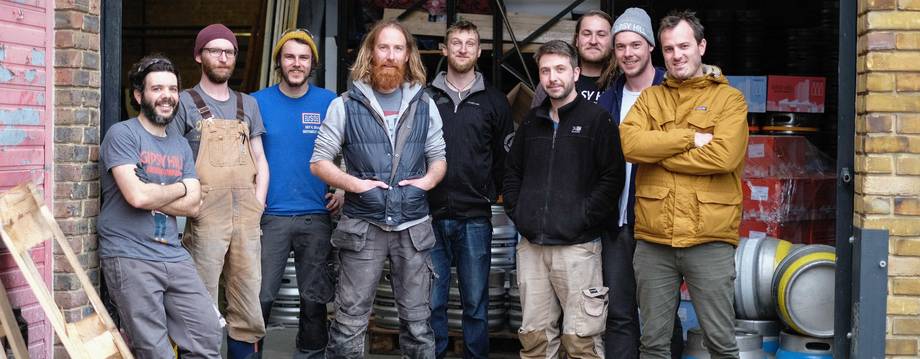
At this point, Charlie has to go and take care of some business, leaving me in the capable hands of brewers Matt and JT. After a quick tour of the brewhouse – with their favourite gadgets and innovations highlighted and duly photographed – the pair break off to confer quietly for a moment, before Matt turns back to me and says: “okay, we’re going to show you something pretty cool that we’ve just started doing. Do you want to milk some oats?”
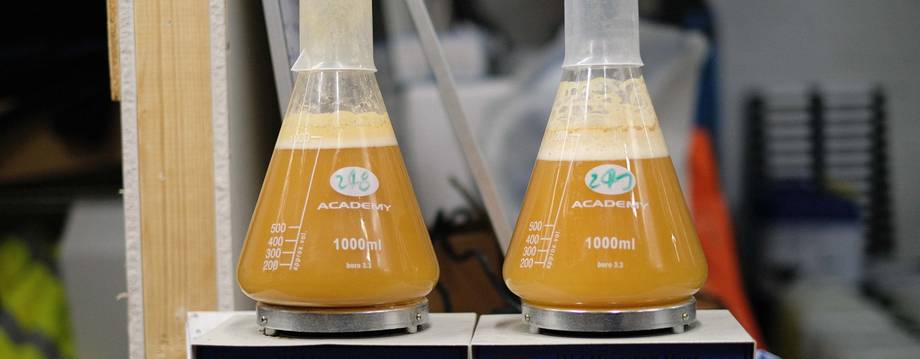
Originally the result of a late-night pub conversation, the investment in a small French press may seem a little frivolous, but it does sum up something important about Gipsy Hill’s ethos. Matt explains this to me as he first steeps a muslin sack of rolled oats in water, then begins to squeeze the thick starchy milk from them using the press.
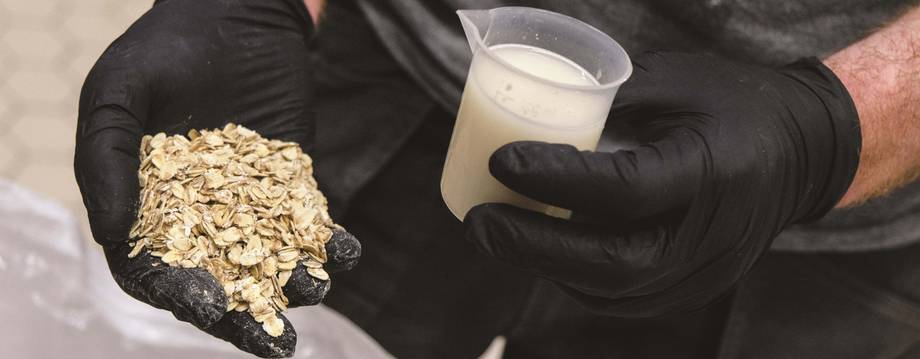
“By cold pressing the oats, we get the protein and other things we want from them without mashing in the rest of the grain,” he says. “We’ve only just started using it, but we’re hoping it will give us a better texture and haze in some of our beers. There are already some brewers in the US buying in oat milk for that very reason, but as far as I know we’re the only ones cold pressing it on site.”
Very little of what Gipsy Hill does – even the stuff that seems a little off-the-wall – is a shot in the dark. The team takes its existing brewing knowledge and examines every aspect to see what can be improved.
“This is what it's all about for us; this is craft,” chips in JT. “You're not just going to the textbook or the time-honoured way of doing things. This is asking what’s the best way to achieve every part of the beer-making process. For example, haze is a bunch of different elements coming together in a way that complements the hops. You're adding so much body in there, that you're essentially achieving the balance you’d otherwise get from alcohol versus bitterness. It's a different angle of attack - can we get this many hops into a not very bitter beer?”
While rolling his eyes just a touch at the French press caper, Charlie’s co-founder Sam McMeekin later sums up this entire approach – the rock-solid core range, investment in brewery kit and processes, and the constant refinement of the craft – in one defining value: quality. While Sam acknowledges that most breweries will talk about the importance of consistency and quality, he feels that in practice quality in UK craft brewing is still “pretty shaky”.
“Things like the French press are great fun,” he says, “but to reap the rewards of those things you have to get the basics right. It's the ATP meters, the CO2 meters, the DMA stuff, that allow you to make great beer every time. We’ll often get new breweries coming to us and asking how we get consistent CO2 levels. We’re always happy to help, but the thought that you could open a brewery without knowing this stuff is pretty frightening.”
This focus has been reinforced by a few tough lessons for the brewery’s early days. Sam shares the example of the brewhouse floor, on which they saved a few thousand pounds by going for a cheaper construction method. Within a year, it had started to crack, six months later, it was bubbling and breaking up, and nine months later it had become unhygienic.
“We could have lived with it and had a great year financially, but it would have been a rot within the brewery, so we stopped production for eight weeks to replace it with the floor we should have invested in originally,” says Sam. “That initial saving of a few thousands cost us so much more in lost production. More importantly though, key members of the team have since said they would probably have left if we hadn’t stuck to our principles on quality, so it was definitely the right thing to do.”
With the new brewkit on its way, as well as a new canning line and the opening of a new taproom, the Douglas Fir, Gipsy Hill’s dedication to complex, rewarding, sessionable beers appears to be paying off. And with a great team of passionate brewers behind them Charlie and Sam are doing their bit to put South London on the beery map.
Share this article
You’ve reached your limit of 5 free articles this month.
Unlock unlimited access and more

Join Beer52 and get your first month half price
-
Get your first box for £13.50 (RRP £27).
-
8 beers & 2 snacks delivered monthly.
-
Printed Ferment magazine included.
-
Unlimited access to all online content.