Lookin’ for some Hop Stuff
Established in 2013 by former City of London worker James Yeomans, Hop Stuff Brewery is already a force in UK craft brewing circles.
Richard Croasdale
Tuesday 02 June 2026
This article is from
New Kids On The Block
issue 12
Share this article
Established in 2013 by former City of London worker James Yeomans, Hop Stuff Brewery is already a force in UK craft brewing circles.
As well as having the most investors of any London brewery – thanks to several successful rounds of crowdfunding – its focus on keg and cask makes it a regular fixture in the capital’s better pubs, while Yeomans himself recently played a key role in CAMRA’s ambitious (and controversial) revitalisation report.
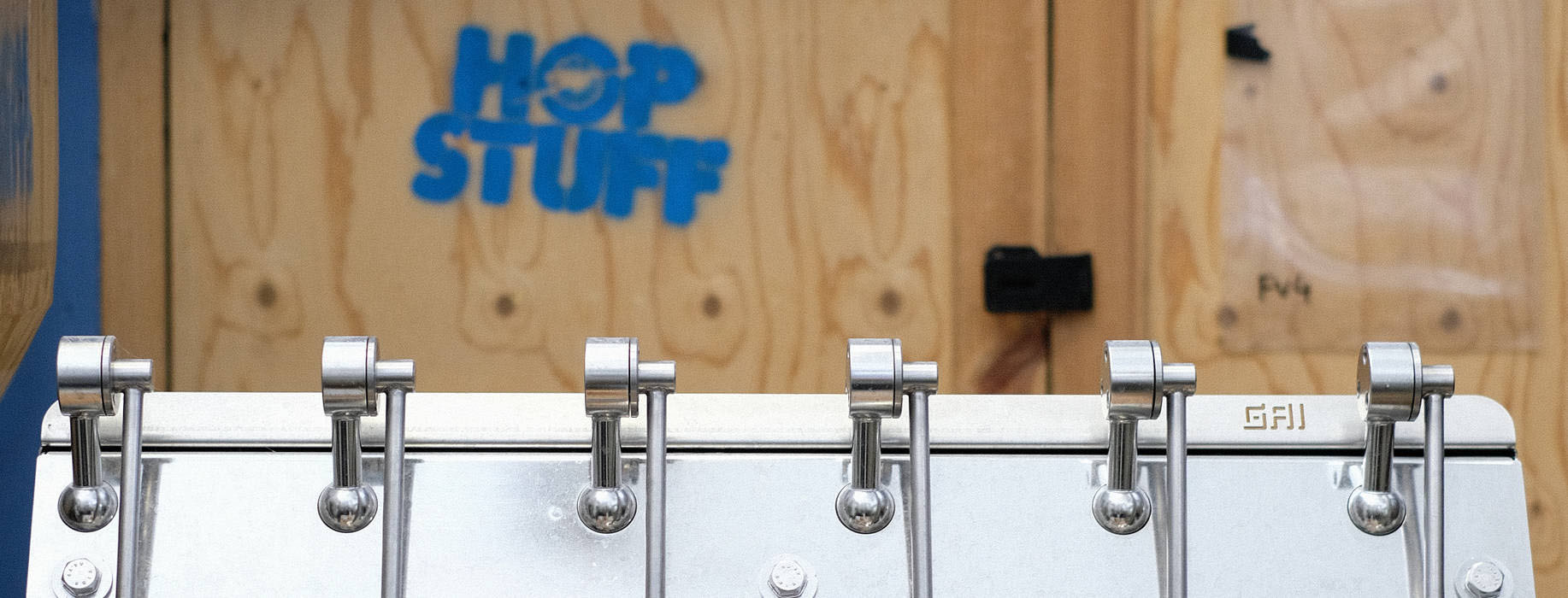
So I’m somewhat surprised by how physically small its brewhouse is. A squat and clearly well-used kettle sits by the entrance, while fermentation vessels of varying sizes are tucked into every nook and cranny of the listed warehouse space (originally part of London’s Royal Arsenal). The sizeable office team have desks on a mezzanine level, the tops of the brewing equipment peeking above floor level and filling the space with warm, malty air. It’s a very efficient use of space, but Hop Stuff is clearly bursting at the seams.
This won’t be a problem for much longer though, and James is bursting to tell me about the brand new £1million, xxxx hectolitre brewhouse they’ll all be moving into later in the Spring.
“There’s so much going on,” he enthuses. “The expansion has really been all-consuming. The new unit is just around the corner, but it’s vast: 20,000 sq ft, compared to 3,000 sq ft here. It’s overdue though – with the limited tank space we currently have, we're only able to brew three or four times a week, because we're not able to flip the tanks quickly enough.”
The huge investment represents a concerted push to take Hop Stuff to the next level, with the addition of a high-capacity canning line and a significant expansion of the team, both on the Brewhouse floor and in the back office.
This wasn’t always the plan though. Having escaped his job in the City, James effectively went into brewing as a lifestyle choice; he wanted to create a business around that “golden couple of hours on a Thursday or Friday, when you’re sitting with your mates in the pub and just unwinding”. Ironically, he spent almost a full year brewing alone, before a slipped disc forced him to take on additional help. “It sort of snowballed from there,” he recalls, looking at his current 28-strong team.
“That first year, I was so focused on making the beer that I really didn’t give enough attention to all the other things you need to run a successful brewery. Brewing is obviously the core, but there's no point having great beer if you don't have the distribution channels to sell it, or the back office to support that.
“As we started to add sales people and set up the taproom as a shop front, it really began to build momentum. You need people doing all those jobs, sure, but the real value came from the collaboration – I needed to be checked and challenged, to have new ideas and fresh thinking. I have a great team now and it’s still growing all the time; if we get our second taproom opened in the next couple of months, our total staff could easily hit 50 by the end of the year.”
As James says though, the beer is core, and is the main reason Hop Stuff has risen so quickly from its shoestring roots. His brewing style is undoubtedly still dictated by his original vision – he’s essentially making beers for ‘City James’, the weekend warrior who sees drinking as a social experience rather than a hobby, who is more at home at a barbecue than on a blog. This, he argues, is a demographic that most craft breweries have failed to grasp.
“If you look objectively at the craft beer market, 95% of public don't drink it. We have around 1600 breweries now, and 1500 of those are squabbling over that tiny 5%. Actually, if you take a step back and say 'they're already converted. Why don't we focus on bringing people to craft?' that’s where the growth is – taking share from the premium lager brands, not the little guy round the corner.”
With this in mind, Hop Stuff’s range of beers is pretty broad, but perfectly logical. It brews what James refers to as ‘gateway’ beers – relatively low strength, with complex but not overly bitter hop profiles, that can be enjoyed by the pint over several hours. It then has slightly stronger, more complex but still accessible beers for those interested in continuing that journey.

“There are a couple of the more established craft breweries that have built their brand around being divisive, with in-your-face beers and equally aggressive marketing. That’s worked really well for them, but there’s also a big chunk of potential craft customers who are turned off by that – that’s where we sit now.”
The next step in Hop Stuff’s evolution also makes sense in this context. Part of the new brewery investment went into a high-capacity canning line, and – having previously eschewed small-pack in favour of cask and keg – James has his sights firmly set on aluminium. But why now?
“I’m a great believer that quality isn’t just about making good, consistent beer,” he explains. “It’s about being a reliable, professional business to work with. Cask and keg have gone really well for us, so I knew we couldn’t go into small pack without investing in extra brewing capacity. There’s no point in producing 2000 cans or bottles because that’s all you can manage, and then the next time a bottleshop phones for more, you have to tell them there won’t be another batch for three weeks. Growth is good, but it has to be sustainable.
“Because of the kind of market we’re aiming at though, I think this will be a really big deal for us now that we’re set up for it. These are beers people will want to take to a barbecue or the beach, to share with their friends. Summer 2017 is going to be huge – it’s going to be the summer of Hop Stuff.”
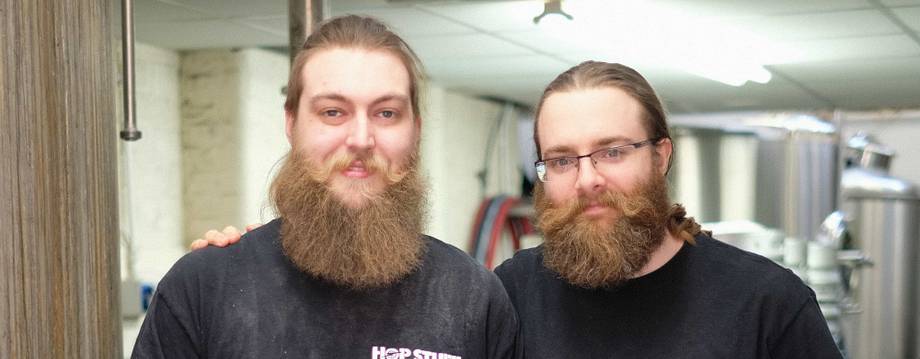
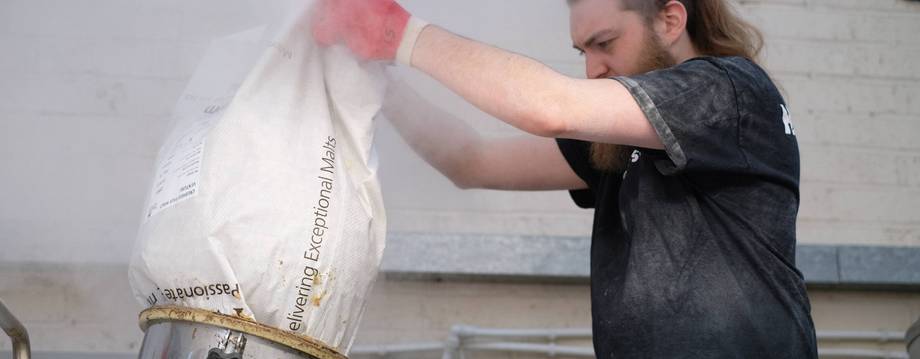
This seems like a good high note on which to go down into the Brewhouse and meet the brewers themselves – Dan and Luke. They’ve just finished mashing a batch of APA and are in the process of transferring the wort to the kettle, so I offer to lend a hand shovelling up the spent malt as we talk. They are, understandably, like kids on Christmas eve about the move.
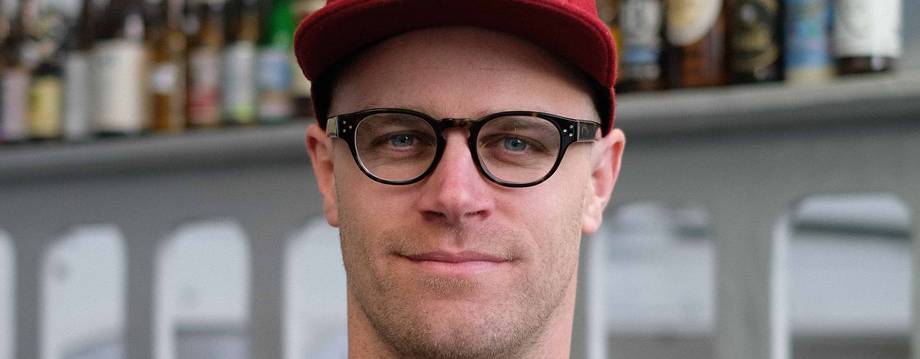
“I was a home brewer before I started here,” says Dan, as I manage to drop steaming grain all over his shoes. “I'd run out of room in my flat just at the point where I got this job, so it was a bit of an upgrade. To be honest, it’ll probably be as big a jump to move onto the new kit!
“It’ll be great to be able to empty the kettle faster, for a start. That can take an hour and a half at the moment, so we have to be really careful about our bitterness because the aroma hops will keep isomerising most of that time. We’re getting a whirlpool too, so we'll be able to chuck stuff in late for fantastic aroma extraction. It's going to take some getting used to, but in the end we'll be brewing better beer and even different styles of beer, because it'll be much more flexible.”
Luke and Dan make an impressive double act, working around each other in the confined space; flushing, cleaning, sanitising and testing each piece of kit as the brew progresses. While the existing setup looks like a lot of hard work, there are no corners cut or compromises made when it comes to quality. There is grin of boyish joy on Luke’s face when the ATP meter (which measures bacterial activity on a swab from the inside of a fermentation vessel) comes back with a reading that’s “ridiculously low”. These are the kind of people you want making your beer.
There’s a strong sense that everyone at Hop Stuff is enjoying the ride, and is excited to see where the expansion takes them. “We’re obviously passionate about the beer, but any craft brewery would say that,” concludes James. “What makes us different from most is that we’re also all ambitious to take it on to something even bigger and better.”
Share this article
You’ve reached your limit of 5 free articles this month.
Unlock unlimited access and more

Join Beer52 and get your first month half price
-
Get your first box for £13.50 (RRP £27).
-
8 beers & 2 snacks delivered monthly.
-
Printed Ferment magazine included.
-
Unlimited access to all online content.