Lifting The Lid on The London Beer Factory
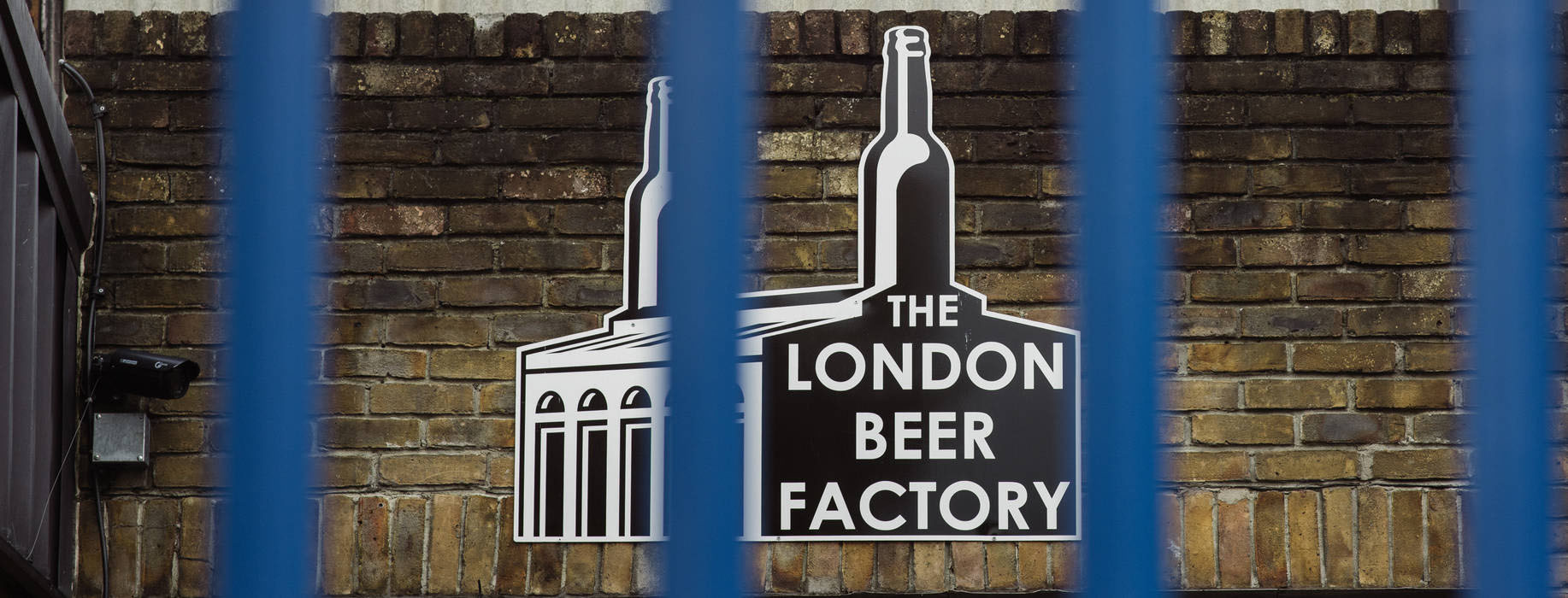
Just across the yard from Gipsy Hill, London Beer Factory is one of the great success stories of the South London brewing revival. Founded in 2013 by brothers Ed and Sim Cotton, the brewery has established a name for itself on two fronts
Richard Croasdale
Tuesday 02 June 2026

This article is from
New Kids On The Block
issue 12
Share this article
Just across the yard from Gipsy Hill, London Beer Factory is one of the great success stories of the South London brewing revival.
Founded in 2013 by brothers Ed and Sim Cotton, the brewery has established a name for itself on two fronts: first, the across-the-board quality of its five core beers in cask, keg and small pack gives its brand the solidity of a much more established brewery. Second, London Beer Factory is the first UK brewery to adopt 360o cans, from which the entire top section detaches, supposedly allowing drinkers to enjoy the full spectrum of aromas without the need to pour.
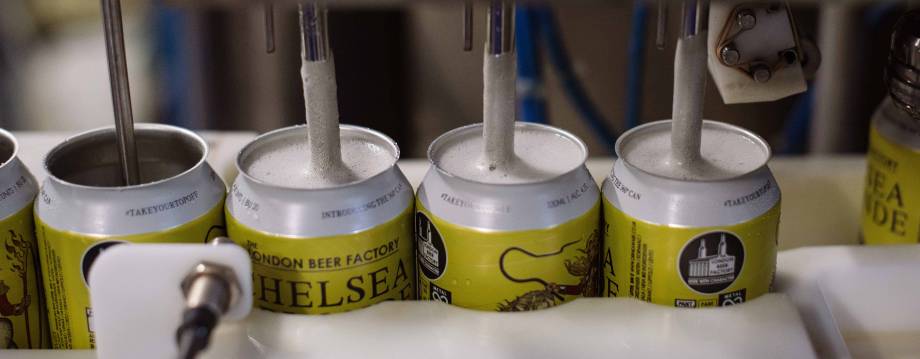
This second claim to fame could be viewed as a bit of a marketing gimmick, and it unquestionably gave London Beer Factory a few months of notoriety. However, coming from many years making and selling wine, Ed Cotton viewed the switch as a pretty cut-and-dry choice.
“The traditional can design seems almost deliberately designed to cut out any aroma. So, with the big aromatic beers being brewed at the moment, if you don’t have a glass you might as well not bother because you’re missing out on half the sensory experience.”
There has inevitably been some scepticism, but Ed believes that, just like cans generally, the 360o gives such a superior experience that it will overcome any fear of change. “I liken it to when screw caps came in on wine bottles,” he says. “People were horrified, but they quickly became the norm. You’re already seeing it happen; people are getting over that historical association between cans and cheap beer. The craft brewing phenomenon is helping people get past that barrier – it’s fewer bottles and more cans all the time now. Even some high-end restaurants are choosing to stock cans, because they’re increasingly accepted as a premium product.”
Understandably though, London Beer Factory is more focused about what goes into the can (or bottle, keg and cask), so I’m keen to talk beer. This side of the story arguably started when Sim Cotton attended a course at Brewlab in Sunderland, having enjoyed homebrew as a hobby for several years. Simultaneously, brother Ed – who was then working in wine for a wholesaler – had observed sales of UK-brewed craft beers really heating up, and an idea was born.
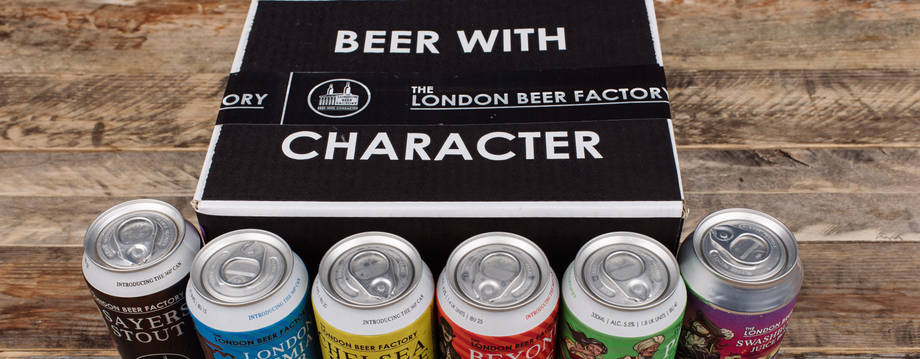
The core range was developed over the course of about a year, and consists of a Belgium-style blonde (the brewery’s first beer), a pale ale, the best-selling (and multi award-winning) Paxton IPA, a stout and a lager. Of these, Ed says the lager – London Bohemian – was the most challenging, both technically and in terms of how a principled craft brewery should approach a style with such baggage.
“A lot of the pubs we sold to told us they wanted a lager, but obviously as a style is has certain connotations,” recalls brewer Nick, who joined from Five Point in 2015. “We knew that if we were going to do it, we couldn’t just make a generic lager because we didn’t want to be known as that brewery. So initially we set out to do something like the original Budvar – quite a bit of sweetness, with a spicy, complex hop profile. We even dry hopped it.
“The problem is that people have such fixed ideas about what they want from a lager that if you try to innovate with it, people wonder what the hell you’re doing. If people order a lager, they don’t want a surprise. We ended up coming up with Bohemian; a very accessibly Czech-style lager that’s still our own. It has that interesting hop profile with good, distinctive malts, but doesn’t push people outside what they expect from the style.”
Beyond the core beers, London Beer Factory’s pilot range gives its team of six brewers room to flex their creative muscles. Fruit Loop, the mango cream ale in this month’s Beer52 box, is a firm seasonal favourite making a return this year, alongside Spring Thyme, a deliciously refreshing ginger and thyme Hefeweizen (“That one’s more for the bottleshops than the pubs,” laughs Ed) and Goddess of The Sea, a lively and aromatic double IPA.
There’s no sense that things are standing still here though. When I first arrive, Ed and Nick are sampling beers still in the fermentation vessels, including an American read ale, a collaboration with BrewDog Clapham and mushroom beer brewed in partnership with the super-fashionable London restaurant Namban. The team has also been inspired by a recent group trip to Belgium, and Nick is keen to apply what he’s learned, particularly around barrel ageing.
“We try and do one of these different beers every other week,” says Ed. “It's a lot of pressure, but at the same time it's exciting. You'll get some that inevitably aren't going to work, but some will work brilliantly. If you don't try you don't know – it's all about pushing the boundaries, which is so important at the moment because so many different breweries are doing so many different things. You've got to be in the mix and, as long as you've got the vessel space to do it, why not?”
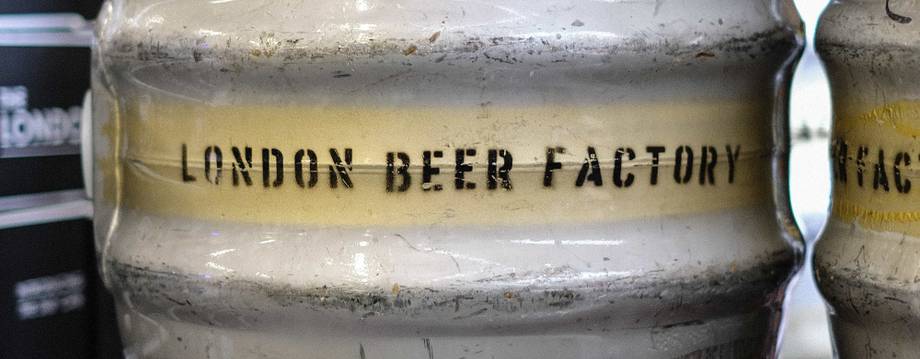
The brewery also plans to keep supplying its beers on cask, even though that side of things has decreased dramatically as a proportion of its total output, and continues to present some challenges.
“We know there are quite a few breweries now – Cloudwater for example – who have stopped doing their beers on cask,” says Ed. “That's a shame because that was great. I definitely believe keg is the way forward, and you can produce a great beer on keg, but cask is something different.”
Nick picks up the theme: “The problem is that once you've made a cask beer, it goes out of the door and it's out of your hands. Most of the pubs we deal with we can trust to treat it properly. But you have to be selective. It's extraordinary to think this country has been selling cask beer for 400 years and some pubs have absolutely no idea how to cellar manage them. But sadly that is the case – it all comes back to training.”
Ed says the pub and bar scene has changed in south London though, in step with its blossoming craft brewing scene. Where he once had to go to Hackney and the East End for an interesting pint, there is now a trail of great pubs and innovative breweries stretching from Brixton, through Peckham and on to Deptford. “It’s been great to see,” he confirms. “There’s a real buzz around this area now, and a generation of breweries that want to be seen as trend-setters, not trend-followers. That’s good for everyone.”
Share this article
You’ve reached your limit of 5 free articles this month.
Unlock unlimited access and more

Join Beer52 and get your first month half price
-
Get your first box for £13.50 (RRP £27).
-
8 beers & 2 snacks delivered monthly.
-
Printed Ferment magazine included.
-
Unlimited access to all online content.