Yes, Chef
With so many great brewers taking their inspiration from food, or even having worked as chefs, Hugh Thomas explores the affinity between plate and pint glass
Hugh Thomas
Tuesday 02 June 2026
This article is from
New Kids On The Block
issue 12
Share this article
In the mid ‘90s, a pub owner in Piedmont, Italy, by the name of Teo Musso started brewing his own beer. Like so many new brewers before him, Teo took inspiration from traditional Belgian styles, but something made his beers different; a bit more exciting.
That something was the addition of fruit and nuts, the likes of which are found growing abundantly in and around Piedmont. This seemingly obvious move to brew with food was as natural as the ingredients which occurred in the region, as the Italian national identity is deeply rooted in culinary heritage.
Other breweries followed suit and, before anyone knew it, Italy had a type of beer it could call its own, one that made use of its ingredients and local culinary knowledge. Rarely is the same sense of place reflected in other locales around the world; you simply don’t get that feeling of cultural affinity if you’re drinking a West Coast IPA in the UK, or a traditional abbey beer in, say, Russia.
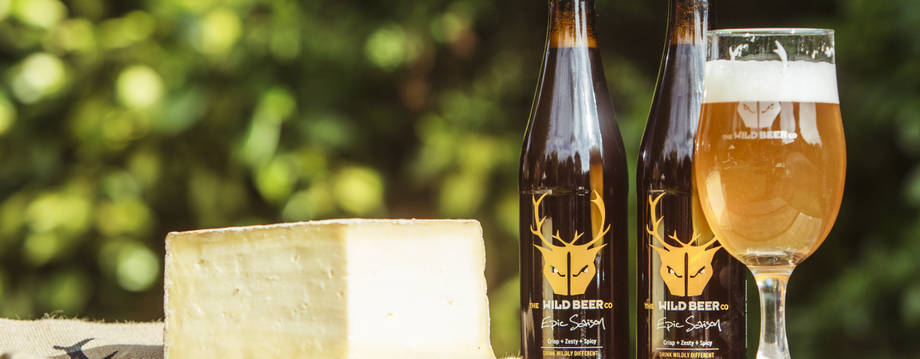
On that basis, you could say food and the understanding of ingredients adds a new dimension to beer and brewing. Just cast a quick glance at Wild Beer Co, and you’ll see that, because of the way it incorporates food into brewing, it’s able to provide a wider variety of intense tastes than other breweries.
The brewery’s co-founders, Brett Ellis and Adam Cooper, are a big reason why. Having built up strong backgrounds in food before they started brewing, the pair have ensured Wild has a steady supply of recipes based on ingredients with distinct flavours; ingredients like foraged mushrooms, lobster, and caramelised miso paste.
Wild Beer’s mission essentially boils down to the perpetual pursuit of the fifth taste; that elusive savoury quality of moreishness, or ‘umami’ as it is sometimes known. Of The Sea, a beer dreamt up from the flavours of seafood bisque, is made with kombu, seaweed, lobster, and Cornish sea salt, and consequently produces a delightful hit of brine on the palate. It’s got umami written all over it.
“We really push the boundaries of what flavours beer can hold,” Brett tells me. “Billionaire (an imperial stout brewed with Tonka beans and miso paste), Breakfast of Champignons (Penny Bun mushrooms), and Yadokai (hijiki, yuzu, and sea buckthorn), also had a strong depth, fullness, and otherness to them.”
Brett sees taste as a fleeting sensation, to be savoured in a short moment, but also remembered. Few know that better than a professional cook.
“As a chef,” says Brett, “I saw cooking as creating a plate of food like a firework; an ephemeral art form. One that is there, is experienced, and then disappears and the creator has to create all over again. I look at beer the same way.”
Chefs experience new tastes and experiment with flavour combinations on a day-to-day basis. Perhaps their frequent encounters with food means inspiration comes easier to them. Johnny Vonk (known affectionately as Mr Awesome) is Dutch brewery Two Chefs’ brand manager, but they call him the ‘sous chef’. He backs up founders and brewers Sanne Slijper and Martijn Disseldorp, two former commercial chefs who became disenchanted with the catering industry.
“Food is a big inspiration for us,” says Johnny. “From old classic Dutch snacks like pickles or pickled onions, to eating [haute cuisine] in a fancy restaurant.”
Two Chefs’ growing range of beers – which includes the raspberry tart Fruit Cake, the citrusy/herby Louie Louie, and the fruity hefeweizen Tropical Ralphie – are more conventional than Wild Beer’s portfolio. Both breweries’ approaches, however, are strikingly similar.
“Sanne and Martijin look at brewing beer like a chef looks at his plate of food,” says Johnny. ‘Everything, from the aroma to the colour, and from the ABV to the aftertaste, needs to be balanced. And like any chef they never stop improving old recipes and experimenting with new ingredients.”
Given the harmony shared between food and beer, and the ways chefs explore it, you’d think restaurants would take full advantage of the relationship, especially with a drink so versatile. But the truth is, restaurants have generally been slow on the uptake in that department. There are however a handful of establishments leading by example; for example Masterchef winner Tim Anderson’s Brixton showpiece Nanban.
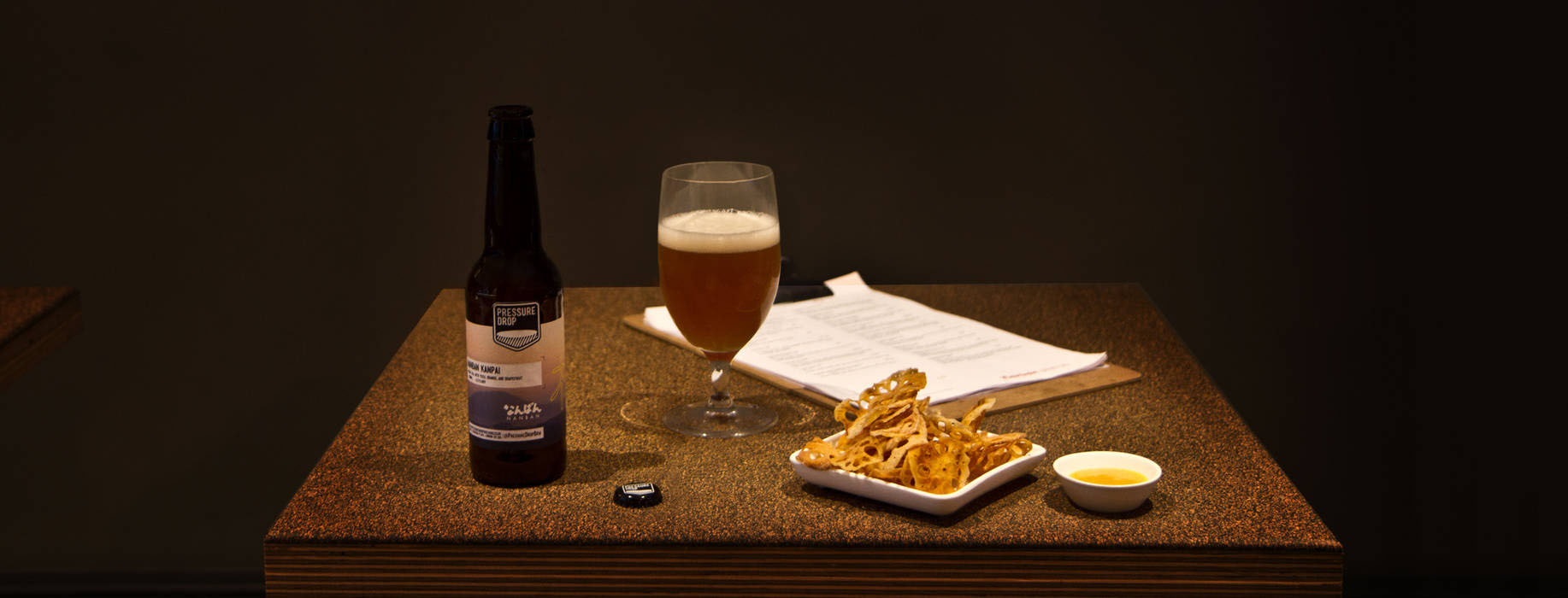
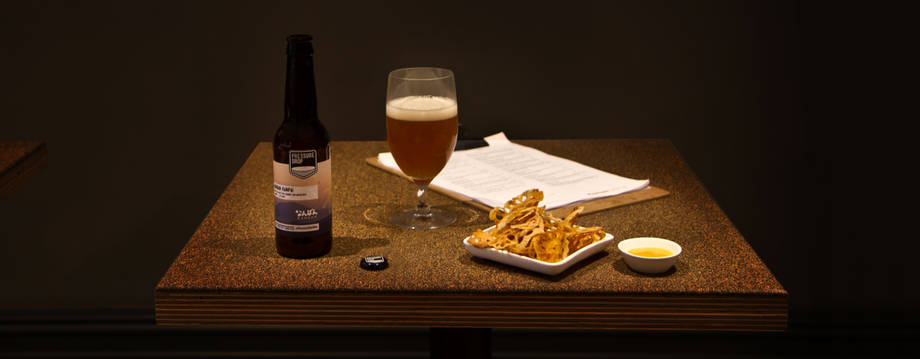
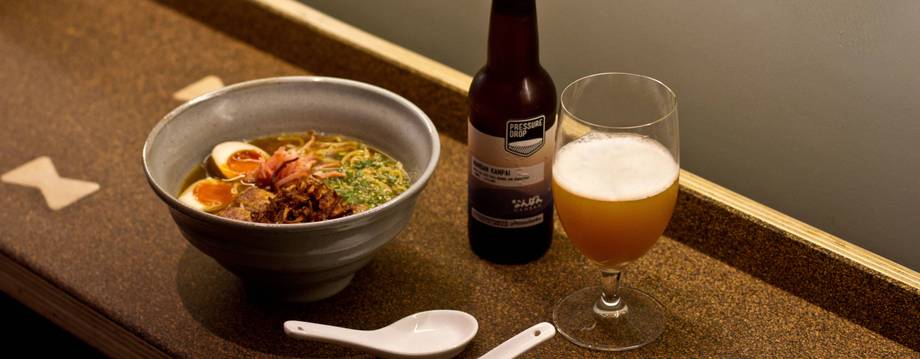
What the large majority of restaurants do with wine, Nanban does with beer. Actually, it goes further than that. A restaurant that specialises in Japanese soul food, Nanban found a natural working partner in Pressure Drop, a brewery that takes much of its inspiration from Asia. Pressure Drop and Nanban’s first few collaborative efforts included a sweet potato beer and a cranberry wheat beer, culminating with Nanban Kanpai – a wheat IPA brewed with Yuzu, grapefruit, and orange juice.
Kanpai is a beer specifically designed to complement Nanban’s panoply of dishes, such as smoked eel, grapefruit schichimi salad, and goad tsukemen ramen.
“Because beer can be brewed to any sort of flavour profile you want, it can be tailor-made to suit any type of food,” Tim says. “Having the right drink for the right meal – one that at least doesn’t clash with the food, but better yet enhances it – is really important in having a good restaurant experience. At least for me and the style of food that I cook, that drink is pretty much always beer.”
A prolific homebrewer himself, Tim’s cheffing instincts have influenced how his own brews play out. “I’ve brewed with miso, walnuts, bacon, chilli, and seaweed,” he says. What’s more, this experimentation, coupled with Tim’s deep understanding of food, affords a unique perspective on how the relationship between food and beer functions.
“There are certainly cooking lessons to be learned from the brewing process,” he says. “I’ve even adopted brew kettles in my restaurant to make our broth. In fact, making broth is a lot like brewing; it’s all about extracting delicious liquid through heat and time.”
It’s clear then that the right food works as well in a beer as it does beside it. But surely there’s more to it than that? Ultimately, the exploration of what traditional ingredients can work together to create a beer has great potential to expand our definition of the drink. The introduction of food, however, can take that idea infinitely further, to a place where our idea of beer is all but transcended. Isn’t that the modern brewery’s objective, after all? Brett certainly thinks so. “We have to be tireless in our pursuit of bettering our beer and processes,” he says. “But also in our goal of changing our perceptions of what beer can be. Only then will we be inspired.”
Share this article
You’ve reached your limit of 5 free articles this month.
Unlock unlimited access and more

Join Beer52 and get your first month half price
-
Get your first box for £13.50 (RRP £27).
-
8 beers & 2 snacks delivered monthly.
-
Printed Ferment magazine included.
-
Unlimited access to all online content.