Bartender, there's a mouse in my beer
A Beginners Guide to Identifying THP

Matthew Curtis
Thursday 26 September 2019

This article is from
Helsinki x Tallinn
issue 45
Share this article
One of the greatest things about being a beer lover in the modern age must surely be the proliferation of excellent sour, funky and wild ales. From geuze and lambic, to pale ales dosed with Brettanomyces (a strain of yeast that creates funky, fruity flavours as it ferments), rustic saisons and fruit infused kettle sours like Berliner wiesse or gose—the choice is broad if you’re fond of a dab of acidity in your beers.
And as more of these styles of beer are created by brewers, so too does our understanding of how they are made deepen. This could be an increased awareness of how to slow or speed up wild fermentations through temperature control, or fine tuning one’s palate to create the very best blends, carefully balancing notes of sweetness and acidity to create a better end product.
It could even help us understand the formation of off flavours and how to best detect and, in turn, eliminate them, helping us make better beer in the process.
The understanding of many common off flavours is growing, not just within the brewing industry, but by drinkers too. Knowing how to detect compounds such as the butterscotch-laden diacetyl (formed by yeast during fermentation) or the balsamic-tinged acetic acid (produced by the aptly named bacteria, acetobacter) is becoming much more commonplace as more of us seek to further understand what should and shouldn’t be in our beer.
Understanding off flavours is increasingly important, even for casual drinkers, because knowing when a product is faulty gives us a chance to hold our hands up and say so. And if we are able to communicate that something we are supposed to enjoy is faulty, then this should, hopefully, equip producers with the knowledge that they need to improve, raising the standard of beer for all of us.
However, some off flavours are still widely misunderstood, or just not very well-known at all, such as the subject of this essay: tetrahydropyridine—known as “THP” for short.
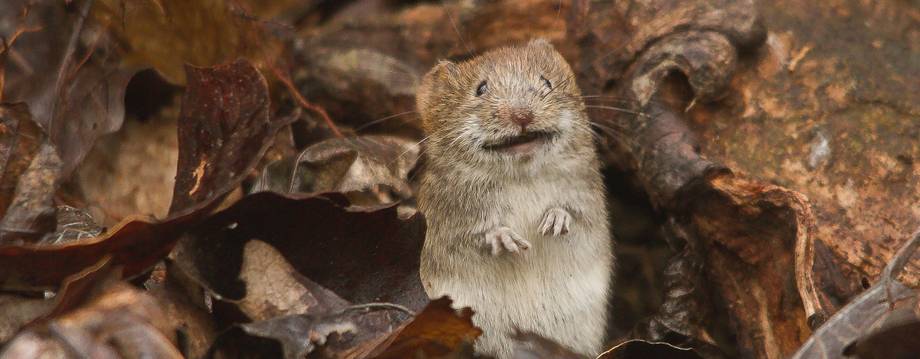
If you enjoy wine or cider as well as sour beers, you may already be familiar with THP, or “mouse” as it’s more commonly referred to outside of beer. So-called because it produces an aroma akin to mouse urine. Understandably however, not everyone is familiar with this particular aroma. Although if you’ve ever had to clean out the habitat of a hamster or gerbil, for example, you may have noted the smell of stale breakfast cereal that is produced by a rodent's number ones.
If you taste a beer, wine or cider that is showing THP, you’re most likely to detect this stale flavour right at the back of your palate as you swallow. This is due to THP reacting with the acidity of your palate, and also can mean it might take a few sips until you do taste it. It becomes easier to taste the more you drink, and the pH of your palate begins to increase. To taste it can recall the flavour of a popular o-shaped breakfast cereal, or leading corn tortilla chip brand.
Hopefully you’ve just read the above and gone “ah, that’s what that flavour is” but don’t worry if you haven’t. Everyone tastes differently and some people are more sensitive to some flavours than others. As an example, I am very sensitive to both diacetyl and THP, but I struggle to detect high levels of astringency, which is why I am fond of very bitter beers.
If you haven’t tasted THP before then don’t worry, you might be very lucky, (unless you make sour beers, in which case you need to find a friend who can) as actually only around 70% of people can actually taste it. If, like me, you can, then I share your pain, unless you are one of those rare people that actually professes to enjoy this flavour...
The purpose of this article is to hopefully help you understand the basics of how THP is formed, how to detect it, and why it’s bad for beer. I also hope to look at the term “mouse”, as I don’t think it’s a particularly useful descriptor, and one that beer should avoid adopting if more people are to understand why THP makes a beer faulty.
Ultimately, my belief is that if more of us understand why something is faulty, then we can not only learn how best to communicate this, but also contribute to making better beer for everyone in the future.
The hamster dance
According to the highly useful “Milk the Funk” wiki—an inexhaustible resource on sour beers—THP is formed largely by various strains of Brettanomyces as it metabolises amino acids during fermentation. Variants of THP can also be formed by lactic acid bacteria such as Lactobacillus and Pediococcus.
As this piece is to help you, the drinker, learn about the basics of this flavour, why it exists and why it's bad, I won’t go into too much scientific detail, but at the footer of this piece is a link to an in-depth report on this published by Milk the Funk, should you wish to delve deeper into the subject. I can also recommend joining their Facebook group, as it is a great place for healthy discussion on the production of sour and funky beers.
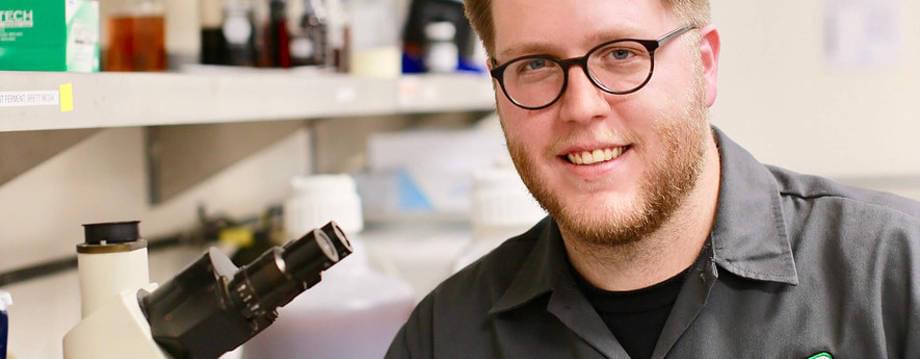
According to Richard Priess of Canada’s Escarpment Labs, “Only a small subset of hardcore sour fans who may dive deep enough to know what THP is and identify it.”
Escarpment is a yeast lab providing liquid yeast pitches for Canadian craft breweries. It also offers in-depth quality control services for its customers. Priess has been heavily involved in the research and prevention of THP forming in beer and kindly contacted me during my own research to share some of his work and offer further insight.
“THP tends to only occur in sour, mixed fermentation, spontaneous, and Brett beers,” Preiss tells me. “Most of our work [at Escarpment Labs] has been on the practical side, educating customers on how THP is formed and how it can be avoided or mitigated, based on existing knowledge.”
Preiss believes that relatively limited awareness of THP when compared to more common faults such as diacetyl or light strike is due to sour beers still being relatively niche. Despite this field growing it still occupies only a tiny fraction of the brewing market, which means that—unless you have come to sour beer via the world of natural wine or cider—it could be that you haven’t tasted it yet. And if you have, you may not have known it at the time.
At Escarpment Labs most of the work done by Preiss and his team has been on education. Their aim is to educate customers on how THP is formed and in turn teach how it can be avoided or mitigated. But this isn’t as easy as you might think.
“Unfortunately, researching THP is quite expensive as the compounds are really tricky to measure directly,” Preiss says. “That being said, we are looking at ways to reproducibly produce THP in the lab from Brett and Lacto [he also says it's surprisingly elusive], and once we've cracked that, we can start to at least study formation and reduction of THP using sensory methods.”
In attempting to find a solution to mitigating the THP problem in sour beers, Preiss’ work has revealed that the sour or Bretted beers in which it form “benefit strongly” from conditioning in package. Meaning that “live” or “bottle conditioned” beers are less susceptible to developing THP as the yeast present in the beer should clean up any dissolved oxygen in the beer.
Strains of Brettanomyces will also break down the THP they produce over time, meaning that a beer containing live Brett should clean itself up in due course—if given the right conditions to do so. This is great news if you’re hoarding a collection of sours or lambics, as it means that any faulty bottles may improve with age. However, this means that if THP is present in a kettle or “quick” sour, such as a Berliner weisse or fruited gose, it’s not going anywhere. If you’re detecting cereal or corn chip flavours in these beers, best to drop the brewery in question a polite email to let them know there’s mouse in your beer.
But is mouse a useful term for this off-flavour? Reiss agrees that it can be accurate, but I’m not so certain. However, this is due to different people perceiving THP in different ways, as Preiss explains.
“To one person, THP might be intensely mousy, but to another, it may taste like stale cereal,” he says. “That's why we tend to encourage multiple descriptions for any single flavour compound.”
Cereal killer
Dominique “Do” Bongers, head of Fierce by Nature—the mixed fermentation and barrel program at Aberdeen’s Fierce Beer—is constantly on the lookout for potential faults in her beer. She describes THP as having a cereal or “muesli bar” taste, as well as contributing to an undesirable, “sticky” mouthfeel in the beer.
Fierce by Nature is a very new project—only launching its first two beers at the 2019 London Craft Beer Festival (to many plaudits, I must add)—and Bongers has been meticulous in her process to avoid the development of off-flavours in her work.
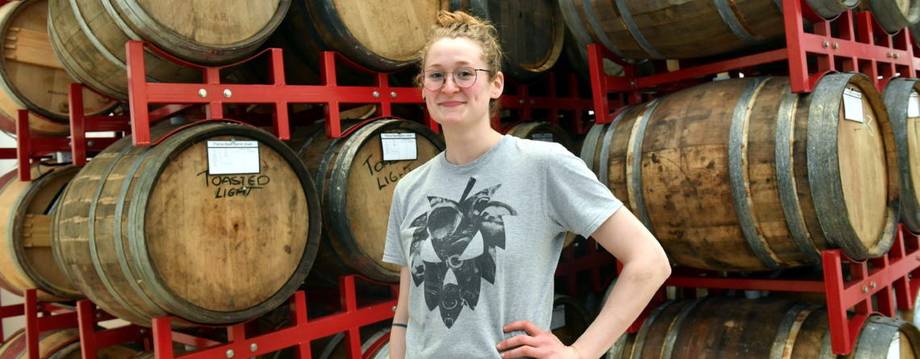
“In my Fierce by Nature unit I have a tap, and every Wednesday I taste the process of the beers, both keg and bottles,” she says. “They need at least one month in the warm room; when cleared they can go out as finished goods.”
The reason for this conditioning time is that yeast such as Brettanomyces will get stressed during packaging. With no more nutrients to feed on, a high alcohol environment and a lack of oxygen it will begin producing off flavours, such as THP.
“No matter how you package the beer, there will be changes in pH and carbonation, because if you want it or not, conditioning will take place if you have dissolved oxygen pick up,” Bongers says. “In a way, it is as simple as waiting for Brett to clean THP up, but if you give it the right conditions you can reduce the conditioning time to about a month.”
Perhaps most presciently, Bongers states that time is only useful in clearing up THP if you know what it is and can identify it in beer in the first place. Breweries making sour or Bretted beers often don’t have the time or financial resources to do their own detailed research into it either, which is why the work carried out by folks like Richard Preiss at Escarpment labs is so valuable.
What’s equally as important is that as drinkers we arm ourselves with a little knowledge so that we can identify off flavours such as THP, so that in turn we can open useful dialogs with the people that make our beer, and hopefully help them improve where necessary. I admit it’s not our responsibility as consumers to help breweries with this. But I do like to think of craft beer as a community where these conversations can be had openly, for the betterment of beer. So don’t be afraid of dropping a brewery a polite email if you suspect you’ve a faulty beer.
The only remaining issue for me is the term “mouse.” While I understand that everyone tastes differently, I’m not so sure that going around smelling mouse urine and comparing it to you beer is best practise. What I do recommend however, is spending plenty of time sampling all the wonderful sour and Bretted beers out there so as to further our knowledge, and in turn our enjoyment of these fabulous mixed culture beers.
“Brewers who invest time in [mixed fermentation] projects do this out of love for the yeast, hard work and patience that gives all these beers their own story,” Bongers says. “We share our knowledge so every batch will taste better, so more people can enjoy it and will drink more of it.”
Share this article
You’ve reached your limit of 5 free articles this month.
Unlock unlimited access and more

Join Beer52 and get your first month half price
-
Get your first box for £13.50 (RRP £27).
-
8 beers & 2 snacks delivered monthly.
-
Printed Ferment magazine included.
-
Unlimited access to all online content.