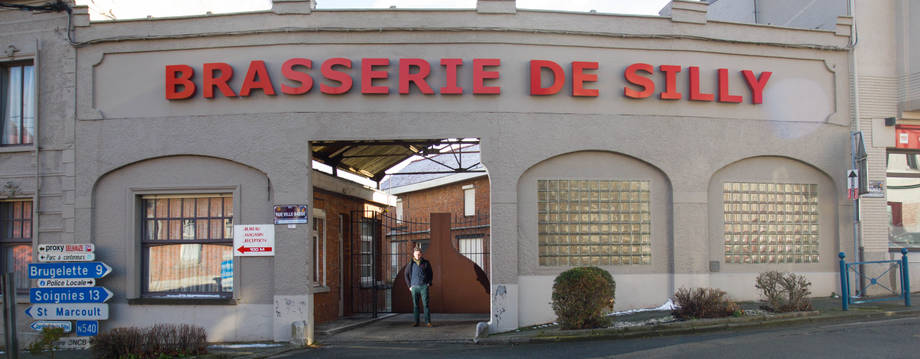
Brasserie de Silly
From the hustle of Brussels, the country drive south to Brasserie de Silly is literally a breath of fresh air, though if you’re accustomed to Scotland’s hilly landscape, the sheer flatness of the region is unsettling.

Richard Croasdale
Tuesday 02 June 2026
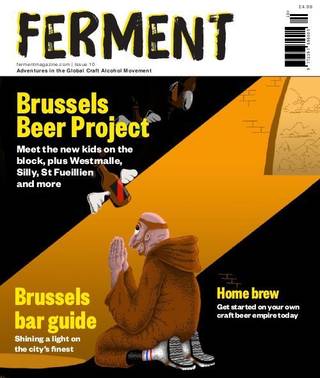
This article is from
Belgium 2017
issue 10
Share this article
From the hustle of Brussels, the country drive south to Brasserie de Silly is literally a breath of fresh air, though if you’re accustomed to Scotland’s hilly landscape, the sheer flatness of the region is unsettling.
Silly, which takes its name from the village it calls home, is the archetypal Belgian farmhouse brewery. It began its journey in 1850 as a working farm, brewing saison during the winter to quench the thirst of seasonal workers during the summer. When the first world war struck in 1914, Silly was able to keep brewing after the ingenious owner painted his copper equipment black, disguising it as cast iron and thus preventing it from being commandeered for the war effort.
Silly wasn’t left entirely untouched by the war though. At the insistence of a band of Scottish soldiers stationed there, the farm began producing its own Scotch ale, to great acclaim from the locals. Not only is the ale still a big seller for Silly, but the descendants of the Scottish soldier who taught the farmer – and who never left the town – still live locally.
By 1947, the brewing had become such a big part of the business, that it stopped farming entirely. Today, the brewing continues in the same farm buildings, under the watchful eye of the original owner’s great, great grandchildren.
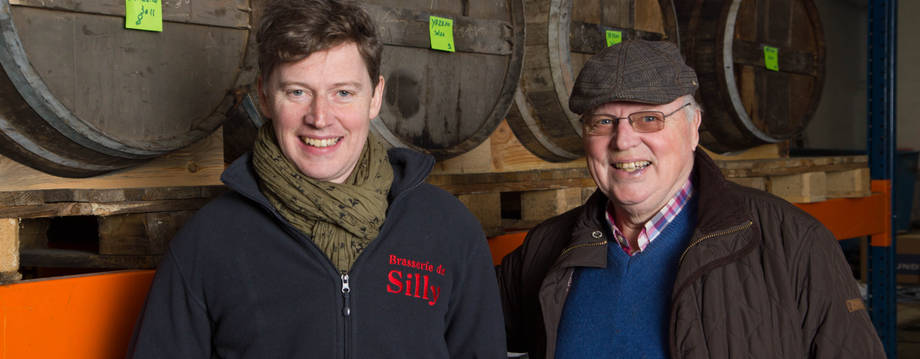
Its range has expanded considerably in that time, with more than ten beers ranging from the traditional to a US-style IPA and a grapefruit beer brewed predominantly for export to the far east. I ask Lionel Van der Haegen, managing director of Brasserie de Silly, what his great, great grandfather would have made of it.
“I think he’d be delighted,” he says. “When I was a kid, I came here and the trucks were going out of the brewery filled about 50% Pils, 40% Coke and water and then maybe 10% specialities. The Belgian consumer felt beer was a common beverage but now I think minds are changing.
“Now people are drinking a white beer in the summer after doing some sports. Then they go home and have a chat with their wife over a piece of cheese and a speciality beer on the terrace. And in the winter it’s more dark beers. So, it’s no longer a case of ‘everybody has their beer’ anymore; that’s become ‘every moment has its beer’.”
Lionel sees the renewed appreciation of beer, driven by the global craft revolution, as an overwhelmingly positive force, as new generations and new markets develop a thirst for high quality traditional Belgian beer.
“For us, we put a lot of effort into our tradition beers, but we follow also the trends like barrel-ageing, IPA and other things our customers demand,” he says. “It’s not enough to stay on the traditional Belgian styles. We’ll never stop promoting those, but if that’s all you do, you get forgotten or not even looked at by a growing section of the market.”
There is one downside to this groundswell of interest in Belgian breweries though, he admits.
“My cousin is the head brewer, and I think he sometimes gets slightly frustrated. Ten years ago, he could experiment in all kinds of directions. With demand as it is though, he has to keep up developing the new beers our customers are calling for. I suppose that’s a good problem to have!”
Share this article
You’ve reached your limit of 5 free articles this month.
Unlock unlimited access and more

Join Beer52 and get your first month half price
-
Get your first box for £13.50 (RRP £27).
-
8 beers & 2 snacks delivered monthly.
-
Printed Ferment magazine included.
-
Unlimited access to all online content.