Brussels Beer Project
You could walk right past Brussels Beer Project unless you were looking for it; the narrow shopfront stacked with hessian bags of grain could be any hipster coffee shop in any city in the world. Yet to step inside is a thrilling assault on the senses.
Ferment
Tuesday 02 June 2026
This article is from
Belgium 2017
issue 10
Share this article
You could walk right past Brussels Beer Project (BBP) unless you were looking for it; the narrow shopfront stacked with hessian bags of grain could be any hipster coffee shop in any city in the world. Yet to step inside is a thrilling assault on the senses. French hip hop fills the long, narrow bar (why does French rapping sound so bloody good? Answers to ferment@beer52.com) while a warm fog of simmering malt hangs humidly in the air.
We step through the back of the bar into a much larger brewery and events space, to find BBP’s founders Sebastien and Olivier being interviewed by a Brussels TV crew about Babylone; their beer brewed using surplus bread from a nearby bakery. I take the opportunity to grab some photographs and a glass of Black Bird IPA.
Brussels Beer Project was founded around three and a half years ago, after Olivier from Brussels and Sebastien from Brittany struck up a friendship in Canada. Their plan from day one was to disrupt what they saw as the staid and complacent world of Belgian brewing, with an egalitarian plan to bring beer to the people.
“We were gypsy brewers at the beginning, and decided it would be cool to brew within the city walls, and make it with the people, with the community,” says Sebastien. “We had the chance to travel before that, so while we had a lot of respect for traditional Belgian brewing, we knew it wasn’t the whole picture and wanted to bring in other influences.”
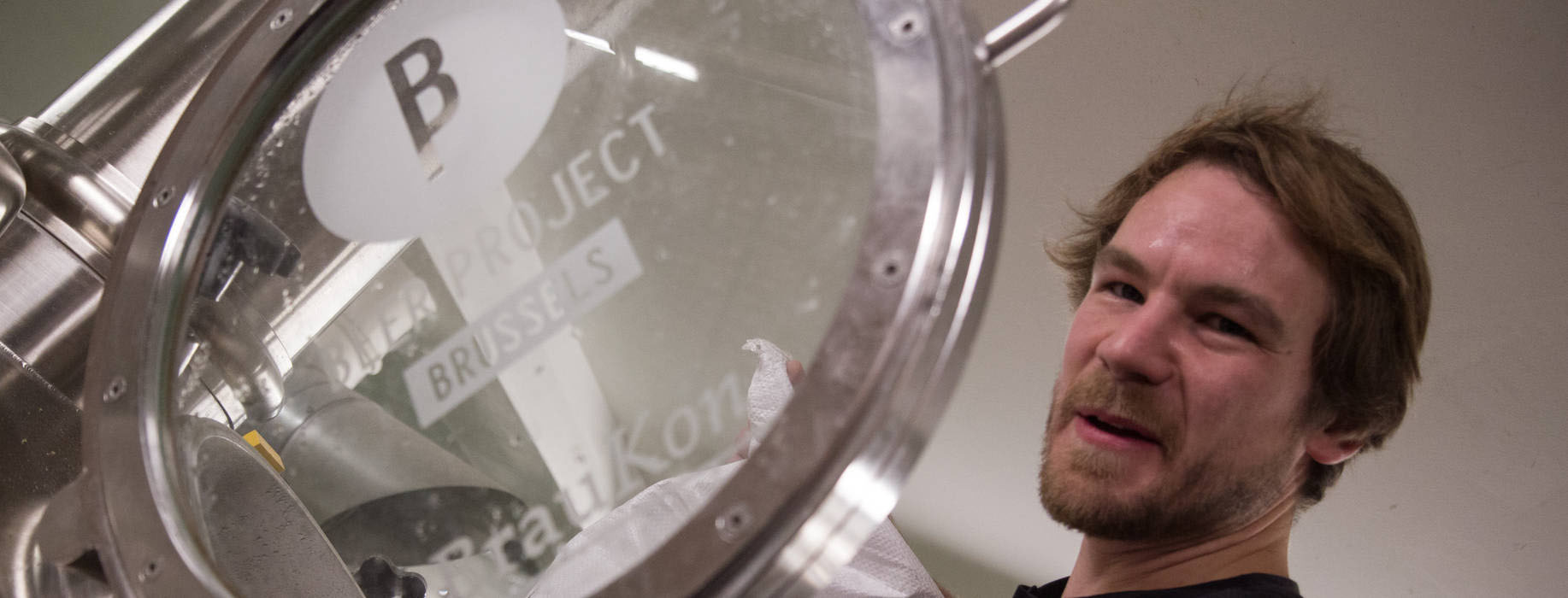
Olivier chimes in: “That’s in our DNA. It’s about co-creation, it’s collaborative and seeks to involve as many people as possible in the adventure of taste. That’s why we wanted to brew in the centre of Brussels; to shorten the distance between beer and people. We never wanted a plexiglass museum case separating the brewery from the people – we want our customers to touch, smell and hear the process up-close.
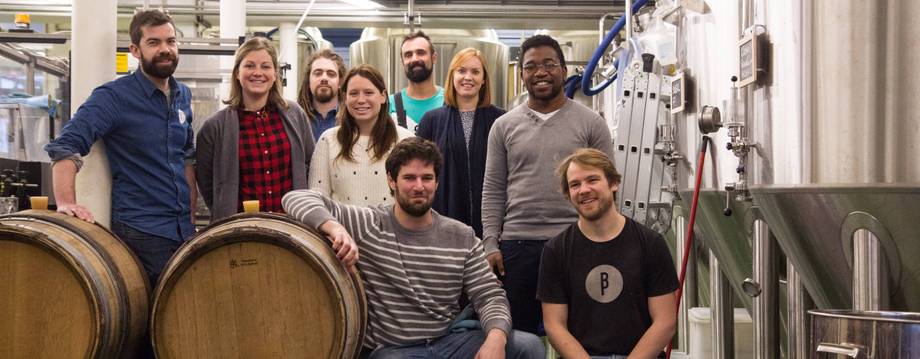
The pair decided to make their home in old Brussels, a particularly cosmopolitan area of the city that reflects their philosophy. The brewery team is similarly cosmopolitan, with Belgians, French, Dutch, and other nations present.
“Brussels has a lot of faces,” continues Olivier. “There’s the very traditional one, the very folkloric one which is a bit more downtown, but we chose old Brussels. People here are turned onto not only what is happening in Brussels, but also everything that’s happening in the wider world.”
As we talk, I have to remind myself that, at three years old, Brussels Beer Project was a trailblazer in Belgium’s relatively young ‘craft’ scene. I ask why a country with such a strong beer culture has taken so long to change course.
“I’ve been to some great, exciting new breweries, but so few in Belgium,” Sebastien continues. “When you see the explosion of creativity in the UK, US, even in Spain, Italy and the Netherlands, it feels like Belgium is just waking up. Success is a double-edged sword in that sense – it’s something to strive for, but can also lead to a certain conservatism when it comes to preserving what you’ve achieved.
“What gives me a lot of hope though is that there’s this fierce curiosity in the culture too. It’s not like wine, where everyone’s out to show how much they know; the people we meet want to learn and find new experiences in their beer. This is essential to what we’re doing – without this we’d just go home!”
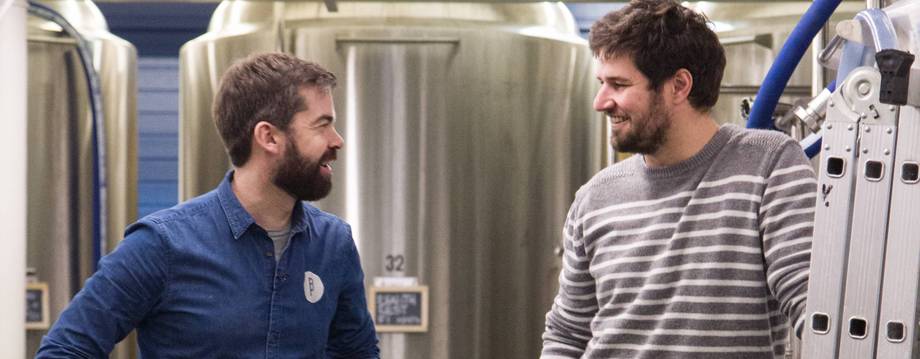
Brussels Beer Project certainly feels radically different to the other breweries I’ve seen here, and their philosophy certainly has more in common with many American and British craft brewers. But the beer itself retains an unmistakably Belgian edge. Which begs the question, is this simply window dressing for traditional Belgian brewing styles?
“Traditional Belgian brewing gives us a toolkit, but it’s not a weight around our necks,” says Sebastien. “Heritage can be a burden and an inspiration, so we’ve tried to take the bits that are useful – stepped mashing, re-fermentation, all that work and knowledge around yeast – and use that to unleash our creativity. We didn’t set out to tear up the book on Belgian beer, just to shake a little of the dust off. But as you can imagine, some people were not so happy with that.”
Although Sebastien is discreet about naming names, it’s no secret that some existing breweries were extremely hostile to Brussels Beer Project in its early days. Indeed, speaking with the more traditional brewers, reactions to the ‘new wave’ tend to range from uneasy platitudes about rising tides to stony faced predictions of doom.
This doesn’t seem to concern Olivier though. On the contrary, he takes the attention as evidence that they are on the right path and must redouble their efforts to keep pushing the boundaries.
“I hope in a couple of years, we’ll still be disturbing people,” he says earnestly. “Our name was chosen very deliberately. We have in essence this obligation to always be a work in progress, always questioning ourselves. Otherwise we’re not a project any more. To stay relevant, we have to reinvent, through things like our barrel ageing experiments and brewing with tobacco leaves from Nicaragua. It’s going to be an exciting few years.”
Share this article
You’ve reached your limit of 5 free articles this month.
Unlock unlimited access and more

Join Beer52 and get your first month half price
-
Get your first box for £13.50 (RRP £27).
-
8 beers & 2 snacks delivered monthly.
-
Printed Ferment magazine included.
-
Unlimited access to all online content.