Ghent bound
James Beeson hits the bars in one of Belgium’s coolest beer destinations, the university town of Ghent
James Beeson
Tuesday 02 June 2026
This article is from
Belgium 2017
issue 10
Share this article
Belgium will always hold a special place in my heart. It was, after all, a trip to Bruges in 2013 that started my love affair with beer in earnest.
I still remember tasting Saison Dupont for the very first time in a dingy underground bar in the city. Crisp, dry and with a slightly funky edge, it transformed my perception of what beer could and should be, and it remains one of my go-to beers to this day.
Returning from Bruges, all I knew was that I wanted to try as many different styles of beer as possible. This led me to found a real ale society at university, get a job in a bar and ultimately start writing about beer. Three years later, I finally got the chance to return to the beery-motherland in December, with a trip to Bruges’ hip, trendy older brother Ghent.
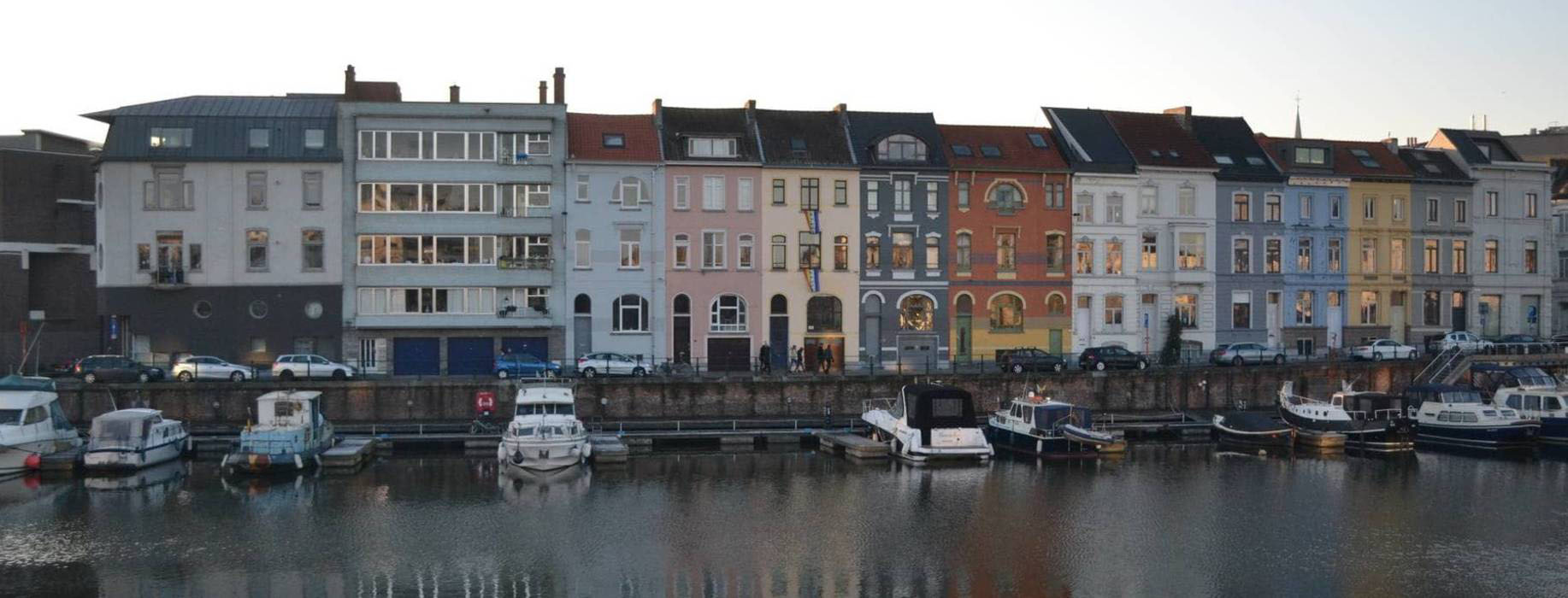
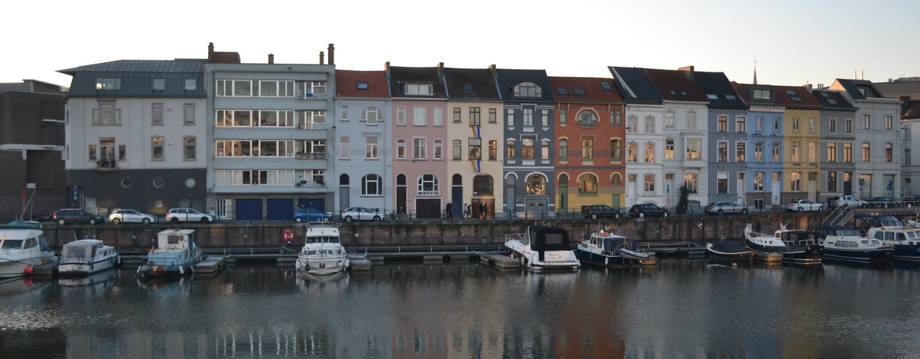
Located almost slap bang between Bruges and Brussels, Belgium’s two most famous cities, Ghent has for the most part avoided the issues the influx of tourism has created in the country’s more popular destinations. The city is home to around 250,000 people, and has a large student population, with Ghent University ranking in the Global Top 100. Despite the more youthful population naturally bringing with them more modern, trendy cafes, bars and clubs, the city retains a strong medieval character, particularly in its centre.
Our first port of call is Cafe De Planck, a small floating bar located on the canal to the south of the city centre. The decor is quintessentially Belgian, with a mixture of old-fashioned books and modern brewery paraphernalia. The beer list is typically extensive, and I decide to ease myself into proceedings with an Oude Orval, a six-month-old bottle of the classic Trappist ale.
We eat dinner quite literally just across the road, at De Brouwzaele. This authentic pub-come-restaurant is notable for its gorgeous large rounded bar, which is situated underneath an old brewing kettle. The beer list is again substantial and the food is absolutely stupendous, although a main course will set you back around €20. Despite Ghent’s reputation for being the vegetarian capital of Europe, I opt for the ribs, which are incredibly tender and smothered in herbs and garlic. The chips are dripped in beef fat and are also delicious.
After dinner, we wander up to near the university campus to Cafe Backdoor, a usually lively student hangout with a heavy musical inspiration. With the university broken up for Christmas it’s a little quiet, but we decide to stick around for a Straffe Hendrik Tripel all the same. Random quirky decorations – a model puffin and a huge motorbike hanging from the wall – give Cafe Backdoor an instantly likeable charm, and the music isn’t half-bad either, with the likes of New Order and Phil Collins getting a runout during our brief stay.
Our final destination of the evening is Rock Circus, the sister pub to Cafe Backdoor located just down the road. Starting to feel the effects of a heavy evening’s work, I plump for the slightly lighter L’Arogante IPA, coming in at 7.2% (positively sessionable by Belgian standards) and get chatting to some locals. Quite unbelievably, one of them happens to be Leslie Lambregts, a gypsy brewer who makes, you guessed it, L’Arogante IPA. We stay until almost 3am, resolving to tackle the bars in the town centre the following day.
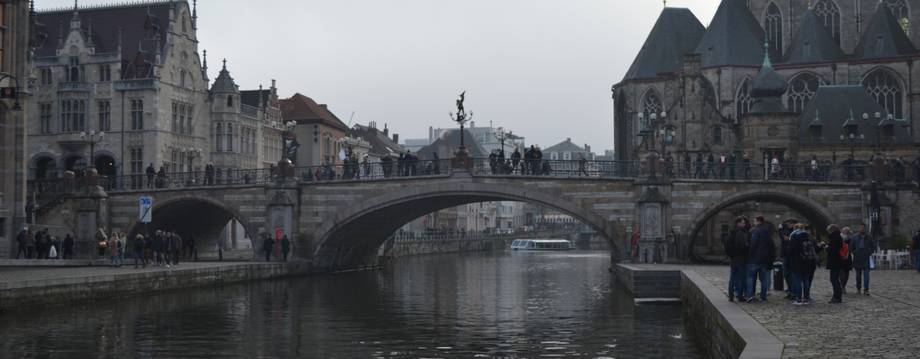
To say I feel ropey the following morning is somewhat of an understatement. Not feeling like drinking before midday, we take a two-hour walking tour of Ghent, giving us time to sweat out our hangovers whilst exploring some of the city’s sites. Among other things, I learn that in medieval times, all of the Flemish grain trade had to pass through Ghent, and some of the wheat and rye had to be sold in the city’s market. Gravensteen Castle and the cobbled streets in the northern district of Patershol are as beautiful as any parts of Bruges and not nearly as touristy.
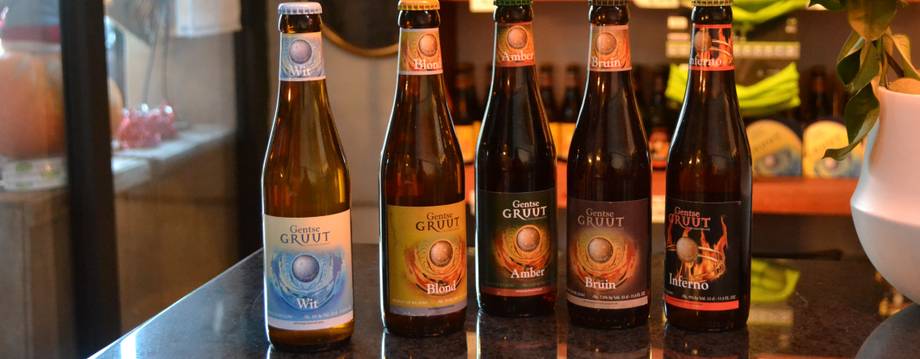
Feeling revitalised, we make tracks to the local Gentse Gruut brewery. Founded in 2009 by Annick De Splenter, the brewery produces four of their five beers without the use of hops, preferring instead to use herbs and spices. Tours of the brewery can be booked from €11 per person, but we decide to just sit in the taproom and order a flight of their beers. The pick of the bunch is the Inferno, which I’m fairly certain was the one containing hops, although it’s difficult to be sure. On the whole, Gruut’s beers are pretty run-of-the-mill, and considering the sheer amount of bars in Ghent, it’s hard to recommend heading away from the town centre to the brewery unless you’re desperate for a tour.
A much better place to spend one’s evening, I’d suggest, is our next destination. Trollekelder is located just opposite the church of Sint-Jacobdkerk in the north of the centre of the city. It doesn’t open until 5pm, and we arrive at ten past to find it already heaving. We grab a seat in the cosy cellar and check out the beer menu. All the usual suspects are present, with over 300 bottles available and ten beers on tap. I opt for a Kwak on draught, which luckily doesn’t require me to give my shoe as a deposit for the extravagant glass (as is the custom in some Belgian bars).
Next it was back over to Patershol to pay a visit to Het Waterhuis aan de Bierkant (The Waterhouse on the Beerside). According to local legend, the pub was so-named because once one enters, everything turns upside down. With over 160 beers, including three house beers on draught, it’s easy to see why one might feel somewhat disorientated after a few drinks inside. The decor is classic Belgian threadbare, with exposed brick and wooden floorboards, and the atmosphere is buzzy but not unpleasant.
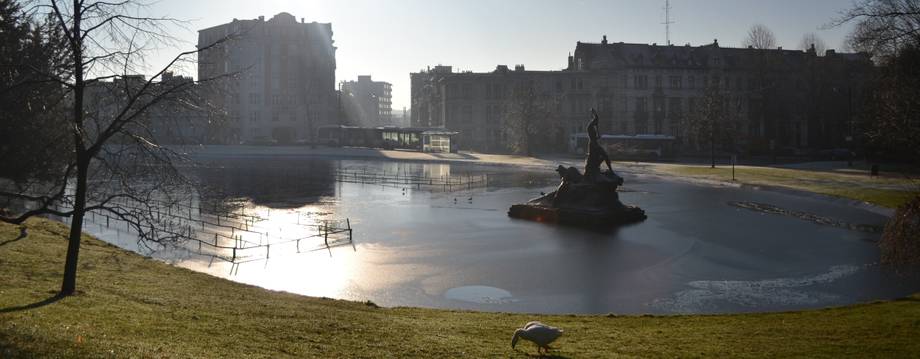
Our final day in Ghent brings with it more crisp sunshine and bitterly cold winds. A brisk walk through Citadel park eviscerates any lingering wooziness from the night before, and we head off to De Hopduvel – a huge beer shop located in the west of the city – to stock up before the journey home. The selection is fantastic and the prices are extremely reasonable. In the gueuze and lambic section Hanssens, Tilquin, Boon and 3 Fonteinen are all present, but there is no sign of any of Brussels’ world-famous Cantillon lambics.
Distraught, we head for Bio-planet, a small sustainable supermarket near the outskirts of town, on the off-chance they may have some of the brewery’s 100% Lambic Bio. Incredibly, not only are we in luck, but they also have a slight reduction on price if you buy six bottles, something we are only too happy to do. We also manage to find bottles of Rosé De Gambrinus in a wonderful small independent shop called Melanie’s World Of Wine And More in Patershol. Finally, before heading back to the UK, we pay a visit to Het Hinkelspel, a local cheese shop with an exquisite range of smelly delicacies.
All in all, there’s a lot to love about Ghent. From its exceptional range of bars, many of which we barely scratch the surface of, to its beautiful buildings and mouthwatering array of restaurants. Even in the midst of the festive season, it’s noticeably less busy than Bruges, and if anything the absence of students made our visit feel a bit on the tame side. I’ve firmly fallen back in love with Belgian beer and culture again, and can only hope it isn’t another three years before I get to visit the country again.
Share this article
You’ve reached your limit of 5 free articles this month.
Unlock unlimited access and more

Join Beer52 and get your first month half price
-
Get your first box for £13.50 (RRP £27).
-
8 beers & 2 snacks delivered monthly.
-
Printed Ferment magazine included.
-
Unlimited access to all online content.