Drinking with the brewer Greg Koch
"I had always considered myself a music enthusiast…but I didn’t know what enthusiasm was until I discovered good beer"
James Brown
Tuesday 02 June 2026
This article is from
Berlin
issue 9
Share this article
The idea for starting Beer52 came to me during an unforgettable Harley Davidson road trip across America with my dad in 2013. It was a formative experience which ignited my passion for craft beer, and Stone Brewing has held a special place in my heart ever since. But it genuinely never occurred to me that three and half years later I would be interviewing the brewery’s co-founder and bona-fide craft beer legend Greg Koch.
Everyone I’ve met along the way in my beer adventure has a different story to tell of how they got into beer, so I was keen to find out where Greg started out.
“I had dreams of being a guitar player,” he says. “I had already fashioned myself as a rock and roller but when I discovered beer, it quickly become my true passion and completely took over. I had always considered myself a music enthusiast…but I didn’t know what enthusiasm was until I discovered good beer.”
Greg’s early thirst for rock and roll instantly reminded me of my own dreams growing up, playing in bands and the overwhelming energy you get from the audience when you’re on stage. But let’s be honest, it’s a tough gig and most never make it far beyond an open mic.
It’s an exciting time for Greg and his team, as they venture into new territory as the first US craft brewer to independently build, own and operate a brewery in Europe. But global craft domination wasn’t always guaranteed. When Koch and his co-founder Steve Wagner launched Stone Brewing in 1996, craft beer sales in the US were plummeting and in 1997 nearly flatlined completely at 2% of the overall beer market. Wholesalers discontinued brands and retailers took them off the shelves, getting rid of them as soon as they could with steep discounts.
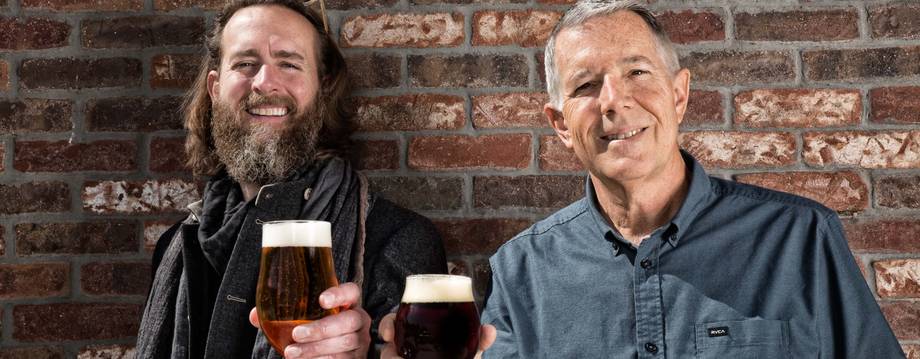
This didn’t seem like an obvious time to start a microbrewery, and I was curious what persuaded Greg to keep going.
“At the time when we started, craft beer was still on the fringe, but that didn’t matter to me. The thing is, hardship becomes less of a barrier in direct proportion to your enthusiasm. When you’ve hit a certain level of enthusiasm, the challenges just become another obstacle that you won’t let get in your way,” Greg states.
Through all the ups and downs of starting out and building Stone to what it is today, I wondered if there was a defining moment.
“I think the proudest moment I have is when Beer Advocate and Rate Beer both started putting us at the top of their list among the best breweries in the world. I knew that wasn’t from an isolated judging competition, with folks in a room sipping on an ounce of beer under controlled circumstances. This was thousands of beer drinkers enjoying our beers across the world, which was an incredible validation.”
Greg is a realist about the value of such notoriety though; a lesson he learned in 2002 when Ratebeer ranked Stone Russian Imperial Stout as the second best beer in the world.
“The number one rated beer was Westvleteren and people did all kinds of things to get it, whereas we got zero attention at number two. It was made by Trappist Monks at The Abbey of Saint Sixtus in Belgium, you had to drive to the brewery and wait in line to pick up a crate… it had this mystery about it, and it was phenomenal beer.
“It was a period where even a non-enthusiast could tell you what the top-rated beer in the world was because there was a lot of media coverage, but nobody knew what the number two was. So it was a personal achievement but didn’t have a big impact on sales.”
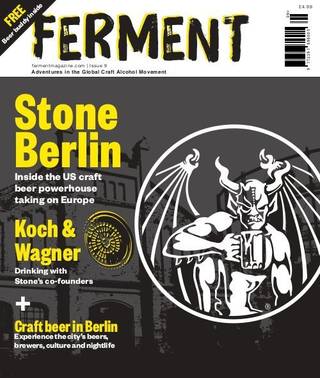
Those early days seem like a very long time ago when I visit the new Stone Berlin brewery. The place is stunning and I’m pleased to say the beer it’s producing is every bit as impressive as the facility itself. It took several years for Stone to find a home in Europe, finally settling on Berlin; an open-minded city with a history of disrupting the status quo, much like Stone’s.
“It wasn’t the only reason, but the disruptive, counter-cultural vibe was part of Berlin that we loved. But I really fell in love with the old gas works property first, then the city.”
Beer is everywhere in Germany; it’s part of the fabric of the nation. However, barring a few exceptions, most beer in Germany is industrial stuff, much like the US 25 years ago and the UK even more recently. Germany has just begun its good beer adventure and it’s ripe for disruption, which must be exciting?
“Of course, as a craft brewer, being able to disrupt Americans’ understanding and appreciation of what real beer was all about was incredible. So I was really excited about the idea of doing that again and bringing it to an area that’s prime for it.”
I’d argue it’s even bigger than that, in the sense that Stone Berlin is beating a path that US breweries will soon follow. I asked Greg what this shift could mean for beer in Europe.
“It’s about fresher beer and helping introduce people to bigger, bolder beer styles that aren’t so common or readily available,” he answers. “As an established, leading craft brewery from the US working with the European craft brewers, we have always seen ourselves as only one part of the equation. But we will be here helping them with that fight, because multiple voices are very important, you can’t do everything!”
So should all craft breweries aspire to the kind of scale that Stone has achieved, if the movement is ever to reach its potential?
“No, actually I think there’s room for every type of brewery making great beer. If the small town brewery wants to remain as it is, that’s great. They can sit alongside breweries with larger presences, like Stone. What’s important is the ability to go into a supermarket and have a selection of real quality beer. If we’re going to say craft beer is for the people, then we have to make it available to the people
“You know James, that’s what’s really special about what you’re doing at Beer52, it’s about that same mission.”
Blushing at these kind words from one of my heroes I agree that, generally speaking, we in the UK are not great at championing that kind of mainstream accessibility. Often our first reaction is to give successful craft breweries a hard time about ‘selling out’. But even if a brewery has a core range in every supermarket up and down the country, there can still be so much creativity and experimentation going on – their journey of discovery doesn’t need to end there.
“That’s the key to it,” says Greg. “You see some people, when they reach 18 or 19 years, they stop looking for those experiences and discoveries. I’m sure you’ve experienced it; people say, ‘oh no, I know what I like’. The world is way too big, you can’t possibly know what you like – you just don’t want to discover anymore.
“I say take that risk of trying something and not liking it, because on the other side you might find something that you love.
I have huge amounts of respect for businesses that use their power to make a positive impact on their community and, in some cases, the entire planet. What part does sustainability play in the decisions you make at Stone?
“You know, craft beer is an ethos: it’s a mixture of idealism, pragmatism, artistry, industry, passion and what’s in the middle of all of that is understanding connectivity to the community and the earth. It’s also about recognising facts like people who are moderate drinkers live longer than those who don’t drink or are heavy drinkers. These are medical facts,” says Greg with a grin.
This does make sense, as people who drink moderately tend to live a more balanced lifestyle overall.
“Absolutely” he confirms. “That mindset stretches across other complementary areas and it’s important to understand our environment and what we eat are important.”
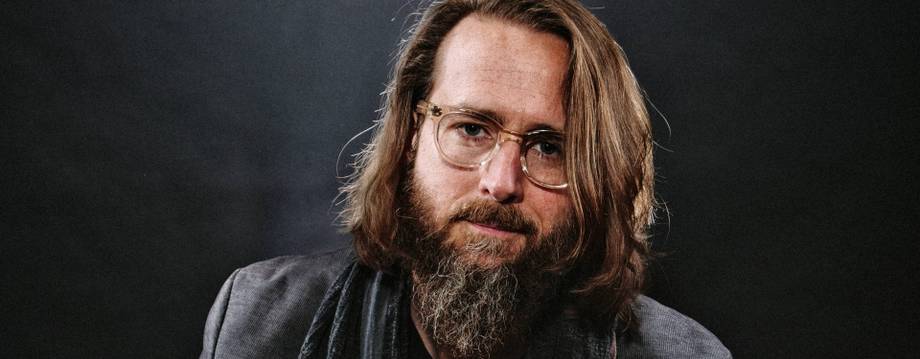
Toward the end of 2015, Greg announced that he was stepping down as CEO after 19 years, to assume the role of chairman.
“I still do a lot of direction on style and character. We have incredible teams that help us define our present and our future, but I work with them to help maintain that Stone ideal, that Stone vibe. I’m also the guy who helps push forward initiatives like Stone Berlin; I was the main voice behind that project.”
Greg has obviously worked hard for many years, and his passion for good beer has paid off. If he wanted, he could sell the brewery tomorrow, buy a jet and starting ticking off the list of countries he hasn’t visited yet. “I still get to do that” Greg interrupts with a smile in his voice.
“You know what are the most awesome things about craft beer for me personally? There are breweries all over the world who just open their door for me and say, come on in and let’s party with beers.
“As you know, that is one of the most awesome experiences you can have. People who are brewing great beers, opening their doors, giving you the tour and sometimes telling you they were inspired by you – that just warms your heart. I can’t tell you how many wonderful, unique experiences I’ve had with brewers and brewery owners. Out with the locals, I’ll get to see different parts of the city, country or activities that I would’ve never known as a visitor without that insider’s look”.
“Craft brewers are by-and-large individual thinkers, they don’t follow the crowd and that manifests itself when it comes to the things they love and care about in their own cities and towns. You get to see that perspective and it’s wonderful.”
Greg is as sincere as they come. Not only is he in love with beer, but also the culture and community that surrounds artisanal food and drink. That comes across loud and clear in everything he says and does.
A lot of press in the US read Greg’s move into the role of Chairman at Stone as a signal that a mega sale was on the cards following in the footsteps of other large US craft breweries like Ballast Point (sold to Constellation Brands for $1bn). “Money would bring me nothing,” he says.
Clearly it goes much deeper than that. I’d go as far as to say this is the single reason why Stone has become one of the best breweries on the planet; it was never about making a shed load of money and it never will be.
An hour has flown by and our call is almost up, although I have a feeling we could have easily continued talking about beer and music for ages. But there is one last thing I want to learn from Greg before we wrap up: how does he manage to get some down time among all the beer and success?
“I’ll tell you what James, I’ll send you a photo of what I’ve been busy doing for the duration of our call. I’m a huge enthusiast of this – I think it’s fucking awesome” he says.
The photo pops up a few moments later: Greg, in his garden, planting seeds for his kitchen garden, including an awesome selection of chilli pepper varieties from around the world. Salt of the earth.
While we were fortunate enough to have Greg on the phone, we persuaded him to give some off-the-cuff tasting notes and back-story to some of the beers in this month’s box...
ARROGANT BASTARD
Arrogant Bastard (7.2%) doesn’t sound or taste like the other Stone beers. What’s the story behind this guy?
“It was born out of home brewing between Steve and it was an accidental discovery. I always joke that Arrogant Bastard already existed we were just the first people to discover it,” says Greg.
“People have been taught to think of beer as a monochromatic thing, but it’s not; the ways, times and occasions to enjoy that beer are not set in stone. I want a beer to go with dinner, and it’s going to be different from the beer I want sitting at the pub drinking a few pints with friends… It would be absurd for me to tell anyone when or how they should drink this beer. Do whatever you damn well please!”
XOCOVEZA
I had the pleasure of spending a year in the beautiful chaos that is Mexico City. The hot chocolate is incredible, though sadly the beer is not as good (yet). Xocoveza delivers something I never thought possible in a beer; one sip and I’m back there – loaded with chocolate, chilli, sweet milk and cinnamon, wow!
To my surprise and delight Greg was happy to suggest some recommendations for how we should enjoy the Xocoveza.
“It’s perfect for Sunday Roast or holiday meals, by the fire place with a snifter glass, it evokes something a bit more by the fire, relaxing, more quiet conversation than a noisy pub.”
CALI-BELGIQUE
It’s often said that hops are king of craft beer. Cali-Belgique IPA, however, is a fine example of the defining character that yeast can impart to a beer. It’s the exact same recipe as Stone IPA, only with different yeast.
“Cali-Belgique IPA has an intercontinental history; we first brewed and released Stone IPA in 1997 and over the years eventually it started inspiring other brewers in other countries including Belgium. We found Belgians making their own IPAs; not quite as hoppy but really unique. Of course, they used the Belgian yeast strains that they’re familiar with, so we were inspired to create a true mash up of West Coast style IPA and Belgian IPA.”
Share this article
You’ve reached your limit of 5 free articles this month.
Unlock unlimited access and more

Join Beer52 and get your first month half price
-
Get your first box for £13.50 (RRP £27).
-
8 beers & 2 snacks delivered monthly.
-
Printed Ferment magazine included.
-
Unlimited access to all online content.