Northern Exposure
Mark Dredge discovers brewing in the Arctic Circle, realising a life-long dream along the way
Mark Dredge
Tuesday 02 June 2026
This article is from
The Future of Craft Beer
issue 8
Share this article
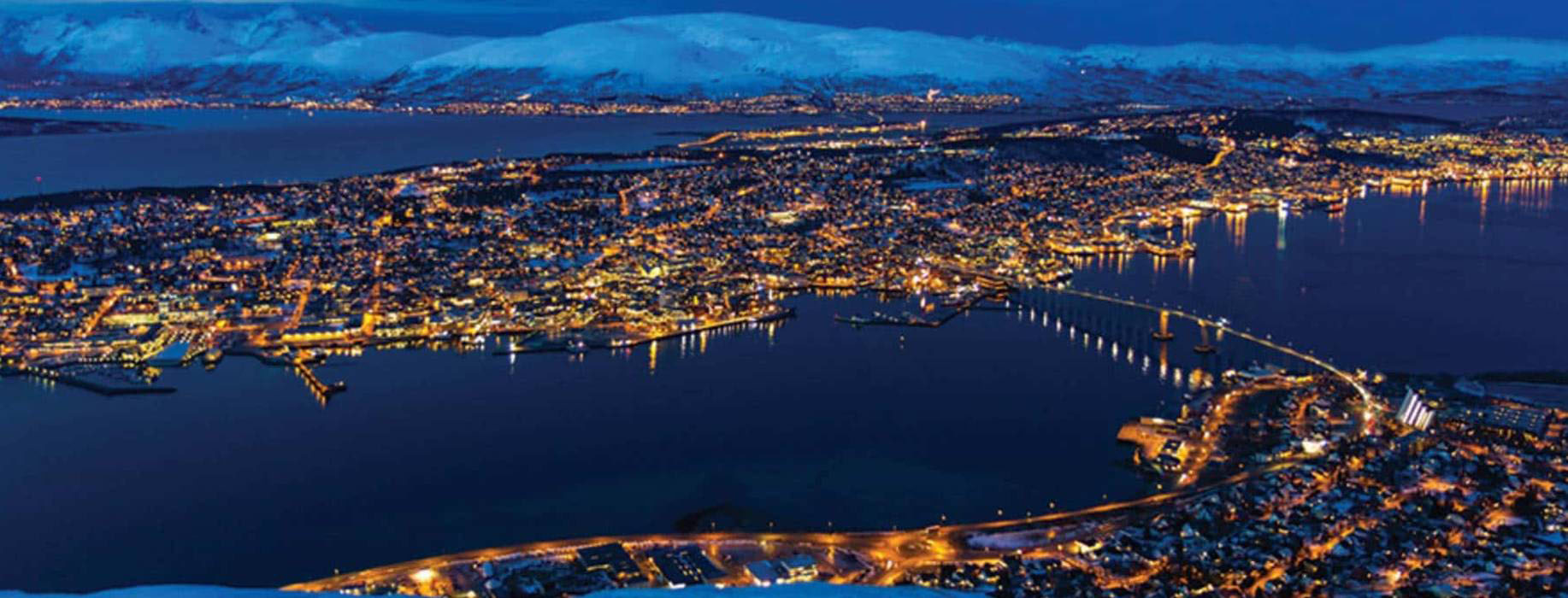
It’s late November and I’m freezing cold, sitting on an inflatable boat 200 miles north of the arctic circle. I’m in Tromsø, known as the ‘Gateway to the Arctic’ for being the last call before ships sailed north.
Those boats were on various missions, some of discovery, research, animal hunting and, more recently, tourists in search of their own arctic adventures.
My first thought when visiting a new place is usually where I can find the best local beers and I know that Tromsø has four breweries plus the bar with the most beer taps in Europe. But before I go looking beer there’s something I’ve got to do, something I’ve dreamed of doing since I was a kid.
That’s why I’m on a tiny, open-air, rigid-hulled inflatable boat that’s speeding through the frigid fjords in the far north of Norway.
The sky is a heavy grey and the sea is icy gunmetal. These fjords were carved through 10,000 years ago at the end of the last Ice Age, leaving snowy mountains which descend deep underwater. It’s into these deep seas that millions of herring come every year. And behind the herring are orca whales.
Seeing orcas in the wild is my ultimate bucket list tick. We’re warned there’s no guarantee that we’ll see them; they are wild animals and go where they want. So when I see the first black dorsal fin lift out of the sea I gasp out loud; I can’t speak, I’m filled with a childlike thrill. Another two fins appear to my left, then a family of nine passes the boat, almost playfully and curiously swimming by.
There are whales in every direction. There must be 20 or 30. Every time another one appears it still makes me gasp in joy and awe.
It’s one of the greatest things I’ve ever experienced. I can’t imagine seeing anything more remarkable, until… “Humpback! Right!” shouts the captain.
A huge tail kicks out of the sea and powers the whale deep down into the icy water. “More humpbacks, left!” Three of them. Far bigger than the orcas, slower, more majestic. One swims up through the surface, mouth open, its big black barnacled head looking around.
For an hour the humpbacks and the orcas swim around the spectacular icy monochrome landscape of the fjord while I sit in the boat in wonder of these beautiful, majestic creatures.
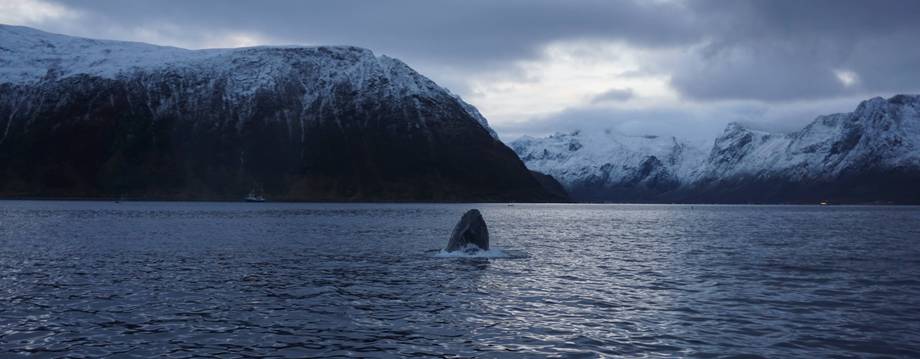
When I see the first black dorsal fin lift out the sea I gasp out loud, I can’t speak, I’m filled with a childlike thrill. Another two fins appear to my left, then a family of nine pass the boat, almost playfully and curiously swimming by
Warm and dry and back in Tromsø, it’s now time to search for things I’m more familiar with: the local breweries. Beer might not always be the primary reason for me to travel somewhere, but drinking the local beers and learning local stories, is always on my itinerary, and I’m fascinated by Tromsø, the arctic capital with four breweries.
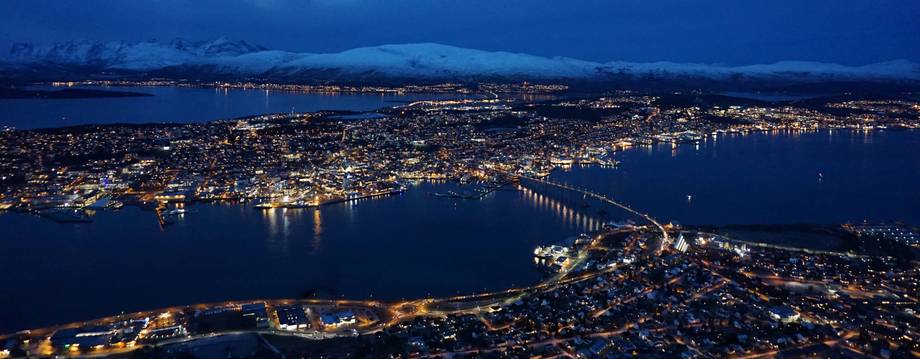
Tromsø was granted a town charter in 1794 (population: 80) and is now the third largest city within the Arctic Circle (population: 75,000). It’s had the nickname of ‘Paris of the North’ for its fashionable citizens and it’s seen many famous arctic expeditions pass through. Today it has a good university, a lively town centre, numerous tourist attractions, like the Arctic Cathedral and Fjellheisen cable car, plus the surrounding natural beauty and nightly displays of the northern lights (I’ll get to them later). Most tourists will also visit Mack Bryggeri, one of Norway’s oldest breweries and still run by the founding family.
The Mack family were merchants and bakers from near Hanover, Germany. As was the tradition for tradesmen, they travel away from their homeland to develop their skill. That took Georg Mack to Norway in the 1830s, where he trained in Bergen before heading north.
Georg settled in Tromsø and had kids, including Ludwig Mack, who followed his father and learnt to bake, spending a few years in Germany before returning to his father’s bakery. At that time Tromsø was suffering from social problems – an area called ‘Hells Passage’ was a wasteland of wasted fishermen, drunk on hard liquor. Ludwig had tasted German beer and its culture and he decided upon a career change. In 1877 (Tromsø population: 5,000), Ludwig, then 35 years old, opened a brewery and started selling his first beer, Bayer, a dark Bavarian-style lager.
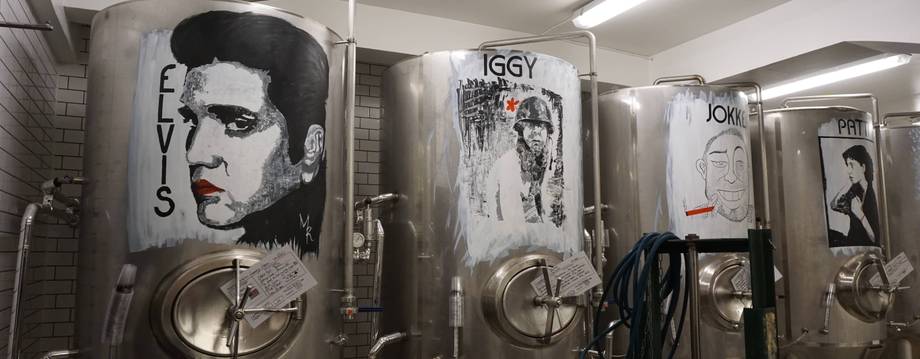
“In the beginning Ludwig had this philosophy that he wanted to make a tasteful and heavy beer so it should be like food for the people,” says Harald Bredrup, director of the brewery and the fifth generation of his family to run Mack (he’s also the President of the Norwegian Brewers Association). Alongside Bayer was Bokøl, a strong bock lager, then in 1888 came their first Pilsner. All are still brewed today.
It wasn’t an easy beginning for what was the northernmost brewery in the world (only when a brewery opened on Svalbard in 2015 did they lose that title). Being a remote and small fishing town, the prosperity of Tromsø long paralleled the successes or failures of the fishermen. But it did survive and did manage to grow, becoming synonymous with Northern Norway.
As well as the beer, they added capacity to produce soft drinks and bottled water, plus in 2000 they installed a smart microbrewery. In 2012, the large production brewery had outgrown its original location – squeezed with the tight infrastructure of a small city – so they built a new production brewery 70km away, leaving the microbrewery in Tromsø.
The brewery offers a popular tour every weekday afternoon, where you can see the original cellars and steam engine from 1877, before ending with a beer (and a photo with a giant polar bear…) in Ølhallen, a 67-tap pub connected to the brewery.
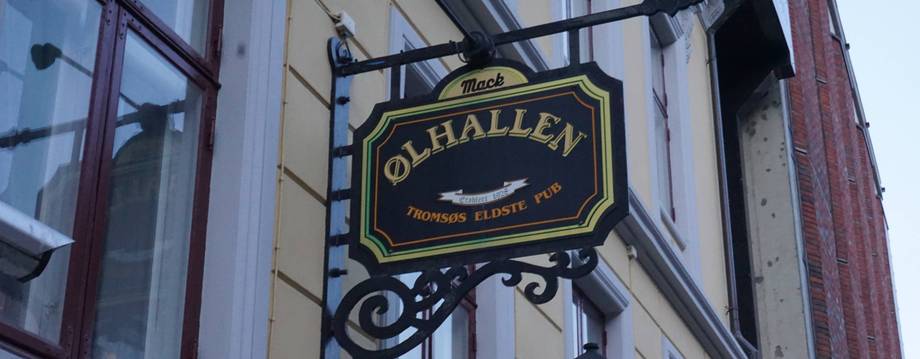
“It has a special history, this pub,” says Harald, whose great-grandfather Lauritz Bredrup opened Ølhallen in 1928. Between 1917-1926 there was a prohibition in Norway, banning spirits and wine but allowing low-alcohol beer (this was the beginning of the government-controlled stores, called Vinmonopolet, which Norway still has today). When prohibition lifted there were no licenses to sell beer in bars but “they couldn’t take away the license to sell beer when you are a brewery,” says Harald. “So people were buying beer directly from the brewery and then drinking it outside. Near here they said a street was called ‘the longest bar in the world’ because people would sit there and drink.”
Lauritz “wanted to open this pub to sell just beer and make it so you can drink your beer inside with decency.” It took him two years but he was able to change the licensing laws. It’s now the oldest and most famous pub in Tromsø.
In the tradition of great pubs, Ølhallen became the central meeting place in the city (though it was strictly a mans’ place: the female toilet was only built in 1973) and it has a great history of storytelling during the years of hunting and exploration. “Here came all the fishermen, the hunters, who had been over the winter on Svalbard,” says Harald, explaining that some even had their post delivered here as they had no fixed address. “Everybody just passing by, they had to come to Ølhallen to hear the newest thing. It was a really popular place. They came here to tell stories.”
Today Harald says that Ølhallen has “Europe’s largest selection of beers on tap,” and every beer is Norwegian, with the majority brewed here in Tromsø – 25 from Mack, the rest from the other three brewers. “Local breweries are thriving,” says Bernhard Siebert from Tromsø Budget Tours (www.budgettours.no), who runs a Beer Safari through the city. “Every time a brewery is founded in Tromsø, ever since 1877, it’s been a success.”
“We’re very patriotic about the beer in Tromsø,” says Christian Riksheim, one of the founders of Bryggeri 13.
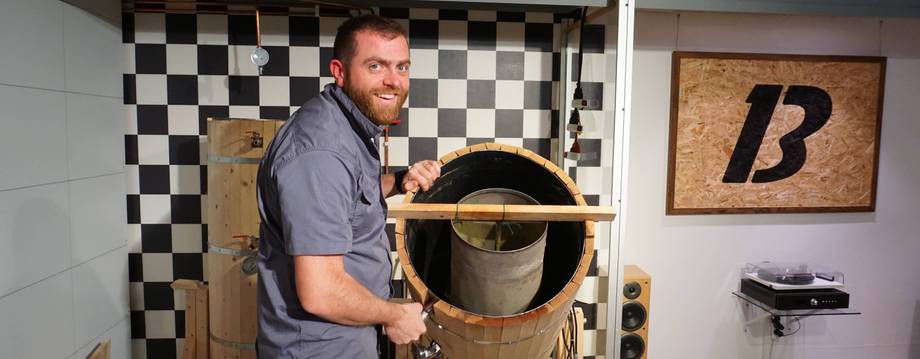
In 2012, Christian and his mate Anders Elde decided to make Christmas beers for their friends, which got them hooked. “After a year we decided we were quite good at it so we asked some friends, who were opening a restaurant, if they wanted us to brew a beer for them,” explains Christian.
They scaled-up their homebrew kit, building their own cobbled-together brewhouse and, in October 2014, they “started with the pretence of brewing for the restaurant,” a pizza place called Casa Inferno, but they “soon figured out that the shops wanted our beers and we sold a lot more than we expected.” he says. “The audience were definitely ready for something else in Tromsø.”
The city also has a good homebrewing community, with equipment sold in numerous places, including Kjeller 5, a beer shop next to Ølhallen.
Bendick Nilson, a fourth year law student, is head of the student brewers, who meet and brew every Sunday. “Many of these people don’t have the space or means to brew at home, so it’s a very nice substitute for a lot of students with small living quarters,” says Bendik. The students can’t sell their beer but they can brew and drink as much as they want. “It’s highly attractive for thrifty students,” he says. “I already had a passion for craft beer and this means I can make beer and save money.”
Aside from the brewing water they all share (which Harald from Mack describes as: “Really good. You can use it almost directly. It’s really perfect for beer. It’s mountain water with really low levels of minerals.”), malty brown or red beer is something I’ve seen that’s common to all the Tromsø breweries.
“The Tromsø palate can be explained in some of Mack’s beers and you see some similarities in local craft beers which are like Mack’s Bayer. A lot of the red and brown ales of the Tromsø craft breweries usually have a lot of the same notes,” says Bendik. Christian from Bryggeri 13 agrees and says their Brown ale is “our type of Bayer.” The other brewer in town, Graff Brygghus, has an Altbier and a Red which both fit that flavour profile.
Tromsø locals Marius Graff and Martin Amundsen opened Graff Brygghus in a small 100-year-old wooden house in summer 2015. Marius is the brewer and Martin manages the brewery.
The guys met in September 2013 while Martin was working in a bank in Oslo and Marius was in school and homebrewing (he’s now just 21 but is one of the smartest brewers I’ve spoken to), writing a blog about his experiences. “I was about to move back here to Tromsø with my wife and my baby,” says Martin, “and I had the idea to start the brewery here in this very building because it was in our family’s ownership. I came across Marius’s beer blog, contacted him and we sat down and had a coffee and talked about what became a common dream: to start a brewery in Tromsø.”
A few months later they were in Portland, and a year after meeting they placed the order for their brewkit from Portland Kettle Works. They returned again to Portland where Marius interned in a few breweries (something not many 19 year-olds get to do). That was his first and only commercial experience before brewing the beers that now bear his surname.
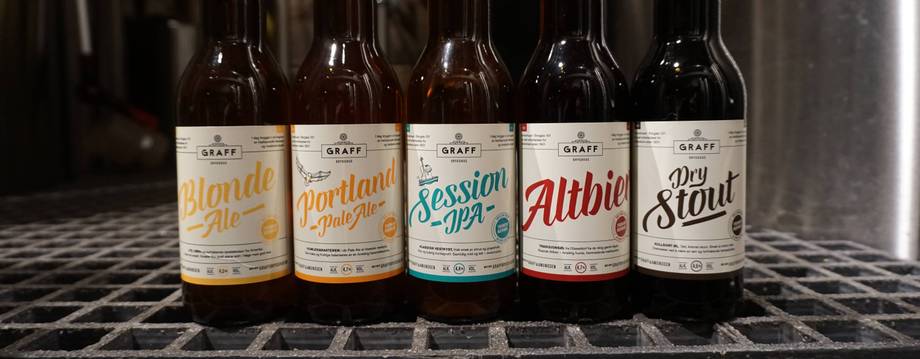
Their core beers, inspired by USA and Germany, include Portland Pale Ale, Blonde, Session IPA, Altbier and Dry Stout, all around 4.7% ABV, and all exceptional in their balance.
Tromsø is a small city and Mack dominates the beer here, so how did people react to Graff? “We have a history of being proud of our local beer,” says Martin. “That could’ve turned out both ways for us. We are local and people seem to be proud of that. People seem to love our beers.”
As we finish some beers I want know their thoughts on Tromsø and its natural wonder. “The proximity to nature is really nice. I can look out the window and see the mountains – it’s a view people will travel from around the world to see once in a lifetime and I have it every morning,” says Martin.
I’m here during the Polar Night, and from 21 November until 21 January the sun doesn’t rise above the horizon, meaning 20 hours of darkness a day. From the end of January it gets lighter until 21 May when the Midnight Sun means it stays light for two months before the darkness gradually sets in again.
“You wouldn’t really appreciate the Midnight Sun if it wasn’t for two months in the dark,” says Martin. “It’s all kinds of different light in this period now. There’s the northern lights, then at midday the sun is rising then there’s all kinds of different colours. I think it’s pretty spectacular to live here.”
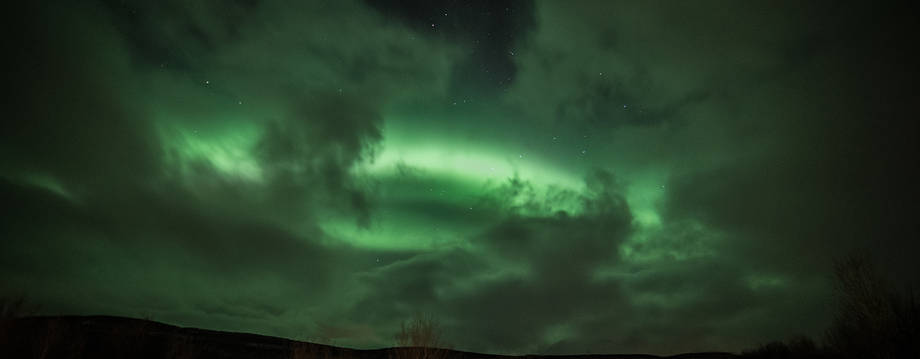
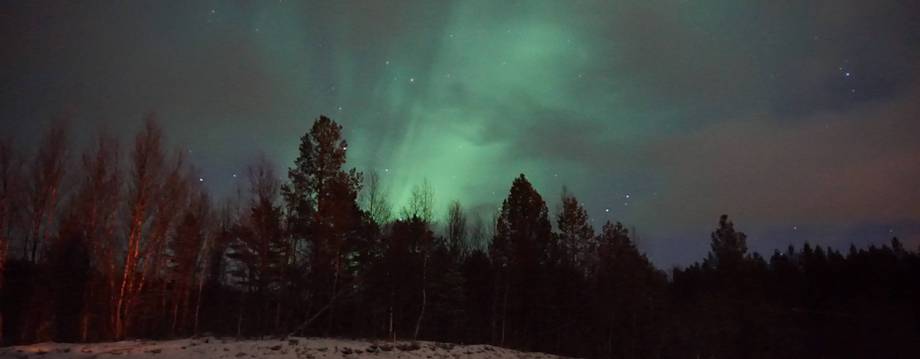
We’ve been here for three days and still haven’t seen the northern lights so when I get a text message from Martin later that evening saying ‘Go outside and look at the northern lights’ we rush to see a shimmering silver glow above us, briefly shining before it’s lost between the city’s streetlights and the snow clouds. We’ve seen whales, we’ve drunk the beers, now it’s time to hunt the northern lights.
“It’s the thrill of the chase and not knowing what you’ll find!” says Dan Steinbakk, owner of Arctic Experience (arcticx.no), as we jump into his van and head towards some remote co-ordinate in northern Norway where he thinks we’ll see the Aurora Borealis.
The northern lights are a natural phenomenon. In Norwegian mythology there are many different stories told about them: some thought they were a reflection of the shields and swords of Valkyrie: the female warriors who chose who lived or died in battle. Others thought the lights were a glowing bridge that led dead warriors into Valhalla. One story said they were the shiny reflection of herring coming into the fjords to alert the fishermen (kind of true as the lights come at the same time as the herring). Local Sami tribes believed the lights to be the energies of the souls of the departed and they should behave respectfully when the lights shine. But the truth is more amazing than the myth: the northern lights are a visible expression of why life is possible.
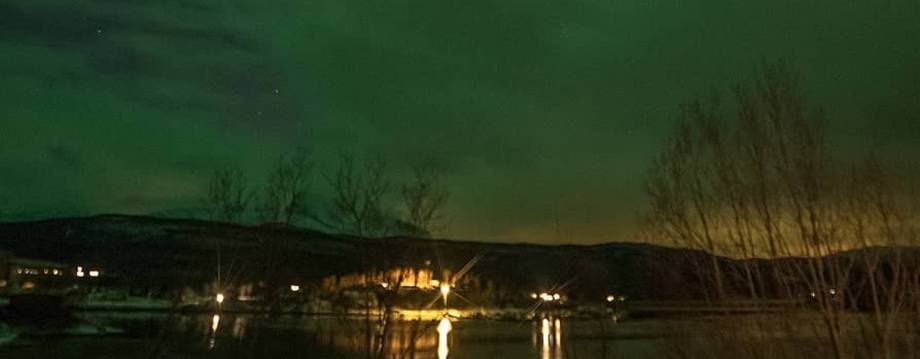
Solar winds spread charged particles from the Sun, which are drawn towards the Earth and trapped in the magnetic field around the poles, where they crash with the life-giving molecules in the atmosphere, releasing energy as light. Different molecules give different colours (oxygen gives greens, nitrogen gives reds and purples) and it forms a halo of magical light around the poles. Tromsø sits in the middle of that.
Dan is chasing gaps in the clouds. We haven’t passed another car on the road for over an hour and he’s constantly taking phone calls and getting weather updates from the surrounding areas. “People don’t pay me to look at clouds!” he says. Finally, after a couple of hours, Dan shouts: “We’ve got her!”
Above us is a whitish-silvery glow, almost misty and hazy, pale green and purple at the edges as it moves fast before our eyes. One moment it seems to billow like an erupting volcano, another time it looks like a snake surging through the sky, whooshing as the wind blows it, an ephemeral dance. It’s not like the bright green sky you see in the photos (as that light is only visible through a long exposure lens); it’s more astonishing than any picture.
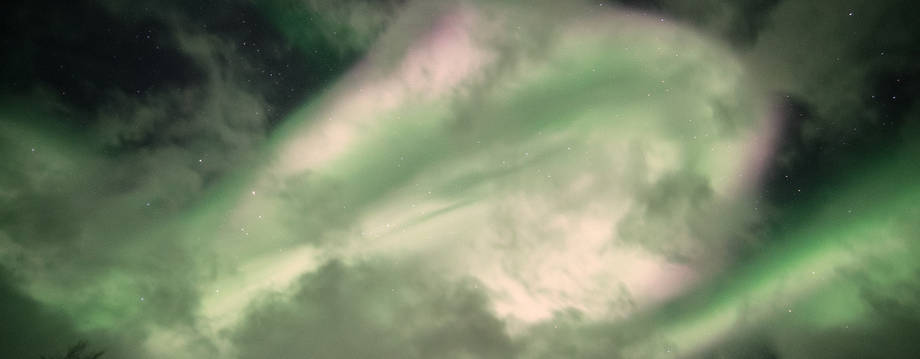
“This is not a normal display,” says Dan. “This is awesome!” He’s just as excited as we are to see this. “She’s treating us well tonight!”
Now that we’ve seen one amazing display, Dan wants more. By the time we make our third stop it’s midnight and we’re in deep snow and thick forest near the Swedish border, with waves of light pulsing in the sky. Dan builds a fire, passes around homemade vegetable soup and carrot cake, and continues to search for more locations. By 1am, when we’ve all got back into the van to try and warm up, he’s saying: “There’s a gap in the clouds across the lake!”
The next view, however, is not a heavenly glow of light, it’s a white snow blizzard and Dan has to give up tonight’s hunt (not before driving almost 300km in total). If the snow hadn’t hit us, I’m sure we’d have just carried on and on, forever hoping to find the perfect light show.
Back in Ølhallen I order a Blanding, a curious local mix of Mack’s Bayer topped up with their Pilsner. The pub is packed with locals and tourists, sharing beers and stories about their day. It’s the stories and the experiences that fascinate me, especially somewhere like Tromsø which is a special location that’s long been the beginning and end point for countless adventures.
Tromsø is a wonderful place to visit. The city is handsome and old with many wooden houses, there are great bars and restaurants, excellent beers from the local breweries, really friendly locals, plus it’s surrounded by unrivalled nature.
I was there to hunt for the once-in-a-lifetime bucket list experiences. I chased after whales and lights, following them through the sea and sky, always wanting to see more of them, to see something more spectacular. The thrill of the chase was what made them so exciting.
That’s where beer also gets me and why I travel far to experience it and meet locals and learn about other beer cultures. I might be drinking something excellent but the thought that maybe the beer in the bar across town might be better or different or new makes me move on. It’s what takes Dan out to chase the lights every night. It’s what brought those old adventurers to northern Norway decades ago and made them spend their winters in the harsh climates. The thrill of the chase, the hope for something extraordinary, the search for stories to tell others.
The price of beer in Norway
Norway is probably the most expensive place in the world to drink: a bottle or can of industrial lager could be 25-45NOK in the shops and 60-100NOK in bars (bottle or draft), while a craft beer will be 35-90NOK in shops and 80-170NOK in bars. With a 10NOK to £1 exchange rate it can be prohibitively expensive to drink.
Buying beer in Norway
Anything 4.75% ABV and above – beer, wine, spirits – can only be sold in the government-run Vinmonopolet stores. Supermarkets and beer stores can sell beer up to 4.7% but nothing higher. Bars can serve any strength beer, plus wines and spirits, but it’s illegal for someone to take beer away with them. In beer shops and breweries people can only take beer away and not open a bottle inside. Breweries can sell direct and even pour growlers, but only up to 4.7% and only to be taken away.
Tromsø’s top beers and bars
Mack’s Bayer is a smooth dunkel with some brown sugar and caramel sweetness, berries, and a quenching dry finish.
Graff’s Portland Pale Ale is as good as any American Pale Ale you’ll find. Juicy citrus, peach and tropical fruit, soft toasty malts and a brilliant balanced bitterness at the end.
Polden’s Edvarda Session IPA is bright gold, it gives some citrusy hops and these mix with a zing of Belgian yeast and peppery spice.
Bryggeri 13’s Blåmann Brown Ale has brown bread, caramel and some bitter roasted grains, drying out with a tangy, refreshing finish.
And where to drink (beyond Ølhallen): Café Sånn is a cool, open bar with a dozen good beers on tap and many more in bottles, including rare and interesting imports; Blå Rock is a kind of dive bar with Mack beer and decent burgers; Huken is a small, fun bar, all wood clad and warm like a sauna, with simple food like burgers and baked potatoes and a few beers; Rorbua has a couple of Mack’s on tap and more in the fridge and it’s a warm, cosy bar with lots of fishing memorabilia.
Share this article
You’ve reached your limit of 5 free articles this month.
Unlock unlimited access and more

Join Beer52 and get your first month half price
-
Get your first box for £13.50 (RRP £27).
-
8 beers & 2 snacks delivered monthly.
-
Printed Ferment magazine included.
-
Unlimited access to all online content.