Meet the brewer: Mike Murphy
Richard Croasdale catches up with Lervig’s Mike Murphy, to ask how a Philadelphia home brewer came to be one of Norway’s hottest brewmasters

Richard Croasdale
Tuesday 02 June 2026
This article is from
Norway
issue 11
Share this article
Richard Croasdale catches up with Lervig’s Mike Murphy, to ask how a Philadelphia home brewer came to be one of Norway’s hottest brewmasters
When Mike Murphy took over as Brewmaster at Lervig Brewery in 2010, it was on the understanding that things would have to change. Even though the brewery had been running since 2003 – to replace the local brewery that had been acquired then scrapped by Carlsberg a few years earlier – it had only ever produced pilsner, which didn’t sit well with Mike’s sensibilities.

“The local people wanted a brewery to replace the one that had closed, so they got together and built Lervig to pretty much the same spec and capacity as the original,” he says. “That means we have a huge brewhouse, which still makes people laugh when I tell them. But then they produced nothing but Pilsner.
“When I arrived, the first thing I did was create a pale ale, which would eventually become Lucky Jack. The owners were very unsure at first; they worried it was too bitter. Last year, Lucky Jack sales overtook the pilsner for the first time, which was a huge milestone.”
Mike’s own journey to Stavanger is somewhat circuitous, having started out as an enterprising teenage drinker in Philadelphia. Seeing homebrew as a way of circumventing the USA’s drinking age laws, the 19 year-old Mike began brewing for himself and a few friends in the early 1990s, honing his skills for the following eight years.
At the end of the ‘90s – a golden age for US craft brewing – he met a woman in Rome and decided to relocate, with the intention of setting up a full-scale 250-hectolitre brewery to supply her bar. Sadly, he ran out of funds before the project was complete and was forced to sell his brew kit to a new brewery in Denmark. The buyer took a liking to Mike and his brewing philosophy however, and offered him a job.
The Danish brewery did well, and three years later was bought out by “a big discount brewery”. The bottling line that Mike had been so proud of – set up for 75cl bottles with Champagne-style corks – was given over to packaging cheap pilsner, which was then sold at a premium. “It was not what I signed up for,” he recalls.
So he started looking for another job. Denmark at the time was saturated with small new craft breweries and Mike didn’t want to move from a high-volume, successful operation to a start-up. To him, this would have felt like going backward.
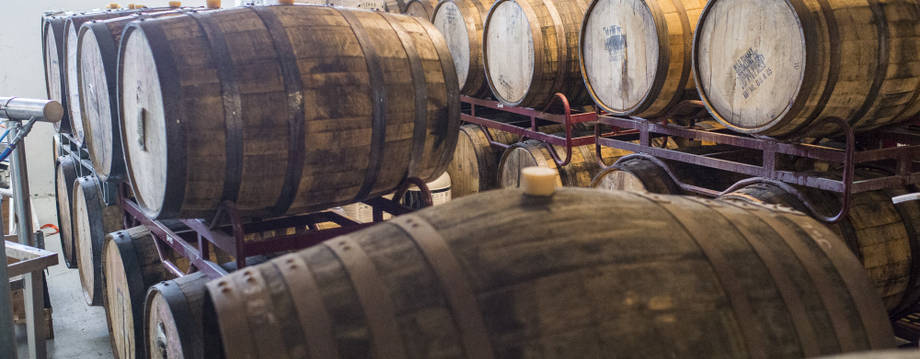
The role at Lervig provided the perfect opportunity for him; a commercial brewery with huge unused capacity, existing relationships with bars and other distribution channels and – as he saw it – untapped potential as a progressive craft brand.
“When I brewed Lucky Jack, there really wasn’t much craft beer in Norway,” he says. “The town where we are was a little behind Oslo, which is a little behind you guys in the UK, which is a little behind the US. So I’d say we were at least five years behind the market when I joined in 2010. Today, every bar and restaurant in the area has craft beer in one form or another and most of them stock us.”
The range of Lervig beers has of course expanded dramatically since those early days, with a core range of regulars supplemented with a constantly changing line-up of collaborations and more “out-there” styles that “challenge us creatively and technically”.
“Craft beer is still a relatively asshole-free industry,” Mike observes. “We’re a relatively small brewery with a relatively small marketing budget, so collaboration makes sense. We get to work with some great people, we get exposure to their customers, they get exposure to ours and everybody gets to shake things up a little.”
Good examples of this include a collaboration with Hoppin’ Frog – Sippin into Darkness – which, despite only having had a single run, is the highest-rated Norwegian brew on Ratebeer. Mike’s also currently working on an oude gueuze blended with one of Lervig’s stouts – a collaboration slated for release at Toer de Geuze 2017 in Brussels.
Aside from his own curiosity, Mike says there are good commercial reasons behind his apparent restlessness as a brewer.
“Everybody’s making a good pale ale these days, so Lucky Jack isn’t necessarily going to stand out on its own. It’s the volume beer for us, but we need to keep the attention of craft beer lovers, who tend to be easily distracted.
“If we keep making the same thing, it’ll be hyped this year, but next year it’ll be old. We have to stay ahead of the curve and anticipate what drinkers want; that means pushing at the margins with beers that seem exciting now, but will be the big sellers a couple of years down the line.”
Mike is confident about Lervig’s future, but also has the contented pragmatism of a man who has been round the block a couple of times.
“I’ve been following this business since the ‘90s,” he says. “Some people I’ve met along the way have become very successful very quickly, others have faded away, and others like me have kept working away, growing slowly and organically.
“There’s no doubt craft is getting bigger; the money is coming, and that makes people more aggressive. I think it’s going to become a lot more cut-throat. I don’t want to fade away, but I’m not sure I want Lervig to take that big-money fast track either – I just want to make good things happen here.”
Share this article
You’ve reached your limit of 5 free articles this month.
Unlock unlimited access and more

Join Beer52 and get your first month half price
-
Get your first box for £13.50 (RRP £27).
-
8 beers & 2 snacks delivered monthly.
-
Printed Ferment magazine included.
-
Unlimited access to all online content.