Blend me a dream
Whether it’s beer, spirits or wine, blending can be a mixed bag, Archie McDiarmid explains.
Archie McDiarmid
Tuesday 03 June 2025

This article is from
Beer & Art
issue 6
Share this article
The word blend has a funny old reputation in the modern world of booze. Mention it to many whisky drinkers and you are discussing a cheap, big-brand, super market staple (although the whizz kids of craft blending at companies like Compass Box would beg to differ). Almost every rum in the world, from the cheapest to most premium, is made of a mixture of spirits from pot and column stills, the definition of spirit blending.
In beer, blends usually come in two types; the classic Belgian lambics where multiple, slowly fermented brews are combined by a master blender (not always the same person as the head brewer, incidentally) to produce a richer, more complex brew than the component parts that made it, but always aiming for a consistent style. The other is the more experimental approach taken by beers like Brewdog’s Mixtape series: take two different beers, sometimes wildly different in style whack ‘em together and glory in the crazy mix of flavours that results. Those two philosophies – producing base elements designed from the start to be mixed together to create the finished product, or creating multiple finished products and combining them at the last minute – also underpin wine blending.
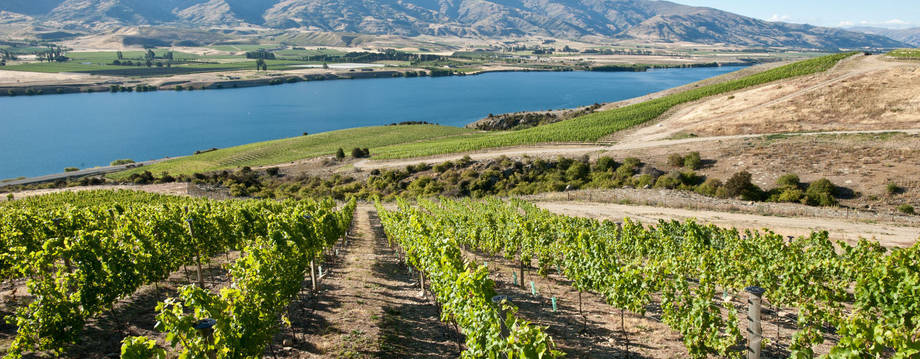
The simplest and oldest blending in wine is the field blend, which is very much what it sounds like; go into your fields pick the grapes you like the look of, regardless of variety, then put them all into a press together and make your wine.
Originally of course, this would have been a matter of necessity rather than choice. Winemaking today might be big business, but you only need to go back a few hundred years for it to be a primarily small scale activity where you would grow a small number of vines and use the resulting grapes to make wine for your family in the coming year and perhaps sell the extra at market. As such you worked with whatever vines you had to hand, which were often whatever your ancestors had planted.
Modern field blends work very much the same way, with winemakers often taking small parcels of grapes that would be too tiny to make a commercially viable wine (usually from very old vines which tend to give small, intensely flavoured yields) and adding them altogether to to make something utterly unique to their vineyards.
The second and most common form of blending is to make wines from two or more separate grape varieties then mix them together in order to achieve a flavour profile that neither could manage on its own. The most famous example of this is in Bordeaux where Cabernet Sauvignon and Merlot (along with smattering of other grapes) are combined to embrace the peppery complexity of former and the juicy ripeness of the latter.
This style of blending is actually much more common than you might realise, since wine labelling rules allow winemakers to only state one grape variety on the label as long as it makes up 80% of what is in the bottle. That ubiquitous bottle of Pinot Grigio hidden in the fridge of nearly every bar in the land almost certainly has as much Garganega or Vermintino as the producer can get away with without mentioning it on the label, since they are cheaper and easier to grow.
Such ‘top up’ blending is not all about economics, since the wine makers can use small amounts of grapes the way a chef uses a spices – Malbec for chocolatey richness, Petit Verdot for intense, fragrant fruit – without putting off customers who want the straight forward reassurance of a single variety on the label.
A similar approach is made in multi-region blending, made most famous in Australia, where wines from two very different regions (thus very different styles) are blended together. Here, they don’t even need to use different grape varieties since a Shiraz made in the Barossa will be very different to one from the Adelaide Hills. Often associated with the lower end of end of the market where fruit is sourced for price rather than flavour from the mega region that is South East Australia (an area bigger than most European countries) regional blending was given a massive boost by Penfolds when they produced ‘Grange’, one of Australia’s most prized (and pricey) wines, made from vineyards hundreds of miles away from each other.
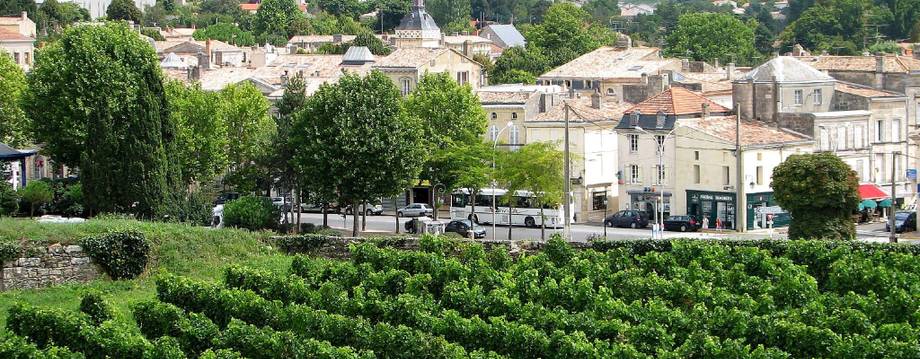
The final blending method is multi-vintage, the lambics of the wine world if you will. The lambic comparison is a fair one in flavour terms too, since it is most commonly found in champagne and other sparkling wines - the obvious exception being Sherry from the south of Spain whose unique ‘solera’ method of multi vintage maturation would need an article, and some explanatory diagrams, all to itself.
Champagne, on the other hand, is a little easier to explain and might be the ultimate expression of the wine blenders art, since not only are multiple grapes used (mostly Chardonnay, Pinot Noir & Meunier), but multiple vineyards, multiple growers and multiple years. The majority of wine in a bottle of non vintage champagne (think Moet Imperial or Bollinger Special Cuvée) will come from a specific year, but the rest (up to a maximum of 40%) will be made up with a blend of ‘reserve’ wines which will have been aged for years longer.
This system not only creates a more richly flavoured and textured wine, but allows for consistency year to year as you can tweak your recipe so that one bottle tastes just like the last. That year-to-year consistency, along with its total deliciousness is a big reason why champagne is one of the few areas of wine dominated by big brands. Wine has no real equivalent of Budweiser or Heineken, in large part because it is such a changeable product, blending allows the wine maker to reduce that vintage-to-vintage changeability for better (the overall quality of wine has never been better) and for worse (the potential loss of the uniqueness of some wines and the development of mega brands).
All this chat about taking finished wines and blending them might have you wondering ‘why can’t I do that at home?’ To which the short answer is ‘No reason at all, it is a lot harder than it looks, but it can be a lot of fun making mistakes’. Just as in beer blending, stick to blending like with like, or a little bit of something more full bodied with a larger amount of lighter wine – the golden rule being you can always add more in, but it is bloody hard to get it back out.
Or of course you could introduce something other than wine. Sangria is a wonderful cocktail when made well, taking simple fruity reds and turning them into something altogether more spectacular. The Germans nailed the ultimate Christmas drink with Gluhwein (mulled wine with brandy) and no New Year’s Day is complete without a quality Mimosa (Buck’s Fizz big brother). So whether you like to mix up your grapes, travel through time, bounce around a country or get DIY with it, I hope you’ll consider getting blended this weekend.
Share this article
You’ve reached your limit of 5 free articles this month.
Unlock unlimited access and more

Join Beer52 and get your first month half price
-
Get your first box for £13.50 (RRP £27).
-
8 beers & 2 snacks delivered monthly.
-
Printed Ferment magazine included.
-
Unlimited access to all online content.