Guest drink: Absinthe
A spirit so diverse it links Vincent van Gogh with Kylie Minogue, absinthe is inescapable in our culture.
Words: Louise Crane
Photos: Richard Croasdale
Tuesday 03 June 2025
This article is from
Beer & Art
issue 6
Share this article
A spirit so diverse it links Vincent van Gogh with Kylie Minogue, absinthe is inescapable in our culture. The potent green drink is as romantic as Romeo and Juliet - intrinsically linked with death, forbidden, and the fabled cause of delirious highs and terrifying hallucinations. But is it really so?
“Absinthe is not hallucinogenic, and there’s no evidence it ever was,” states Jenny Gardener of distribution company Sip or Mix, who supply absinthe and other spirits to the UK’s leading bars and drinks outlets. It’s a myth that’s been perpetuated by misunderstanding, and blind repetition of propaganda, led by prohibitionists and other drinks manufacturers who sought to protect their own trade.
Absinthe is a French spirit first manufactured near the French/Swiss border around the beginning of the 19th century when, as rumour has it, a Swiss apothecary sold the recipe for absinthe elixir to Henry-Louis Pernod. The liquorice-tasting drink, a distillation of wormwood, anise, lemon balm and fennel, became popular among soldiers returning from war in the mid century, and then the young creatives of La Belle Epoque whose names will stand forever in cultural history: van Gogh, Toulouse-Lautrec, Rimbaud, Baudelard. Absinthe, like much other alcohol, was an escape, a freedom from inhibitions, and for the impressionists, a portal to transcendence. It was also popular with the working class. In 1874, France consumed 700,000 litres of the stuff.
Absinthe seemed to promise something more of a psychoactive experience than an equivalent beverage - brandy, perhaps. The compound fingered for such an effect was thujone found in grand wormwood, the main herb used in the maceration that forms absinthe’s base. Thujone hijacks the nervous system to causes convulsions when consumed in high doses, and was blamed for deliriums tremens by French psychiatrist Valentin Magnan, who injected mice with massive amounts of the chemical (we now know “the shakes” are caused by the biochemical effects of withdrawal from alcohol).
Despite weak evidence, the idea that thujone made absinthe dangerous was seized upon by the powerful temperance movement, who touted absinthe as the scourge of the people of France, a drink that drove the poor to madness, and into the asylum. It was a convenient scapegoat when in 1905, Swiss farmer Jean Lanfray downed two glasses and shot his pregnant wife and two daughters. Never mind that he had also consumed creme de menthe, cognac, seven glasses of wine, coffee with brandy, and a further litre of wine.
Brandy producers also had no problem in harming their rivals’ reputations, pushing the image of absinthe as a green devil. The Great Wine Blight of the 1860s devastated France’s wine-grape harvest, when the Phylloxera aphid rampaged through France’s vineyards. Brandy was in scarce supply, and by the turn of the century, French consumption of absinthe was up to 36 million litres.
Before the thujone would have any effect, a person would need to consume so much absinthe they would be dead from alcohol poisoning
The wine industry’s decades-long misinformation campaign cemented absinthe’s reputation as the root of all societal evils, and eventually it was banned in all Western European countries bar Spain, and the United States, by the end of World War One. The European ban remained until 1988 when absinthe was re-legalized effectively by accident after food regulations adopted by the EU neglected to mention the drink by name.
Ted Breaux is an American chemist raised in New Orleans, once known as the Absinthe Capital of the World, and the man to thank for the overturn of the ban in the US. In 2008, he published research undertaken with German scientists that proved the levels of thujone in absinthe, both old and new, is much, much lower than the previously estimated level of 260mg/L. The highest thujone level was 48.3mg/L, an amount so small that before the thujone would have any effect, a person would need to consume so much absinthe they would be dead from alcohol poisoning. So is there anything in absinthe that might have caused its drinkers such a trip?
Breaux reckons that absinthe was once again sabotaged by its own popularity. Drinks manufacturers looking to cash in on La Belle Epoque’s most notorious trend sold cheaper, inferior versions of the drink to French alcoholics who couldn’t afford anything else. These ‘bootleg’ copies contained adulterants such as copper sulfate (a pesticide) and antimony trichloride, chronic exposure to which would cause vomiting, jaundice and hallucinations. Breaux’s research tested thirteen varieties of high quality absinthe from reputable manufacturers, and found no psychoactive ingredients in any of the samples.
Jad Adams is a historian and author of the 2014 book Hideous Absinthe. He has observed that the research on absinthe always goes hand-in-hand with the cultural concerns of the day. He writes, “In the 1850s and 1860s, when French artistic society was seemingly going crazy… absinthe was scientifically demonstrated to make people mad…. In the 1970s, scientists were excited by recreational drugs and worked to demonstrate that absinthe had a similar action to cannabis. In the late 1990s, scientists working with molecular technology and clinical detachment were eager to demonstrate that absinthe caused its effects because of chemical reactions in the brain.”
Today, we have research that shows absinthe is no more dangerous than any other alcohol, and thanks to Breaux’s and his colleague’s perseverance, in March 2008, the US Alcohol and Tobacco Tax and Trade Bureau approved the sale of products that were “thujone free” (containing less than 10 parts per million). Breaux has since moved into absinthe-making, teaming with the historic Combier Distillery in France to recreate the original absinthe by reverse-engineering the pre-ban samples he has acquired.
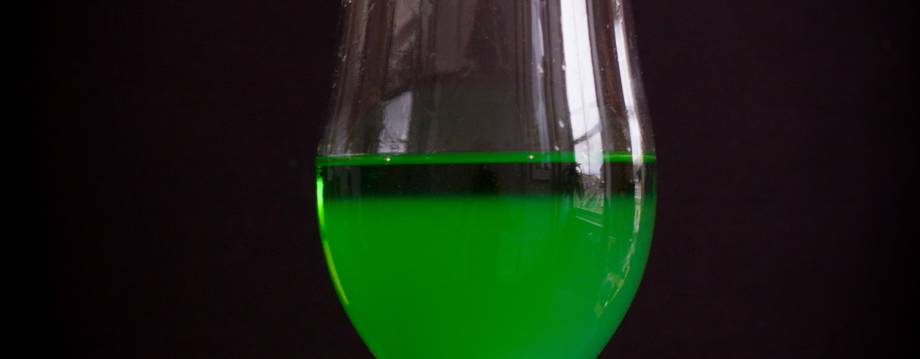
And another myth? “Not all absinthes were green,” explains Breaux. “Some were clear, and these were particularly favoured by clandestine bootleggers following the ban. There’s also an example of a red absinthe, coloured by hibiscus.” The blame for the lurid green image lays at the feet of Czech “absinths” stumbled upon by tourists to Eastern Europe after the fall of the Berlin Wall in 1989. But this was not the absinthe drunk by Verlaine, Toulouse-Lautrec and van Gogh. The popular Czech absinthes are simply flavoured vodka dyed green, very highly alcoholic, lacking anise, and without the iconic “louche” effect, where the drink goes cloudy upon the addition of water. The ritual of setting alight a sugar cube held above the absinthe was invented to disguise this inferiority, and as explained by Marie-Claude Delahaye of Musee de l’Absinthe in Auvers (the town where van Gogh famously shot himself). “There is no relation to the true ritual of absinthe. It is an invention of today, which may have been inspired by ceramic match strikers, or pyrogénes, from La Belle Epoque era that carried absinthe advertisements.”
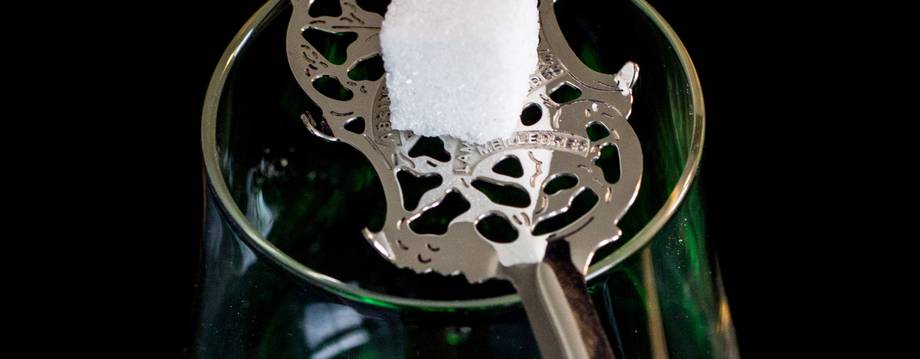
The ritual of the 19th century absinthe devotees is described by Jenny Gardener: “Set an absinthe spoon over the glass and place a sugar cube on top. Slowly pour over the water - you can even use an absinthe fountain - to dissolve the sugar, which will counteract any bitterness from the wormwood. Absinthe was initially developed as a medicine and was meant to be diluted. Today, it still makes a wonderful digestif.”
More and more, absinthe is being consumed not as a drug, or a fast route to insobriety, but appreciated more like a fine wine or whisky. In the words of BIlly Abbott, editor of The Whisky Exchange’s website, “Proper’ absinthe producers, who use whole botanicals and traditional methods create spirits with depth and complexity, rather than green things to set fire to.” And with producers like the man who overturned American’s absinthe ban, it seems Absinthe deserves some parts of its reputation more than others.
Share this article
You’ve reached your limit of 5 free articles this month.
Unlock unlimited access and more

Join Beer52 and get your first month half price
-
Get your first box for £13.50 (RRP £27).
-
8 beers & 2 snacks delivered monthly.
-
Printed Ferment magazine included.
-
Unlimited access to all online content.