Once upon a time in the North
Pete Brown tells the story of brewing in the North of England, past, present and future.
Pete Brown
Tuesday 03 June 2025
This article is from
Beers of The North
issue 5
Share this article
The north is less a point on a compass and more a state of mind.
As a northerner who has lived in the south more than half my life, I’ve realised that however far north you were born, the north begins about twenty miles south of you. Geordies dismiss anyone from south of Darlington as wretched southerners. The people in Darlington, if they’re feeling kind, might give you as far as York. And so on.
As a beer lover who grew in Barnsley, this law suits my purposed very well. The city of Sheffield lies about eighteen miles south of where I was born, and Sheffield is arguably the most important beer city in the UK.
Sheffield fights for this title with numerous other cities of course. Most drinkers probably look to London as the heart of Britain’s beer culture, But Sheffield has three times more breweries per head of population than the capital. A few years ago, the Sheffield branch of the Campaign for Real Ale instigated a friendly rivalry with nearby Nottingham and Derby (almost in the north, but not quite) to see which city had the most real ale hand pumps on the bar. Sheffield wins hands down every year, even after the competition has been expanded to include York, Norwich and Leeds, all of which art great beer cities in their own right.
That Sheffield has this reputation is largely down to one man. Dace Wickett arrived in Sheffield in the late 1960s as a polytechnic lecturer, and after a few years running bars in the student union, he decided to open his own pub. The Fat Cat, an isolated outpost in the middle of the city’s post-industrial Kelham Island district, opened in 1981 with a focus in traditional cask ale and a range of interesting Belgian bottled beers, at a time when lager was sweeping the nation. People told Wickett he was mad, but on opening night there were queues around the block, and the Fat Cat has been a fixture of the Sheffield beer and pub scene ever since, seeing Kelham Island regenerate around it into a hub of great beer pubs and classy restaurants.
When southerners start spinning the yarn that craft beer emerged in London around 2010, it’s always nice to remind them that Thornbidge set up in Derbyshire in 2005
In 1990 Wickett added a microbrewery to the pub. Again, people told him he as mad. But Kelham Island brewing became a regional fixture, and its Pale Rider won Champion Beer of Britain in 2004.
Wickett’s enthusiasm spawned a quiet revolution around Sheffield. He wasn’t always easy to work with, and sometimes brewers left his employ on bad terms. Bit even if they did, they would have been sufficiently inspired by what they lasted under him that they would often start a brewery of their own. Soon there was a cluster of microbreweries around Kelham. That’s now spread out into the city and the region beyond, which now boasts 57 breweries.

One of these is Thornbridge, the region’s star brewer over the last ten years. Wickett had a hand in this too, suggesting to Thornbridge founder Jim Harrison that a brewery in one of his outbuildings might be a good idea.
When southerners start spinning the yarn that craft beer emerged in London around 2010, it’s always nice to remind them that Thornbidge set up in Derbyshire in 2005 brewing American stye IPAs and barrel-aged Imperial Stouts in their first year. Thornbridge was also the brewery where a certain Martin Dickie, later of BrewDog, got his first job as a brewer.
Current brewer Rob Lovatt took Thornbridge in a new direction with his commitment to mastering lager styles from central Europe. It takes some German Brewers a lifetime to master a delicate beer such as Kolsch, but Lovatt has. Arrange of lager styles nailed so precisely they’re indistinguishable from the originals.
Thornbridge is now moving onto sour beers, more experimental but still precisely engineered. A new £2.5m investment sees a brand new bottling line and a trebling of the size of the barrel store. This one time micro is now the size of a modest regional brewer.
This is great news for Thornbridge as it builds its national and international reputation, but it stands out oddly from the local scene in Sheffield, its main and original market.
The difference between the north and the south of England in beer terms is that in the dark days before the craft beer boom, cask ale never really went away from the north. Drinkers here are not CAMRA fanatics, just discerning ale fans who appreciate a decent pint. It means that while the north has a wide range of breweries, the styles of beers those brewers create can often be fixed in tradition.
That’s not necessarily a bad thing. One big question Yorkshire asks itself is whether there’s such a thing as a discount Yorkshire Bitter style. I’d argue that there is, and that one of the finest examples of it is Acorn Brewery’s Barnsley Bitter. I’m biased because Barnsley is my home town, but it has a distinct, rich treacliness that can be a wonderful antidote to one hoppy pale ale too many.
Not that Acorn shies away from hoppy pale ales: their single hop IPA project is now into its sixth year. Pre-dating most others who have had the same idea, Acorn brews the same IPA with a different hop each month.
Another brewery that’s attempted to span tradition and innovation is Magic Rock, founded in 2011. “It’s been amazing,” says Managing Director Richard Burhouse. “We’ve been very lucky. We’ve had great demand from year one.”

Last year Magic Rock moved to a new site. It’s dramatically increased their capacity and they’ve also installed a state-of-the-art canning line, a clear indication of the direction of travel in craft beer just now. But the feature that gets talked about more than any other, by both Magic Rock and their customers, is the tap room. An on-site brewery tap, showcasing the full range of beers and holding exclusive events and tastings, is a common feature of American craft beer breweries but surprisingly rare here. Few breweries in London have the space. In many parts of the country, the concept wouldn’t work on the dull, grey industrial estates where breweries are based. But in the post-industrial north, Brewers are finding sites in towns and cities that are easily accessible to the public and cheap enough to spreads out. “It shows confidence in what you’re doing, and we can let the locals try beer first,” says Richard.
On the downside, one problem that’s surfaced recently form Magic Rock is what some would regard as the north’s legendary tightness. “When we moved to the new site we had to put the price of our cask beer up for the first time in about three years,” says Richartd. “Demand fell off a cliff. People still buy very much on price here. “It’s a knowledgeable cask market, and they want to drink new things all the time,” but they are a very clear idea of what they think they should be paying for it.”
It’s an issue Northern Monk have faced up in Leeds too. Then city was arguably the home of the UK’s first craft beer bar when North Bar opened in 1997. It’s appreciation of international craft beer is still largely limited to specialist bars like these. Most Brewers have to cater for the more traditional demand in pubs too.
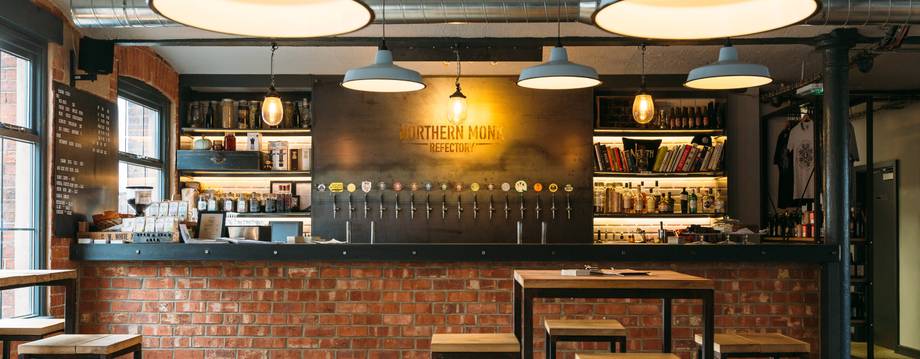
“We have one cask ale: True North, a 3.7% pale ale we brew to order. It’s a style all the pubs want round here wand it’s hard to move the older drinkers away from it,” says Russell Bissett, who founded the brewery in 2013.
Bissett had a very clear idea of the kind of brewery he wanted to create. When looking for premises, he “wanted to find somewhere that reflected the brand – somewhere with a northern identity.” He eventually found an old mill building, accessible enough for the obligatory tap room, and stripped everything out to expose original features such as York flagstones.
As he mentioned the phrase, this seems like a good time to ask: what is a northern identity?
“Good question! Integrity, legitimacy, earthiness and passion for what you do, I’d say. It’s who we are as people and as a company, and I think it’s very relevant to what craft beer is all about.”
Like Magic Rock, Northern Monk are struggling to educate local drinkers on why their beers are worth paying more for. But overall, Bisset remains optimistic and fiercely proud of his region.
“It’s an incredible time to be brewing in the north,” he says. “We try to take a global look at styles, but it’s a privilege to be in the north. Leeds is an incredible beer city. There’s a huge amount of collaboration – everyone lifts each other up.”
Leeds has long been a beacon of great beer. A less obvious location is Hull, isolated out on the East Yorkshire coast. But this is where Allan Rice and Sarah Thackray founded Atom - one of the north’s if not here country’s most interesting breweries - in January 2014.
“Our core tenet is the science of brewing,” says head brewer Jack Walker. “We’re all scientists by background, and we have a scientific link to everything we do. We look at things from a lateral viewpoint, looking for alternatives to hops, such as in our camomile tea beer or our cardamom and coriander porter. For our 12.6 per cent Imperial stout, we boil the wort for six hours to get the Maillard reaction and those deep caramel flavours.”
Hull is an evolving scene. “We were the first to do experimental brewing here but there are a few others opening up now. Hull is a proud city, always evolving, and it’s the 2017 City of Culture. We’re making sure we’ll have out taproom ready by then.”
The arrival of new breweries like Atom and Northern Monk, bursting with ideas, is a source of both joy and frustration for Steve Gibbs, founder of Durham Brewing.
“I’ve been doing this for 22 years. Back then we had it all to ourselves,” he says. “This is probably the poorest area of the country. There are only so many pubs and bars selling these beers, and were saturated with breweries now.”
It’s an incredible time to be brewing in the north. We try to take a global look at styles, but it’s a privilege to be in the north
Steve has been brewing unconventional beers since before most of the new wave of craft brewers were old enough to drink - event before some of them were born. Temptation was a 10% AV Imperial stout before people had even coined the phrase Imperial stout. Now he’s brewing a version of it with Cantillon gueuze yeast, and ageing another in whisky casks. “My beers don’t fit into categories,” he says. “It’s murder trying to get them into competitions.”
Up the road in Newcastle there’s a sense that the city is playing catch-up with the rest of the country. But it’s steaming ahead with the astonishing determination its inhabitants are famous for.
This is probably the poorest area of the country. There are only so many pubs and bars selling these beers, and were saturated with breweries now.
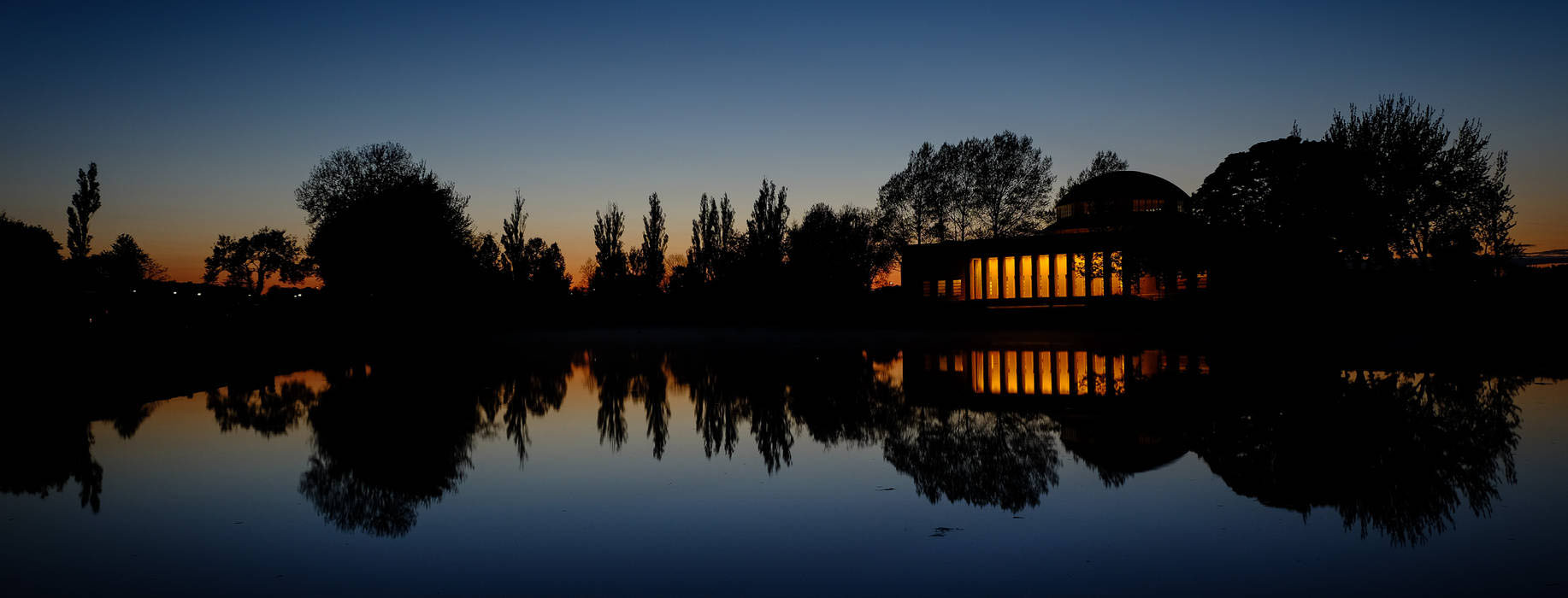
The Wylam Brewery started off in 2000 in a potting shed in the village of Wylam. Last year, new owner Dave Stone moved into the magnificent Palace of the Arts in Newcastle’s Exhibition Park. I doubt there’s a prettier brewery anywhere else n the country. It seems to capture the optimism and forward thinking of the region into physical form.
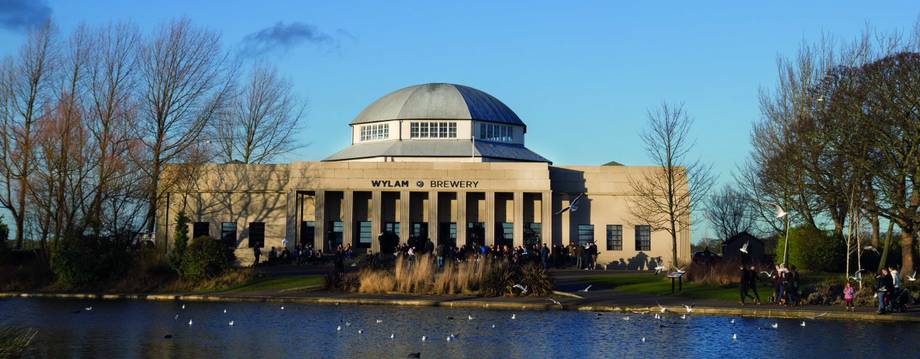
“For a long time we had to do traditional cask between 3.8 and 4.2 per cent or we couldn’t sell it,” say Dave, “But there’s been a wonderful explosion of styles over the last five years. Now we’re doing a Limonata Pale, a single hop Sorachi ace beer, a lemon barley and rose saison…”
As I speak to him on the phone, he’s standing on the steps of the Leeds Beer Festival, at which Northern Monk has just been named Brewer of the Festival.
“There’s everything in here,” Dave gushes. “Goses and 12 per cent stouts. And the most extraordinary thing is, there’s not a bad beer in the place. That’s the big change. The quality is amazing.”
I ask him what the crowd and the vibe is like, and for him, the festival is a big, optimistic sign pointing to the future.
We’re really lucky here. Everyone is so collaborative, sharing ideas, recipes and technology and helping each other out. The crowd here in the afternoon session are the old tickers. But in the evenings kit’s a new generation coming through who are hungry for knowledge and want to try new things. We can explain to them that you can’t sell a beer for £2.40 when it contains six grand’s worth of hops!”
Forget the stereotypes: maybe the north isn’t that tight after all.
Share this article
You’ve reached your limit of 5 free articles this month.
Unlock unlimited access and more

Join Beer52 and get your first month half price
-
Get your first box for £13.50 (RRP £27).
-
8 beers & 2 snacks delivered monthly.
-
Printed Ferment magazine included.
-
Unlimited access to all online content.